Liveaboard.com

Liveaboard Diving in Roca Partida

Our guests rated liveaboard diving in Roca Partida as 9.1

  • 100% Best Price Guarantee

Liveaboard Diving in Roca Partida

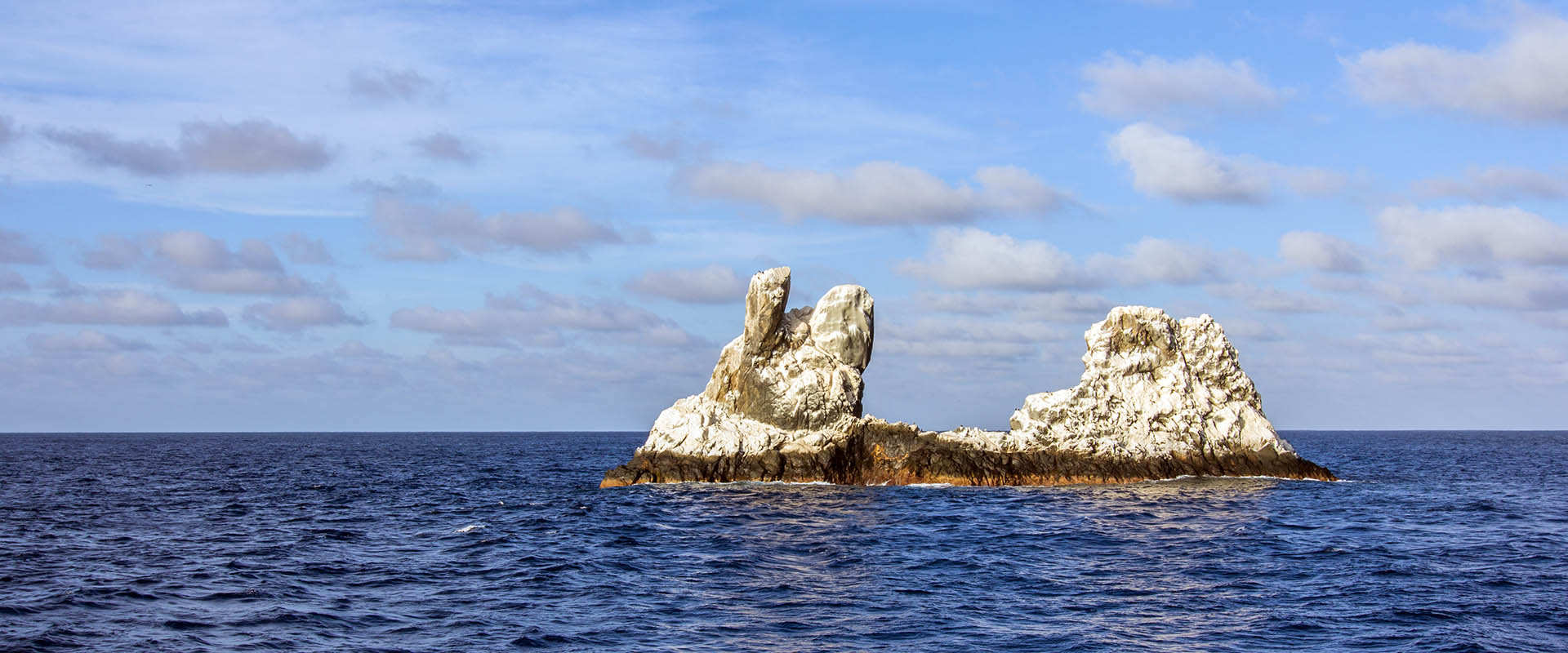
Liveaboards to San Benedicto, part of the Socorro Islands, officially known as the Revillagigedo Archipelago, will escort divers to one of the best dive areas to see large pelagics. The Socorro Islands are a group of four volcanic islands located in the Pacific Ocean about 400km (250 mi) off the coast of the southern tip of Baja California, a southwestern state of Mexico. This archipelago is a popular dive area and most popular for the different aquatic species you can see and dive with. The other three islands are Socorro Island, San Benedicto, and Clarion, all incredible dive sites in their own ways. Roca Partida is the smallest of the islands, with a pinnacle of 30m (100ft).

Roca Partida is a year-round dive area, but each season brings its own gems. The calmest seas are from November to May, with the waters being around 28 degrees Celsius (82 degrees Fahrenheit) in November, 21 degrees Celsius (69 degrees Fahrenheit) in February, and back up to 25 degrees Celsius (68 degrees Fahrenheit) in May. These winter months also bring with them the main spectacles: the thousands of humpback whales that stop over here during their migration to and from Alaska and numerous Pacific manta rays. The visibility here depends solely on the plankton in the water, which depends on the moon, but in general, the visibility varies from 15 - 50m (49 - 164ft).

Roca Partida is a more advanced diving area as sometimes there are strong currents and big waves, and most dive spots are quite deep; however, each liveaboard to Roca Partida has its minimum dive experience level, most expect to have your Advanced Open water with at least 50 logged dives, but there are a few which only need you to have your Open Water and no minimum logged dives. Please keep this in mind.

What You Can See

Roca Partida liveaboard dive cruises allow divers to see a large variety of marine life to satisfy all divers with a unique experience. It is open water dives and unsteady conditions, with currents coming and going and large waves coming and going; many pelagic species are attracted to this area. When diving down, you will first be met by large schools of Jacks and Tuna, which live around the pinnacle. 20 meters (60 feet) down the pinnacle, there are multiple caves that you can explore, including lobsters and different species of sharks. Some of the most popular sharks you will run into here are Oceanic white tip, schooling Scalloped Hammerhead sharks, and Whale Sharks on an extremely lucky day. Other inhabitants are the impressive Giant Pacific Manta Rays, which fly through the water with wingspans of around 7 meters (21 feet); they are extremely curious and come close to the divers for a fantastic experience.

This archipelago of islands is part of a protected biosphere reserve, and many conservation organizations are working to preserve the unique wildlife that inhabits and passes through it. Socorro diving area is not a coral reef, so do not expect bright colors everywhere, but once you spot the spectacular marine wildlife, you won't be able to focus on much else anyway!

Getting To Roca Partida

This island is only accessible via a Mexico liveaboard, and because this island is mostly uninhabited, this is the perfect way to get away from the busy cities and get a good quality experience with some of the best the oceans offer. Liveaboard.com currently offers six different liveaboards that visit these sites, all different to suit anyone's desires.

There are two ports from which the liveaboards depart: Cabo San Lucas and San Jose del Cabo. These are both cities in the state of Baja California and located in the most Southern municipality; Los Cabos in Mexico. The closest international airport to these two cities is Los Cabos International Airport, which has flights arriving from the United States, Canada, and other Mexican Cities.


Roca Partida Diving Reviews

  • Rating 9.1 out of 10
  • 9.1 Superb
  • Rating 10.0 out of 10
  • 10.0 Exceptional
  • Pamela (Suzy) R
  • Flag of United StatesUnited States

Above the water is a rock. Below the water is diver's paradise.

Diving Roca Partida in February on the Nautilus Belle Amie
  • Rating 8.8 out of 10
  • 8.8 Fabulous
  • Timothy N
  • Flag of United StatesUnited States

My favorite! whale sharks, dolphins, mantas, tuna. very exciting dives!

Diving Roca Partida in February on the Nautilus Belle Amie
  • Rating 9.2 out of 10
  • 9.2 Superb
  • Robert L
  • Flag of United StatesUnited States

The most unique and incredible dive site I've ever visited. Underwater walls and sea life encounters were the diving experiences of a lifetime.

Diving Roca Partida in February on the Valentina
  • Rating 9.2 out of 10
  • 9.2 Superb
  • Scott S
  • Flag of United StatesUnited States

Amazing manta interaction.

Diving Roca Partida in December on the Nautilus Belle Amie


What to know about diving in Roca Partida

What is diving like at Roca Partida?

Roca Partida is a tiny volcanic pinnacle rising vertically from deep water, and diving here means circling the rock in open blue water rather than following a reef. It's known for dense shark activity — resting whitetip reef sharks stacked in ledges near the surface, with schooling hammerhead, silky, and Galápagos sharks patrolling deeper down. The site is considered one of the most dramatic single dives in the Revillagigedo Archipelago.

How big is Roca Partida?

Roca Partida is remarkably small above water — roughly 100 ft (30 m) long and about 130 ft (40 m) high — barely more than a guano-covered rock jutting from the Pacific. Below the surface, though, it sits atop a seamount that drops away into thousands of feet of open ocean. Divers can circle the entire above-water rock a couple of times in a single dive.

What marine life can you see at Roca Partida?

Roca Partida draws an unusually dense concentration of pelagic life for its size: schooling hammerhead, silky, and Galápagos sharks; resting whitetip reef sharks on the rock's ledges; giant Pacific manta rays; and large schools of tuna and jacks. Bottlenose dolphins and, less commonly, whale sharks and humpback whales also pass through. Its remote, open-ocean location acts as a magnet for animals crossing open water.

How do you get to Roca Partida?

Roca Partida is reached only by liveaboard, as part of a Revillagigedo itinerary that also visits Socorro and San Benedicto. It sits roughly 70 miles (113 km) west of Socorro and about 85 miles (137 km) from San Benedicto, so boats typically sail overnight to reach it. There's no independent access given the distance from shore.

What experience level is needed to dive Roca Partida?

Roca Partida is considered one of the more advanced Revillagigedo sites, with open-ocean conditions, strong currents, and no shallow reef to retreat to if conditions turn. Most liveaboards require Advanced Open Water certification and a solid number of logged dives before booking. Divers should be comfortable with blue-water diving and current-driven drift dives.

When is the best time to dive Roca Partida?

Roca Partida dives well throughout the broader Revillagigedo season, November through June, with whitetip and hammerhead activity considered consistent across most months. Early season (November–January) offers a higher chance of whale shark encounters, while mid-season brings the best odds for whale sightings. Trips pause during the Eastern Pacific hurricane season, July through October.
Is Roca Partida included on Revillagigedo liveaboard itineraries?

Yes — Roca Partida is one of the three core stops on nearly every Revillagigedo liveaboard itinerary, alongside Socorro and San Benedicto, usually visited for one to two dedicated dive days depending on weather. It's often cited by divers as a highlight of the trip. Clarión Island is rarely included given the additional days of sailing required to reach it.

We’re here to help, 24/7.

Connect with our expert travel consultants to plan your next trip.

  • Mylene Issartial
  • Andrea Martinez
  • Farah Celada-Benito
  • Juliane Ball
  • Oksana Kovaleva
  • Nicole Laughlin
  • Nina Kapp