Liveaboard.com

Milford Sound Cruises

Compare and book your trip online.

  • 100% Best Price Guarantee

Adventure Cruises in Milford Sound

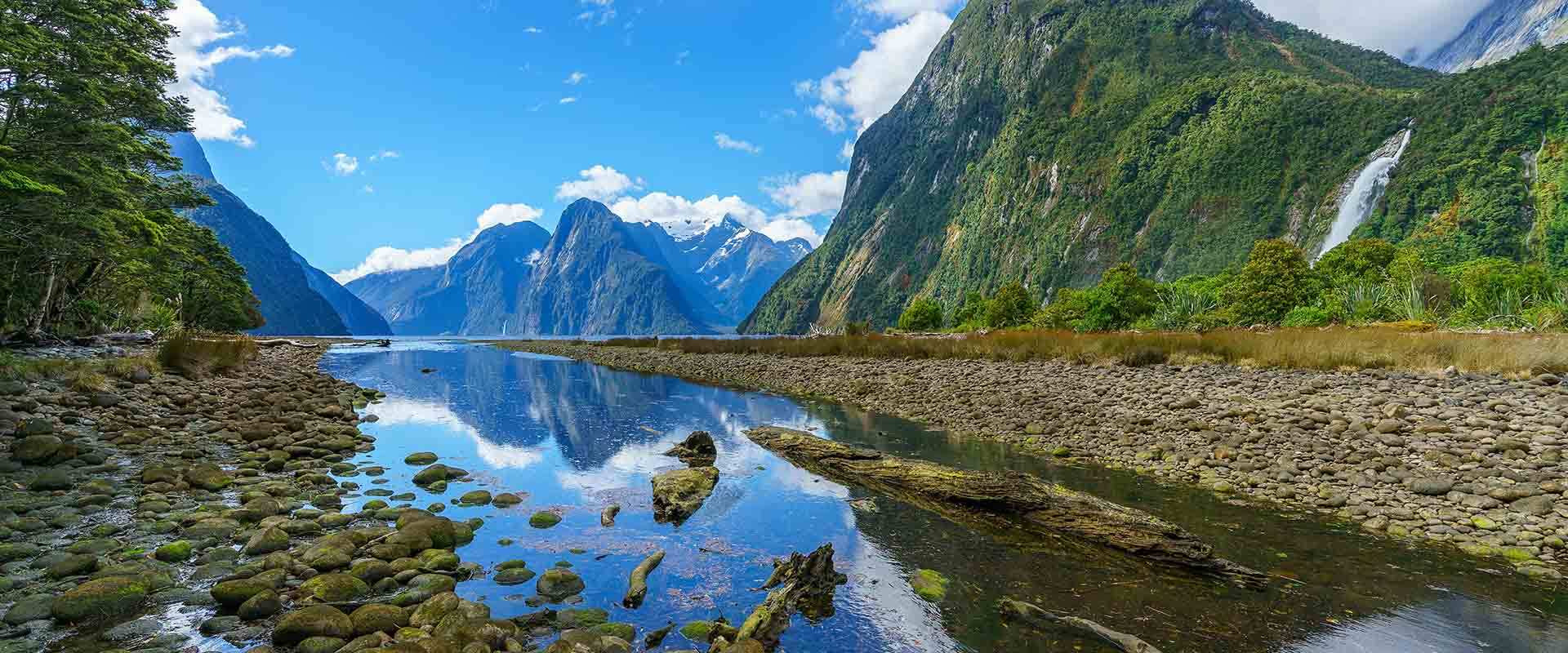
A Milford Sound cruise is the best way to explore and experience a point of national pride for New Zealanders and an area known as one of the most beautiful spots in the world. Milford Sound is not technically a sound at all, but a fiord and part of the Fiordland National Park, itself within the bounds of a UNESCO World Heritage site. Located to the southwest of New Zealand’s South Island, Milford Sound consists of steep, forested hills punctuated by craggy mountains rising on either side of calm, cool waters.

Cruises to Milford Sound take in the region’s dense rainforests as well as its unique underwater environment, granting more adventurous visitors the opportunity to hike the Milford Track, kayak along waterfalls and even don a wetsuit to five or snorkel the glacier-fed waters. Meanwhile, animal lovers can watch for penguins, seals and dolphins. The region’s unpredictable weather only adds to its wild and untamed character and promises adventure.


Top things to do and see in Milford Sound

New Zealand’s Fiordland boasts majestic landscapes of verdant, mountainous terrain sketched with deep fiords. Small ship cruises of the fiords drift between cliffs covered in a mantle of lush rainforest as curious dolphins occasionally skim the water’s surface in the boat’s wake. The Fiordland National Park region has ancient valleys, glacier-fed rivers, and towering waterfalls. Milford Sound is the most famous and popular of the park’s fiords, with tree-maned Mitre Peak standing like a sentinel at its entrance.

Adventure seekers can kayak along Pembroke Glacier before taking to land and enjoying the area’s excellent network of hiking trails. The Milford Track, in particular, is the perfect way to experience awesome nature from afar and within. Called the “finest walk in the world,” Milford Track starts at Lake Te Anau and runs for 53.5 kilometers (33 miles) to Sandfly Point. Exploring the region surrounding Milford Sound takes visitors to several fantastic waterfalls, including Bowen Falls, plummeting from 160 meters (525 feet) above, and Stirling Falls, which resembles a light spring shower.

Much of the wildlife within and around Milford Sound is protected, with many species endemic to the area. Seal Point, near Mitre Peak, is aptly named, given its popularity with New Zealand fur seals. Bird-watchers can look for blue duck, takeke, mohua, and kea, while the shores and waters are home to seals, three species of dolphins, and penguins, including the rare Fiordland Crested Penguin. Under Milford Sound’s calm surface lives the world’s largest population of black coral trees, some as much as 200 years old.

Top Tips for visiting Milford Sound on a cruise

  • Due to the region’s unpredictable weather, every Milford Sound boat cruise is an adventure cruise. For this reason, itineraries may change, and visitors should pack for potentially cold, rainy, and windy weather, including a warm jacket and waterproof shell, regardless of the time of year.
  • Despite occasionally cold and cloudy weather, sunscreen is highly recommended.
  • Milford Sound is one of the few places visitors hope for rain, leading to temporary waterfalls cascading down the fiord walls.
  • Bring binoculars and a camera to spot and capture birds and dolphins.
  • Wear good hiking shoes for trekking the Milford Track and other overland trip portions.
  • Note that Milford Track bookings must be made ahead of time during the summer months. During the winter, the trail is more arduous, and track facilities are closed. For this reason, only experienced hikers should attempt it.

Best time to cruise the Milford Sound

Unlike most travel destinations and small ship cruise itineraries, Milford Sound cruises benefit from rainfall, creating temporary waterfalls throughout the fiord.

For this reason, the best time to visit Milford Sound is during the rainy season, in December and January. Rains, however, are fairly consistent throughout the year.

Milford Sound in December and January is also the warmest period, with summer stretching from November to mid-February.

In Milford Sound winter is from June to August; the weather is much cooler, the winds are stronger, but the crowds are thinner.

September to November and late February to May are the shoulder months when the weather is pleasant, the rains are consistent, and the crowds are smaller.

Where do Milford Sound cruises depart from?

Most New Zealand adventure cruises that visit Milford Sound depart from Te Anau. Visitors fly into Queenstown and are transferred to Te Anau.

Queenstown Airport is not an international airport. The nearest international airports are Christchurch and Auckland, which serve most major airlines. Visitors from North America or Europe will likely require a connection outside New Zealand before reaching either airport.

Note that the transfer from Queenstown to Te Anau is often included in a New Zealand cruise package, though the transfer from Christchurch or Auckland to Queenstown is likely not.

Book your next adventure cruise to Milford Sound, New Zealand, today.


What to know about adventure cruising in Milford Sound

What is a Milford Sound cruise like?

The standard scenic cruise runs about an hour and 45 minutes, sailing the 9.4 miles (15.1 km) from the terminal out toward the Tasman Sea and back, passing beneath Miter Peak and nosing the bow into the permanent waterfalls at Lady Bowen and Stirling. Fur seals haul out on the rocks near the mouth, and bottlenose dolphins, the southernmost wild population in the world, turn up unpredictably. Boats run through the day, with the middle hours busiest.

What is a Milford Sound overnight cruise?

A vessel that sails in the late afternoon, anchors in a sheltered arm for the night, and returns the next morning, which buys you the fiord after the day boats have gone. Kayaks and tenders go out before dinner, and the early-morning light on the cliffs is the reason most people book. Berths are limited, and the season runs roughly September to May (as of 2026).

What is a fly-cruise-fly Milford Sound trip?

A scenic flight from Queenstown or Te Anau over the Southern Alps to Milford's airstrip, a cruise on the fiord, and a flight back — about four hours door to door instead of the 12 or 13 hours a coach day trip takes. The flight itself is the selling point, crossing hanging valleys and snowfields no road reaches. It is weather-dependent, and cancellations are common enough that it pays to allow a spare day (as of 2026).

Where is Milford Sound?

In Fiordland National Park, in the southwest corner of New Zealand's South Island, on the Tasman Sea coast. It is 181 miles (291 km) from Queenstown — about four hours by road — and 75 miles (121 km) from Te Anau, the nearest town. It is the only one of Fiordland's fifteen fiords reachable by car.

What is Mitre Peak?

The pyramid of rock that rises straight out of the water on the fiord's southern side, 5,551 ft (1,692 m) above sea level, is named for its resemblance to a bishop's miter. It is the single most photographed mountain in New Zealand and the reason most cruise boats slow down at roughly the same point. It is actually a cluster of peaks that happens to line up as one from the usual viewpoint.

Which Milford Sound cruise is best?

It comes down to boat size and timing more than operator. Smaller vessels get closer to the cliffs and carry fewer people; larger ones are steadier and warmer in bad weather. The 9am and after-3pm departures avoid the coach crush between 11am and 2pm, and nature-focused cruises trade commentary volume for more time watching wildlife. Book ahead in summer regardless (as of 2026).

Where can you stay at Milford Sound?

Barely anywhere - there is one lodge and a basic campsite at the fiord, and that is the whole of it. Almost everyone stays in Te Anau, 75 miles (121 km) and two hours away, or in Queenstown, four hours away. The other option is sleeping aboard an overnight cruise, which is the only way to actually be on the water at dawn (as of 2026).

Can you kayak in Milford Sound?

Yes, and it changes the scale of the place — from a kayak, the cliffs read as 4,000 ft (1,200 m) of rock rather than a backdrop. Guided trips depart from the foreshore, typically last three to five hours, and some cruise operators offer a combined cruise-and-kayak ticket. Trips go year-round but are canceled in high winds, and the water stays cold whatever the month (as of 2026).

What is a Milford Sound nature cruise?

A smaller-boat option with a Department of Conservation or specialist guide aboard, running longer than the standard scenic trip and spending more time on wildlife — seals, penguins, dolphins, and the black coral that grows unusually close to the surface here because a tannin-stained freshwater layer dims the light. Commentary is the point, so there is less onboard noise and fewer passengers. It costs a little more than a scenic cruise.

How do you visit Milford Sound from Queenstown?

Three ways: drive the 181 miles (291 km) yourself, which takes four hours each way and makes for a 12-hour day; take a coach-and-cruise package that does the same run with commentary and no driving; or fly, which turns the whole thing into a half-day. The road itself is a highlight, through the Eglinton Valley and the Homer Tunnel, so driving is not wasted time. Check road conditions in winter, when avalanche closures happen (as of 2026).

How long is a Milford Sound day cruise?

The cruise takes about 1 hour and 45 minutes to 2 hours on the water, covering the full length of the fiord out to the Tasman Sea and back. Nature cruises stretch to around two and a half hours. Factor the travel around it: from Te Anau, the round trip is a comfortable day; from Queenstown, it is a very long one.

Is Milford Sound worth it?

For most people, yes — Rudyard Kipling called it the eighth wonder of the world, and between 550,000 and a million visitors a year make the trip. The honest caveats are the drive, the crowds between 11am and 2pm, and the weather. Rain is not the problem it sounds like: at 252 inches (6,412 mm) a year, it is one of the wettest inhabited places on earth, and a downpour turns the cliffs into hundreds of temporary waterfalls.

When are Milford Sound's waterfalls at their best?

During and just after heavy rain, when hundreds of temporary falls appear down the cliff faces and the permanent ones run hard, only Lady Bowen, at 531 ft (162 m), and Stirling, at 495 ft (151 m), flow year-round. Spring, from September to November, adds snowmelt on top of the rain and is the most reliable stretch for volume.

Can you join a Milford Sound cruise from Te Anau?

Yes - Te Anau is the closest town, 75 miles (121 km) away, about two hours along the Milford Road, and coach-and-cruise packages run from there daily. Staying in Te Anau rather than Queenstown halves the driving time and lets you depart early before the Queenstown coaches arrive. The drive crosses the Eglinton Valley and the Homer Tunnel, which is worth doing in daylight (as of 2026).

We’re here to help, 24/7.

Connect with our expert travel consultants to plan your next trip.

  • Farah Celada-Benito
  • Josue Zarco
  • Mylene Issartial
  • Juliane Ball
  • Nicole Laughlin
  • Nina Kapp
  • Andrea Martinez