Liveaboard.com

Marlborough Sounds Cruises

Compare and book your trip online.

  • 100% Best Price Guarantee

Adventure Cruises in Marlborough Sounds

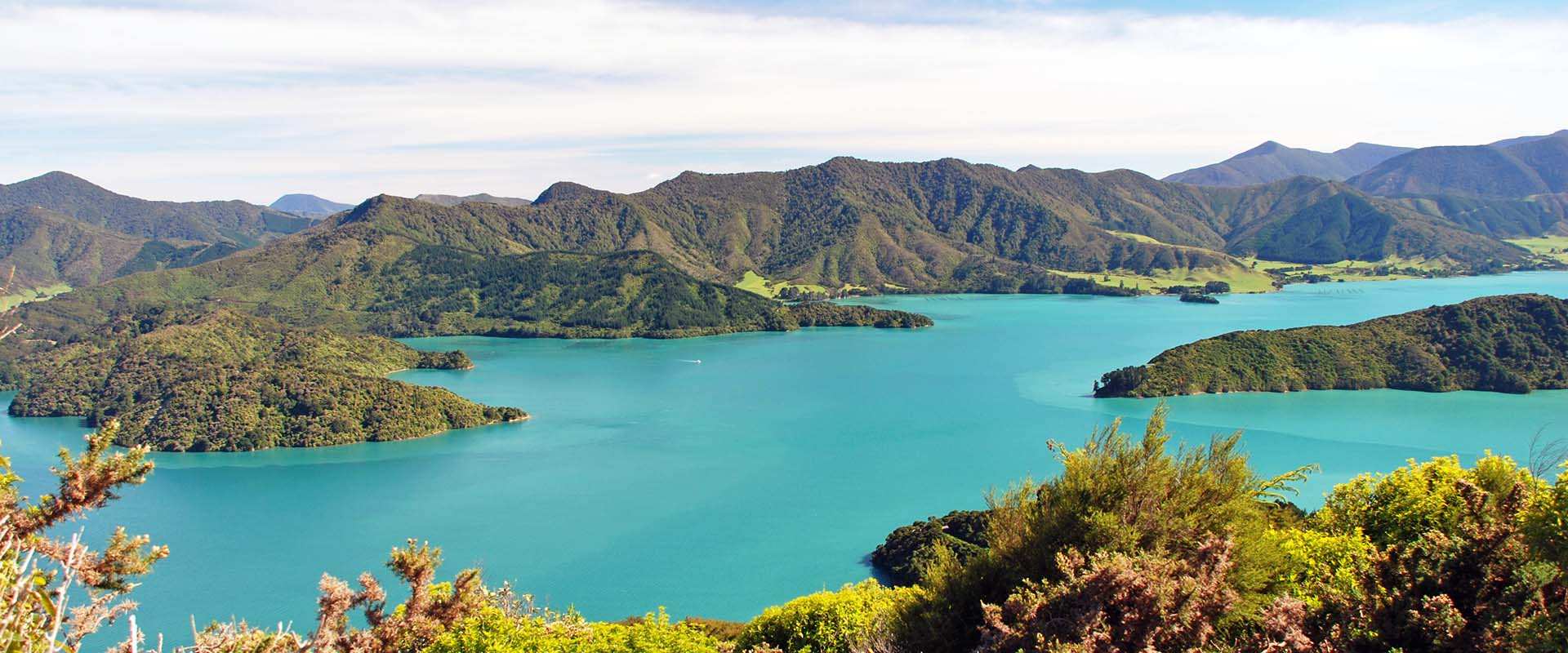
Marlborough Sound cruises explore a region of New Zealand known as a sensory feast rich in tranquil natural beauty. A complex network of submerged valleys covering over 4000 square kilometers (2485 square miles), the Marlborough Sounds occupy one-fifth of New Zealand’s total coastline. In Maori mythology, the sounds are made of the prows of sunken boats. The reality is no less enchanting: drowned river valleys transformed by time into islands, peninsulas, and inlets.

Cruises through New Zealand’s Marlborough Sounds explore the area’s three main sounds, Queen Charlotte, Pelorus, and Kenepuru, as well as Motuara Island, a bird-watcher’s dream, and Ship Cove, a favorite spot of Captain James Cook’s. Along the way, visitors can kayak protected coves and hike the famous Queen Charlotte Track.


Top things to do and see in Marlborough Sound

Queen Charlotte Sound is the easternmost of the sounds and one of two major sounds making up the Marlboroughs, in addition to Pelorus. It is known for its calm waters, perfect for sailing, kayaking, and, of course, Marlborough Sound overnight cruises. Fringed with thick pine forest, the sound is home to dolphins, New Zealand fur seals, and orcas. Several islands lie within the sound, including Motuara Island, an important bird sanctuary.

Pelorus Sound, along with Queen Charlotte Sound, is one of the two main bodies of water making up the Marlborough Sounds. Located at the north end of South Island, Pelorus Sound has many watery arms, including Kenepuru Sound, and is frequented by pods of playful dolphins and even the occasional humpback whale.

Kenepuru Sound is actually a branch of the Pelorus Sound, though still one of the largest sounds among the Marlboroughs, stretching for twenty-five kilometers (16 miles). It is the site of important mussel farming and a favored spot for fishing, especially for snapper.

The Queen Charlotte Track runs for 71 kilometers (44 miles) from Ship Cove to Anakiwa along the lushly wooded ridge that separates Queen Charlotte Sound from Kenepuru Sounds. The track includes easy and more challenging stretches and can be walked in sections or from end to end. No matter how much or how little of the track one explores, visitors are rewarded with a trek through forests and along rocky ridges offering tremendous views of the sounds and encounters with gannets, woodpigeons, waxeyes, wekas, and the elusive wild pig.

Motuara Island, in Queen Charlotte Sound, is a bird sanctuary and bird-watcher’s paradise. The island is home to various bird species, including robins, tuis, kiwis, bellbirds, kakariki, and the rare south island saddleback. Visitors can hike the island to spectacular views of the sounds and Cook Strait and see penguin nesting boxes set up as part of local conservation efforts.

Ship Cove, a bay located in the Queen Charlotte Sound, just west of Motuara Island, was named and made famous by the British explorer Captain James Cook. Cook made anchor at the cove in the early 1770s to replenish his ship’s stores and promptly fell in love with the place, making it his favorite rest stop in between exploratory expeditions. Today, Ship Cove serves as a monument to the fabled explorer and an excellent spot to swim at the nearby beach among the songs of the surrounding birdlife. Ship Cove also serves as the starting point for the Queen Charlotte Track.

D'Urville Island, home to just over fifty permanent residents, is a less-traveled stop on New Zealand adventure cruises. D’Urville is known for its hiking and cycling trails, offering panoramic views of the sounds. It is also an excellent spot to enjoy some fishing in Stephen’s Passage and the French Pass, including Kingfish, Snapper, Grouper, and Blue Cod. The island is separated from the mainland by the notorious French Pass, known for its rushing waters and numerous vortices, which have been the bane and the end of many captains over the centuries. No need to worry, though, as cruises in Marlborough Sound steer clear of the more treacherous areas of the pass!

Top Tips for visiting Marlborough Sound on a cruise

  • Pack a good pair of hiking boots for treks along Queen Charlotte Track.
  • Bring binoculars and a camera to help spot and capture birds and whales.
  • It is recommended to pack a warm jacket and waterproof shell, regardless of the season.

Best time to cruise the Marlborough Sound

September to November is spring and a good time to visit the sounds as the weather is warming while crowds are still small.

The Marlborough Sounds in December to February are especially popular with international and local visitors, so plan ahead to ensure availability and avoid high prices. Summer is the best time to see whales.

The best time to take a Marlborough Sounds cruise is fall, from March to May, when the weather is still warm and the leaves are turning.

June to August in the Marlborough Sounds is winter, bringing more rain and the possibility of snow. Note that many Marlborough Sound small-ship cruises are not available during this period.

Where do Marlborough Sound cruises depart from?

Typically, New Zealand small ship cruises visiting Marlborough Sound leave from Picton or Havelock on the South Island. Visitors will fly into Wellington, Auckland, or Christchurch and either take a domestic flight or land transfer to their point of departure.

The airports at Wellington, Auckland, and Christchurch are international airports served by most major airlines, though a connecting flight will likely be required.



What to know about adventure cruising in Marlborough Sounds

What is Picton?

A small town of about 4,000 people at the head of Queen Charlotte Sound, and the hinge of New Zealand's transport network: the Cook Strait ferries from Wellington dock here, crossing 57 miles (92 km) in about three and a half hours, and the main South Island rail and road routes start from the waterfront. For visitors, it is the launching point for everything in the Sounds — cruises, water taxis, kayaks, and the Queen Charlotte Track.

What are the Marlborough Sounds?

A maze of drowned river valleys at the top of the South Island, formed as the land subsided and the sea flooded the valleys — which makes them rias, not fiords like Fiordland's. They cover roughly 1,540 sq mi (4,000 sq km) and hold about a tenth of New Zealand's entire coastline in that small area. The three main arms are Queen Charlotte, Kenepuru and Pelorus (Te Hoiere).

What is Queen Charlotte Sound?

The easternmost and most visited of the three main sounds, running about 25 miles (40 km) inland from Cook Strait to Picton at its head. Captain Cook used Meretoto / Ship Cove near its entrance as his New Zealand base, returning five times in the 1770s and proclaiming British sovereignty over the South Island from nearby Motuara Island. It is the sound the ferries make in transit, and where most cruises and the Queen Charlotte Track run.

Can you visit Marlborough wine country from the Sounds?

Easily - the Wairau Valley vineyards around Blenheim are about 20 miles (32 km) south of Picton, half an hour by road. Marlborough produces the large majority of New Zealand's wine and has effectively defined the world's style of Sauvignon Blanc. Cruise calls at Picton almost always offer a wine excursion, and self-drivers can combine a morning on the water with an afternoon in the vineyards.

What is there to do in Picton?

Most of it happens on the water: cruises into the sound, the mail-run boat, water taxis to the Queen Charlotte Track, kayaking and diving on the wreck of the Mikhail Lermontov in Port Gore. On land, there is the Edwin Fox, one of the oldest surviving merchant sailing ships in the world, a small maritime museum, and the Snout Track walk along the ridge above town. The town itself takes about an hour to see.

What tours run in the Marlborough Sounds?

Half-day and full-day cruises from Picton into Queen Charlotte Sound are the staple, with several of them following the rural mail boat as it delivers to isolated bays. Add-ons include drop-offs for sections of the Queen Charlotte Track, guided kayaking, wildlife trips to Motuara Island's bird sanctuary, and mussel-farm tours that finish with a tasting. Nearly everything departs from Picton's town wharf (as of 2026).

What are Marlborough Sounds cruises like?

Sheltered, green and close-in — unlike Fiordland's vertical granite, the Sounds are low, forested hills with bays every few hundred meters, so a cruise is a slow wander past coves, holiday houses and marine farms rather than a run down a single channel. Small ships anchor overnight in bays with no road access. Because the water is protected, conditions are gentle almost year-round.

Can you charter a yacht in the Marlborough Sounds?

Yes, and it is one of New Zealand's best cruising grounds for it — sheltered water, hundreds of anchorages, and short passages between them. Bareboat charters go from Picton and Waikawa for skippers with the right experience; skippered charters are available for everyone else. Summer, from December to March, is the settled season and books out early (as of 2026).

Where should you stay in the Marlborough Sounds?

Picton has the most rooms and the easiest logistics if you are catching a ferry or a cruise. For the Sounds themselves, the lodges scattered along Queen Charlotte and Kenepuru are reached by water taxi and offer the quiet that Picton does not — several sit directly on the Queen Charlotte Track. Blenheim, half an hour south, suits anyone combining the water with wine country (as of 2026).

Do you need a car in Picton?

Not for the Sounds - the roads out along Queen Charlotte and Kenepuru are narrow, winding and slow, and water taxis reach most places faster. A car earns its keep for the wine country, the Wairau Valley, and onward travel down the South Island. If you arrive on the ferry, note that most rental companies have depots right by the terminal (as of 2026).

Are there overnight cruises in the Marlborough Sounds?

Yes — small vessels run one- to four-night trips out of Picton, anchoring in bays along Queen Charlotte and Pelorus with kayaks, fishing gear, and shore walks included. The appeal is the emptiness after the day boats leave; many of the anchorages have no road to them at all. Boats are small, often under 20 guests, so summer dates go early (as of 2026).

What is a Queen Charlotte Sound cruise?

Usually a half-day run from Picton down the sound, often following the mail boat to isolated properties, with a stop at Motuara Island, where a predator-free sanctuary means saddlebacks and robins come to meet the boat. The fuller version continues to Meretoto / Ship Cove at the outer end, where Cook anchored. Expect three to five hours (as of 2026).

Where do cruise ships dock in Picton?

At the Waitohi wharf on the Picton waterfront, a short walk from the town center — one of the few New Zealand ports where the ship is effectively in town. Only smaller ships berth here; larger vessels that cannot fit anchor in the sound and tender ashore. Picton takes a modest number of calls each season compared with Auckland or Tauranga (as of 2026).

How do water taxis work in the Marlborough Sounds?

They run scheduled and on-demand services from Picton and Anakiwa, and they are the region's real transport network — dropping walkers at track trailheads, carrying packs between lodges, and reaching bays with no road. Most operate year-round and can be booked the day before. For the Queen Charlotte Track, a taxi takes you to Meretoto/Ship Cove, where you can walk back toward Picton.

What are the mussel farms in the Marlborough Sounds?

The long lines of black buoys throughout Pelorus and Kenepuru are green-lipped mussel farms, an industry that has grown here since the 1960s and now supplies most of New Zealand's export crop. Salmon farms operate in the same waters. Tours from Havelock, which calls itself the green-lipped mussel capital of the world, go out to the lines and finish with a steamed mussel tasting.

We’re here to help, 24/7.

Connect with our expert travel consultants to plan your next trip.

  • Ester Canali
  • Farah Celada-Benito
  • Oksana Kovaleva
  • Mylene Issartial
  • Josue Zarco
  • Nicole Laughlin
  • Juliane Ball