Liveaboard.com

Fuvahmulah Liveaboard Diving

Our customers rated liveaboard diving in Fuvahmulah as 9.1.

  • 100% Best Price Guarantee

Liveaboard Diving in Fuvahmulah

Fuvahmulah, located in the Maldives, is a hidden gem for avid scuba diving enthusiasts seeking unparalleled underwater experiences. Embarking on a liveaboard diving adventure in Fuvahmulah allows divers to explore this unique destination's mesmerizing beauty and extraordinary marine life.

With its pristine waters and diverse ecosystems, Fuvamulah stands out as an exceptional location for scuba diving in the Maldives. As the only atoll in the southern hemisphere, this secluded island boasts an abundance of underwater marvels that attract divers from around the world.

The Maldives, as a whole, offers exceptional liveaboard diving experiences, and Fuvahmulah holds its own allure within this paradise. Fuvahmulah's reputation as a thrilling scuba diving destination stems from its distinctive features. The island is renowned for its deep channels, strong currents, and vibrant marine biodiversity, making it an ideal location for experienced divers seeking an adrenaline rush.

Diving in Fuvahmulah: A Kaleidoscope of Marine Life

Fuvahmulah's rich marine biodiversity is a sight to behold. Divers can encounter a kaleidoscope of marine species, including majestic manta rays, elusive tiger sharks, curious whale sharks, and graceful reef sharks. The nutrient-rich waters attract these magnificent creatures, creating a thrilling diving experience. Fuvahmulah, with its distinct charm, is a must-visit destination for those seeking an extraordinary underwater adventure.

Dive Sites of Fuvahmulah: A World of Diversity

Fuvahmulah boasts an impressive array of dive sites, each offering a unique experience. From thrilling drift dives along the channels to exploring vibrant coral gardens and encountering majestic pelagic species, the diversity of underwater landscapes in Fuvahmulah is unparalleled. Popular dive sites include Gazeera Thila, Miskiy Reef, and Thoondu.

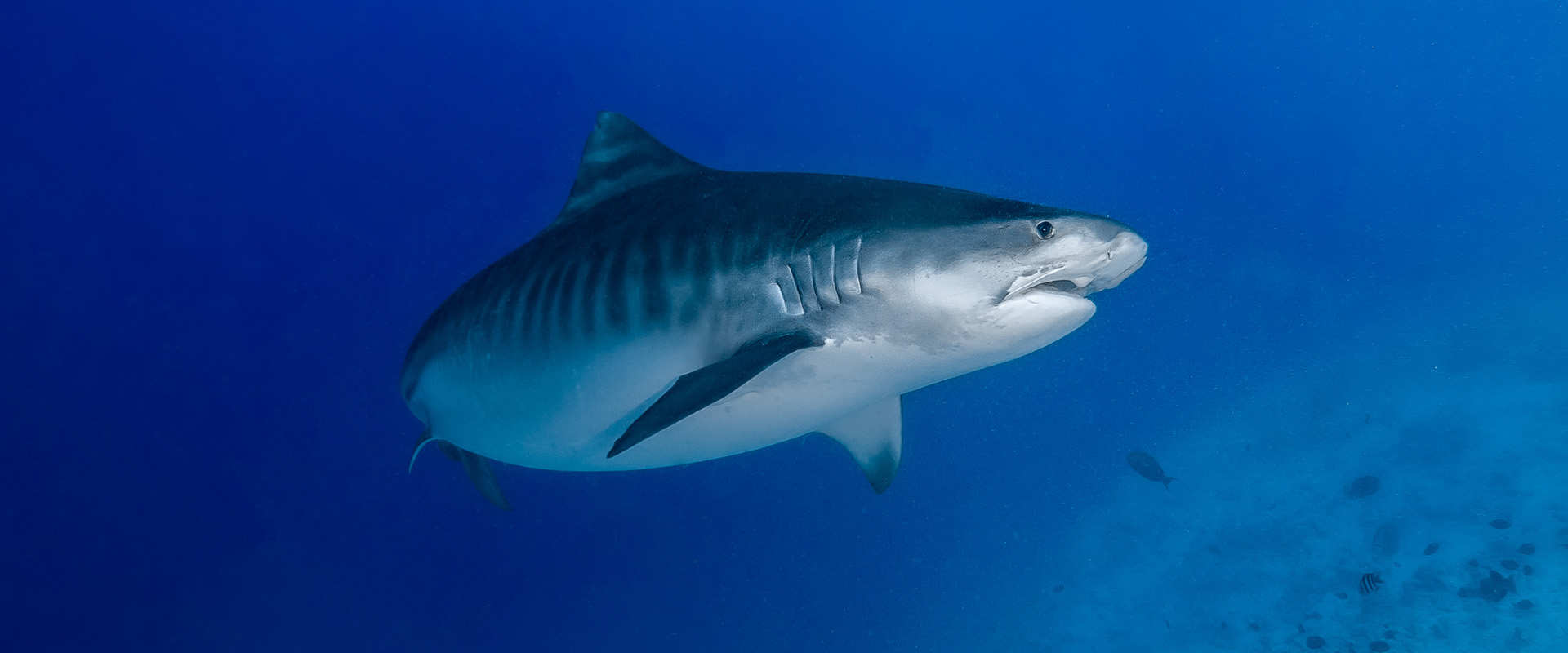
One of the most exhilarating experiences that await divers in Fuvahmulah is the chance to encounter the majestic tiger sharks that inhabit the surrounding waters. Fuvahmulah is renowned as one of the few places in the world where divers can witness these awe-inspiring creatures up close. The highlight of tiger shark diving in Fuvahmulah is the opportunity to see the breathtaking phenomenon known as the "tiger shark vortex." This mesmerizing spectacle occurs when multiple tiger sharks gather in large numbers to feed on migrating fish. It is an awe-inspiring sight that leaves a lasting impression on those fortunate enough to witness it.

Tiger Harbor

The harbor in Fuvahmulah was built in 2003, along with the fish market. Initially, fishermen would dispose of fish waste inside the harbor, attracting tiger sharks to where boats are parked. In 2017, the local council implemented regulations requiring fishermen to dispose of fish waste outside instead. Seizing the opportunity, a local dive center began tossing fish waste at the harbor entrance, leading to the congregation of numerous tiger sharks. This popular dive site, once known as Tiger Zoo, is now called Tiger Harbour. With depths ranging from 10 to 65 meters, divers can witness the stunning spectacle of tiger sharks ascending from the depths to the shallows of 10 meters. The site boasts sightings of over 15 tiger sharks at once, and Fuvahmulah offers year-round opportunities for tiger shark encounters.

Capturing Memories: Underwater Photography

Fuvahmulah's vibrant marine life and stunning underwater landscapes are paradises for underwater photographers. The opportunities for capturing breathtaking images are endless for seasoned professionals and enthusiastic beginners. Take the time to read up on the local species, how and where to find them so you can better practice mastering underwater photography techniques to document your Fuvahmulah diving adventures and take home truly unique mementos.

Best Time to Visit Fuvahmulah

Fuvahmulah's diving season is year-round, with each season offering different highlights. The best time to visit for liveaboard diving is during the dry northeast monsoon season, which typically runs from December to April. During this period, the waters are generally calm, visibility is excellent, and encounters with large pelagic species are more common. Before embarking on your Fuvahmulah liveaboard diving adventure, ensure you are well-prepared. Ensure your scuba diving certifications are up to date. Consider obtaining additional certifications, such as deep or drift diving, if you plan to explore the more challenging dive sites. Pack appropriate dive gear, including wetsuits or rash guards, masks, fins, and dive computers.

How to Get to Fuvahmulah

To embark on your journey to Fuvahmulah, there are several options. The most convenient way is to take a domestic flight from Malé International Airport to Fuvahmulah Airport, which takes approximately 1 hour. Several airlines operate daily flights. Upon arrival, you'll be greeted by the warm embrace of the island's tranquil atmosphere and the friendly locals who are always eager to share the wonders of their home.


Fuvahmulah Diving Reviews

  • Rating 9.1 out of 10
  • 9.1 Superb
  • Rating 9.2 out of 10
  • 9.2 Superb
  • rica P
  • Flag of United StatesUnited States

2 x Big blue. Saw Tiger sharks up close!

Diving Fuvahmulah in February on the Carpe Diem
  • Rating 8.0 out of 10
  • 8.0 Very good
  • Takeshi C
  • Flag of United StatesUnited States

Tiger sharks were great to see

Diving Fuvahmulah in February on the Carpe Vita
  • Rating 9.2 out of 10
  • 9.2 Superb
  • Monika T
  • Flag of GermanyGermany

The dive at the tigerwall was exciting and impressing.

Diving Fuvahmulah in March on the Top Class Cruising - Sachika
  • Rating 8.4 out of 10
  • 8.4 Very good
  • Ian B
  • Flag of United KingdomUnited Kingdom

Palagic central. We did 6 dives and lots count of the amount of tiger shark encounters we had.

Diving Fuvahmulah in March on the Spirit of Maldives


What to know about diving in Fuvahmulah

What is Fuvahmulah and why is it different from other Maldives destinations?

Fuvahmulah is a single, isolated coral island sitting directly on the equator in the Maldives' deep south, and unlike almost every other populated island in the country, it is not part of an atoll — its reef drops straight into open ocean just offshore. That deep-water access is what draws pelagic species, tiger sharks, thresher sharks, and oceanic manta rays, making it one of the best-known shark-diving destinations in the world.

What is diving like in Fuvahmulah?

Diving in Fuvahmulah means drifting along a steep outer reef slope in open ocean rather than inside a sheltered lagoon, with water around 77-86°F (25-30°C) and visibility typically 66-98 ft (20-30 m). Currents range from moderate to strong, and most signature encounters, tiger sharks, threshers, and hammerheads, happen in blue water beyond the reef edge, which is why local guides and small groups are standard practice.

What other shark species can you see diving in Fuvahmulah besides tiger sharks?

Beyond its resident tiger sharks, Fuvahmulah is one of the few places on earth with a predictable thresher shark cleaning station, with sightings most consistent from April to November at 39-49 ft (12-15 m). January to March brings large schools of scalloped hammerheads and silvertip sharks, and solitary hammerheads can turn up around the island at any time of year. As of 2026, the exact timing shifts year to year depending on conditions, so operators plan schedules around recent sightings.

Where do you see tiger sharks while diving in Fuvahmulah?

The dive site known as Tiger Zoo, just off the harbor, is the draw: tiger sharks gather there year-round, drawn by scraps discharged from the local fish market rather than by season or current, so sightings are close to guaranteed on any given day. Dives here are typically shallow and low-current compared to the atoll's other pelagic sites, which is part of why Fuvahmulah has become the world's most reliable place to dive with tiger sharks.

What else is there to do in Fuvahmulah besides diving?

Between dives, Fuvahmulah's main draws are its two large freshwater lakes, Bandaara Kilhi and Dhadimagi Kilhi, unusual for the Maldives, ringed by walking paths and wetland birdlife, plus a scenic sandy point at the island's southern tip, known as Thoondu. At about 2 sq mi (5 sq km), the island is large enough to explore by scooter, with a proper town feel that's rare on smaller Maldivian islands.

Are there dive centers based in Fuvahmulah?

Yes, several dedicated dive operators are based on the island year-round, running daily boat trips to the Tiger Zoo, thresher-cleaning stations, and seasonal hammerhead and manta sites. Because group sizes and dive schedules are built around current shark activity, it's worth booking with a local operator in advance, particularly during the busier January-May pelagic season.

How do you get to Fuvahmulah?

Fuvahmulah has its own domestic airport, built with a runway across part of the island, reachable by a scheduled flight of just over an hour from Malé, with multiple flights most days. As of 2026, there's no seaplane service this far south, so the domestic flight is the only realistic way in for most visitors.

Is Fuvahmulah part of an atoll?

No, Fuvahmulah is one of only two populated Maldivian islands that stand alone rather than sit within a ring-shaped atoll; the other is Addu, further south. It's classified as its own administrative unit, Gnaviyani, and its isolated position with deep water close to shore is exactly what makes it so attractive to sharks and other pelagic visitors.

Is diving in Fuvahmulah suitable for beginners?

Fuvahmulah's shark dives generally suit certified divers of most levels for shallower encounters like the Tiger Zoo, but the deeper pelagic sites, hammerhead schools, thresher cleaning stations, and blue-water drifts involve stronger currents and depths that favor advanced or experienced divers. As of 2026, most operators recommend at least an Advanced Open Water certification and solid buoyancy control before booking a full shark-diving itinerary.

We’re here to help, 24/7.

Connect with our expert travel consultants to plan your next trip.

  • Andrea Martinez
  • Josue Zarco
  • Farah Celada-Benito
  • Mylene Issartial
  • Nina Kapp
  • Oksana Kovaleva
  • Nicole Laughlin