Liveaboard.com

Subantarctic Islands Small Ship Cruises

Compare and book your trip online.

  • 100% Best Price Guarantee

Adventure Cruises in Subantarctic Islands

A Subantarctic Islands Cruise is a true exploration adventure. Cruises to the Subantarctic Islands, New Zealand, sail south into the great polar ocean around Antarctica. On arrival, you’ll see that your destination bursts with wildlife, much of which is endemic, meaning it exists in one place only, having evolved and thrived on that tiny island for eons. Species endemism in the Subantarctic Islands makes them the “Galapagos of the Southern Ocean.” In these wild, windy World Heritage sites, now protected from human impact by strict tourism guidelines, your camera lens will explode with penguins, seals, seabirds, whales, unique land birds, and dramatic vistas, which are truly a world apart.


Top things to do and see in the Subantarctic Islands

Macquarie Island - Macquarie may be the most famous Subantarctic Island visited by your New Zealand cruise. It owes its high ranking among visitors to the abundance of large, charismatic wildlife. Macquarie, like many of its sister islands, hosts an endemic species of penguin- in this case, Royal Penguins, which have long, yellow eyebrows. Your tour guide will likely draw your attention to the endemic Macquarie Island Shag (kingfisher) as well. Plus, the island hosts a colony of massive Elephant Seals (the larger of the two Elephant Seal species), King, Rockhopper, and Gentoo Penguins, multiple albatross species, Orcas, and Southern Right Whales.

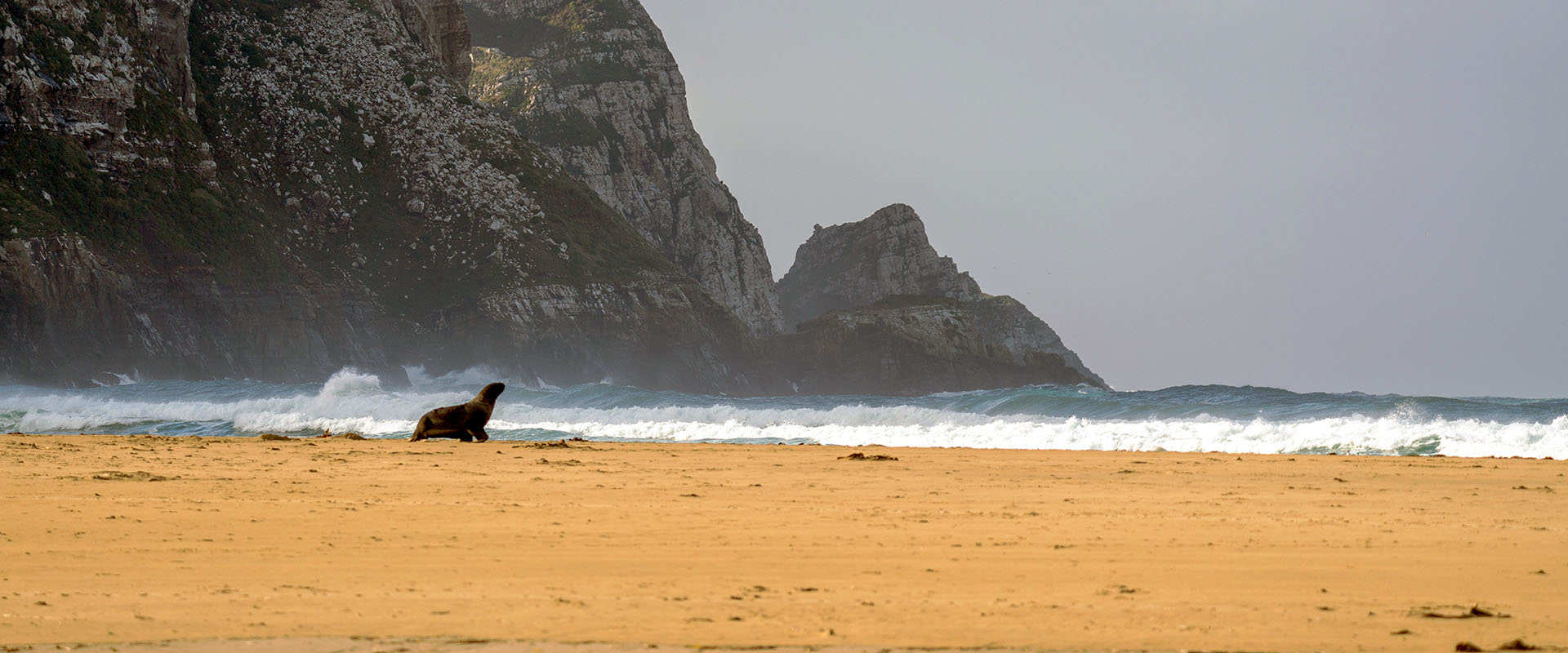
Auckland Islands - Humans seem to have failed every time they probe into Auckland for settlement, treasure, or sailing (the multiple shipwrecks throughout history attest to that), but other animals do just fine. Subantarctic Islands expedition cruises visit Auckland to see beaches strewn with rare New Zealand Sea Lions and windy skies teeming with birds. As you explore the islands on foot, you’ll get to see nesting Royal Albatross up close, as well as the Yellow-Eyed Penguin, rarest penguin species in the world. Endemic mega-herbs vegetation lends colors and strange shapes to the landscape, and regenerating Rata trees host parakeets, Tui, and Bellbird.

The Snares - No introduced mammal has ever touched this island group, which makes the Snares a pristine haven for endemic birdlife. In the past, sailors were wary of landing here because of the shallow reefs likely to trap (or ensnare) their boats, but nowadays, landings are forbidden by the government to protect local species. Therefore, it’s from your adventure cruise ship that you’ll observe the endemic Snares Crested Penguin, the rocky cliff faces with nesting Buller’s Albatross, the Snares Island Tomtit, and others. The Snares hold more species of nesting seabirds than the entire British Isles!

Campbell Island - A variety of land exploration options are available on this ancient, eroded volcano. Subantarctic Islands boat cruises landing on Campbell give visitors the chance to observe huge wildflowers with leaves half a meter long, some of which may be in bloom when you arrive. There’s a mountain with an incredible viewpoint, and an abandoned meteorological station. The local wildlife includes breeding Yellow-eyed Penguins, the critically endangered Campbell Teal (a flightless, duck-like bird long believed extinct), huge Giant Petrels, Southern Royal Albatross and the diminutive Subantarctic Snipe, whose call is wildly disproportionate to its size.

Bounty Islands and Antipodes Islands - The list of wildlife on the Bounty and Antipodes islands, off to the southeast of New Zealand’s southern tip, is astounding. Not all Subantarctic cruises visit here, but if you’re lucky enough to be on one that does, Bounty’s grim, rocky landscape will treat you to thousands of Salvins Albatross, Erect-Crested Penguins, the endemic Bounty Island Shag (rarest in the world), and plenty of large seabirds. Adventure cruises cannot land on the nearby Antipodes Islands, but from your ship you’ll still be able to spot endemic animals including the Antipodean Snipe, Antipodes Island Parakeet (an exceedingly rare creature), and the Antipodean Albatross.

Stewart Island - Just off of New Zealand’s southern tip lies Stewart Island, a paradise where more than seventy-five percent of the landmass is a protected nature reserve, and only two percent is inhabited by humans. Your Subantarctic Islands small ship cruise will have no problem finding untouched, sweeping beaches and verdant rainforests to explore. You will see dolphins, seabirds, landbirds, and the aurora australis (southern lights), but probably no other human soul.

Beach and Bush Walks - Walking through otherworldly habitats and seeing large and small wildlife up close is what makes the Subantarctic Islands cruise experience special. However, the New Zealand and Australian governments forbid landings on a few of the islands which have birds’ nests vulnerable to trampling, or other sensitive flora and fauna. Please understand that these regulations support conservation, and embrace the experience of wildlife-watching from your ship.

Top Tips for visiting the Subantarctic Islands on a cruise

  • Packing layers and outerwear is very important on New Zealand cruises to the Subantarctic Islands, as the weather here can be wet and windy, and you don’t want physical discomfort to prevent you from exploring outdoors, where there’s so much incredible flora and fauna to see!
  • Binoculars and a camera are also a must.

Best time to cruise the Subantarctic Islands

Plan ahead if you want to cruise the Subantarctic Islands, because the summer season is short. Subantarctic Islands expedition cruises in November, December or January are your only options. Stewart Island cruises, on the other hand, run in May.

Where do Subantarctic Islands cruises depart from?

New Zealand adventure cruises to the Subantarctic Islands and Stewart Island depart from the port of Bluff, a small town on the country’s southern tip. Bluff can be reached by car, bus, or shuttle from the local airport at Invercargill. Some Stewart Island cruises depart from Half Moon Bay on Stewart Island itself; to get here on your own, just take a public ferry to Stewart Island from Bluff.

To get to Invercargill, fly into Christchurch or Wellington. Both offer direct flights to Invercargill (Christchurch offers more). If the direct flight schedule doesn’t suit you, just opt for one of the many one-stop flights from either city. Queenstown also offers direct flights to Invercargill, but only flights from Australia are direct.

Book your next adventure cruise to New Zealand's Subantarctic Islands.


What to know about adventure cruising in Subantarctic Islands

Where can you see royal penguins in the wild?

Royal penguins breed nowhere on Earth but Macquarie Island and the neighboring Bishop and Clerk Islets, so a landing there is the only way to see them. The Hurd Point colony alone holds around 500,000 pairs, terraced up the slope behind the beach. Birds come ashore from late September, chicks hatch from late November, and the colony empties again by late February.

Where is Macquarie Island?

Macquarie sits at 54 degrees 38 minutes south in the Southern Ocean, roughly 930 miles (1,500 km) southeast of Tasmania and about halfway to Antarctica. It is a long, narrow spine of land some 22 miles (35 km) end to end and barely 3 miles (5 km) across. Politically, it belongs to Tasmania, though most ships reach it on New Zealand subantarctic itineraries sailing from Bluff.

Where are the Antipodes Islands?

They lie 535 miles (860 km) southeast of Stewart Island at 49 degrees 41 minutes south — an 8.1 sq mi (21 sq km) cluster of basalt with no harbor and nobody living on it. The name comes from sitting near the antipodal point to London; the true antipodal point lies just off the Cherbourg Peninsula in France. Half the world's erect-crested penguins breed here, and landings need a permit, so most visitors see the coast from a Zodiac.

Where do southern royal albatrosses nest?

Campbell Island is the stronghold, holding the great majority of the world's breeding pairs, with smaller colonies on Enderby, Adams, and Auckland Islands. Adults have a wingspan of about 10 ft (3 m), and the boardwalk up Col Lyall runs close enough to see birds sitting on open nests. The species is listed as Vulnerable, primarily due to longline fishing.

What are the Subantarctic Islands?

They are the scattered island groups between roughly 45 and 55 degrees south, in the ocean belt below the continents and north of the Antarctic Convergence. New Zealand's five groups — the Snares, Bounty, Antipodes, Auckland, and Campbell Islands — were inscribed as a UNESCO World Heritage site in 1998, with Australia's Macquarie Island listed separately in 1997. None has ever carried a permanent human population, which is why the wildlife here is so untroubled by people.

What is there to see on Enderby Island?

Enderby lies off the northeastern tip of Auckland Island and is the most-visited landing in the whole subantarctic. A boardwalk crosses from Sandy Bay, where New Zealand sea lions haul out to breed, through southern rata forest and fields of megaherbs to the cliffs on the far side. Cattle, rabbits, pigs and rats were cleared in 1994, and the recovery since has been dramatic.

What are the penguin barrels on Macquarie Island?

They are the rusting iron digesters left from the island's penguin oil industry, when Joseph Hatch held the lease between 1902 and 1920 and king and royal penguins were rendered down for oil. The remains still stand at Nuggets Point and Lusitania Bay, now ringed by the king penguin colony that outlasted the trade. Public outcry over the industry helped drive the island's protection.

What is Campbell Island like?

Campbell lies 410 miles (660 km) south of the South Island, a 44 sq mi (113 sq km) island almost cut in two by the fiord of Perseverance Harbor. It is famously grey: around 647 hours of sunshine a year, gusts over 60 mph (96 km/h) on at least 100 days, and a mean annual temperature near 44 degrees F (7 degrees C). Ships anchor in the harbor, and you can walk the Col Lyall boardwalk up to the albatross colonies.

What happened to the cats on Macquarie Island?

Around 2,500 feral cats were removed by June 2000, ending an annual toll on seabirds estimated at some 60,000 birds. Rabbits, rats and mice took longer: a campaign begun in 2007 finished in 2014, when the island was declared pest-free. A decade on, tussock and megaherb cover has grown back thickly enough to stabilize the old landslide scars.

Which penguins live on Macquarie Island?

Four species breed there — king, royal, gentoo, and rockhopper — and the royals are found nowhere else in the world. The king penguin colony at Lusitania Bay runs to the hundreds of thousands and is visible from the water even where landings are not permitted. Gentoo numbers have been falling in recent years for reasons not yet understood (as of 2026).

Does anyone live on Macquarie Island?

There is no permanent population, but the Australian Antarctic Division has run a research station on the northern isthmus continuously since 1948, staffed by roughly 20 to 40 expeditioners at a time. Visiting ships sometimes arrange a station visit, though that depends entirely on the weather and on the station's own program. Everything beyond the isthmus is an uninhabited nature reserve.

Which islands make up New Zealand's subantarctic group?

Five groups. The Snares are closest, about 125 miles (200 km) south of the South Island; the Auckland Islands are the largest and host the usual landing sites; Campbell lies furthest south at 52 degrees south; and the Bounty and Antipodes Islands lie to the east. Most voyages from Bluff combine three or four of them, often adding Australia's Macquarie Island on the same run.

Can you visit Macquarie Island?

Yes, but only aboard a permitted expedition ship - there is no airstrip and no independent travel. Tasmania Parks and Wildlife controls access, numbers ashore are capped, and whether you land at all depends on the swell on the day. Only a handful of voyages call each season, sailing from Bluff in New Zealand or from Hobart (as of 2026).

Can you see killer whales in the Subantarctic Islands?

Yes, and these waters hold one of the ocean's oddities: the type D killer whale, a blunt-headed form with a tiny white eyepatch. It was known only from a mass stranding on a New Zealand beach in 1955 until researchers filmed and sampled living animals in 2019. Sightings are luck rather than scheduled, and the open crossings between island groups are where they tend to appear.

Can you land on the Snares Islands?

No — the Snares are closed to visitors except by research permit, so ships cruise the coastline by Zodiac instead. Little is lost by it: the cliffs are lined with Snares penguins found nowhere else, and up to three million sooty shearwaters breed on North East Island, darkening the sky when they return at dusk between November and April. The whole group covers just 1.3 sq mi (3.4 sq km).

We’re here to help, 24/7.

Connect with our expert travel consultants to plan your next trip.

  • Juliane Ball
  • Ester Canali
  • Oksana Kovaleva
  • Josue Zarco
  • Andrea Martinez
  • Farah Celada-Benito
  • Nina Kapp