Liveaboard.com

Saronic Islands Small Ship Cruises

Compare and book your trip online.

  • 100% Best Price Guarantee

Adventure Cruises in Saronic Islands

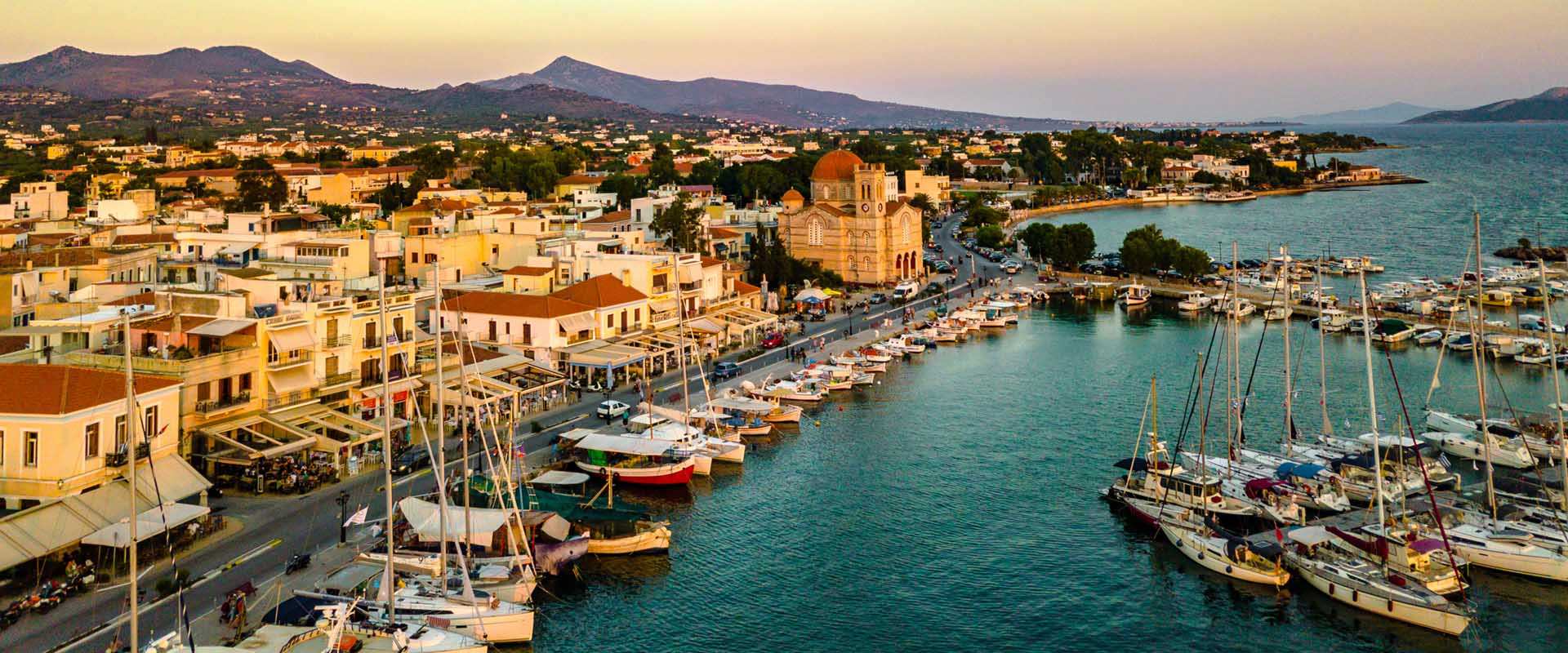
Embarking on a small ship cruise around the Saronic Islands presents an adventure, blending the tranquility of secluded bays with the allure of ancient history. These cruises offer the unique opportunity to explore the hidden gems of Greece away from the bustling crowds, allowing you to immerse yourself in the local culture, savor traditional Greek cuisine, and indulge in the natural beauty of islands such as Hydra, Spetses, and Aegina. The charm of the Saronic Gulf is its accessibility and diverse experiences, making it an ideal destination for adventure cruisers seeking a blend of relaxation, exploration, and adventure.

When is the Best Time to Cruise the Saronic Islands

The best time to embark on a cruise around the Saronic Islands is from late spring to early autumn, particularly between May and September. The weather is most favorable during these months, with warm, sunny days and mild evenings, perfect for enjoying all the islands' outdoor activities. This period also sees the waters at their most inviting, ideal for swimming, snorkeling, and diving. While the summer can be busy, cruising on a small ship offers the advantage of accessing quieter, more secluded spots.

What Types of Activities are Available in the Saronic Islands

The Saronic Islands are a hotspot for various activities, catering to both the adventurous soul and those seeking relaxation. From kayaking in the crystal-clear waters of Hydra to exploring the historical sites of Epidaurus and the Temple of Aphaia on Aegina, there is something for everyone. Hiking enthusiasts will enjoy the trails on Poros, offering breathtaking views of the Saronic Gulf. To taste local life, visit the vibrant markets and quaint cafes in Spetses. The islands also offer ample opportunities for snorkeling and diving, revealing an underwater world rich in marine life.

What Can Be Seen in the Saronic Islands

The Saronic Islands are rich in biodiversity, history, and culture. Visitors can marvel at the ancient ruins scattered across the islands, including the well-preserved amphitheater of Epidaurus and the sanctuaries of Aegina. The waters around these islands are home to a fascinating array of marine life, including dolphins and Mediterranean monk seals, offering a thrilling experience for wildlife enthusiasts. The islands' flora is equally captivating, with landscapes covered in aromatic herbs and colorful wildflowers, providing a serene backdrop to every adventure.

Exploring the Neighboring Areas from the Saronic Islands

A small ship cruise around the Saronic Islands also serves as a gateway to exploring neighboring areas, each with its unique charm. Notable destinations include:

  • Nafplio: Often regarded as one of Greece's most picturesque cities, Nafplio offers a captivating mix of medieval fortresses, neoclassical buildings, and stunning seaside views.
  • Corinth Canal: This engineering marvel, cutting through the narrow Isthmus of Corinth, provides a unique navigation experience for small ships.
  • Mystras: A UNESCO World Heritage site near Sparta that features the ruins of an ancient city and a castle perched on Mount Taygetos, offering a glimpse into Byzantine life.
  • Monemvasia: A medieval fortress town located on a small island off the east coast of the Peloponnese, known as the "Gibraltar of the East."
  • Hydra: Though part of the Saronic Islands, Hydra deserves special mention for its vehicle-free streets, preserved 18th-century architecture, and vibrant art scene.



What to know about adventure cruising in Saronic Islands

What is Hydra known for?

For having no cars — a preservation order dating from the 1950s bans all wheeled vehicles, including motorbikes and bicycles, with exemptions only for a fire truck, an ambulance and the refuse lorry. Everything else moves by mule, on foot or by water taxi, and several hundred working donkeys still haul luggage and building material up the stone lanes. The island is 52 sq km (20 sq mi) with around 2,000 residents, its harbor ringed by the stone mansions of the shipping families who sent some 150 vessels to the Greek War of Independence in 1821.

What is Aegina known for?

Pistachios and a temple. Fistiki Aeginis has held protected designation of origin status since 1996; the harvest occurs around mid-September, and the island hosts a Fistiki Fest at the port to mark the occasion. Above the northeast coast stands the Temple of Aphaia, built around 500 BC and one of the best-preserved Doric temples in Greece. Aegina was also briefly the seat of the modern Greek state — the provisional government sat here from 1826, and Kapodistrias was sworn in on the island in 1828, before the capital moved to Nafplio in 1829.

What is Spetses like?

Spetses is the most elegant of the Saronic islands — a pine-covered 27 sq km (10 sq mi) of neoclassical mansions, horse-drawn carriages and a shipbuilding tradition still visible in the old boatyards at the Palio Limani. Cars are banned from the town between Agia Marina and the Anargyrios School, so taxis, carriages, scooters and water taxis do the work. The Poseidonion Grand Hotel, opened in 1914 on a Belle Époque Riviera model, set the island's tone, and the Armata festival each September re-enacts the 1822 naval victory by burning an Ottoman flagship in the harbor.

What is Poros like?

Poros is the intimate one — two joined land masses covering about 31 sq km (12 sq mi), separated from the Peloponnese by a channel barely 200 m (660 ft) wide, so the mainland village of Galatas sits close enough to read across the water. The town rises in tiers of tiled roofs to a clock tower of 1927, and a ten-minute crossing puts you in the lemon groves of the Lemonodasos on the mainland shore. On the wooded northern half lie the foundations of a Temple of Poseidon, dating to around 520 BC, measuring 27.4 by 14.4 m (90 by 47 ft), where Demosthenes took poison in 322 BC.

What are the Saronic Islands?

The islands of the Saronic Gulf between Attica and the Peloponnese — Salamis, Aegina, Agistri, and Poros proper, with Hydra and Spetses just beyond — are strictly the Argo-Saronic. They are the closest islands to Athens, all reachable from Piraeus in under two hours, and none of them has an airport. That combination — short crossings, sheltered water, no flights — is why the Saronic is the standard ground for weekend charters and one-day cruises out of the capital.

Where is the Saronic Gulf?

The Saronic Gulf is the arm of the Aegean between Attica and the eastern Peloponnese, with Piraeus at its head and the Corinth Canal at its northwestern corner. Athens sits on its northern shore, so the islands scattered across it — Aegina, Agistri, Poros, then Hydra and Spetses further southwest — are effectively the city's own archipelago. Summer winds here run Force 2–4, noticeably milder than the Cyclades, and rainfall is around 500 mm (20 in) a year, with essentially none from June to August.

What is there to do on Hydra?

Walk, swim, and look at things, which is the point of the island. The waterfront mansions of the Tombazis, Koundouriotis and Voulgaris families are open as museums; the coast path leads west to Kamini and Vlychos and east to Mandraki, and the monastery of Profitis Ilias is a steep hour's climb above the town. Donkey rides, water taxis to the swimming rocks, and the Leonard Cohen pilgrimage — he bought a house here in 1960 — fill most of the rest of a day call.

What is a good sailing itinerary for the Saronic Islands?

A week from Athens typically runs Alimos or Zea to Aegina, then Poros, Hydra and Spetses, with the Peloponnesian ports of Ermioni, Porto Cheli and Epidaurus folded in on the way back. Legs are short — mostly 10–20 nautical miles (18–37 km) — and the gulf is sheltered enough that a Force 2–4 afternoon breeze is the normal picture rather than the Aegean meltemi. It is the reason first-time charterers and families are steered here rather than to the Cyclades.

How do you get from Athens to Spetses?

High-speed catamarans from Piraeus take about 1 hour 35 minutes to 2 hours 20 minutes, with several sailings a day in season; fares range from roughly €25 to €40 as of 2026. There is no conventional slow ferry and no car ferry from Piraeus, so you cannot take a vehicle — which suits an island that bans cars from town anyway. The alternative is to drive to Kosta on the Peloponnese and take the ten-minute water taxi across, which runs around the clock.

What are the beaches like on Hydra?

Small, rocky, and reached on foot or by water taxi, since no road serves them. Vlychos and Kamini lie a 20- to 40-minute coastal walk west of town; Mandraki is a short hop east; and Bisti and Agios Nikolaos, at the far western end, are boat-only pine-backed coves. Expect pebble and slab rather than sand, and water that runs about 26°C (79°F) in August and still 23°C (73°F) in October.

Can you cruise the Saronic Islands from Athens?

Yes — the classic one-day cruise from Athens, calling at Hydra, Poros, and Aegina, still runs daily in season, typically from around €98, including a buffet lunch, as of 2026. Longer options run three- and four-night small-ship loops that add the Peloponnesian coast and Epidaurus, and the gulf is a standard week for bareboat and skippered charters out of Alimos. Because Piraeus is the hub, the Saronic is the easiest Greek cruising ground to reach on a short trip.

What is there to do on Aegina?

Climb to the Temple of Aphaia, standing since about 500 BC on a pine-covered ridge with views over Attica; wander the Byzantine ghost town of Paleochora and its scattered chapels; and swim at Agia Marina or Marathonas. The port town has the ruined Temple of Apollo and a fish market that has not changed much in decades. Buy pistachios from the quayside stalls — the September harvest is the island's calendar in one crop.

Do the Saronic Islands have airports?

None of them — not Aegina, Agistri, Poros, Hydra, Spetses or Salamis. Every arrival is by sea, from Piraeus or from the Peloponnesian ports of Kosta, Galatas and Metochi, and the crossings are short enough that it hardly matters: Aegina in about 40 minutes by fast ferry, Poros in an hour, Hydra in just over an hour. Athens International Airport is roughly 50 km (31 mi) from Piraeus, about an hour by metro or road.

How do you get to Aegina?

Aegina is the closest of the group — about 40 minutes from Piraeus by high-speed catamaran, or 40 minutes to 1 hour 25 by conventional ferry, with sailings roughly hourly year-round. Fares run about €5–€10 on the slow boats and around €20 on the fast ones as of 2026, and the conventional ferries take cars. Agistri is a further ten minutes on, which makes the two easy to combine in a day.

Why are there no cars on Hydra?

A preservation order from the 1950s protects Hydra as a listed traditional settlement and bans wheeled vehicles outright — cars, motorbikes, quad bikes, and even bicycles — and requires buildings to follow methods and styles from around 1800. Mules, donkeys and horses do the hauling, water taxis do the rest, and a handful of licensed municipal vehicles cover emergencies and refuse. Enforcement tightened in May 2025, when the government set up a public online register of all licensed vehicles on Hydra and hotlines to report illegal ones.

We’re here to help, 24/7.

Connect with our expert travel consultants to plan your next trip.

  • Oksana Kovaleva
  • Nicole Laughlin
  • Juliane Ball
  • Farah Celada-Benito
  • Josue Zarco
  • Andrea Martinez
  • Ester Canali