Liveaboard.com

Fernandina Island Adventure Cruises

Our guests rated adventure cruises in Fernandina Island as 9.3

  • 100% Best Price Guarantee

Adventure Cruises in Fernandina Island

Fernandina Island Cruises are rich with adventure activities and beautiful scenery. Fernandina is the youngest and westernmost island in the island chain. It is 30,000 years old and still forming from recent volcanic eruptions. The landing at the island's only visitor site, Punta Espinosa, is dry and amid a mangrove forest. Fernandina's geography is made up of a central volcano (the youngest in the world) and a variety of parasitic cones called calderas. Extensive lava fields cover its surface with the exception of a few areas called kipunkas, where vegetation still grows.

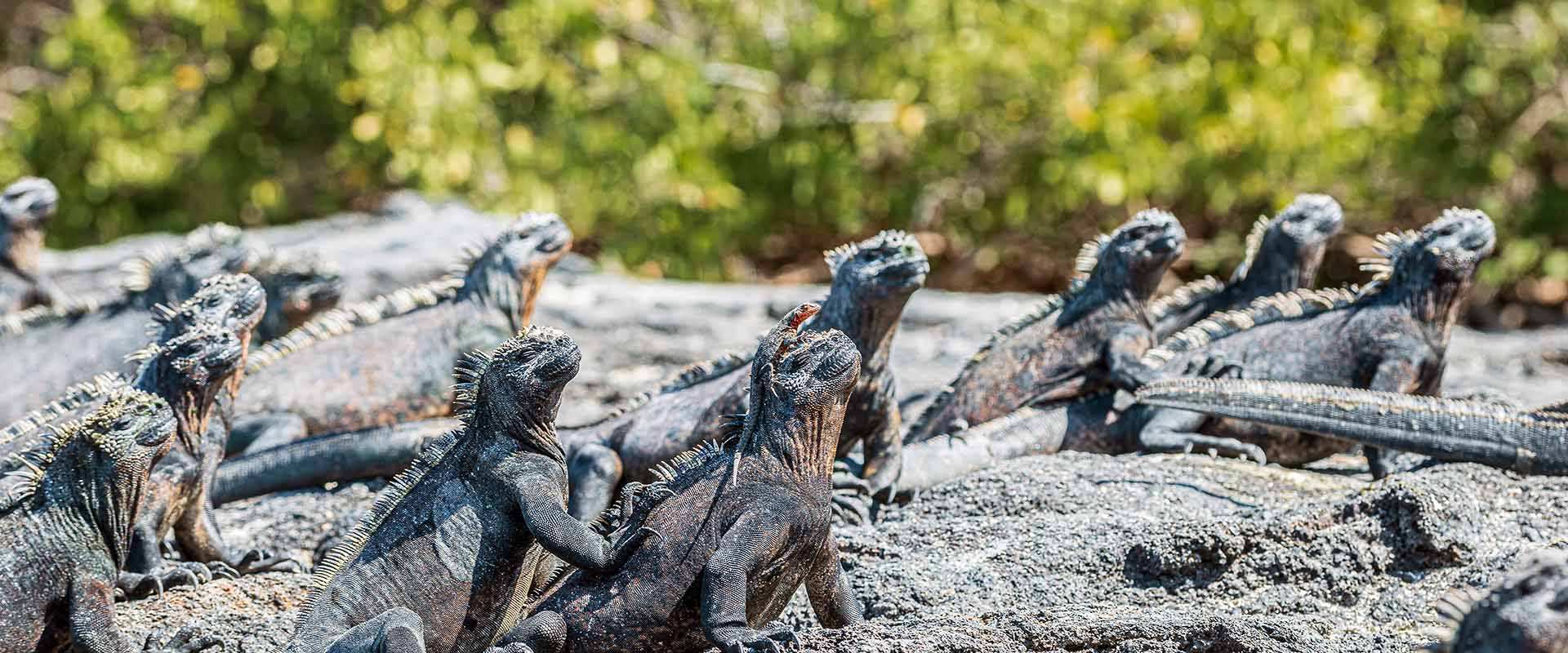
Your adventure cruise to Galapagos Islands archipelago has some special Fernandina Island wildlife encounters in store. There are no invasive species on the island, making it one of the most pristine ecosystems in the world. As you leave the boat at the port, you’ll immediately see iguanas sunning themselves, feeding on seaweed and sea lions, and resting on the beach. Penguins, crabs, heron and waterfowl, and sea turtles are other likely encounters.


Top things to do & see at Fernandina Island

Punta Espinosa is a wonderful welcome as we make land. You will soak in the volcanic landscape as Red and turquoise-blue zayapas (Sally lightfoot) crabs dash over its surface. This is an excellent place to snorkel.

You can't miss the La Cumbre volcano, which gave birth to the island. Seven eruptions have been recorded since 1968. Some hiking and photos are certainly necessary.

Keep the camera out for the colony of flightless cormorants. They’re evolution in action. They evolved heavier bodies and stronger legs to adapt to water conditions since most of their food comes from the life-giving sea. They’re present all year, but their breeding season is spring.

One of the island's highlights is the black lava that flows further inland and opens into a lagoon. It's a popular spot to see Galapagos hawks surveying activity from above. The hiking and Fernandina Island wildlife encounters here are guest favorites.

Top Tips for Fernandina Island

  • Pack sensible shoes for hiking over the lava formations and a camera to capture your moments with the landscape and wildlife. A waterproof sleeve or cover for your mobile phone is another great idea, especially if it doubles as your camera.
  • You can explore the lava fields in the water at Punta Espinosa, so snorkeling gear is in order. You wouldn’t visit Galapagos without some.
  • We recommend that guests also bring sunscreen, plenty of water on land, and a hat to shield them from the sun in the dry season.

Best time to cruise Fernandina Island

You must plan ahead to choose the best time to visit Fernandina Island for your favorite adventure activity. Understanding the dry and warm seasons will help you get the most out of your time there.

Taking a small ship cruise to Fernandina Island in the dry season covers the months of July through December. The weather is favorable for hiking in the warm season, but you can get quality hiking no matter what time you visit, thanks to the easy-going weather in the Galapagos. Snorkeling is best between June and November when the water is crystal clear and warm.

Birdwatchers or those looking for a Fernandina Island wildlife encounter should plan to travel in the spring when the birds' mating seasons are underway. If you can't travel until later in the year, rest assured there is plenty of wildlife to see on Fernandina Island year-round. Like the famous penguins, the lava lizards and iguanas will always be around.

Where do Fernandina Island cruises depart from?

Before boarding the yacht, guests will land in Ecuador at Quito, the capital, or Guayaquil, which is at sea level on the coast.

After landing in Ecuador, you'll need a domestic flight to Baltra Island unless your cruise itinerary tells you otherwise. Currently, most of our small ship cruises in the Galapagos leave from Baltra. The flight should last a little over two hours.

Book your next adventure cruise to Fernandina Island, Galapagos, today.


Fernandina Island Adventure cruise reviews

  • Rating 9.3 out of 10
  • 9.3 Superb
  • Rating 10.0 out of 10
  • 10.0 Exceptional
  • Rae S
  • Flag of United StatesUnited States

Absolute paradise. The west side of Isabela is so pristine and scenic!

Cruising Fernandina Island in February on the Solaris
  • Rating 9.6 out of 10
  • 9.6 Exceptional
  • Nina Q
  • Flag of United StatesUnited States

Unbelievable. Frolicking baby sea lions and myriads of marine iguanas. Our favorite island.

Cruising Fernandina Island in November on the Galapagos Angel
  • Rating 8.8 out of 10
  • 8.8 Fabulous
  • Nora F
  • Flag of United StatesUnited States

Walking on the lava was sometimes tricky and took a lot of balance to keep from falling. That said, the walk was worth the extra time it took to walk slowly through the lava fields. The iguana were interesting as were the colorful crabs.

Cruising Fernandina Island in October on the Golondrina
  • Rating 10.0 out of 10
  • 10.0 Exceptional
  • Dawn M
  • Flag of United StatesUnited States

Fun, informative, and rewarding! There was always another new creature to see, with every dive!

Cruising Fernandina Island in October on the EcoGalaxy


What to know about adventure cruising in Fernandina Island

Where is Fernandina Island?

Fernandina is the westernmost and youngest of the major Galapagos islands, sitting just west of Isabela across the narrow Bolívar Channel. Its central shield volcano, La Cumbre, rises to roughly 4,902 ft (1,494 m) and is one of the most active in the world.

Which natural process created the Galapagos Islands?

Volcanic activity — specifically a hotspot under the Pacific Plate that has been pushing magma up through the crust for at least 20 million years. Fernandina is the textbook example: a single massive shield volcano that has built up the entire island from the seafloor 4,000 ft (1,200 m) below.

How were the Galapagos Islands formed in detail?

The Nazca plate drifts southeast over a fixed mantle plume at roughly 2 inches (5 cm) per year, so eruptions build new islands in the west while older eastern ones erode. Fernandina sits directly over the current hotspot, which is why it's both the youngest island and the most volcanically active.

Are the Galapagos Islands volcanic in origin?

Entirely — every island in the chain was built by undersea eruptions. Fernandina is the most active example, with five major eruptions in the past two decades, and is the only island where you can sometimes see fresh lava flows from a cruise ship's deck.

How many Galapagos Islands are still forming?

Five of the western islands sit over the active volcanic hotspot and are still growing: Fernandina,Isabela, Pinta, Marchena, and Santiago. Fernandina is the youngest and most volcanically active — La Cumbre has erupted at least 25 times since records began in the 1800s.

How big are the Galapagos Islands?

The archipelago covers about 3,040 sq mi (7,880 sq km) of land across 13 main islands and dozens of smaller islets and rocks. Isabela is the largest at 1,792 sq mi (4,640 sq km), and Fernandina ranks third at about 248 sq mi (642 sq km).

When was the last eruption in the Galapagos Islands?

La Cumbre on Fernandina erupted most recently in March 2024 with lava flows reaching the southeast coast. Wolf Volcano in the northern part of Isabela also erupted in 2022. Both events were closely monitored by the Galapagos National Park.

Why are the Galapagos Islands important to science?

Beyond Darwin, the islands remain one of the world's premier natural laboratories for studying evolution in real time — including ongoing finch beak research and volcanic succession ecology on Fernandina. Roughly 25% of the marine species and 30% of plants are found nowhere else.

How are organisms protected on Fernandina?

Fernandina is one of the most pristine islands in the world — no introduced mammals have ever established themselves. Visitor numbers are tightly controlled; only one site (Punta Espinoza) is open to landings, and everyone must scrub their boots before disembarking to prevent the transfer of seeds and pests.

Which Galapagos islands have flightless cormorants?

Flightless cormorants are found only on Fernandina and the western coast of Isabela — roughly 1,500 birds total. Punta Espinoza on Fernandina is the most reliable spot to see them nesting alongside marine iguanas and Galápagos penguins.

We’re here to help, 24/7.

Connect with our expert travel consultants to plan your next trip.

  • Nina Kapp
  • Oksana Kovaleva
  • Ester Canali
  • Mylene Issartial
  • Josue Zarco
  • Juliane Ball
  • Andrea Martinez