Arctic Cruises - Experience the Northern Lights
The deck is quiet except for the soft crackle of ice brushing the hull. Breath hangs in the air like smoke as passengers tilt their faces toward the sky. Above them, green light unfurls in slow, silent ribbons, rippling across a velvet-black horizon. Stars blink through gaps in the glow, and the sea mirrors the spectacle in fractured reflections between drifting floes. On an Arctic Cruise, night is not an absence of light, but a theater of it — a place where the sky performs, and the earth stands still to watch.
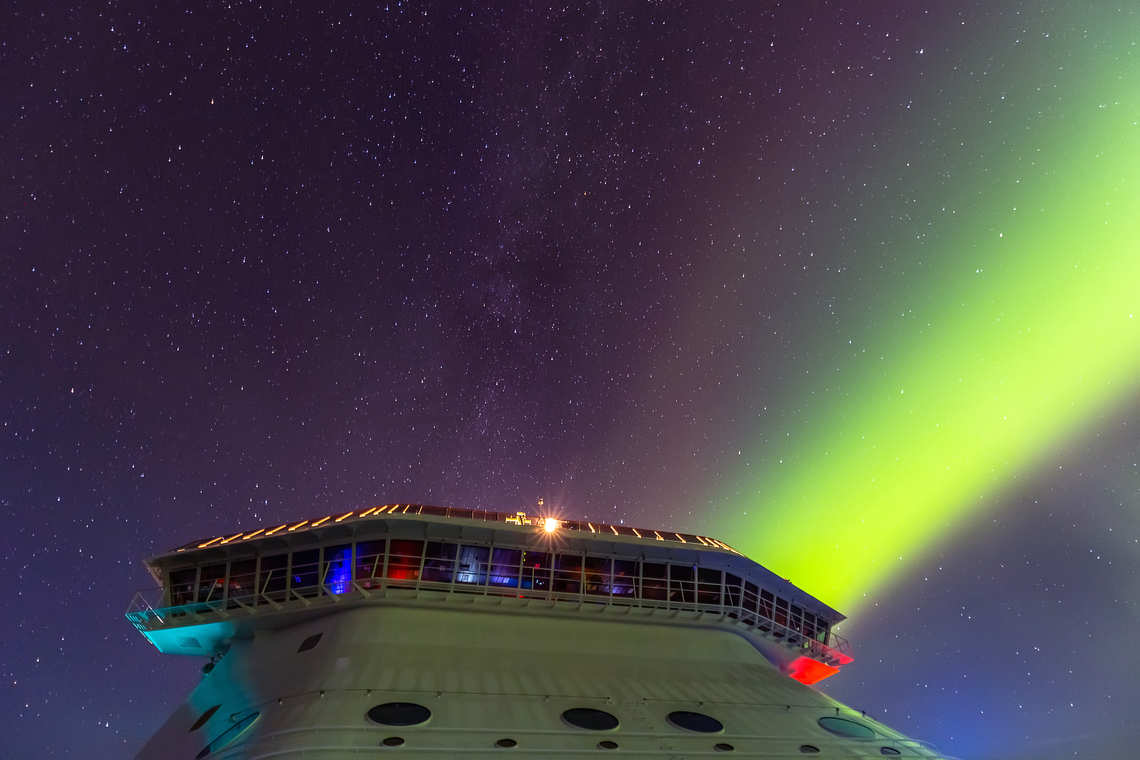
Far from city glare and crowded latitudes, the high north offers one of the most intimate encounters with the Aurora Borealis, better known as the Northern Lights. Here, in the vast polar regions near Svalbard and the icy coasts of Alaska, travelers find themselves suspended between sea, ice, and sky. The experience is at once scientific and spiritual; charged particles dancing along magnetic lines, translated by human eyes into wonder.
What Makes the Aurora Borealis So Special
The Northern Lights are born from a cosmic exchange. Solar winds — streams of charged particles from the sun — collide with Earth’s magnetic field, funneling energy toward the poles. There, high in the atmosphere, atoms of oxygen and nitrogen ignite in shimmering color. Green dominates, but pink, violet, and red sometimes streak the sky in rarer displays.
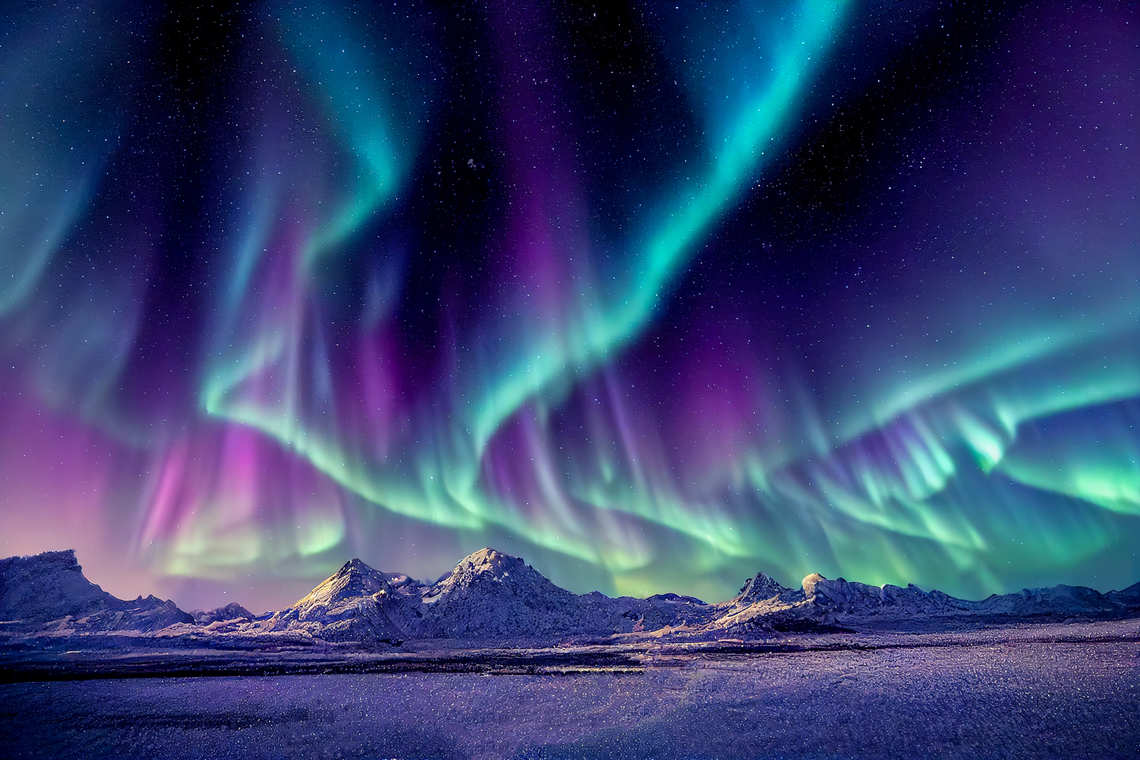
Yet science explains only the mechanism, not the feeling. To witness the Aurora Borealis from the deck of a ship surrounded by silence and snow is to feel small in the best possible way. The lights do not roar or crackle; they drift, pulse, and dissolve like living brushstrokes. Time loosens its grip. Minutes stretch. Conversations fall away.
For centuries, Arctic cultures have woven stories around these lights. Some Inuit legends describe them as spirits playing games in the sky. In parts of Scandinavia, folklore once warned people not to whistle at the aurora for fear of attracting its attention. These interpretations speak to the same awe modern travelers feel — a sense that the sky is not empty but alive.
Unlike a land-based aurora hunt, an Arctic Cruise adds movement to the experience. Ships can reposition under clearer skies, navigating away from cloud cover. The ocean becomes both foreground and mirror, doubling the spectacle.
The Landscapes and Seascapes That Define the Journey
An Arctic voyage unfolds through a world sculpted by ice. Jagged peaks rise straight from the sea, their slopes etched with glaciers that creak and calve into turquoise water. Fjords carve deep into the land, sheltering still coves where reflections blur the boundary between rock and sky.
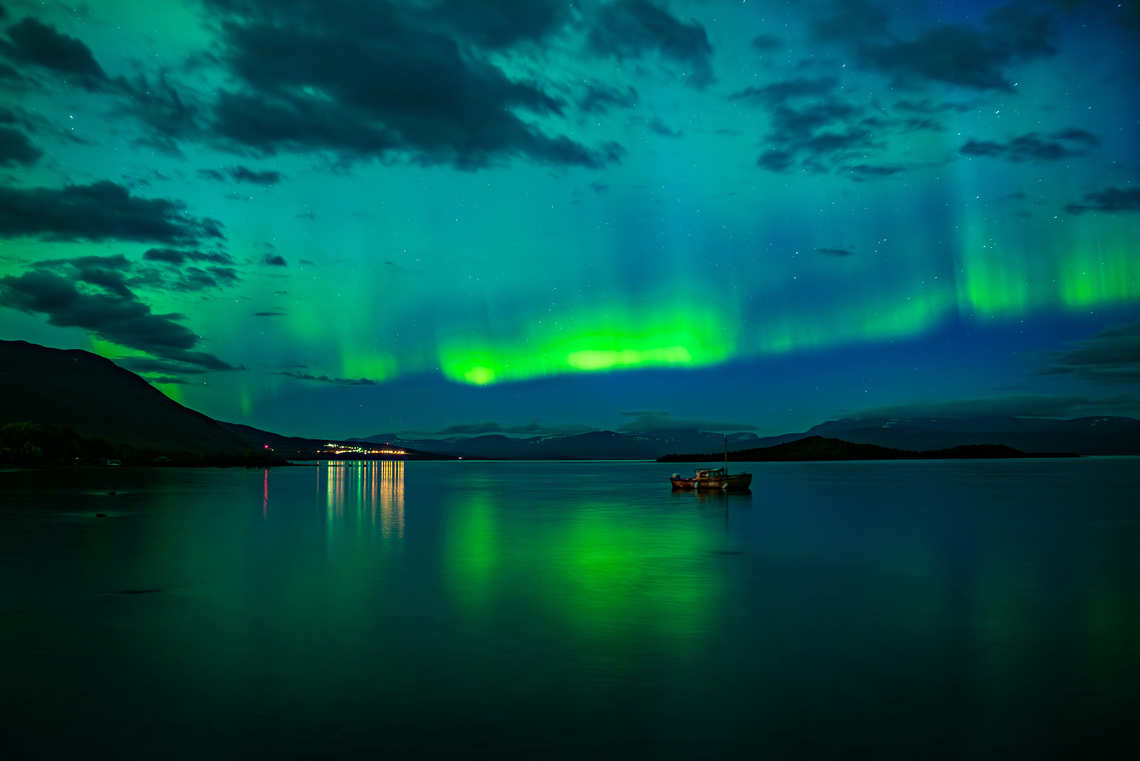
In Spitsbergen, the largest island of Svalbard, mountains stand like frozen waves. Snowfields roll down to the shoreline, and tidewater glaciers spill icebergs into narrow inlets. The palette is spare — whites, blues, slate grays — yet constantly shifting with light and weather.
Wildlife animates this austere stage. Seabirds wheel over cliffs in summer, while winter brings a quieter cast: Arctic foxes padding across snow, seals surfacing through breathing holes, and the occasional polar bear roaming sea ice in search of prey. Whales exhale plumes into the cold air, their dark backs briefly breaking the mirrored surface.

The sea itself is a character. Sometimes glassy and black beneath the aurora, sometimes churned into steel-colored waves, it carries the ship through a mosaic of pack ice, open leads, and drifting floes. Each day reveals a different composition, shaped by wind, temperature, and tide.
A Day in the Life
Morning begins with a soft knock or a gentle announcement: wildlife sighted off the bow, or light breaking over a glacier face. Guests gather in the lounge, sipping coffee, eyes scanning the horizon through wide windows. The air smells faintly of salt and wool.

After breakfast, small expedition boats ferry travelers ashore. Boots crunch over snow or gravel beaches as guides point out animal tracks, ancient whalebone remains, or delicate frost crystals clinging to rock. The cold sharpens the senses. Every sound — a distant bird call, the crack of shifting ice — feels amplified.
Afternoons might bring a slow cruise through a fjord, the ship idling beneath cliffs streaked with ice. Photographers cluster on deck, adjusting lenses as light filters through low clouds. Inside, naturalists offer talks on glaciology, marine ecology, or the science behind the Northern Lights, grounding the day’s beauty in a deeper understanding.
Dinner is warm and unhurried. Conversation flows easily among strangers who now share the same astonishment. Outside, darkness returns early. Cameras are set, tripods ready. When the call finally comes — “Aurora visible off the port side” — people move quickly but quietly, stepping into the cold to watch the sky ignite once more.
The Stories Behind the Experience
Though the Arctic can feel empty, it is not unpeopled. Indigenous communities across the circumpolar north have adapted to these conditions for millennia. In Alaska, Inuit and Iñupiat traditions reflect deep knowledge of sea ice, animal behavior, and seasonal rhythms. Survival here has always depended on reading subtle signs in weather and landscape.

Explorers and scientists followed later, drawn by curiosity and ambition. The history of polar exploration is etched into place names and abandoned outposts scattered along remote coasts. Weathered huts and rusted equipment remain as reminders of both triumph and hardship in a region that tests human limits.
Modern Arctic cruises often include visits to small research stations or historic sites, where guides share stories of early expeditions and ongoing climate studies. Travelers learn how scientists monitor glacial retreat, sea-ice thickness, and shifting wildlife patterns — data that help the world understand broader environmental change.
These encounters add a human layer to the scenery. The Arctic is not just a backdrop for spectacle; it is a lived-in, studied, and storied place.
Who Will Love This Experience Most
An Arctic Cruise appeals to travelers who value immersion over itinerary. Photographers find endless subjects in the interplay of light, ice, and sky, especially when the Northern Lights unfurl above a still sea. Wildlife enthusiasts are drawn by the possibility of spotting whales, seals, and polar-adapted birds in their natural habitat.
Curious minds — those who enjoy lectures, field notes, and conversations with scientists — thrive in this environment. The journey rewards patience and attentiveness rather than a rush from landmark to landmark. Even seasoned travelers often find themselves surprised by how deeply the Arctic quiet settles in.

Comfort exists, but it is secondary to experience. Cabins are warm, meals hearty, but the true luxury is access: standing on deck at midnight under an aurora, or walking across a tundra plain with only wind for company.
When to Experience It at Its Best
The prime season for witnessing the Aurora Borealis on an Arctic Cruise falls between late autumn and early spring, when nights are long and dark. In places like Svalbard, the polar night — when the sun does not rise for weeks — creates extended windows for aurora viewing.

| Months | Daylight Conditions | Temperature | Sea & Ice | Wildlife Activity | Aurora Visibility |
|---|---|---|---|---|---|
| Dec – Feb | Polar night or very limited twilight; long, dark days | -20°C to -5°C (-4°F to 23°F) | Extensive sea ice, frozen coastlines, deep snow cover | Polar bears roam sea ice, Arctic fox is active, and fewer seabirds | Very Common – Best time for frequent, vivid Northern Lights |
| Mar – May | Rapidly lengthening days; a mix of daylight and darkness | -10°C to 5°C (14°F to 41°F) | Ice begins breaking up; fjords start opening | Migratory birds return, seals and whales are more active | Good to Moderate – Still strong aurora season, especially early spring |
| Jun – Aug | Midnight sun; 24-hour daylight in the high Arctic | 0°C to 10°C (32°F to 50°F) | Minimal sea ice; open water cruising at its easiest | Peak bird colonies, whales feeding, tundra blooms | Very Rare – Sky too bright to see the Aurora Borealis |
| Sep – Nov | Nights return; daylight steadily decreases | -5°C to 5°C (23°F to 41°F) | New sea ice forming; dramatic light and stormy seas possible | Whales are still present, and birds are migrating south | Likely – Excellent aurora viewing as darkness returns |
Clear skies are essential. Cold, stable weather often brings the best visibility, though conditions can shift quickly. Solar activity also plays a role; stronger geomagnetic storms can produce brighter, more dynamic displays visible even at lower latitudes.

Wildlife patterns change with the seasons. Winter emphasizes stark landscapes and the dance of the Northern Lights, while shoulder seasons may offer a blend of aurora sightings and increased marine life activity. Each period has its own rhythm, shaped by light, temperature, and ice.
Responsible Travel Matters Here
The Arctic is both resilient and fragile. Its ecosystems have adapted to extremes, yet they are sensitive to disturbance and global climate shifts. Responsible travel practices help minimize impact in a place where recovery can be slow.

Expedition ships follow strict guidelines for wildlife encounters, maintaining safe distances and limiting time ashore. Waste management, fuel efficiency, and careful route planning all play roles in reducing environmental footprints. Visitors, too, participate by respecting local regulations and leaving no trace.
Many cruises support scientific research, sharing observations or hosting researchers on board. In this way, travel becomes part of a broader effort to understand and protect polar environments. The goal is not just to witness beauty, but to ensure it endures.
Moments Measured in Light and Ice

Night deepens again, and the ship drifts in a sheltered bay. Ice ticks softly against the hull. Above, the sky begins its quiet transformation, green light blooming at the horizon before cascading overhead in slow-motion waves. Faces glow faintly in the aurora’s reflection, eyes lifted, breath held.
An Arctic Cruise is measured not in miles but in moments like this — when the boundary between earth and cosmos seems to dissolve. The Northern Lights do not promise certainty; they arrive on their own terms. But in the waiting, in the cold air and shared silence, travelers find something rarer than spectacle: a sense of connection to forces vast and unseen, and to a planet still capable of astonishment.