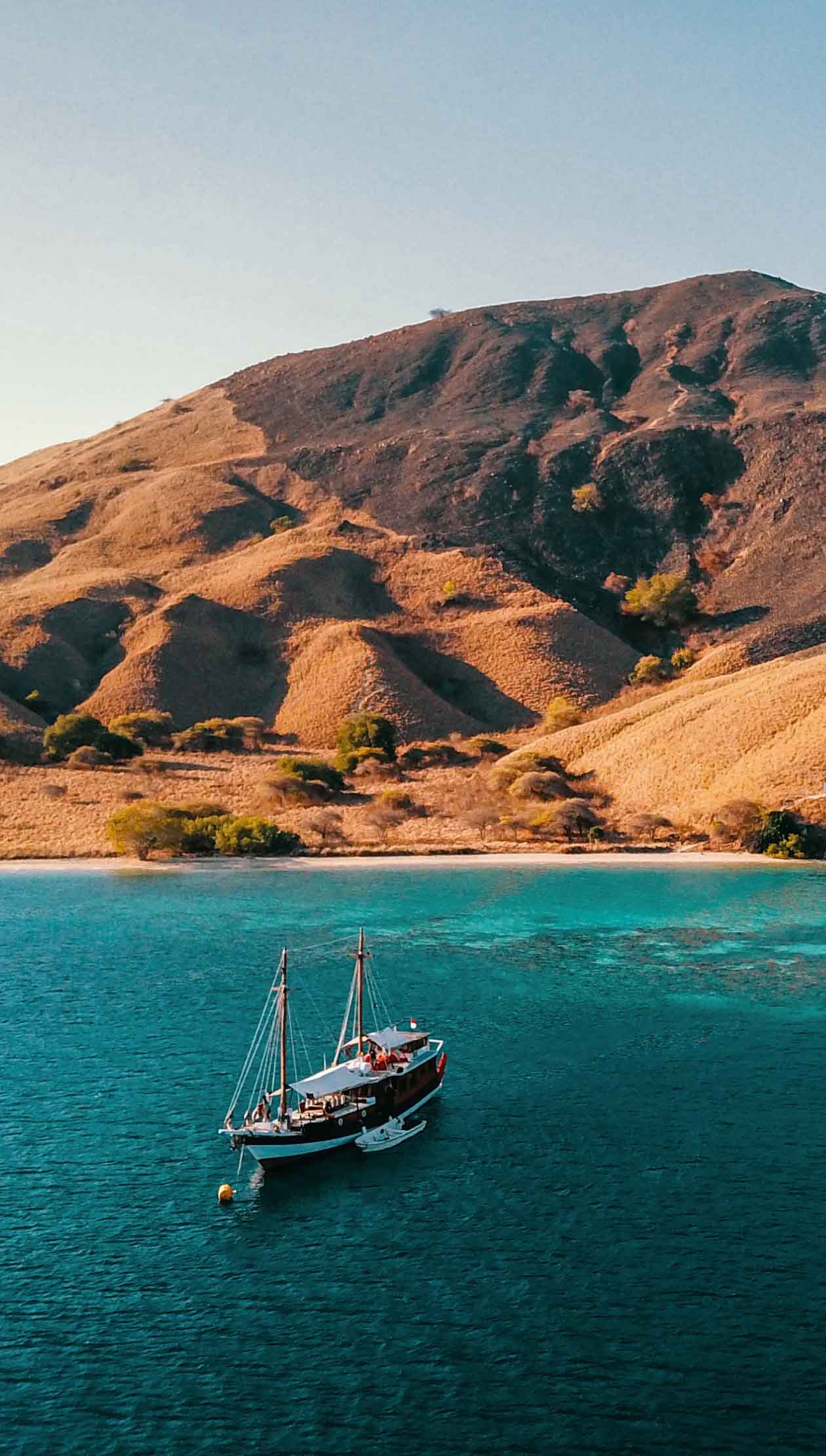
Kayaking on an Adventure Cruise
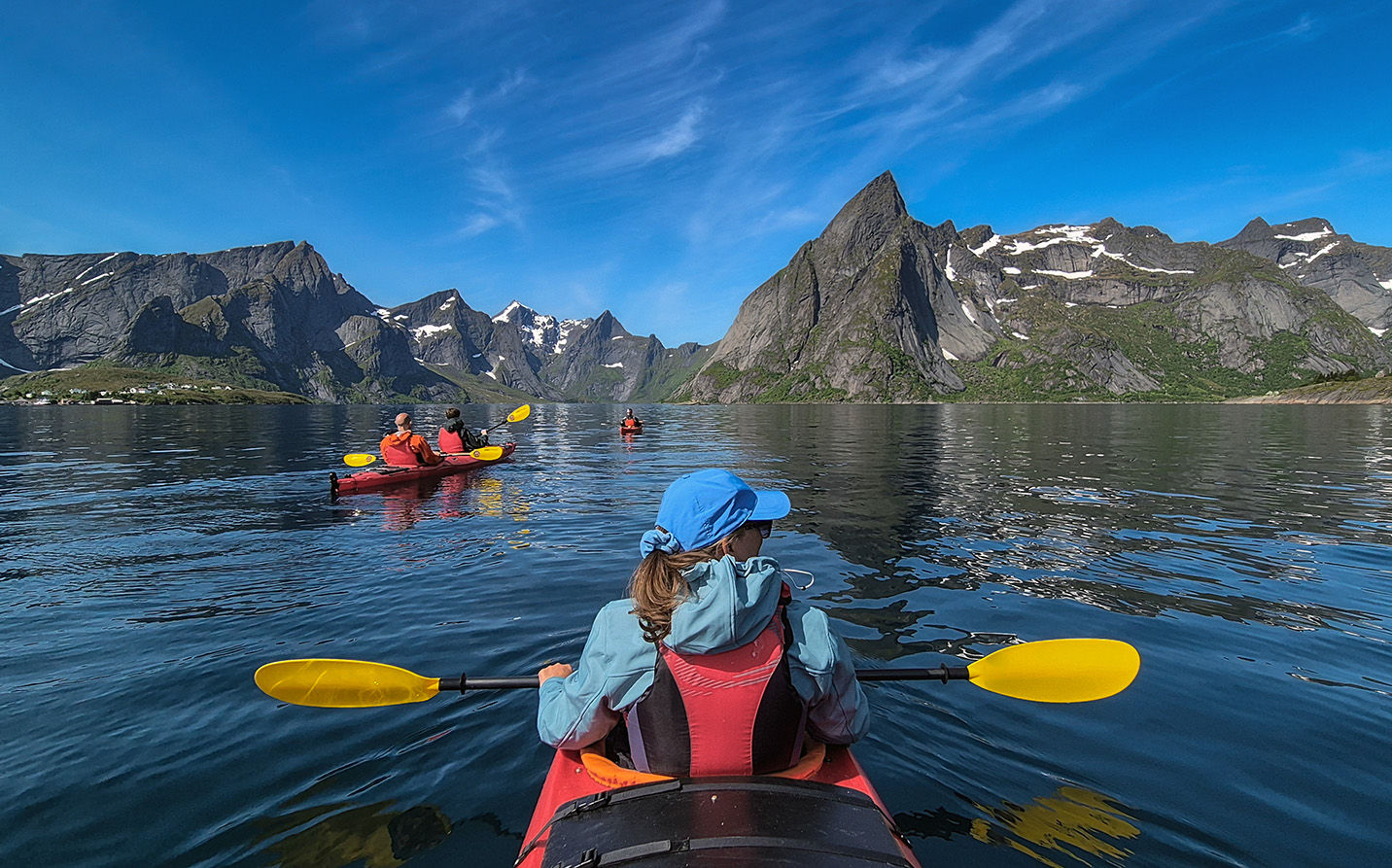
The expedition vessel exhales into a still cove somewhere south of the Antarctic Circle, engine cut, anchor unspooling into water so clear the seabed seems suspended in glass. A tabular iceberg drifts past — a city block of cold, blue light. Crewmembers winch a rack of sea kayaks toward the waterline. A guide in a red drysuit checks paddle leashes and counts heads. The air smells of brine and ozone. Somewhere astern, a Weddell seal hauled out on a floe lifts its head, sneezes, and goes back to sleep. Kayaking, here, begins not with a launch ramp but with a winch and a hush.
This is the quiet revolution of small-ship travel. From Antarctic ice shelves to Greenlandic fjords, Alaskan tidewater glaciers to Icelandic black-sand bays, paddlers on adventure cruises are finding silence that larger vessels and bus tours simply cannot reach.
Kayaking from a Small Ship Is Special
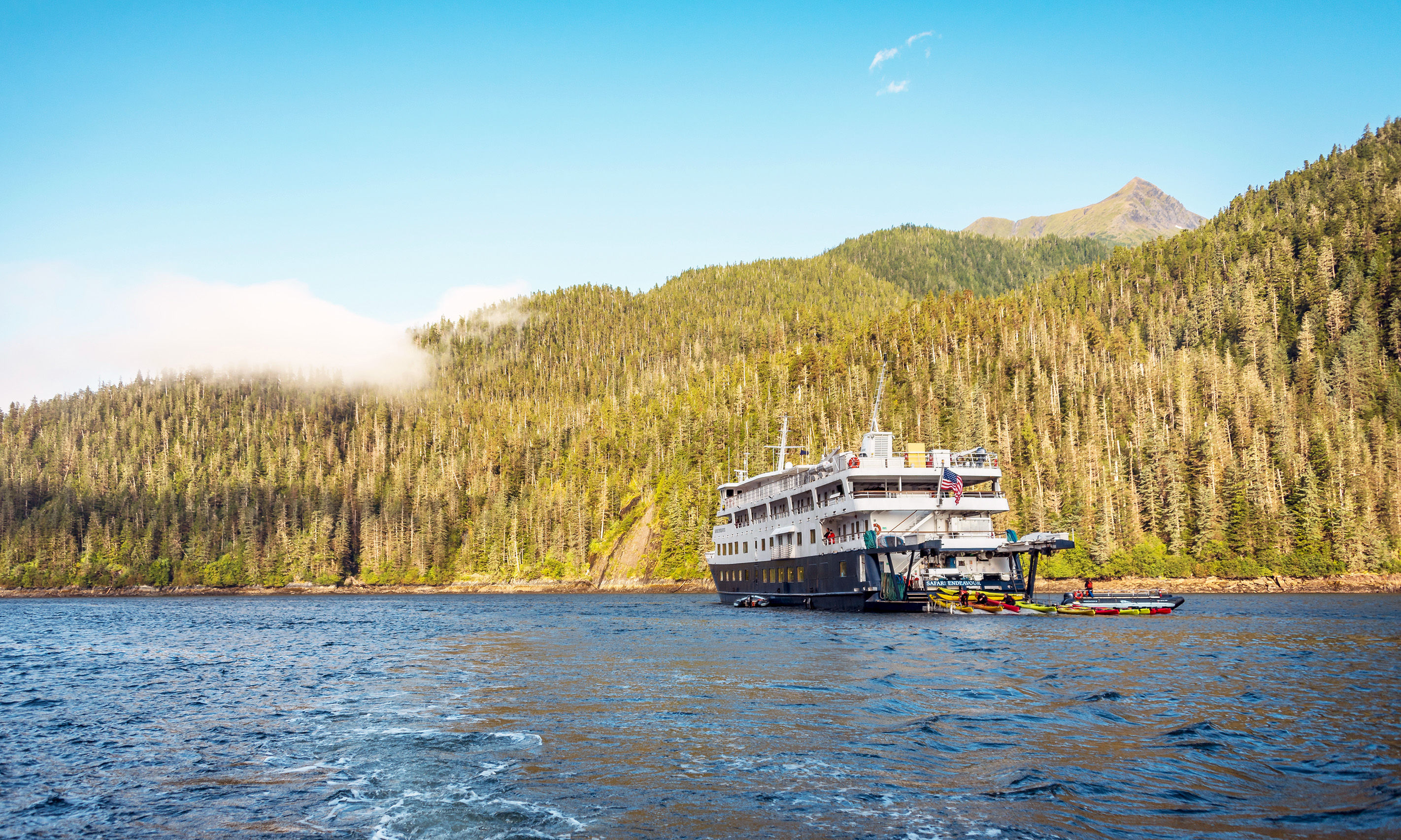
Sea kayaking from an adventure cruise is less an excursion than a translation. The mothership delivers travelers across open water; the kayak returns them to the human scale of the place — the slap of cold against a hull, the thin breath of a guide a few meters away, the click of crampon ice underfoot if a landing is called.
The roots run deep. The kayak itself was invented by Inuit and Yupik peoples of the Arctic, who built sealskin-and-driftwood boats called qajaqs to hunt along the ice edge. Greenlanders still teach the rolling techniques their grandfathers learned. To paddle these waters today is to inhabit, however briefly, a four-thousand-year-old way of moving through them. What travelers describe afterward is rarely the photographs. It is the moment when the engines stop, the ship recedes, and a pair of paddles becomes the loudest sound for miles.
Landscapes and Seascapes Define the Journey
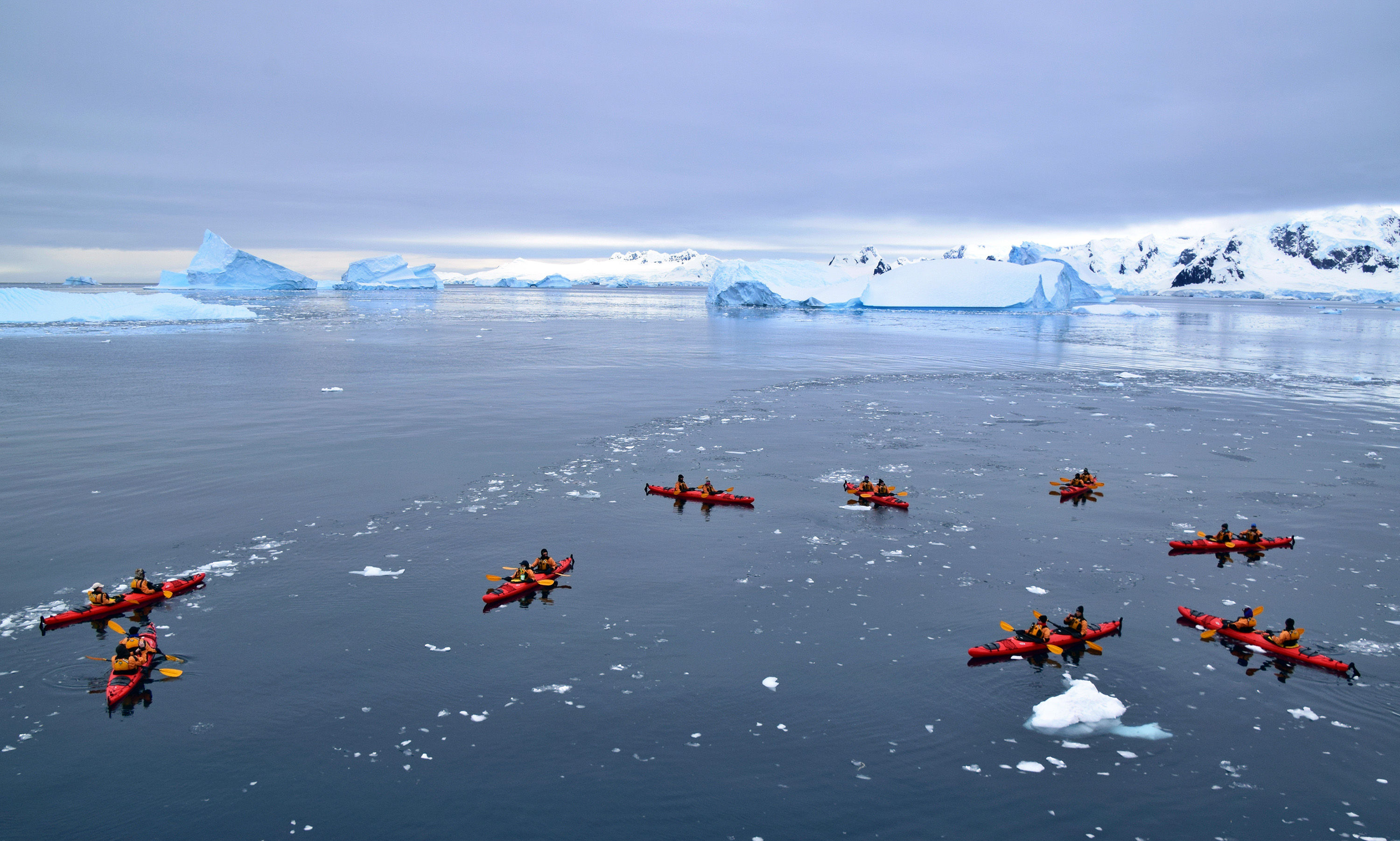
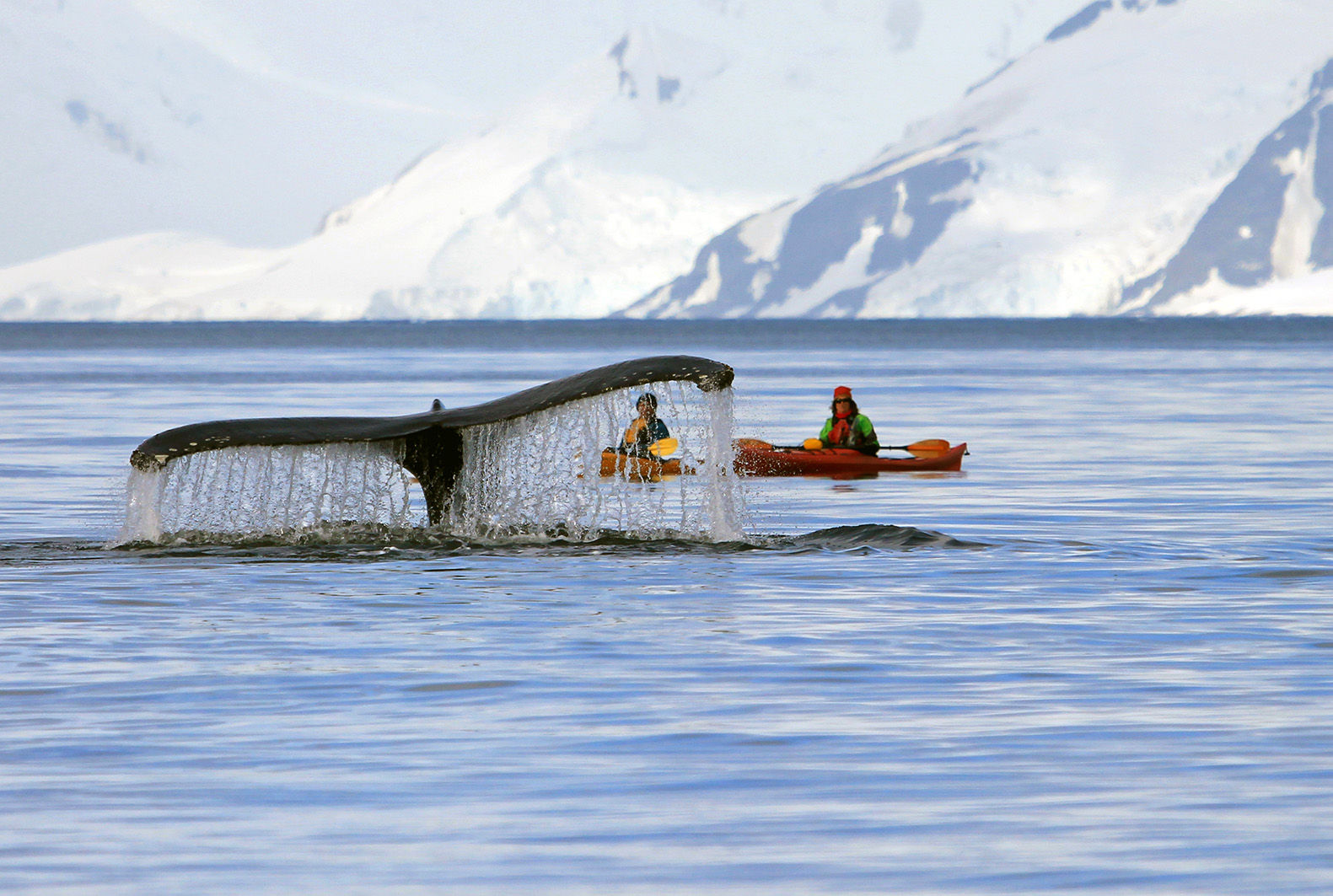
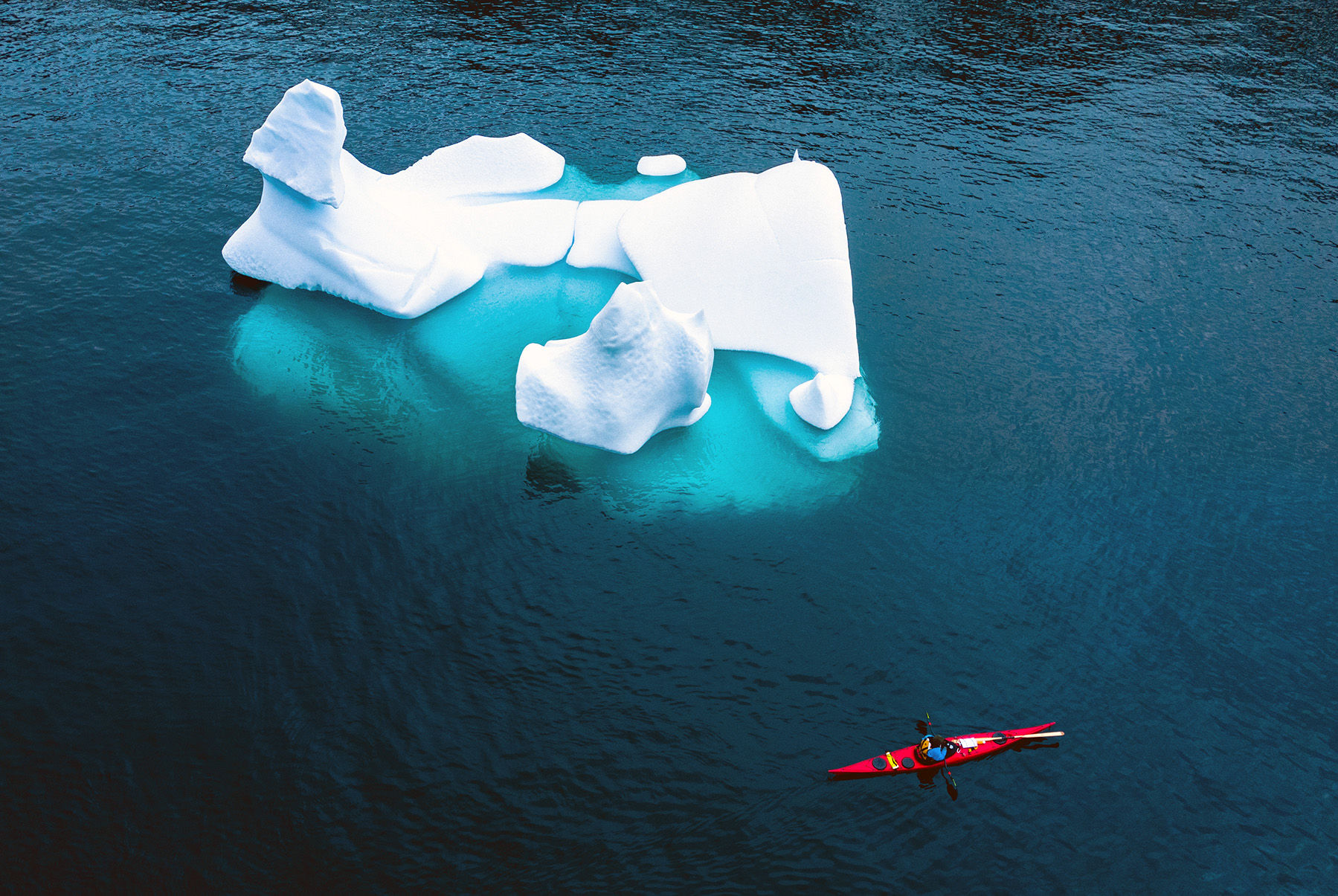
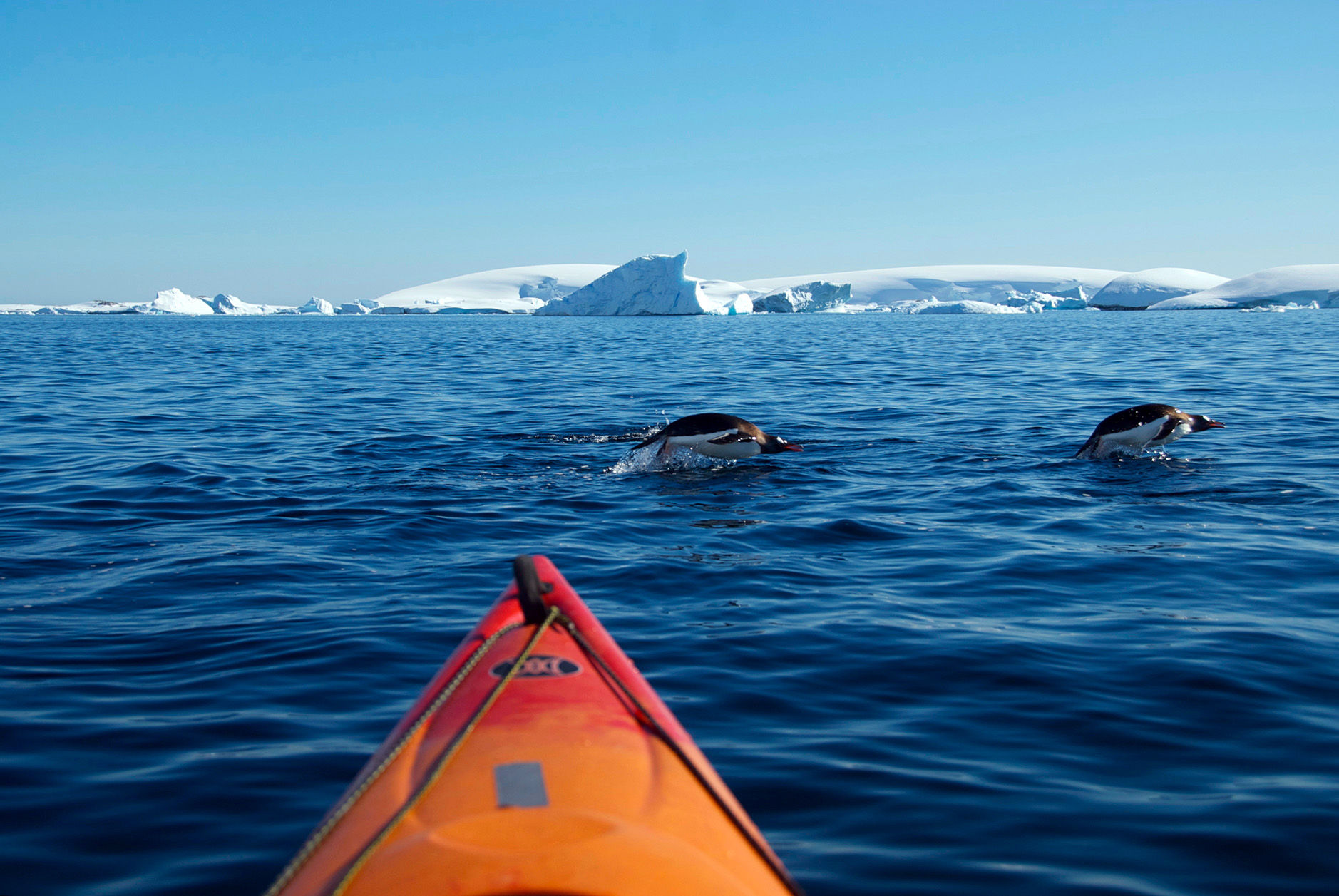
In Antarctica, kayakers thread through brash ice in protected bays of the Peninsula — Paradise Harbor, Neko Harbor, the Lemaire Channel — beneath cliffs streaked with the rust of guano. Crabeater seals doze on floes. Gentoo penguins porpoise alongside the boats.
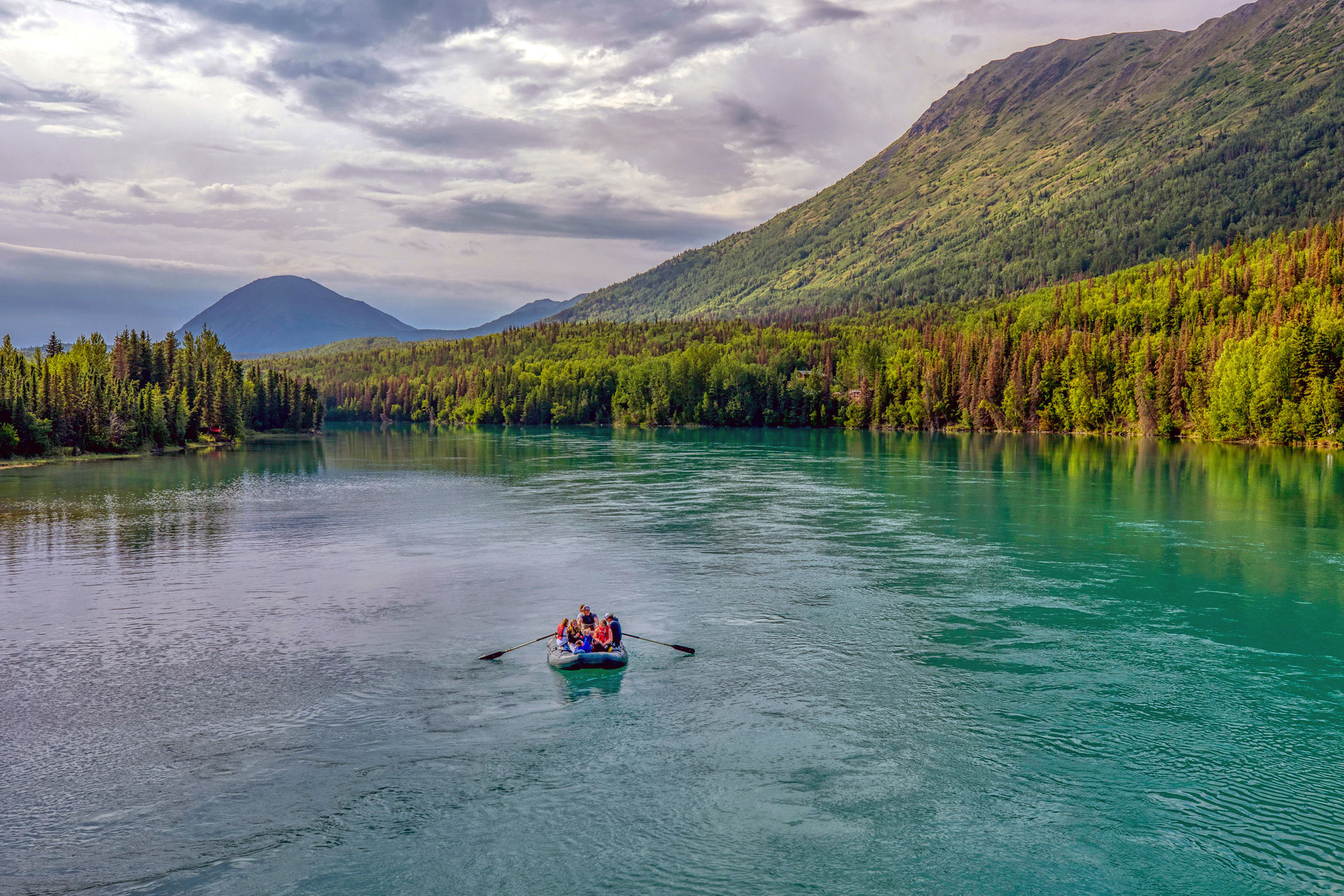
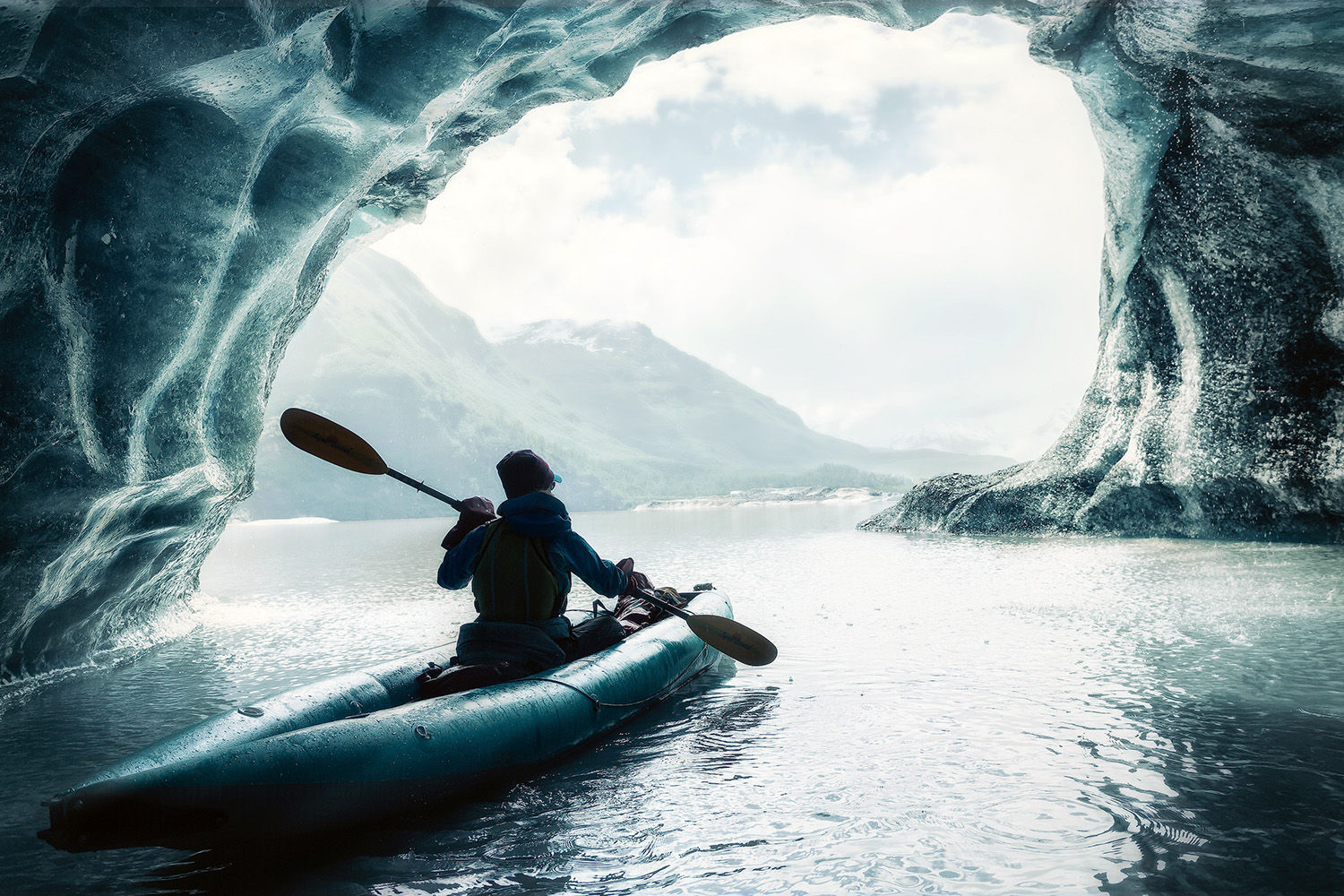
Alaska kayaking offers a more verdant register. Glacier kayaking in places like Bear Glacier Lagoon, Tracy Arm, and the fjords of the Inside Passage means paddling between blue-veined icebergs while bald eagles wheel overhead and the cracks of calving ice ricochet down sheer walls.
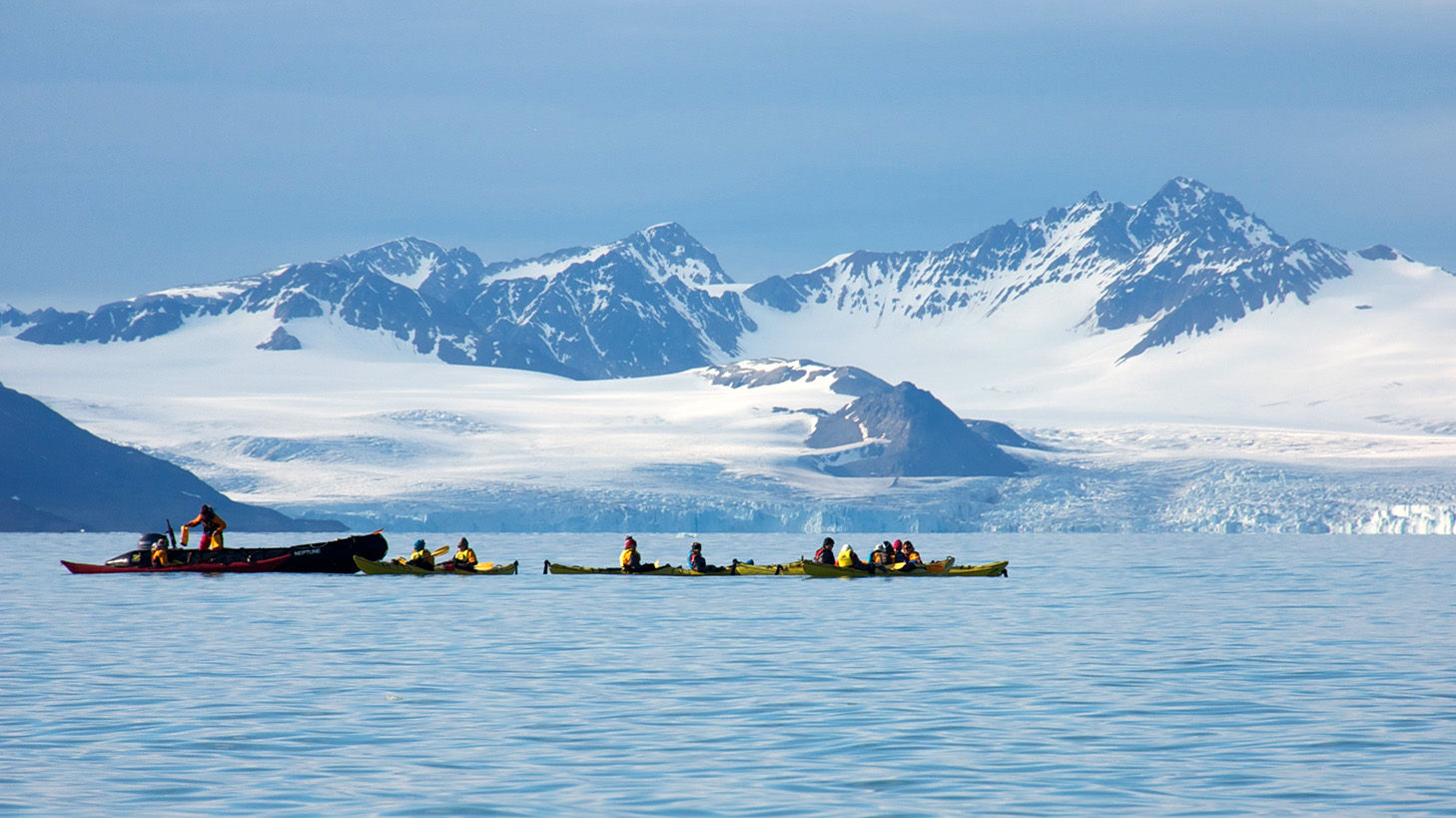
Arctic kayaking — in Svalbard, eastern Greenland, and the Canadian High Arctic — trades trees for pure geology: vertical basalt, glaciated peaks, and the white seam of pack ice on the horizon. Walrus haul out on shoals. Beluga sometimes pass beneath the boats, ghost-pale and unhurried.
A Day in the Life
Mornings on a small expedition ship begin before the sun does — or, in high-latitude summer, before the sun has bothered to set. Coffee appears in the lounge. A guide briefs the day's possible landings on a chart spread across a table, pencils, dividers, and a ring of mugs. By mid-morning, the ship has nosed into a sheltered bay. Paddlers gather in the mudroom, pulling on drysuits and pogies. Boats are launched from the stern platform in pairs. A safety zodiac shadows the group at a polite distance.
Lunch may be served back aboard, or as a thermos in a cobble cove. Afternoons often bring a second outing — a Zodiac cruise, a shore walk, or a longer paddle into a calving fjord. Evenings are generous. A naturalist might give a talk on glaciology while the chef plates Arctic char or Patagonian toothfish. Travelers compare photographs in the library. Outside the windows, the ice keeps moving, indifferent and luminous.
The Cultural and Human Stories Behind the Experience
Polar and subpolar coastlines are not empty. In Greenland and Nunavut, Inuit communities continue traditions of subsistence hunting and kayak-building that long predate European maps of the region. Some kayak cruises stop at settlements such as Ittoqqortoormiit or Pond Inlet, where local guides share stories that no shipboard lecture can replace.
In Alaska, Tlingit, Haida, and Tsimshian cultural centers along the Inside Passage offer carving demonstrations and oral histories, a different way of seeing the rainforest above the kayak's bow.
Antarctica, uniquely, has no Indigenous human history — only the layered stories of sealers, whalers, and the scientists who occupy its bases today. Many vessels offer landings at historic huts where Shackleton's and Scott's possessions still rest, where they were left.
Who Will Love This Experience
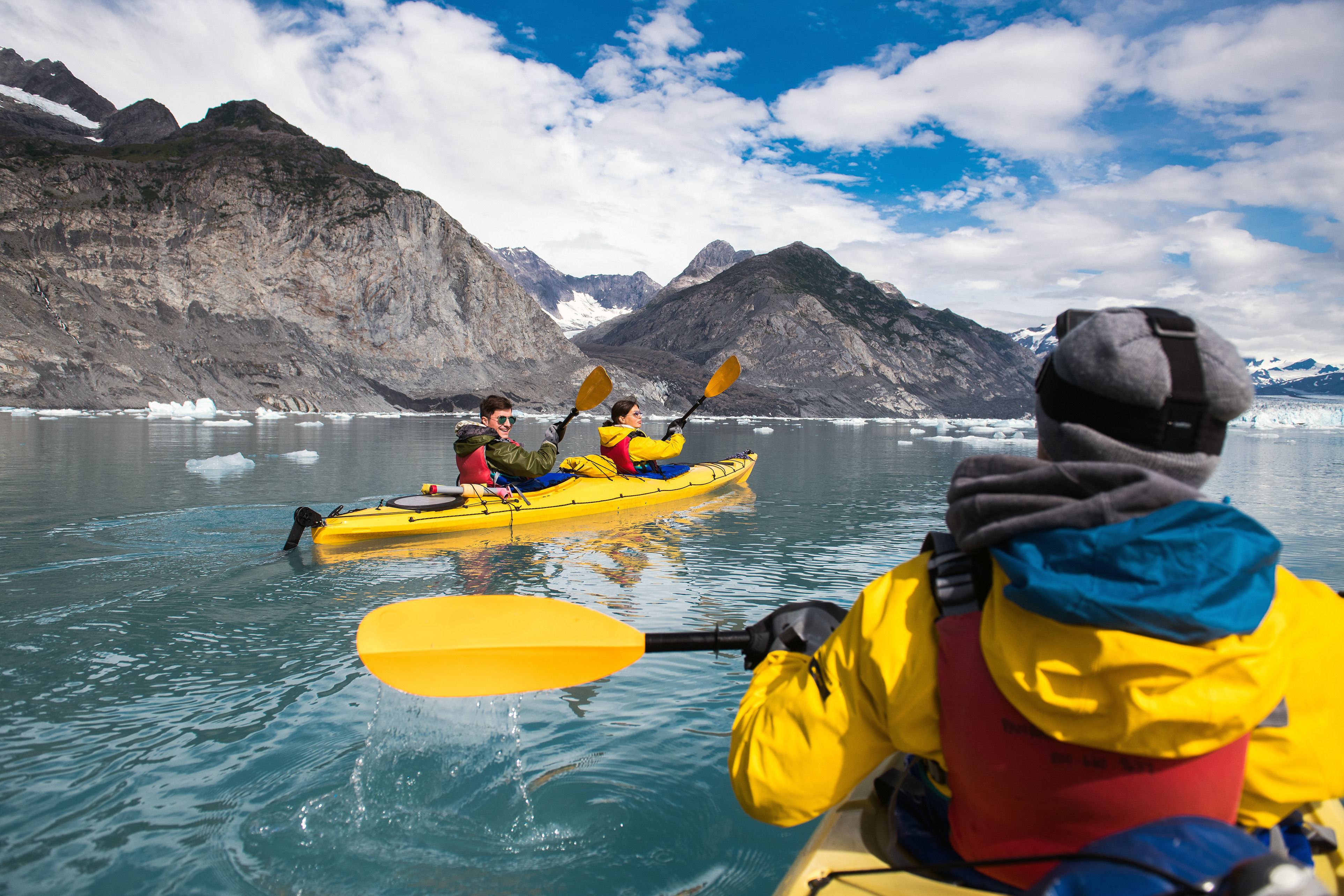
Adventure cruise kayaking attracts a specific kind of traveler, though not necessarily an athletic one. Most operators welcome beginners, supplying stable double kayaks and guides who handle the navigation. What is required is comfort with cold, willingness to be wet, and a tolerance for weather-driven changes to plans.
Photographers tend to find the form irresistible. The low angle, the boat's silence, and the absence of a ship's railing produce images that telephoto lenses cannot replicate. Wildlife enthusiasts gain access to species — molting walrus, leopard seals, sea otters wrapped in kelp — that flee from larger vessels.
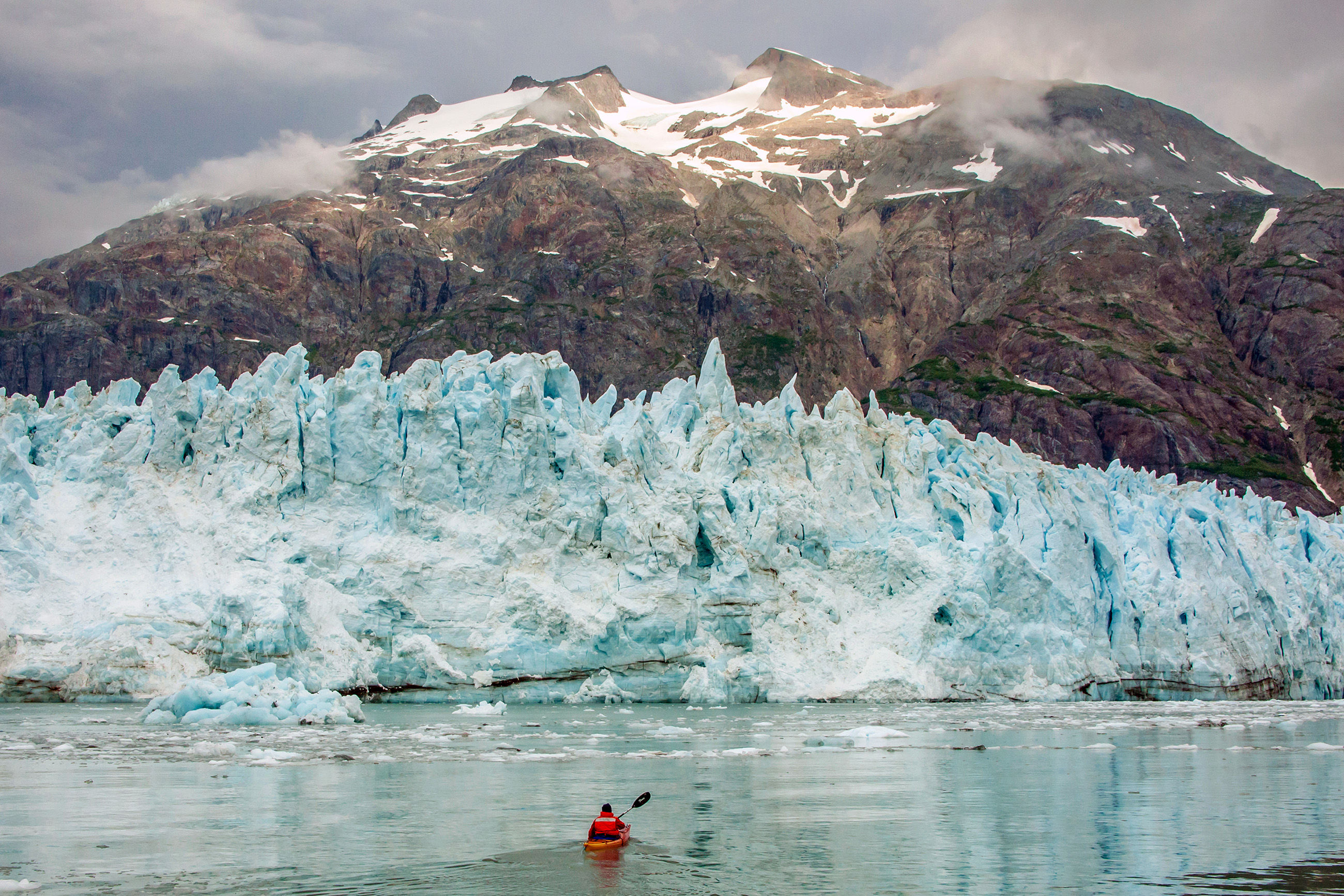
Travelers who prize quiet over spectacle, who would rather hear a glacier than photograph a buffet, gravitate toward these voyages most of all. Couples and solo travelers are common; so are multigenerational families who book trips while children are old enough to paddle and grandparents are still keen for one more wild place.
Experience It at Its Best
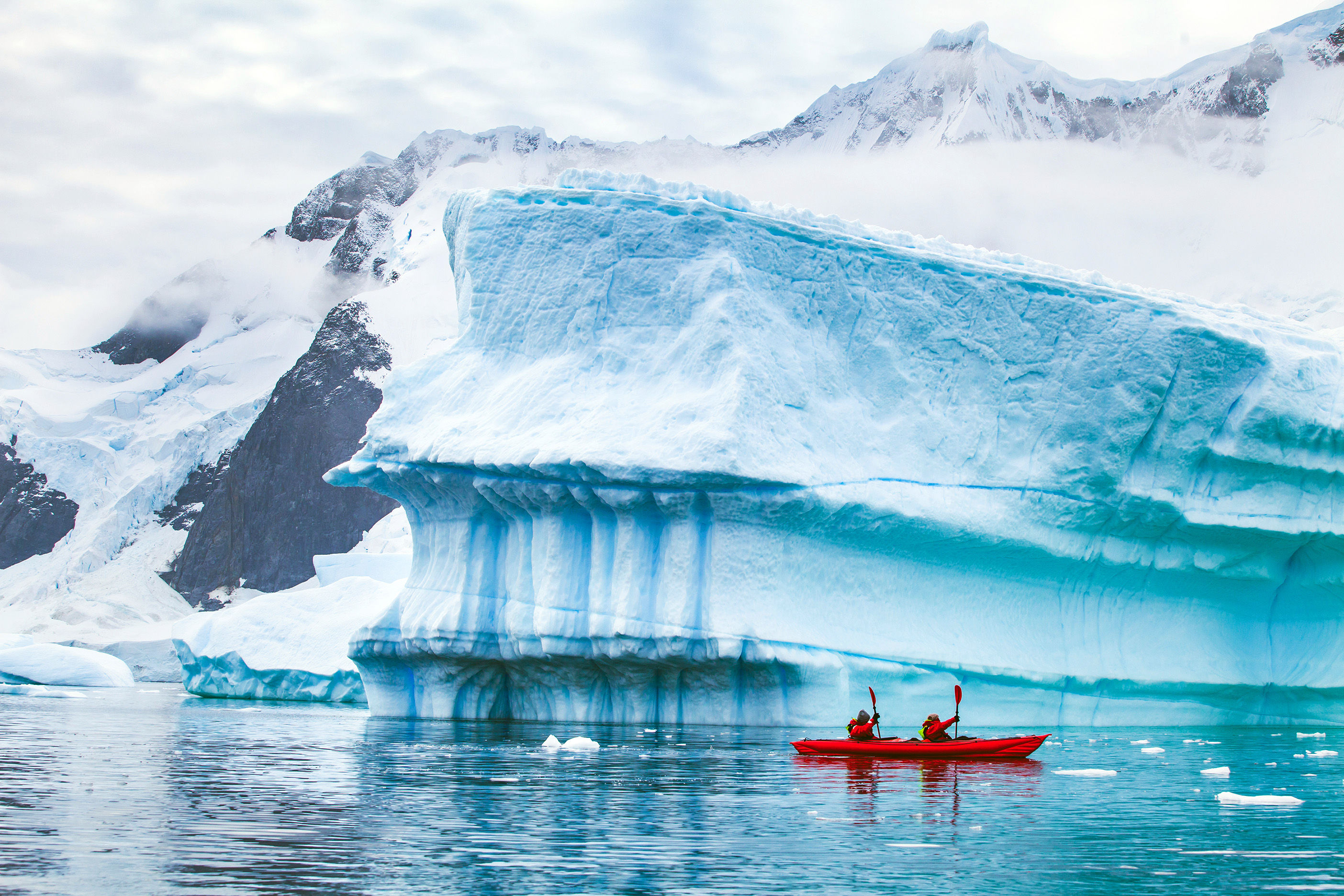
Polar travel runs on light, not calendar. And, in every region, the weather rules. Itineraries can change at a moment's notice due to weather and sea conditions. Antarctica opens in late October and closes in March. November rewards visitors with pristine snow and courting penguins; January and February bring more wildlife, an ice retreat that opens deeper passages, and the best overall kayaking conditions.
Arctic voyages — Svalbard, Greenland, the Northwest Passage — operate from June through September. July and August bring twenty-four-hour daylight, retreating sea ice, and peak chances of seeing polar bears, narwhal, and walrus. Alaska has the longest window: May through September. May offers wildflowers and quieter harbors; June and July bring the longest days; September can produce extraordinary light and the first dusting of snow on the peaks.
Responsible Travel Matters
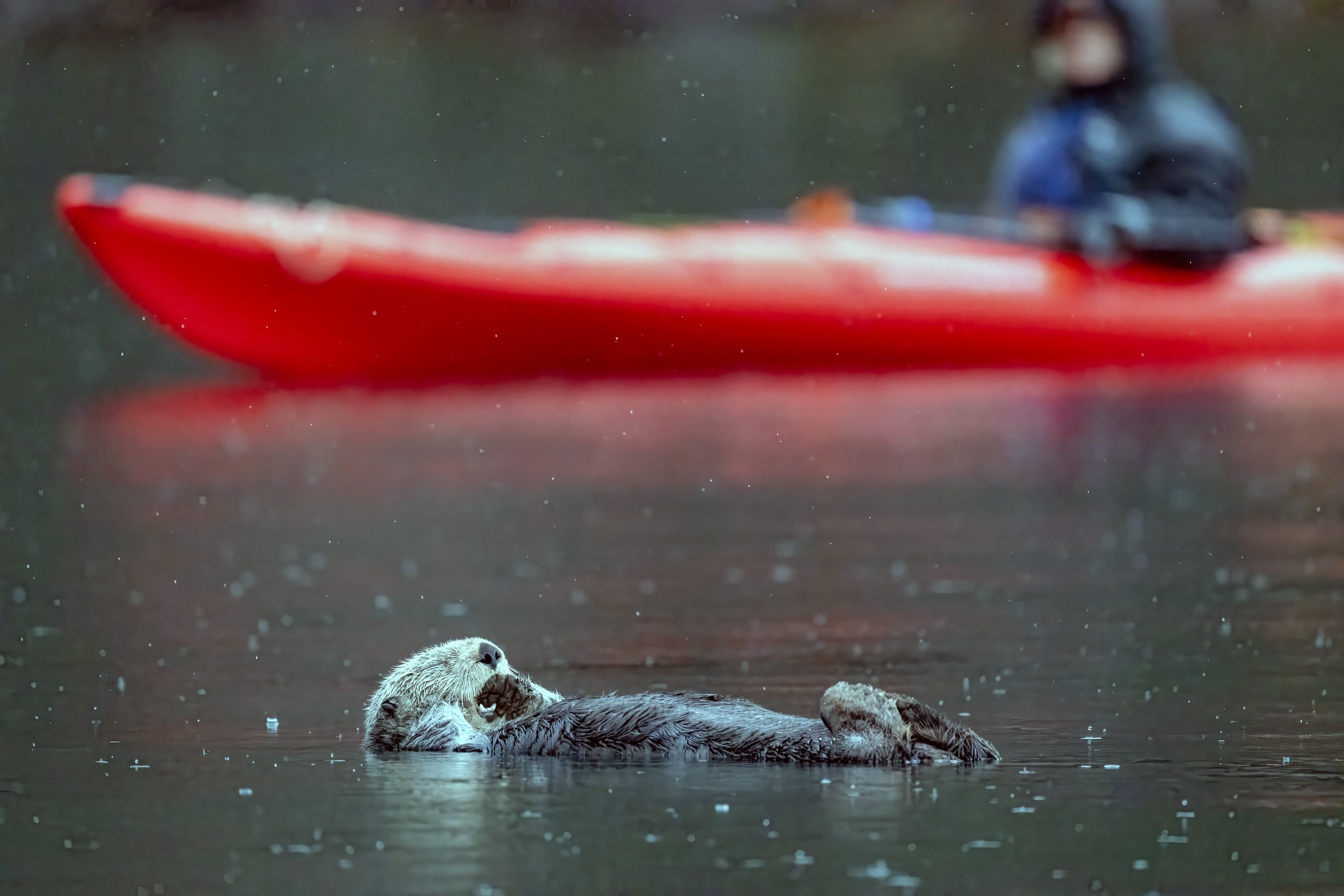
The same fragility that draws travelers to these waters demands more from them. Antarctica is governed by the Antarctic Treaty System and the International Association of Antarctica Tour Operators, which sets strict limits on landing numbers and biosecurity protocols at every stop. Only one hundred passengers may step ashore at any given time, and ships carrying more than five hundred guests cannot land them at all — one reason the small-ship model dominates here.
In the Arctic, the Association of Arctic Expedition Cruise Operators performs a similar role, with strict rules about distance from wildlife and visits to Inuit communities. Operators increasingly favor hybrid propulsion, biofuel blends, and route-planning that minimizes engine time.
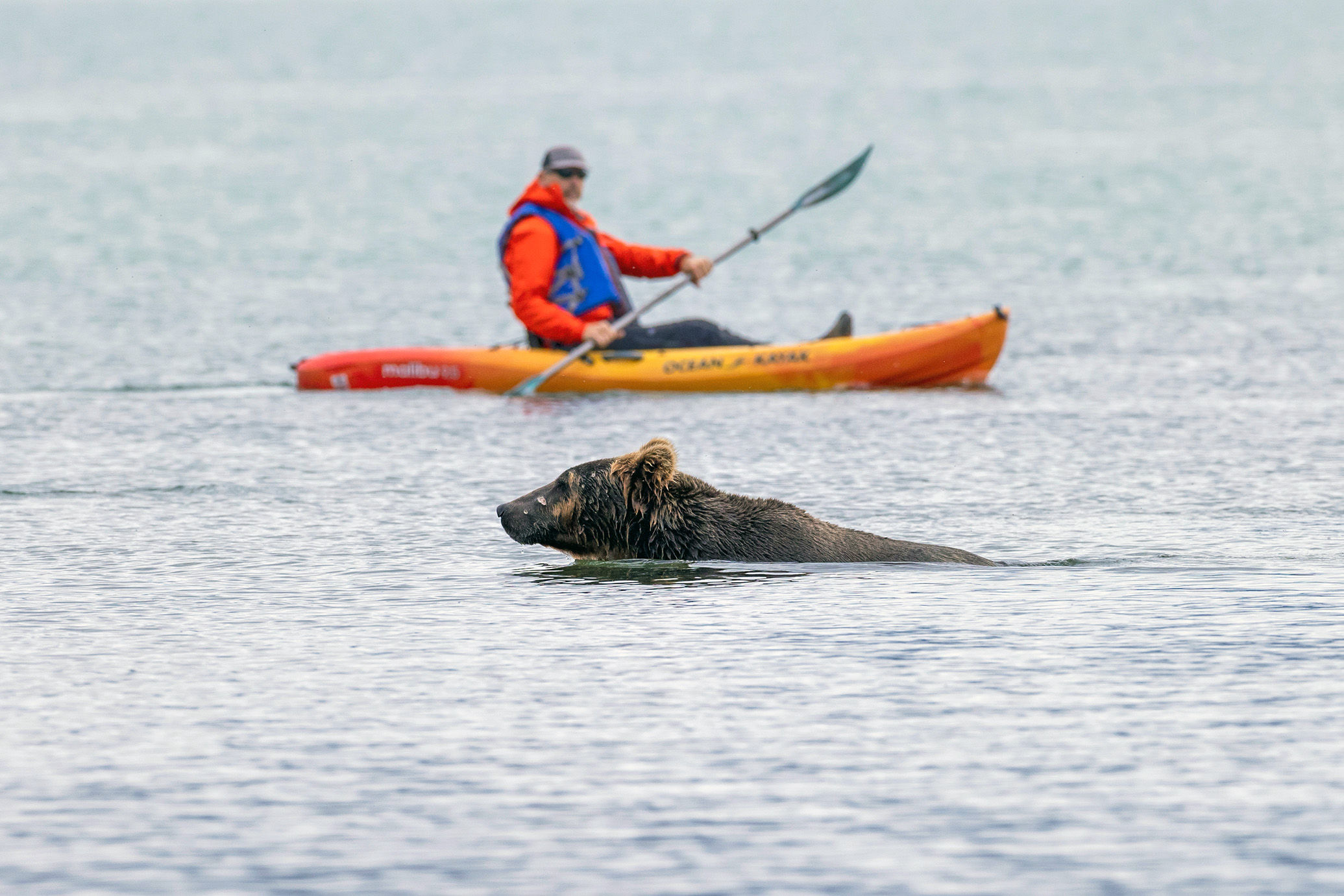
For travelers, the practices are simple: keep the prescribed distance from wildlife, scrub boots between landings, and choose operators that hire local guides and contribute to conservation projects. The kayak, in this sense, is already an act of low-impact travel — silent, slow, and engine-free.
A Final Reflection
By the time the kayaks are winched back aboard, hands stiff and cheeks wind-burned, the cove has begun to change. The light has shifted; an iceberg has rolled; a tern crosses overhead in a direction it did not come from. Someone notices and points.
The ship lifts anchor. Cabins fill with the smell of dinner. The wake unfurls behind the stern like a long, slow exhale. What remains is harder to name than to feel — a sense of having been allowed somewhere, briefly, by a place that does not need to be visited to keep on being itself.
Paddling from the deck of a small ship is not a sport, not a tour, not quite a pilgrimage. It is a way of paying attention. The reward is not a checked-off destination but a recalibrated scale: a memory of being very small inside something very large, and finding, against expectation, that the smallness felt like belonging.
This article was developed with AI assistance and reviewed and edited for accuracy, quality, and relevance.