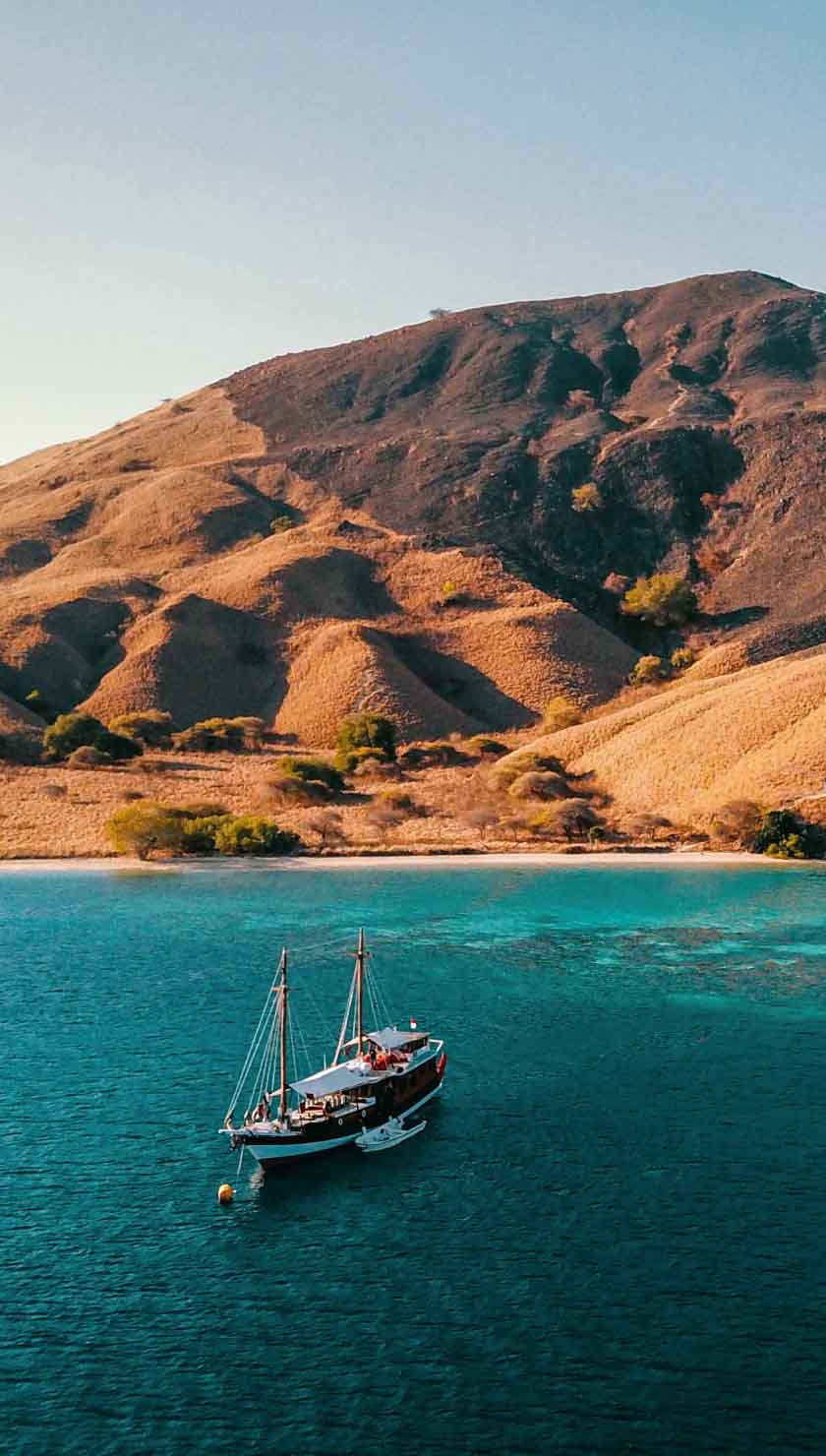
catamaran cruise content
Catamaran cruises: why two hulls beat one
Catamarans have quietly become the boat of choice for small-ship cruising. Two hulls means more stability (less seasickness), shallower draft (closer to shore, into hidden coves), more deck space per passenger, and — if you’ve ever tried to sleep on a heeling monohull — much nicer cabins. They’re the goldilocks vessel: bigger than a yacht, smaller than a cruise ship, faster than a gulet.
The main event: the Galápagos
If there’s one place built for catamaran travel, it’s the Galapagos. The Ecuadorian archipelago restricts visitor numbers per landing site, which is why nearly all Galápagos cruises are small ships — and catamarans, in the 16-passenger range, are the sweet spot. A typical week takes in two or three islands a day, with wet landings on beaches where sea lions sprawl indifferently across your path, snorkeling with marine iguanas and the occasional hammerhead, and hikes past blue-footed boobies doing their absurd courtship dance. Every boat carries a naturalist guide, mandated by the park.Itineraries are usually 4, 5, 7, or 8 nights. The longer ones reach the more remote western islands — Isabela and Fernandina, where flightless cormorants and the densest concentration of marine iguanas live. Cost runs from around $3,500 per person for a mid-range week up to $8,000+ for the luxury catamarans.
Best months are tricky: December–May is warmer with calmer seas and better snorkeling visibility; June–November is cooler with rougher water but more wildlife activity. There’s no real bad time.
But wait, there’s more!
The Galapagos isn’t the only premium cruise destination that features catamaran cruises. Other options include Australia, Croatia, and Alaska.