Penguins on Adventure Cruises
The first penguin you see may not be standing on snow. It may appear in a flash of bubbles off a volcanic shoreline, cutting through warm equatorial light with the quick, precise movements of a bird that has traded the sky for the sea. In the Galápagos, penguins share the coastline with marine iguanas, sea lions, lava herons, and blue-footed boobies, creating one of the most unexpected wildlife scenes on Earth.

Far to the south, the image changes completely. Antarctica’s penguins gather beneath cliffs of ice and cloud, crossing snowfields in narrow highways of webbed footprints, calling across colonies that seem to pulse with life. Here, the landscape is vast and elemental: icebergs drift like sculpted marble, Zodiac boats nose through brash ice, and the air carries the clean edge of the polar world.
For travelers searching for the best places to see penguins, small-ship cruises and adventure cruises offer something especially powerful: proximity without intrusion. Whether snorkeling near a Galápagos penguin or watching penguins in Antarctica shuffle between rookery and sea, the experience is not simply about spotting wildlife. It is about entering a living landscape on its own terms.

Adventure Cruises Are Ideal for Penguin Encounters
Penguin watching rewards patience, quiet, and access to places where larger vessels cannot easily go. This is where small-ship cruises excel. With fewer guests, expert naturalist guides, and flexible expedition-style routing, small ships are well-suited to remote coastlines, island landings, and wildlife-rich anchorages.

In Antarctica, small expedition vessels use Zodiacs to reach beaches, bays, and ice-fringed landing sites where penguins nest, feed, and commute between land and sea. On an Antarctica cruise, penguins are often the emotional center of the journey, but the rhythm of each encounter depends on weather, ice, wildlife behavior, and strict environmental guidelines.
In the Galápagos, small vessels allow travelers to move between islands with very different personalities: black lava fields, mangrove coves, cactus-studded slopes, and clear snorkeling sites alive with fish. For penguin lovers, the advantage is not only seeing birds on shore, but also having the chance to encounter them underwater, where their true speed and grace are revealed.
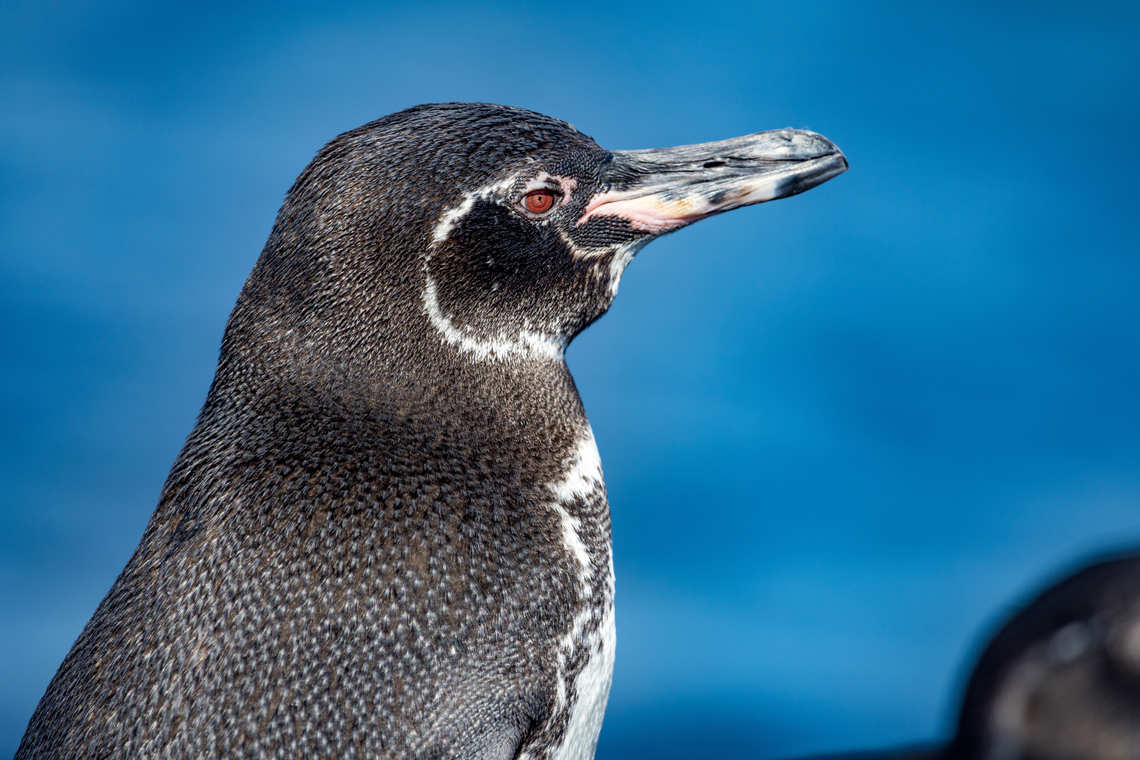
There Are Penguins in the Galápagos
Yes, there are penguins in the Galápagos — and their presence is one of the archipelago’s great surprises. The Galápagos penguin is endemic to the islands, meaning it is found nowhere else in the world. Small, agile, and adapted to a tropical environment, it is the most northerly penguin species on the planet.

At first, the idea feels almost impossible. Penguins belong, in the popular imagination, to ice shelves and polar storms. Yet the Galápagos penguin survives near the equator thanks to the cool, nutrient-rich currents that rise around the western islands. These currents bring the fish that sustain the birds and create small pockets of ocean cool enough for them to thrive.
To ask if there are penguins in the Galápagos is to discover how strange and inventive evolution can be. Here, penguins shelter in lava crevices instead of snowbanks, rest beside sun-warmed rock instead of ice, and swim through water where snorkelers may also encounter sea turtles, rays, reef fish, and playful sea lions.

Where Galápagos Penguins Live
So, where do Galápagos penguins live? Most are found around the cooler western islands, especially Fernandina and the western coast of Isabela, where upwelling currents create rich feeding grounds. They may also be seen around selected sites near Bartolomé, Santiago, and other islands, depending on season, conditions, and itinerary.

For travelers hoping to maximize their chances, September is often considered the peak month for Galápagos penguin sightings. It falls within the cooler, drier season, when nutrient-rich currents make marine life especially active, and penguins are more frequently encountered around key viewing areas. Wildlife is never guaranteed, of course, but September can be one of the most rewarding months for penguin-focused Galápagos cruising.
The setting is unforgettable. A Galápagos penguin may stand upright on a ledge of black basalt, its dark back blending with the lava until it turns and reveals a pale front marked by delicate bands. Nearby, red Sally Lightfoot crabs move over the rocks like sparks, while frigatebirds wheel overhead and sea lions doze in the sun.

The most thrilling encounters often happen in the water. During Galápagos snorkeling excursions, a penguin may suddenly streak past in pursuit of small fish, transforming from a slightly comic figure on land into a blade of motion underwater. It is one of the great privileges of a Galápagos adventure cruise: to see a penguin not merely posing on the shore, but hunting in its element.
Penguins in Antarctica: The Classic Polar Encounter
If the Galápagos offers the surprise of penguins in the tropics, Antarctica offers the grand spectacle. For many travelers, penguins in Antarctica are the defining image of the polar south: thousands of birds gathered along stone beaches, snowy ridgelines, and ice-rimmed coves, their colonies filling the air with sound, movement, and unmistakable personality.

An Antarctic landing is a sensory experience. The crunch of snow under boots, the briny smell of the colony, the sudden splash of a penguin entering the water, the distant crack of ice shifting in a bay — all of it becomes part of the encounter. Penguins are not background characters in Antarctica. They are among the great animating forces of the coastline.
For travelers seeking penguins in Antarctica, small expedition ships usually focus on the Antarctic Peninsula and nearby islands such as the South Shetlands. These voyages combine Zodiac cruising, shore landings, onboard lectures, and guided walks led by expedition teams that often include ornithologists, marine biologists, naturalists, and penguin specialists. A good Antarctica penguin tour is not rushed. It allows time to notice behavior: pebble stealing, courtship displays, chick feeding, territorial squabbles, and the busy highways penguins carve through the snow.

Types of Penguins in Antarctica
The types of penguins in Antarctica vary depending on exactly where a cruise travels. On classic Antarctic Peninsula itineraries, travelers most often encounter gentoo, chinstrap, and Adélie penguins. Longer expedition cruises that include South Georgia or the Falkland Islands may add king, macaroni, and rockhopper penguins to the experience.
Gentoo Penguins

Gentoo penguins are among the most frequently seen species on Antarctic Peninsula cruises. With bright orange beaks and white markings above the eyes, they are animated, curious, and often busy carrying stones to their nests. Their colonies can be lively places, full of movement and argument.
Chinstrap Penguins

Chinstrap penguins are named for the fine black line that runs beneath the chin like a helmet strap. They often nest on rocky slopes and can form dense, noisy colonies. Watching them climb from the sea to a rookery is a reminder of how determined these small birds can be.
Adélie Penguins

Adélie penguins look like the classic Antarctic penguin: compact, black-and-white, and expressive. They are closely associated with colder, icier environments and are a favorite among travelers for their bold, almost theatrical character.
Emperor Penguins

Emperor penguins are the largest and most legendary of all penguins, but they are not commonly seen on standard Antarctic Peninsula cruises. Travelers hoping to see them usually need a specialized itinerary focused on the remote emperor penguin habitat.
King Penguins

King penguins are more commonly associated with South Georgia and other sub-Antarctic islands than the Antarctic Peninsula itself. On longer expedition cruises, however, their vast colonies can be among the most spectacular wildlife sights in the Southern Ocean.
Galápagos vs. Antarctica: Two Very Different Penguin Journeys
The Galápagos and Antarctica offer two radically different ways to experience penguins. In the Galápagos, the encounter is intimate, rare, and surprising. You may see a single Galápagos penguin resting on lava, then meet another underwater while snorkeling through a cove bright with tropical life.

In Antarctica, the experience is on a larger scale. The scenery is immense, the colonies can be dramatic, and the wildlife encounters unfold against one of the most remote landscapes on Earth. Here, penguins in Antarctica are part of a broader polar world of icebergs, whales, seals, seabirds, and shifting weather.

Both destinations belong among the best places to see penguins, but they satisfy different dreams. Choose the Galápagos for warmth, snorkeling, endemic wildlife, and ecological surprise. Choose Antarctica for abundance, polar drama, and the unforgettable sight of penguins living at the edge of the ice.

Best Places to See Penguins
Galápagos Islands, Ecuador

The Galápagos Islands are best for travelers who want a rare penguin encounter in an unexpected setting. Small-ship itineraries explore volcanic islands, wildlife-rich coves, and snorkeling sites where the Galápagos penguin may be seen alongside sea lions, turtles, rays, and reef fish.
Antarctic Peninsula

The Antarctic Peninsula is one of the most accessible and rewarding regions for first-time polar travelers. It offers classic Antarctica cruise penguin experiences, including gentoo, chinstrap, and Adélie colonies, Zodiac excursions, and landings framed by glaciers and icebergs.
South Shetland Islands

Often included on Antarctic Peninsula itineraries, the South Shetland Islands offer dramatic volcanic landscapes, active penguin colonies, and a sense of arrival in the polar world. They are a strong choice for travelers seeking a varied Antarctica penguin tour.
South Georgia
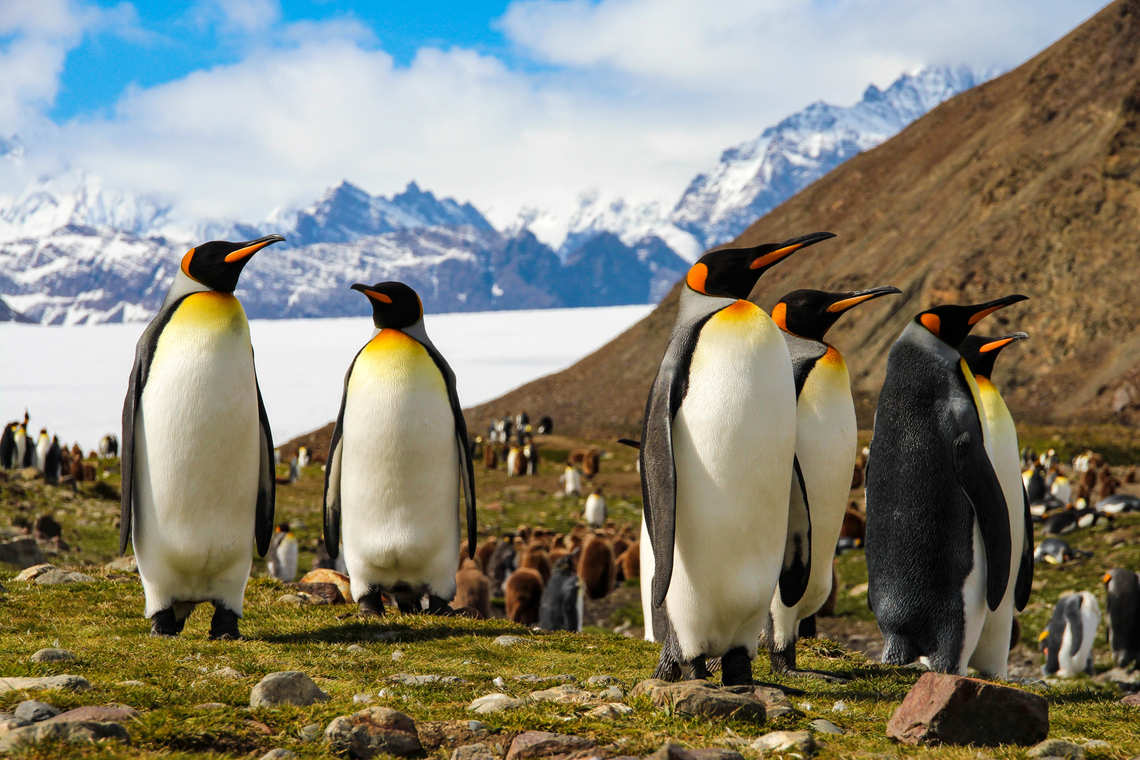
For serious wildlife enthusiasts, South Georgia is one of the greatest penguin destinations on Earth. Its king penguin colonies can be immense, filling beaches and hillsides with birds. These itineraries are usually longer, more expeditionary, and deeply rewarding.
Falkland Islands
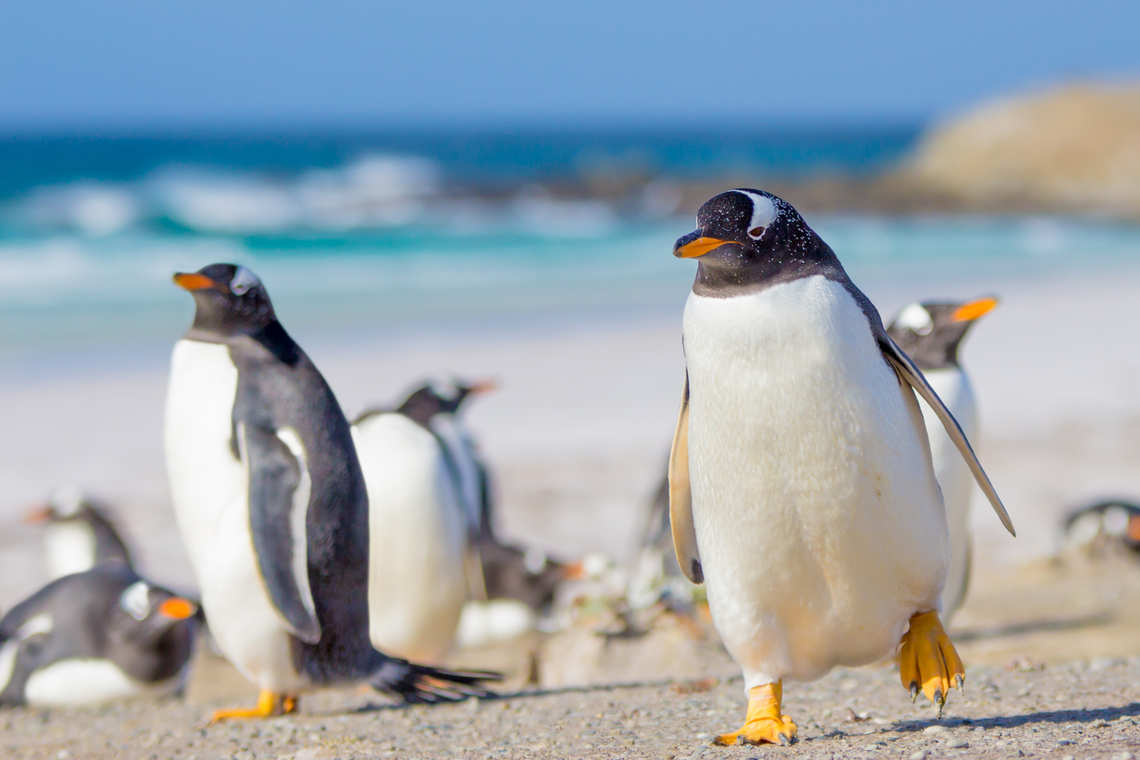
The Falkland Islands can add further penguin diversity to extended South Atlantic cruises, including species less commonly seen on standard Antarctic Peninsula routes. For travelers with time to spare, they create a richer, broader penguin journey.
What a Penguin Encounter Feels Like

A penguin encounter is rarely still. It is a choreography of splashes, calls, pebbles, feathers, wind, and sudden speed. One moment, a penguin seems almost comical, rocking on its heels or arguing over a stone. The next, it enters the sea and becomes a creature of startling elegance.
Small-ship adventure cruises allow travelers to linger in these moments. A naturalist may point out the difference between a gentoo and a chinstrap, explain why a Galápagos penguin depends on cool currents, or ask guests to pause quietly while birds cross a path ahead. The best encounters are not staged. They unfold gradually, shaped by tide, weather, season, and the private urgencies of wildlife.

Responsible Penguin Watching

Seeing penguins in the wild is a privilege, and that privilege comes with responsibility. Travelers should never touch, feed, chase, or crowd wildlife. In Antarctica, guests must follow expedition staff instructions, keep an appropriate distance from animals, and allow penguins the right of way. In the Galápagos, visitors should remain with certified naturalist guides and respect national park rules.
The goal of a responsible Antarctica penguin tour or Galápagos adventure cruise is not to get as close as possible. It is to observe without changing the behavior of the animals being observed. The most memorable wildlife encounters often happen when travelers stay still, remain patient, and let the landscape reveal itself.
Choosing Your Penguin Voyage

For some travelers, the dream is a Galápagos penguin slipping through clear water during a snorkeling excursion. For others, it is the sight of penguins gathered beneath a wall of ice in Antarctica, their calls rising into the polar air. Both experiences are extraordinary. Both are best approached with curiosity, humility, and a sense of wonder.
The best places to see penguins are not only destinations on a map. They are living worlds: volcanic, frozen, fragile, and alive with movement. Small-ship cruises and adventure cruises offer a way to enter those worlds carefully, guided by experts and shaped by the rhythms of the wild. Whether in the Galápagos or Antarctica, the reward is the same: a closer view of one of the planet’s most beloved birds, in places that still feel gloriously untamed.
This article was developed with AI assistance and reviewed and edited for accuracy, quality, and relevance.