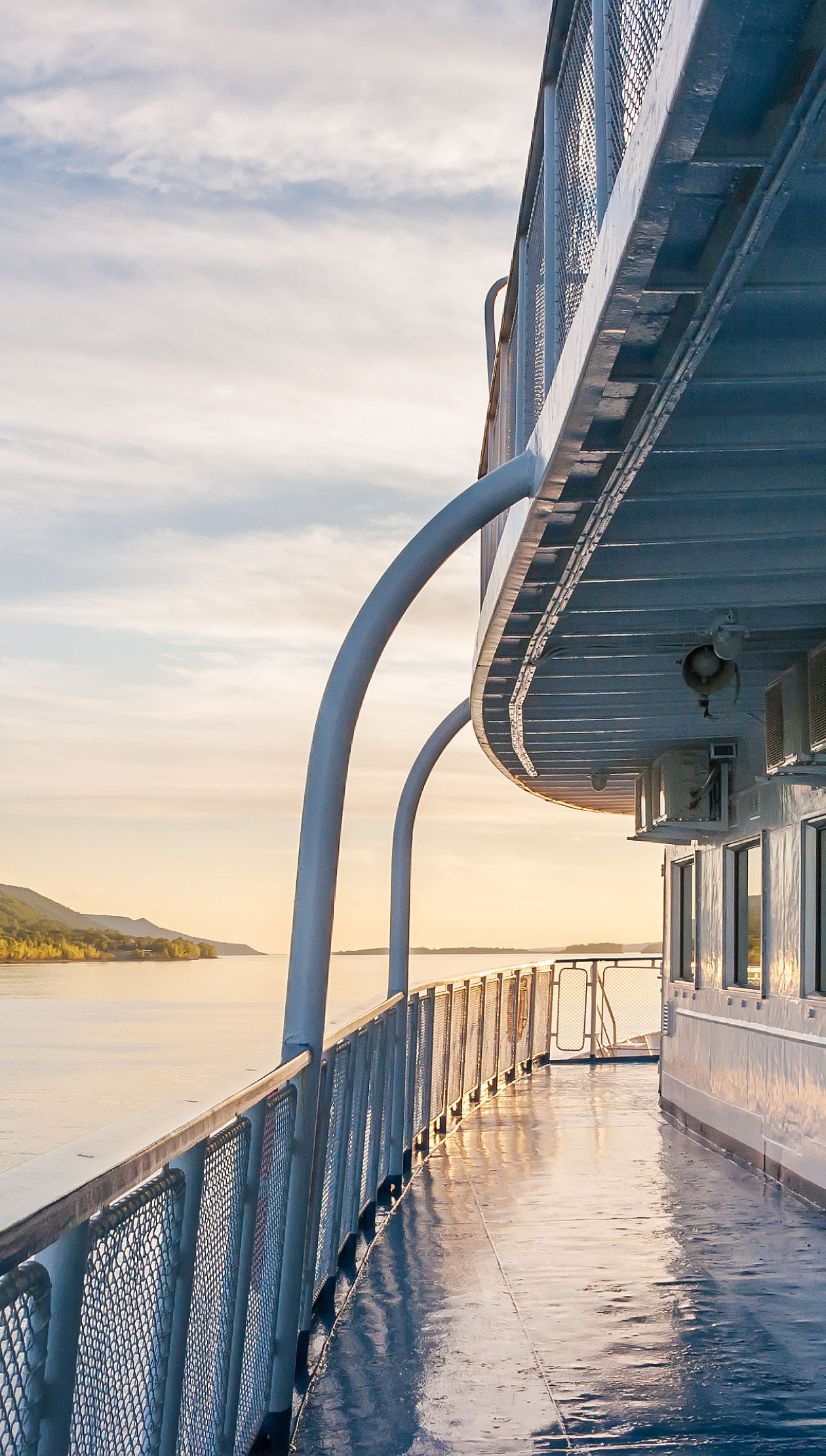
The wider cruise experience begins upstream on the Padma, one of Bangladesh's defining rivers. Its scale is immediately impressive: open water stretches toward distant banks, river islands shift with the seasons, and ferries move between communities that have depended on the water for generations. As a ship continues south through linked waterways, the scenery becomes more intimate. Palms lean over narrow channels, rice fields meet the river's edge, and the air grows warmer and more humid as the route approaches Khulna, Bagerhat, and Mongla.
Mongla itself stands on the Pashur River rather than directly on the Padma. However, it belongs to the same vast delta system and can form the southern climax of longer Bangladesh river cruises. Here, the industrial presence of a working port sits close to the forested waterways of the Sundarbans. That contrast gives Mongla a distinctive character: practical, atmospheric, and deeply tied to the movement of ships, goods, people, and tides.
The Padma River and the Delta Route to Mongla
A cruise linking the Padma with Mongla combines broad-river navigation with the narrower waterways of southwestern Bangladesh. The route may vary according to vessel size, water levels, permits, and seasonal conditions, but the experience is united by a constant sense of movement through one of the world's great river landscapes.
Mawa and the Upper Padma
Mawa River Cruises offer a memorable introduction to the Padma. The river is wide, active, and constantly changing, with ferries, fishing craft, and cargo vessels sharing the water. From the deck, travelers can watch the shoreline drift past in long bands of farmland and settlement. Mawa also provides a striking meeting point between traditional river travel and modern infrastructure.
The Padma Bridge
The Padma Bridge is one of the river's most recognizable landmarks. Passing beneath it or viewing it from the water emphasizes the river's extraordinary width and the engineering required to connect its banks. For cruise guests, it creates a dramatic visual chapter within the journey and a useful point for onboard talks about transport, trade, and the changing relationship between road and river travel.
Goalundo and Daulatdia
Goalundo and Daulatdia have long been associated with ferry traffic and the meeting of major waterways. The area feels energetic, with vessels arriving and departing, people moving between riverbanks, and small businesses serving travelers. A stop or scenic passage here provides insight into the everyday importance of the Padma as a transport corridor rather than simply a landscape to be admired.
Rajbari and Faridpur
The river districts around Rajbari and Faridpur introduce a gentler rural rhythm. Depending on the itinerary, guests may visit farms, local workshops, produce markets, or riverside communities. These excursions are often simple but memorable, offering conversations with residents and a closer look at how agriculture, fishing, and seasonal flooding influence daily life.
Kushtia and Paksey
Longer Padma River cruises may extend toward Kushtia and Paksey. The region adds literary, musical, and industrial history to the voyage, while the Hardinge Bridge creates another impressive river landmark. Shore programs can include heritage interpretation, regional crafts, and visits that place the Padma within the broader cultural story of western Bangladesh.
Chandpur and the Great Confluence
At Chandpur, the river journey reaches a vast meeting of waters associated with the Padma and Meghna systems. The scale of the confluence can be remarkable, especially when currents, weather, and light create shifting patterns across the surface. Chandpur is also known for its strong fishing identity, making it a natural place for culinary excursions and discussions about river ecology and local livelihoods.
Barisal and the Lower Delta Waterways
Southbound itineraries can continue through the intricate channels around Barisal, where the cruise atmosphere changes from open-river grandeur to close-up delta life. Boats pass beneath overhanging trees, beside cultivated banks, and through waterways used as local roads. Market visits, village walks, and small-boat excursions reveal a landscape in which travel, trade, and social life often begin at the water's edge.
Khulna, the Urban River Hub
Khulna river cruises offer access to one of southwestern Bangladesh's principal urban centers. The city serves as a practical staging point for voyages to Mongla and the Sundarbans, while its riverfront reflects the region's commercial energy. Excursions may focus on local food, industry, museums, or the environmental importance of the nearby mangrove zone.
Bagerhat and Its Brick Heritage
A visit to Bagerhat brings architectural depth to the itinerary. The historic mosque city is celebrated for its brick monuments and carefully planned medieval urban landscape. Guided visits allow travelers to move beyond the riverside scenery and understand how trade, faith, engineering, and settlement developed across the delta centuries ago.
Mongla, the Pashur River, and the Sundarbans
Mongla is the final transition point between inland cruising and mangrove exploration. Ships enter the Pashur River corridor, where tidal movement becomes more noticeable, and the horizon begins to fill with forest. From Mongla, smaller vessels can continue toward Sundarbans river cruises, exploring creeks, watchtowers, mudflats, and wildlife habitats. The scenery is quieter here, but never empty: birds move above the canopy, fishermen work along the channels, and the forest seems to breathe with the tide.
What Makes Cruising Toward Mongla Unique
The appeal of this route lies in its contrasts. Guests experience the immense width of the Padma, the intensity of ferry ports, the calm of agricultural waterways, the brick heritage of Bagerhat, and the tidal wilderness near Mongla. Few river journeys combine modern infrastructure, working ports, village life, historic monuments, and protected mangrove landscapes in a single itinerary.
Food adds another layer to the voyage. Menus may feature freshly prepared river fish, rice, vegetables, lentils, chicken, tropical fruit, and gently spiced regional dishes. Culinary excursions can include produce markets, family-run kitchens, and demonstrations that explain how river conditions and seasonal harvests influence local cooking.
Mongla River Cruise Itineraries by Length and Theme
Short Cruises: 3 to 5 Days
A short journey typically focuses on Khulna, Mongla, and the northern edge of the Sundarbans. Guests might board a compact vessel, cruise the Pashur River, take guided wildlife trips by small boat, visit a forest observation point, and spend an evening listening to naturalist talks. These itineraries suit travelers who want a concentrated experience with limited time.
Medium Cruises: 6 to 9 Days
Medium-length cruises can combine Mongla and the Sundarbans with Bagerhat, Khulna, and Barisal, as well as selected rural waterways. The additional days create space for slower exploration, including village walks, market visits, sunrise photography, and more extensive forest navigation. Guests gain a fuller sense of the delta's cultural and environmental diversity.
Long Cruises: 10 Days or More
Long itineraries may link Dhaka or the central river network with Mawa, the Padma corridor, Barisal, Khulna, Bagerhat, Mongla, and the Sundarbans. This is the most rewarding format for travelers who want to understand Bangladesh through its waterways. Days alternate between broad-river cruising, cultural excursions, historic sites, and quieter passages through narrow channels.
Special-Interest Cruises
Mongla itineraries are especially well suited to wildlife, photography, history, and culinary themes. A natural history cruise may emphasize mangrove ecology and birdwatching, while an architectural journey can pair Bagerhat with river towns and historic infrastructure. Culinary departures can explore fish markets, regional cooking, and seasonal produce. Rather than following European-style wine or Christmas-market formats, these cruises build their identity around the landscapes and traditions of Bangladesh.
The Onboard Experience
- Ship sizes and ambiance: Vessels range from simple regional boats to comfortable small ships with private cabins, shaded observation areas, and open decks. The mood is generally informal, expeditionary, and closely connected to the river.
- Cuisine and wine: Meals are often locally inspired and served as shared dishes or buffets. Wine availability is usually limited and varies by vessel, so travelers should confirm their selections before booking. Tea, coffee, juices, and soft drinks are more commonly offered.
- Excursions and enrichment: Programs may include naturalist-led boat trips, heritage walks, market visits, village encounters, cooking demonstrations, and talks on river ecology, history, and conservation.
Something for Everyone
- Traveler types: Couples often enjoy the peaceful scenery and shared discovery
- benefit from the sociable atmosphere.
- Families will appreciate wildlife-focused programs.
- Luxury travelers can choose private departures or premium cabins where available.
A Journey Shaped by Water
A river cruise to Mongla is more than a route across Bangladesh. It is a gradual passage from the power of the Padma to the tidal stillness of the Sundarbans, shaped by working ports, historic cities, riverside communities, and landscapes that change with every bend. The journey leaves travelers with a deeper understanding of how water carries culture, memory, livelihood, and life through the heart of the delta.