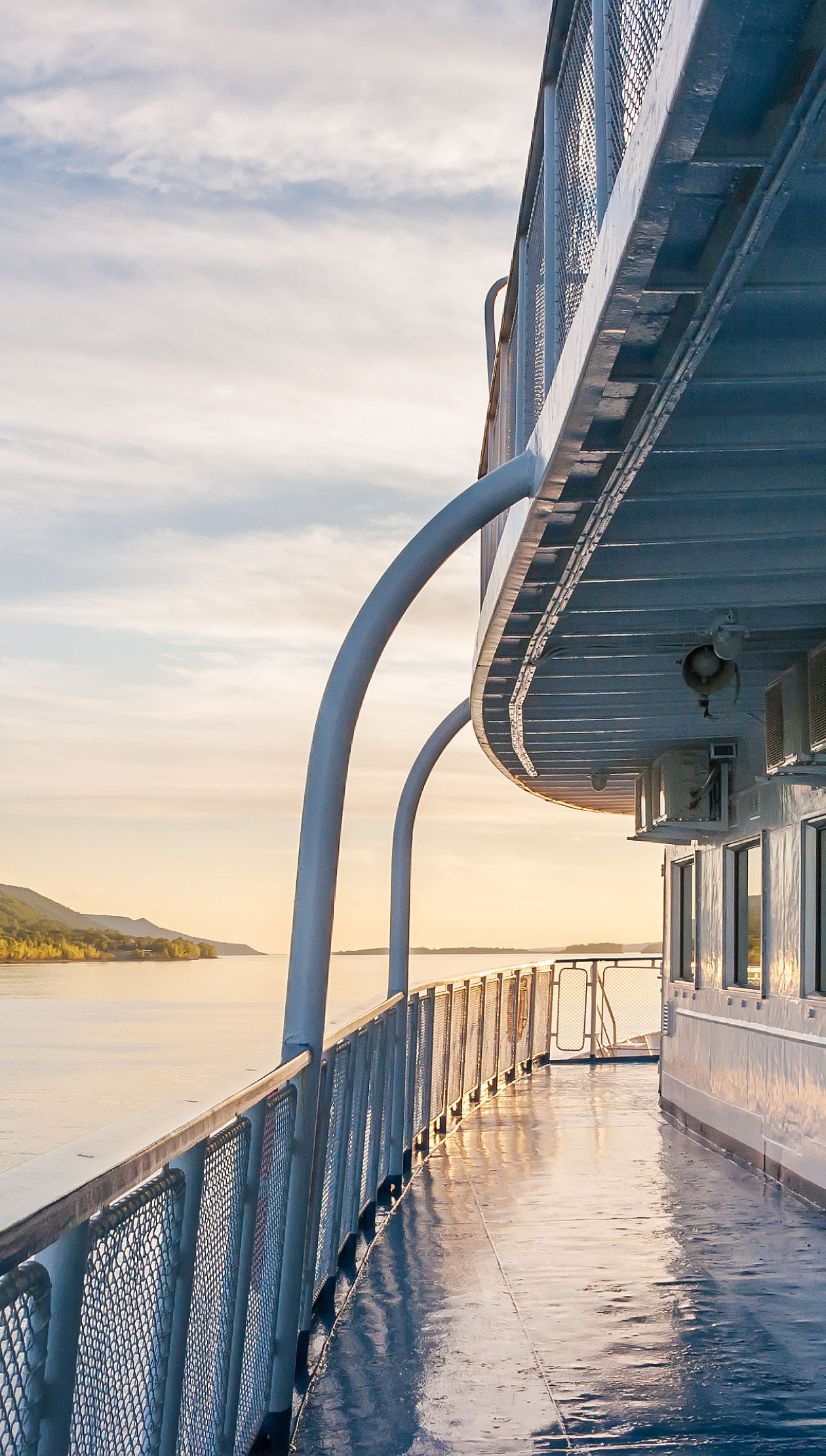
세뇨라 다 리베이라(Senhora da Ribeira) 강 크루즈는 유럽에서 가장 독특한 문화 경관 중 하나를 가로지르는 여정의 일부입니다. 강이 굽이칠 때마다 두로 계곡의 또 다른 면모가 드러납니다. 여러 세대에 걸쳐 노동자들이 쌓아 올린 돌담, 강 위 높은 곳에 자리 잡은 와이너리, 좁은 도로와 유서 깊은 철도로 연결된 작은 마을들이 바로 그것입니다. 배가 동쪽으로 이동하며 푸르른 하류 계곡에서 더 건조하고 바위가 많은 상류 두로 지역의 풍경으로 들어설수록 경치는 점점 더 장엄해집니다.
세뇨라 다 리베이라(Senhora da Ribeira)는 도우로 강 북쪽 강둑의 한적한 곳에 자리 잡고 있습니다. 보호된 부두 덕분에 강 선박들은 포도나무와 토종 식물로 뒤덮인 언덕 아래에 정박할 수 있습니다. 이곳은 수많은 기념물을 나열하기보다는, 점점 더 희귀해지고 있는 ‘고요함’을 선사합니다. 승객들은 선데크에서 방해받지 않는 전망을 즐기며, 계곡 위로 변해가는 빛을 관찰하고 광활한 풍경의 규모를 만끽할 수 있습니다. 일부 여정의 경우, 배는 더 동쪽 지역으로의 탐방을 마친 후 이곳에 도착하기 때문에, 세뇨라 다 리베이라는 상류 도우로에서 갈라 디너나 마지막 밤을 보내기에 분위기 있는 장소가 됩니다.
세뇨라 다 리베이라의 규모는 소박하지만, 그 위치 덕분에 많은 도우로 강 크루즈 여정에서 특별한 자리를 차지하고 있습니다. 바람을 막아주는 부두는 스페인 국경과 중앙 와인 산지 사이에서 평온한 하룻밤을 보낼 수 있는 정박지를 제공합니다. 육지에서 주의를 뺏는 요소가 거의 없기 때문에, 지나가는 기차 사이의 고요함, 경사면 위를 맴도는 새들, 계곡의 지형을 따라 늘어선 포도밭 등 풍경 그 자체에 초점이 맞춰집니다.
두로 강 크루즈
두로 강은 스페인에서 발원하여 포르투갈 북부를 가로질러 서쪽으로 흐른 뒤, 포르투에서 대서양으로 흘러듭니다. 포르투갈에서 이 강은 일련의 수문과 댐을 지나며, 한때 위험했던 상업용 수로를 현대적인 강 선박이 항해할 수 있는 항로로 탈바꿈시켰습니다. 오늘날 크루즈는 역사적인 도시, 와인 생산 마을, 고고학 유적지, 그리고 외딴 시골 지역을 연결합니다.
세뇨라 다 리베이라(Senhora da Ribeira) 주변의 상류 두로 강은 포르투 인근의 강과는 확연히 다른 분위기를 자아냅니다. 마을은 더 작아지고, 공기는 더 따뜻하고 건조해지며, 경사면에는 짙은 색의 암석 띠가 드러나 있습니다. 계단식 포도밭은 여전히 곳곳에 펼쳐져 있지만, 아몬드 나무와 올리브 숲, 경작되지 않은 언덕들이 풍경에 다양성을 더합니다. 경작지와 험준한 지형 사이의 이러한 대비는 도우로 강 크루즈 여행의 가장 큰 매력 중 하나입니다.
피냐오와 와인 산지의 심장부
피냐오 강 크루즈는 손님들을 도우로 계곡에서 가장 잘 알려진 와인 생산지 중 한 곳으로 안내합니다. 포도밭이 강가에서 가파르게 솟아오르며, 양쪽 강둑의 요지에는 유명한 와이너리들이 자리 잡고 있습니다. 이 마을의 유서 깊은 기차역은 전통적인 포도 수확과 와인 운송을 묘사한 장식 패널로 유명합니다. 여행 일정에는 종종 가이드와 함께하는 와이너리 방문, 와인 저장고 투어 및 시음이 포함되며, 짧은 보트 투어를 통해 마을을 둘러싼 계단식 경사면을 가까이서 감상할 수 있습니다.
페소 다 레구아와 도우로 박물관
페소 다 레구아는 도우로 와인의 유통 및 운송을 관장하는 중요한 중심지로 발전했습니다. 넓은 강변 지역은 여전히 강과 밀접하게 연결되어 있으며, 도우로 박물관에서는 지리적 조건, 노동, 무역이 이 계곡을 어떻게 형성해 왔는지 설명하고 있습니다. 레구아에서 방문객들은 주변 언덕을 탐방하며 탁 트인 전망을 감상하고 포도밭을 둘러볼 수 있습니다. 또한 이 마을은 라메고(Lamego)로 편리하게 이동할 수 있어, 도우로 크루즈에서 가장 중요한 관광 거점 중 하나로 꼽힙니다.
라메고와 그 기념비적인 유산
강에서 떨어진 곳에 위치한 라메고(Lamego)는 보통 페소 다 레구아에서 버스를 타고 이동합니다. 이 도시는 언덕 꼭대기에 자리한 성지, 웅장한 계단, 그리고 우아한 구시가지로 유명합니다. 가이드와 함께하는 투어를 통해 지역 역사의 여러 시기를 반영하는 종교 예술품, 조경된 테라스, 건축물을 감상할 수 있습니다. 라메고는 또한 주변 시골 지역에서 생산된 건조육, 현지 치즈, 빵, 와인을 맛볼 기회를 제공하여 여행에 미식적 즐거움을 더해줍니다.
포스 코아와 선사 시대 암각화
더 동쪽으로 가면, 포스 코아는 여행객들에게 세계에서 가장 중요한 야외 선사 시대 예술 경관 중 하나를 선보입니다. 코아 계곡을 따라 말, 야생 소 및 기타 동물을 묘사한 것을 포함하여 수천 점의 고대 암각화가 확인되었습니다. 크루즈 투어를 통해 코아 강과 도우로 강이 합류하는 지점을 내려다보는 현대적인 박물관을 방문할 수도 있습니다. 고대의 인간적 표현과 웅장한 자연 경관이 어우러져 이 지역에 탁월한 문화적 깊이를 더해줍니다.
레베리뉴와 두로 강 하류
레베리뉴는 포르투에 더 가까운, 녹음이 우거진 시골 지역에 위치해 있습니다. 이곳은 주로 도우로 강 여정의 마지막 단계에서, 특히 수문 운영 시간에 따라 항해 일정이 영향을 받을 때 정박지로 자주 이용됩니다. 주변 풍경에는 숲이 우거진 경사면, 강변 마을, 농경지가 펼쳐집니다. 상류 두로 지역의 웅장한 암반과 포도밭을 지나면, 레베리뉴는 강이 더 도시적인 구간으로 부드럽게 이어지는 전환점을 제공합니다.
포르투와 대서양 연안
대부분의 장거리 도우로 강 크루즈는 포르투에서 시작하고 끝납니다. 이 도시는 북쪽 강둑 위로 계단식 지형을 이루며 솟아 있어, 도착하는 선박들에게 교회 첨탑, 다채로운 주택, 역사적인 상업 건물들을 선보입니다. 관광 일정으로는 구시가지, 강변 거리, 시장, 건축적 랜드마크 탐방이 포함될 수 있습니다. 물 위에서 승객들은 각기 다른 시대의 공학 기술을 보여주는 일련의 다리 아래를 지나며, 결국 대서양 해안을 향해 펼쳐지는 탁 트인 전망을 만끽하게 됩니다.
빌라 노바 데 가이아와 도우로 마리나
포르투 강 건너편에 위치한 가이아(구 빌라 노바 데 가이아)는 포트 와인의 숙성 및 저장지로 유명합니다. 이곳의 유서 깊은 와인 저장고들은 수세기 동안 도우로 계곡과 국제 시장을 연결해 온 무역의 역사를 간직하고 있습니다. 시음 체험을 통해 주요 포트 와인 스타일 간의 차이점과 블렌딩 및 숙성의 중요성을 알아볼 수 있습니다. 하류 쪽으로 더 내려가면, 도우로 마리나에서는 레저 보트와 강변 레스토랑, 해안으로의 편리한 접근성을 통해 강이 지닌 현대적인 면모를 만나볼 수 있습니다.
도루 강을 따라 만나는 문화, 요리, 풍경
두로 강 크루즈는 사람들과 험준한 지형 간의 상호작용이 만들어낸 독특한 경험을 선사합니다. 선상에서 바라볼 수 있는 포도밭 계단식 경작은 기계 사용이 여전히 어려운 경사면에서 대를 이어 이어진 육체 노동을 통해 조성되었습니다. 가이드의 해설과 기상 투어를 통해 포도 품종 선정, 수확, 블렌딩 과정을 알아볼 수 있으며, 이를 통해 와인이 이 지역의 정체성과 뗄 수 없는 관계에 있음을 이해하게 됩니다.
식사 메뉴로는 구운 생선, 장시간 조리한 고기, 제철 채소, 지역 치즈, 아몬드를 주재료로 한 디저트 등이 제공됩니다. 포트 와인이 당연히 주를 이루지만, 승객들은 도우로 지역의 스틸 레드 와인과 화이트 와인도 맛볼 수 있습니다. 선상 메뉴는 종종 지역 요리를 누구나 쉽게 즐길 수 있는 국제적인 스타일로 재해석하며, 현지 식재료를 항해 중 지나치는 와이너리의 와인과 페어링해 제공합니다.
세뇨라 다 리베이라 크루즈 일정
3~5일간의 단기 두로 강 크루즈
단기 도우로 강 크루즈 여정은 주로 포르투, 빌라 노바 데 가이아, 페소 다 레구아, 피냐오를 중심으로 진행됩니다. 이 여정은 포르투갈에서의 광범위한 휴가 일정에 강 크루즈 체험을 더하고자 하는 여행객에게 적합합니다. 주요 볼거리로는 포르투의 다리 아래를 항해하는 것, 가이아의 와인 저장고 방문, 하나 이상의 수문을 통과하는 것, 그리고 피냐오 인근 와이너리에서 와인 시음 등이 있습니다. 세뇨라 다 리베이라(Senhora da Ribeira)는 일부 편도 노선이나 상류 도우로(Upper Douro)까지 확장된 압축된 여정에 포함될 수 있습니다.
6~9일간의 중형 강 크루즈
6~9일간의 여정은 세뇨라 다 리베이라 크루즈의 전형적인 경험을 선사합니다. 선박은 보통 포르투에서 출발해 스페인 국경 방향으로 왕복하며, 레구아, 피냐오, 포스 코아, 세뇨라 다 리베이라 등에서 정차하거나 관광을 진행합니다. 승객들은 하루 종일 이어지는 아름다운 항해, 포도원 방문, 문화 투어, 그리고 갑판에서 휴식을 취할 수 있는 시간을 만끽할 수 있습니다. 일부 여정에는 국경을 넘어 역사적인 도시 살라망카로 향하는 버스 관광도 포함되어 있습니다.
10일 이상의 장거리 강 크루즈
더 긴 휴가 일정에서는 도우로 강 크루즈와 리스본, 포르투, 마드리드 또는 이베리아 반도의 다른 여행지에서의 체류를 결합합니다. 여유 시간을 활용해 승선 전 포르투를 둘러보거나, 수도에서 며칠 밤을 보내거나, 크루즈 종료 후 내륙 도시를 방문할 수 있습니다. 이러한 프로그램은 도우로 강의 와인 유산을 대서양 무역, 왕실 역사, 예술 및 지역 문화라는 더 넓은 맥락 속에서 이해하고 싶은 여행객에게 이상적입니다.
와인, 미식 및 문화 여행
- 와인에 중점을 둔 크루즈에는 가이드가 동행하는 시음, 와이너리에서의 점심 식사, 블렌딩 시연, 그리고 보호 지역인 도우로 와인 산지의 발전에 관한 강연이 포함될 수 있습니다.
- 미식 크루즈에는 시장 방문, 요리 시연, 지역 특산물을 활용한 메뉴가 포함될 수 있습니다.
- 예술 및 역사 여정은 포스 코아(Foz Coa) 인근의 선사 시대 암각화, 라메고(Lamego)의 기념물, 포르투(Porto)의 역사적 건축물을 중점적으로 다룰 수 있습니다.
- 가을 수확철에 진행되는계절별 크루즈는 활기 넘치는 포도밭과 따뜻한 색감을 선사하며, 축제 시즌 크루즈는 크루즈 전후의 조명이 빛나는 도시, 축제 분위기의 만찬, 계절 시장을 결합할 수 있습니다.
두로 강 유람선에서의 생활
선박 규모와 분위기
도루 강 선박은 강에 설치된 수문을 통과하고 더 좁은 굴곡을 항해해야 하기 때문에, 일반적으로 더 넓은 유럽 강에서 운항하는 선박들보다 규모가 작습니다. 대부분의 선박에는 바깥을 바라보는 객실, 파노라마 전망 라운지, 레스토랑, 개방형 선데크가 마련되어 있습니다. 일부 선박에는 작은 수영장이나 그늘진 휴식 공간도 있습니다. 분위기는 편안하고 사교적이며, 지나가는 풍경이 여전히 가장 큰 매력입니다.
요리와 와인
아침과 점심 식사는 대개 캐주얼한 분위기인 반면, 저녁 식사에는 정교하게 구성된 메뉴와 이에 어울리는 와인이 제공됩니다. 친숙한 세계 각국의 요리들과 함께 지역 특산 요리도 선보입니다. 특별한 저녁 행사에서는 도우로 와인, 현지 요리, 또는 여정 중 만나는 다양한 문화를 기념하기도 합니다. 세뇨라 다 리베이라(Senhora da Ribeira) 근처에서 열리는 갈라 디너는 어둑한 계곡과 고요한 강이 만들어내는 자연스러운 아늑한 분위기 덕분에 특히 기억에 남을 만한 경험이 될 수 있습니다.
관광 및 문화 체험
매일 진행되는 탐방 일정에는 버스 이동, 가이드와 함께하는 산책, 박물관 방문, 와인 시음이 포함됩니다. 선상 강연에서는 포도 재배, 강 항해, 지역 역사, 계곡의 계단식 농경지 조성 과정 등을 다룰 수 있습니다. 활동 강도는 다양하며, 많은 여행사가 짧은 산책을 선호하는 손님을 위해 더 수월한 대안을 제공합니다. 역사 지구, 저택, 전망대 등을 방문할 때는 계단, 경사면, 고르지 않은 노면을 걸어야 할 수 있으므로 편안한 신발을 준비하는 것이 좋습니다.
모두를 위한 매력
- 커플들은 아늑한 선박, 포도밭 풍경, 여유로운 식사 덕분에 도우로 강을 찾습니다.
- 혼자 여행하는 분들은 선상 내의 친근한 분위기와 체계적으로 구성된 외출 프로그램을 통해 즐거운 시간을 보낼 수 있습니다.
- 나이가좀 더 든 자녀를 동반한 성인들은 이 여정을 통해 고고학, 공학, 음식 문화를 탐구할 수 있습니다.
- 럭셔리 여행을 즐기는 분들은 넓은 스위트룸, 세련된 다이닝, 소규모 탐방 그룹을 갖춘 선박을 선택할 수 있습니다.
전반적으로 차분한 여행 리듬은 이 여행 스타일을 처음 접하는 분들에게도 적합하며, 아름다운 경치와 풍부한 문화 체험을 통해 강 크루즈 여행의 매력을 충분히 느낄 수 있습니다.
세뇨라 다 리베이라의 변함없는 매력
세뇨라 다 리베이라를 따라 떠나는 강 크루즈는 도우로 강이 지닌 가장 평화롭고 본연의 모습을 보여줍니다. 계단식 포도밭, 고대 암각화, 유서 깊은 와인 마을, 그리고 고요한 언덕 아래에서 보내는 저녁 시간 사이에서, 이 여정은 단순히 아름다운 풍경을 지나가는 것 이상의 의미를 갖게 됩니다. 이 여정은 자연과 인내, 그리고 여러 세대에 걸친 인간의 솜씨가 빚어낸 풍경과 가까이에서 만나는 경험을 선사합니다.