Liveaboard.com

River Cruises in Austria

  • 100% Best Price Guarantee

River cruises in Austria

Discover Storybook Scenery and Imperial Cities on a River Cruise Through Austria

Explore Austria’s historic landscapes, cultural treasures, and breathtaking scenery along the storied Danube River. Austria’s river cruises along the Danube offer an immersive journey through Europe’s cultural heart. As you drift past vineyard-clad valleys, medieval castles, and vibrant cities like Vienna and Linz, each stop unveils Austria’s timeless charm, rich history, and picturesque landscapes.

From the UNESCO-listed Wachau Valley to the Baroque splendor of Melk Abbey, an Austrian river cruise combines adventure, relaxation, and discovery, making it a captivating experience for every type of traveler.


Austria's Main Waterway: The Danube River

From the imperial grandeur of Vienna to the storybook charm of Dürnstein, Austria offers an unforgettable river cruise experience that weaves together breathtaking landscapes, rich cultural heritage, and world-class cuisine. As your ship glides along the legendary Danube River, you’ll encounter medieval towns, vineyard-covered valleys, and ornate abbeys perched high above the water—each bend revealing a new scene from a living European masterpiece.

The Lifeline of Central Europe

The Danube River is Europe’s second-longest river and a vital thread through the heart of Austria. As it flows eastward from Germany into Slovakia, it carves a path through some of Austria’s most captivating landscapes, offering a river cruise experience that is both scenic and soul-stirring. Whether sailing past rolling vineyards in the Wachau Valley or admiring the skyline of Vienna, the Danube sets the stage for a remarkable cultural journey.

Vienna: Imperial Elegance and Artistic Legacy

No Austrian river cruise is complete without a stop in Vienna, the capital city renowned for its classical music, palaces, and grand boulevards. Step ashore to explore the magnificent Schönbrunn Palace, stroll the elegant Ringstrasse, or take in a performance at the famed Vienna State Opera. Don’t miss the chance to savor a slice of Sachertorte in a traditional Viennese café.

Dürnstein: Storybook Beauty in the Wachau Valley

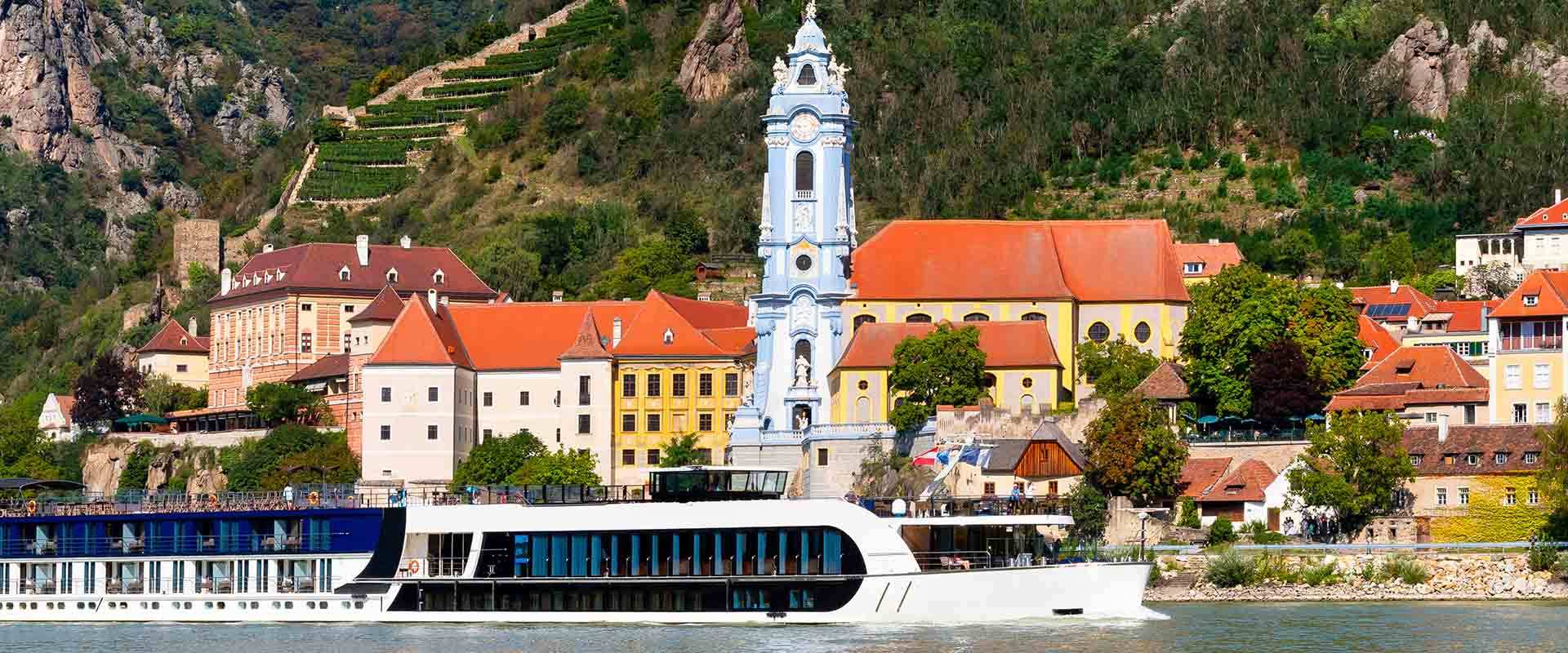
Located in the heart of the UNESCO-listed Wachau Valley, the picturesque town of Dürnstein is a highlight for many river cruisers. Famous for its blue-baroque abbey and the ruins where King Richard the Lionheart was once imprisoned, Dürnstein offers charming cobblestone streets, local wineries, and panoramic hilltop views over the Danube.

Linz: A Fusion of History and Innovation

Further upriver lies Linz, Austria’s third-largest city and a UNESCO City of Media Arts. Here, medieval churches stand alongside cutting-edge digital art museums like the Ars Electronica Center. Enjoy a walk along the Danube Promenade or sample a local delicacy, the original Linzertorte.

Melk: A Baroque Jewel Above the Danube

High above the river, the golden spires of Melk Abbey dominate the skyline. This Benedictine masterpiece is a highlight of many Danube itineraries, offering richly frescoed halls, an ornate library, and sweeping views over the river valley. Melk is also a gateway to the scenic Wachau wine region, perfect for tastings and vineyard strolls.

Grein: Theatrical Heritage in a Riverside Hamlet

Grein is a must for those who appreciate quaint towns with authentic Austrian charm. Visit the oldest working theater in Austria, Stadttheater Grein, and enjoy a slower pace as you wander past colorful homes, riverside cafes, and the hilltop Greinburg Castle.

The Unique Appeal of Cruising Through Austria

Scenery That Tells a Story

From lush vineyards and medieval fortresses to alpine vistas and golden-domed abbeys, river cruising through Austria is like gliding through a living history book. The gentle pace of the ship allows time to absorb the beauty of every detail—sunlight dancing on vineyard terraces, castles cloaked in morning mist, and pastel villages nestled along the banks.

Culture and Cuisine

Austrian river cruises offer more than just sights—they’re a sensory immersion into regional traditions. Enjoy onboard tastings of Wachau wines, indulge in schnitzel or strudel during shore excursions, and attend classical music performances in Vienna’s palaces. These enriching encounters add depth and delight to every voyage.

The Onboard Experience: Comfort, Culture, and Connection

Ship Sizes and Ambiance

Most Austrian river cruises are aboard intimate ships carrying 100–190 guests. This smaller scale allows for a relaxed, boutique feel, personalized service, and seamless docking in the heart of each destination.

Cuisine and Wine

Dining onboard reflects Austria’s rich culinary heritage—expect multi-course meals featuring local produce paired with regional wines like Grüner Veltliner or Riesling from the Wachau. Many ships also offer open-air terraces and specialty restaurants for al fresco dining with a view.

Excursions and Enrichment

Daily excursions include guided city tours, castle visits, vineyard strolls, and bike rides along the Danube. Onboard, enjoy cultural performances, language lessons, wine tastings, and expert talks to deepen your understanding of Austria’s art, history, and traditions.

Who Cruises Austria

  • Couples: Romantic settings and elegant dining make Austria ideal for anniversaries and honeymoons.
  • Solo Travelers: Small-group excursions and friendly ship environments foster connection and camaraderie.
  • Luxury Seekers: Premium lines offer butler service, spa treatments, and curated cultural access.
  • Multigenerational Families: Enrichment programs and varied shore excursions cater to all ages and interests.


Itinerary Types: Tailored to Every Traveler

Short Itineraries (3–5 Days): Quick Cultural Getaways

Perfect for first-time cruisers or those short on time, these itineraries often start or end in Vienna and include highlights such as Melk Abbey and Dürnstein. Enjoy wine tastings, guided city walks, and panoramic cruising through the Wachau Valley—all packed into a few unforgettable days.

Medium Itineraries (6–9 Days): In-Depth Exploration

Spend a week cruising through Austria and neighboring countries like Germany, Slovakia, and Hungary. These cruises typically visit Vienna, Linz, Melk, and Bratislava. Travelers enjoy guided excursions, historical tours, and culinary delights on board and ashore.

Long Itineraries (10+ Days): Grand Danube Voyages

For travelers seeking a more immersive journey, long-haul cruises often sail from Germany to Romania, with several days exploring Austria’s Danube treasures. Expect extended time in Vienna and Linz, multiple cultural excursions, and a front-row seat to the evolving landscapes of Central and Eastern Europe.

Special Interest Cruises: Enriching Themes, Curated Experiences

  • Wine Cruises: Featuring private tastings, vineyard visits, and guest lectures from vintners across the Wachau Valley.
  • Art and History Cruises: Delve into Austria’s imperial past with museum visits, castle tours, and onboard lectures by historians.
  • Christmas Market Cruises: Available from late November, these cruises bring the festive spirit alive with visits to Austria’s most magical holiday markets in Vienna and Linz.
  • Culinary Cruises: Celebrate Austria’s gastronomic heritage with cooking demos, chef-led tastings, and curated regional menus.

Plan Your Austrian River Cruise

Whether you're drawn by Vienna's classical music, the vineyards of the Wachau, or the golden glow of Melk Abbey, a river cruise through Austria offers a harmonious blend of relaxation, discovery, and cultural immersion. With curated itineraries and immersive experiences, this is slow travel at its most refined.

“To drift along the Danube in Austria is to journey through centuries—where every town whispers a story, every vista stirs the soul, and every moment invites you to linger a little longer.”

What to know about river cruising in Austria

What is an Austria river cruise like?

Austria river cruises sail the Danube through the Wachau Valley's terraced vineyards, typically stopping at Melk, Dürnstein, and Vienna. Most itineraries are 7–8 nights and form part of a longer Budapest-to-Vienna or Passau-to-Budapest routing, since Austria itself only accounts for a few days of the river. As of 2026, the sailing season runs from April through December, with a dedicated Christmas market season in late November and December.

Do Danube river cruises stop in Vienna?

Yes, Vienna is a near-universal stop on Danube itineraries, usually with an overnight so guests can take in Schonbrunn Palace, the Ringstrasse, and a classical concert. Ships dock near the Reichsbrücke, about 3 miles (5 km) from the historic center, with shuttles or transfers provided.

Is the Wachau Valley worth visiting on a Danube river cruise?

Absolutely — the roughly 22-mile (35 km) Wachau between Melk and Krems is the prettiest leg of the entire Danube, lined with apricot orchards, vineyards, and Baroque abbeys. Cruising it by daylight, ideally during spring blossom or the autumn harvest, is a highlight many travelers rate above the cities.

What does a Germany–Austria river cruise cover?

A Germany–Austria river cruise typically follows the Danube or Main-Danube Canal from Nuremberg or Regensburg through Passau and into the Austrian towns of Linz, Melk, and Vienna, covering roughly 250 miles (402 km). These itineraries usually run 7–10 nights and are among the most common Danube routings sold. Locks along this stretch can add several hours to transit times, so onboard schedules build in flexibility around lock passages.

What is a river cruise combining Switzerland and Austria?

Because Switzerland and Austria don't share a major connecting river route, cruises marketed this way typically combine a Rhine sailing through Switzerland with a separate Danube sailing through Austria, linked by a coach transfer or rail connection between the two. These combination trips usually run longer than a standard river cruise, often 10–14 nights total. Travelers should confirm with the operator whether the transfer between rivers is included in the fare.

What is a Danube river cruise through Austria?

The Austrian stretch of the Danube runs through the Wachau Valley between Melk and Krems, a scenic 20-mile (32 km) section lined with vineyards, castle ruins, and the Melk Abbey. Most Danube itineraries spend one full day here, often with a coach or bike excursion alongside the river cruise leg. As of 2026, this section is typically sailed by day, since low bridges elsewhere on the river make night transit less practical here than on other stretches.

What is a Vienna river cruise like?

Vienna is a standard embarkation, disembarkation, or overnight port on nearly every Danube river cruise, with ships typically docking within walking distance of the Ringstrasse and St. Stephen's Cathedral. Most itineraries include a full day or two in the city, often paired with an evening classical music concert as an optional excursion. Pre- or post-cruise stays of two to three nights are common, given the city's museums and palaces.

Can you visit Salzburg on an Austria river cruise?

Salzburg sits away from the Danube's main river cruise route, so it's usually visited as a full-day coach excursion from a port like Passau or Linz, a drive of roughly 70 miles (113 km) each way. Some operators offer it as a pre- or post-cruise overnight extension instead of a single-day trip, given the drive time. Confirm with the operator whether the Salzburg excursion is included in the base fare or sold separately.

Do US travelers need a visa for an Austria river cruise?

As of 2026, US citizens can enter Austria and other Schengen Area countries for up to 90 days for tourism without a visa. Travelers should check passport validity requirements (typically at least three months beyond the return date) and confirm current ETIAS travel authorization requirements closer to departure, since the EU's online pre-registration system for visa-exempt visitors has an evolving rollout timeline.

What currency is used on an Austria river cruise?

Austria uses the euro (€), and most river cruise fares are quoted in US dollars or euros, with onboard purchases (drinks packages, spa treatments, gratuities) typically charged to a shipboard account. Credit cards are widely accepted in Vienna and in towns in the Wachau Valley, though small vendors and markets may prefer cash. ATMs are readily available in all major port towns.

When is the best time for an Austria river cruise?

May through September brings the mildest weather for the Wachau Valley, with daytime temperatures typically 65–80°F (18–27°C), while the Christmas market season in late November and December draws a separate wave of travelers to Vienna's holiday markets despite colder 30–40°F (−1–4°C) conditions. Spring cruises coincide with apricot blossoms in the Wachau, a regional specialty. Water levels can run low in late summer, occasionally requiring itinerary adjustments.

How long is a typical Austria river cruise?

Most Austria river cruises run 7–8 nights as part of a longer Danube itinerary connecting Budapest, Vienna, and Passau or Nuremberg. Austria itself typically accounts for 2–3 days of a longer sailing, since the country's river frontage is comparatively short. Shorter 4–5 night sailings focused solely on the Wachau Valley and Vienna are less common but do exist.

Where do Austria river cruises embark and disembark?

Vienna is the most common embarkation or disembarkation point for Austria river cruises, with ships docking near the city center along the Danube Canal. Linz and Passau (just across the German border) are the other typical turnaround points on longer itineraries. Airport transfers to Vienna International Airport are usually available as an add-on through the cruise line.

Are Austria river cruises affected by low water levels?

The Danube can run low in late summer and early autumn, particularly August through October, occasionally forcing operators to bus passengers between ports instead of sailing a full stretch. Spring sailings can face the opposite issue if snowmelt raises water levels too high for ships to clear bridges. Most lines build contingency routing into the itinerary and will notify guests of any changes before the departure date.

What should you pack for an Austria river cruise?

Layered clothing works best given the Danube's variable weather, from 65–80°F (18–27°C) summer days to 30–40°F (−1–4°C) around the Christmas markets. Comfortable walking shoes are essential for cobblestone streets in Vienna's old town and the vineyard paths of the Wachau Valley. A light rain jacket is worth packing regardless of season, since river valleys see periodic showers.


Similar destinations

Germany

Germany

  • Rating 8.4 out of 10
  • 33 cruise ships
  • 2 reviews
Hungary

Hungary

  • Rating 0.0 out of 10
  • 21 cruise ships
Slovakia

Slovakia

  • Rating 0.0 out of 10
  • 20 cruise ships
Czech Republic

Czech Republic

  • Rating 0.0 out of 10
  • 4 cruise ships
France

France

  • Rating 0.0 out of 10
  • 39 cruise ships
Poland

Poland

  • Rating 0.0 out of 10
  • 3 cruise ships

We’re here to help, 24/7.

Connect with our expert travel consultants to plan your next trip.

  • Josue Zarco
  • Mylene Issartial
  • Ester Canali
  • Farah Celada-Benito
  • Juliane Ball
  • Nina Kapp
  • Andrea Martinez