Liveaboard.com

Thailand Liveaboard Diving

Compare and book 34 liveaboards with 2,680 verified reviews online

  • 100% Best Price Guarantee

Liveaboard Diving in Thailand

Diving in Thailand gives scuba divers the chance to experience the lush underwater life of the Andaman Sea with relative ease and comfort.

Liveaboard diving in Thailand offers enough to tempt any serious diver, with healthy reefs, schools of fish, barracuda, whale sharks, and manta rays. But the country's food, people, and landscapes put the icing on the cake. It's no wonder that Thailand is a world favourite for divers and Southeast Asia-lovers alike, who return year after year for affordable liveaboard dive trips to incredible underwater destinations. Thailand is filled with some of the world's best dive sites, the most popular areas being Koh Tao and Koh Samui in the Gulf of Thailand, Koh Phi Phi, Koh Lanta and Phuket in the Andaman Sea.

The marine life in Thailand, given its location on the edge of the Coral Triangle, is extremely varied and the corals are very healthy. The Similan Islands, Richelieu Rock and its whale sharks, Mergui Archipelago and its undisturbed Burmese waters, and the southern pinnacles off Phuket promise dramatic underwater topography and a wealth of marine life. The relative closeness of these destinations to the Thai mainland makes Thailand the perfect country for a short or long liveaboard dive safari to the Similans or southern destinations like Koh Phi Phi, Koh Lipe, and Koh Lanta National Marine Park.


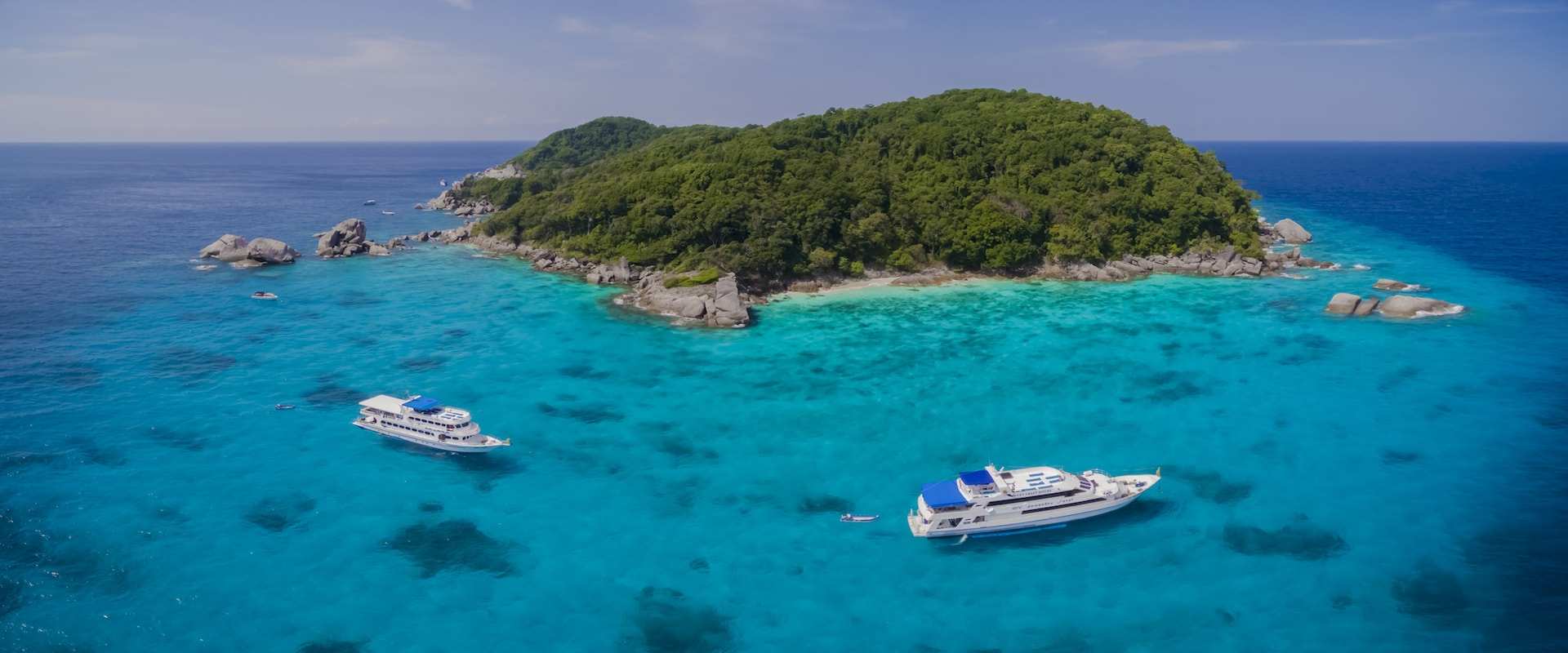
Liveaboard diving in the Similan Islands is the peak of Thailand dive experiences. Its huge granite boulders with caverns and arches offer shark diving, schools of fish, huge sea fans, and general world-class quality of habitats and species. Elephant Head Rock, West of Six, and Christmas Point are only a few of the 20 plus dive sites. Similan scuba diving varies in difficulty, but currents in certain areas makes them better-suited for experienced divers. Lush greenery and white sand beaches ring the nine islands, completing the view from above water. Liveaboard boats diving at Richelieu Rock will bring you to the pelagics capital of Thailand. Around this limestone pinnacle jutting from the depths of the ocean, upwellings rich with plankton invite whale sharks, mantas and barracudas, not to mention the macro-life hiding amongst Richelieu's famous purple soft corals and sea fans. The strong currents here call for experienced divers. Koh Tachai and Koh Bon, members of the Similan Island National Park, are often visited en route to Richelieu and offer more pelagics, Napoleon Wrasse, and even night diving for macro-critters.

A Liveaboard dive tour in the Andaman Islands includes the crown jewels of Thailand diving (Similans and Richelieu), but they don't stop there. One additional highlight of these trips is the lush Surin Islands, where non-divers and divers alike are bewitched by the small cove beaches, island wildlife, and accessible snorkelling sites- not to mention the highest hard coral diversity in Thailand. Another incredible North Andaman dive area is the Mergui Archipelago of Burma, which opened to divers in the late 1990s; its undisturbed ecosystem offers the whole range from huge pelagics down to tiny macro-critters. Experienced divers will be best suited to week-long North Andaman itineraries, which visit some remote destinations with currents and open water. North Andaman liveaboards run from October through May for best visibility and surface conditions. The water temperature averages a comfortable 27-30°C. Usually, North Andaman liveaboard itineraries include the Similan Island, Richelieu Rock, the Surin Islands, and sometimes south Burma, depending on the itinerary length. Liveaboard diving in the South Andaman Sea presents a wealth of offerings just off the front door of Phuket. Leading the way are Hin Daeng and Hin Muang, underwater pinnacles covered with carpets of anemones, sponges, and sea fans, which host regular whale sharks and manta rays. Experienced divers are best suited to the currents swirling around these pinnacles. South Andaman liveaboards also visit Koh Ha and Koh Rok; these uninhabited, white-sand islands offer one of the best-preserved coral reefs in the country. Entry-level divers can find their niche in the South Andaman, where dive certification courses are offered on Phuket and Koh Phi Phi. The length of liveaboard itineraries in the South Andaman Sea ranges from two to six nights, giving entry-level divers a chance to experience a liveaboard along with more seasoned enthusiasts. The budget ranges from about 150 to over 400 euros per night, and the boats are M/V or S/V diving yachts. Trips usually run from April through October, departing from Chalong pier in Phuket or Pak Bara pier near the town of Hat Yai.

More about diving in Thailand

  • Thailand offers a variety of dive sites from fringing reefs, deep drop-offs, wrecks, walls, caverns, tunnels, pinnacles and open ocean adventures.
  • Submerge at Koh Phi Phi's coral gardens and limestone slopes, hosting everything from seahorses to sharks.
  • Wreck dive in Khao Lak on your way out to the North Andaman Sea.
  • Dive the untouched Mergui Archipelago in Burma, newly open to diving and rich with life.
  • Koh Tachai hosts pelagics just like Richelieu- dive here for mantas, whale sharks, tuna, and fun underwater topography.
  • Koh Bon is a premier manta site, but it also adds reef sharks and macro to the mix.
  • Lose yourself in the profusion of marine life on and around Hin Daeng and Hin Muang's vertical cliffs.
  • Maximize your dives per day by living onboard and have dive sites on your doorstep daily.

Ports of departure and how to get there

North Andaman liveaboard trips usually depart from Khao Lak or Phuket. Getting to Phuket is easy with a 1 hour flight from Bangkok or direct international flights from Kuala Lumpur, Hong Kong, Singapore, and other Southeast Asian destinations. Phuket is also reachable by train, bus, and car within Thailand. Hat Yai can be reached by domestic or select international flights (from Kuala Lumpur). Trains and buses run to Hat Yai from within Thailand, and even from Malaysia. Khao Lak can also be reached from Bangkok by overnight buses headed toward Phuket, but make sure they're taking a route that allows you to disembark in Khao Lak.

Getting to Khao Lak is easy by car or bus from Phuket, about 70 kilometres to the south. The travel time is roughly one hour. Khao Lak has no airport. For entry-level divers, Khao Lak's proximity to the Similan Islands makes it a great place to combine a PADI Open Water course with amazing day trips to Thailand's premier Andaman dive destination.

Divers with extra time in Phuket can visit the pristine coral garden of Shark Point or the Kingcruiser Wreck, not to mention taking advantage of nightlife, food, and land tour options. If you're planning a dive certification trip, Phuket or its neighbours (Koh Phi Phi, Koh Lanta), are the perfect locations for your PADI Open Water course

Best Time to Travel

The best time to dive in Thailand is year-round. However, the peak Thailand diving season for the Gulf of Thailand is from May through September and from October through April for the Andaman Sea. The water temperature in Thailand ranges from 28 degrees Celsius (82 Fahrenheit) to 30 degrees Celsius (86 Fahrenheit). Visibility in Thailand's waters is optimum throughout the area with an average of 30 meters (100 feet). Diving depths will typically vary depending on the dive site, but usually, do not exceed 36 meters (120 feet). Currents are usually mild and the overall air temperature is hot with high humidity.


Liveaboard diving in Thailand offers some of the healthiest reefs and largest schools of fish than at any other region. With the Thailand coast on both the Andaman Sea and the Gulf of Thailand, you can see often see whale sharks, hammerheads, manta rays, barracuda and much more.


Thailand Diving Reviews

  • Rating 9.1 out of 10
  • 9.1 Superb
  • Rating 9.6 out of 10
  • 9.6 Exceptional
  • Ann P
  • Flag of United StatesUnited States

Relaxed and people are so friendly from captain to staff and also dive instructors amazing and took so many amazing photos

Diving Thailand in July on the Krishna 3
  • Rating 10.0 out of 10
  • 10.0 Exceptional
  • Alexandria K
  • Flag of United StatesUnited States

Wonderful even not during peak season. Dive conditions were still good. Not great but pretty good.

Diving Thailand in July on the Andaman
  • Rating 10.0 out of 10
  • 10.0 Exceptional
  • Ann P
  • Flag of United StatesUnited States

It was amazing with lots of things to see and captain made sure to take us to places that were suitable for current wearher

Diving Thailand in July on the Seatopia
  • Rating 10.0 out of 10
  • 10.0 Exceptional
  • Bradley F
  • Flag of United StatesUnited States

I’m in love with this country and its people. Friendly does not even begin to describe it. It is a joy to experience a culture based on respect.

Diving Thailand in July on the Seatopia


What to know about diving in Thailand

How do you get to the Similan Islands?

Most divers reach the Similan Islands by speedboat or liveaboard departing from Khao Lak or Phuket, with the islands sitting roughly 60 km (37 mi) offshore in the Andaman Sea — a speedboat crossing runs about 2 hours from Khao Lak or up to 3-4 hours from Phuket, while liveaboards make the same run overnight. The park is only open from mid-October through mid-May each year, so trip dates need to fall within that window, as of the 2026 season.

Where is the best diving in Thailand?

Thailand's best diving splits between two very different regions: the Andaman Sea in the west, home to the Similan and Surin Islands and the famous pinnacle Richelieu Rock, and the Gulf of Thailand around Koh Tao, with sites like Sail Rock and Chumphon Pinnacle. Serious liveaboard divers tend to favor the Andaman Sea's outer islands for visibility and pelagic encounters, while the Gulf offers reliable year-round diving and easier access for shorter trips.

Where are the Similan Islands, and how far are they from Phuket?

The Similan Islands are a chain of nine granite islands in the Andaman Sea, roughly 60 km (37 mi) off Thailand's west coast and part of Mu Ko Similan National Park. Most trips depart from Khao Lak, the closest mainland pier, or from Phuket, a bit further south, with the crossing taking anywhere from about 2 hours by speedboat to overnight by liveaboard.

Where is Richelieu Rock, and what makes it special?

Richelieu Rock is a submerged limestone pinnacle in the Andaman Sea, part of Mu Ko Surin National Park and about 18 km (11 mi) east of the Surin Islands, with its peak rising close to the surface from a base around 98-115 ft (30-35 m) down. Purple soft corals blanket the rock, and it's widely rated Thailand's best single site for macro life and its most reliable spot for whale sharks and manta rays, typically February through April.

How do you get to the Surin Islands?

The Surin Islands are reached by speedboat from Kuraburi Pier on the mainland, a roughly one-hour crossing, with boats typically departing around 9-9:30am and returning by late afternoon. Kuraburi itself sits over 250 km (155 mi) north of the main Phuket and Krabi resort areas, so most visitors add an hour-plus road transfer before reaching the pier, or join a liveaboard that includes the islands on a longer Andaman itinerary.

When and where can you see whale sharks in Thailand?

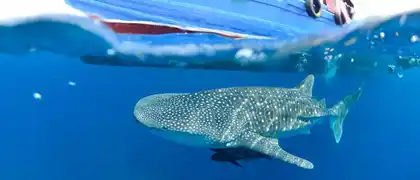
Whale sharks show up most reliably at Richelieu Rock and Hin Daeng/Hin Muang in the Andaman Sea and at Sail Rock and Chumphon Pinnacle in the Gulf of Thailand, generally February-April in the Andaman and whenever plankton blooms are thick in the Gulf. Sightings are never guaranteed at any single site, so divers specifically chasing whale sharks do best on multi-day liveaboard itineraries that visit several of these locations.

When is Similan Islands National Park open for diving?

The park closes to all boats and divers every year during the southwest monsoon, reopening in mid-October and closing again by mid-May. For the 2025-2026 season, it opened October 15, 2025, and is scheduled to close May 15, 2026, as of the published park calendar — outside that window, the islands are completely off-limits, so any Similan-focused itinerary needs to fall inside those dates.

What are Hin Daeng and Hin Muang, and what are they known for?

Hin Daeng ("Red Rock") and Hin Muang ("Purple Rock") are a pair of dramatic pinnacles in the southern Andaman Sea, part of Mu Ko Lanta National Marine Park, roughly 100 km (62 mi) southeast of Phuket and about 90 km (56 mi) south of Phi Phi Island. Hin Muang's wall drops from around 16 ft (5 m) to well beyond 131 ft (40 m) and is famously blanketed in purple soft coral; together, the pair are regarded as Thailand's top spot for manta rays.

When is the best time to see mantas at Hin Daeng and Hin Muang?

February through April is the sweet spot for manta ray — and occasional whale shark — encounters here, when seas are calmest, and plankton draws the animals in to feed. The sites are only reachable on longer liveaboard routes or full-day trips from Koh Lanta or Phuket, given a 2.5-5-hour crossing depending on the departure point.

What is Sail Rock, and why is it a signature Koh Tao dive site?

Sail Rock is a granite pinnacle in the Gulf of Thailand sitting between Koh Tao and Koh Phangan, best known for "the Chimney" — a vertical swim-through starting around 60 ft (18 m) and exiting near the surface around 26 ft (8 m) — and for some of the region's best odds of a whale shark encounter in season. Because it's the furthest site from Koh Tao, it's most often dived as a day trip from Koh Phangan or as a stop on Gulf of Thailand liveaboard routes.

What is Chumphon Pinnacle, and what will I see there?

Chumphon Pinnacle is a submerged granite formation about 45 minutes northwest of Koh Tao by boat, with depths ranging from 46 to 131 ft (14-40 m) across several connected peaks. It's known for the sheer volume of fish — dense schools of barracuda, giant trevally, and batfish swirl around the rock, and whale sharks pass through when conditions align, making it one of Koh Tao's most popular deeper dives.

How does diving in the Gulf of Thailand differ from the Andaman Sea?

The Gulf of Thailand, centered on Koh Tao, offers year-round diving with calmer, more sheltered conditions and generally lower visibility around 33-98 ft (10-30 m), making it a popular choice for training and repeat day trips. The Andaman Sea, home to the Similan and Surin Islands and Richelieu Rock, tends to have clearer water and more frequent pelagic encounters, but is seasonal — open only roughly mid-October to mid-May — and is better suited to liveaboard trips than day boats.

What's the diving like around the Phi Phi Islands?

Phi Phi's sites mix sheltered bays suited to any certification level with more demanding pinnacles like Shark Point and Anemone Reef, where seahorses, occasional leopard sharks, and dense soft coral growth are the draw. Blacktip reef sharks and hawksbill turtles are common sightings, and marine park entrance fees apply — around 600 THB (roughly $17 USD) for foreign divers, as of 2026 rates.

What certification level do you need for a Thailand liveaboard trip?

Open Water certification covers most itineraries, since the bulk of the Similan, Surin, and Gulf of Thailand sites are within recreational depth limits and have light currents. Advanced Open Water becomes useful for deeper pinnacles like Richelieu Rock, Hin Daeng/Hin Muang, and Chumphon Pinnacle, where dives regularly push past 66-80 ft (20-24 m) and occasional currents run stronger.

When is the best time of year for liveaboard diving in Thailand overall?

For the Andaman Sea — Similan, Surin, and Richelieu Rock — the entire season runs mid-October through mid-May, with February-April offering the calmest seas and the best odds of whale sharks and mantas. The Gulf of Thailand around Koh Tao offers comfortable diving year-round, making it the fallback option during the Andaman's May-October closure.


Similar destinations

Indonesia

Indonesia

  • Rating 9.3 out of 10
  • 81 liveaboards
  • 988 reviews
Philippines

Philippines

  • Rating 8.9 out of 10
  • 15 liveaboards
  • 248 reviews
Egypt

Egypt

  • Rating 9.1 out of 10
  • 79 liveaboards
  • 1,192 reviews
Myanmar

Myanmar

  • Rating 8.6 out of 10
  • 3 liveaboards
  • 26 reviews
Maldives

Maldives

  • Rating 9.2 out of 10
  • 42 liveaboards
  • 1,147 reviews
Seychelles

Seychelles

  • Rating 8.2 out of 10
  • 3 liveaboards
  • 26 reviews

We’re here to help, 24/7.

Connect with our expert travel consultants to plan your next trip.

  • Juliane Ball
  • Farah Celada-Benito
  • Mylene Issartial
  • Josue Zarco
  • Andrea Martinez
  • Nicole Laughlin
  • Ester Canali