Liveaboard.com

Hin Daeng Liveaboard Diving

Our guests rated liveaboard diving in Hin Daeng as 8.9

  • 100% Best Price Guarantee

Liveaboard Diving in Hin Daeng

What To Expect On A Hin Daeng Liveaboard

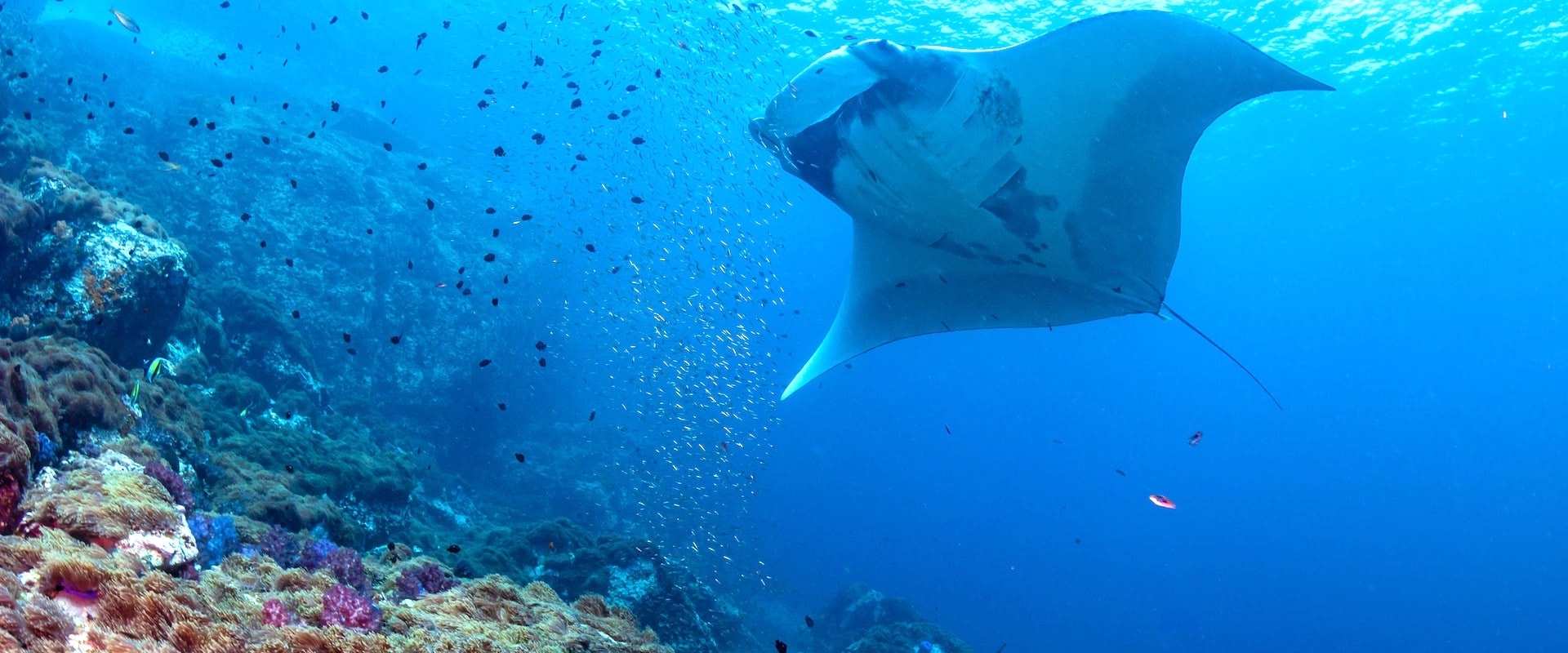
Liveaboards to Hin Daeng, Thailand, are usually searching for the majestic Manta Rays that can be found around this dive area. Hin Daeng, meaning Red Rock, is located south of Phuket in the southern Andaman Sea for its abundance of red corals. As part of Mu Koh Lanta National Marine Park, it is a few hundred meters south of Hin Muang, southwest of the Phi Phi Islands, and can be reached with liveaboards departing from Phuket. Rated as one of the best dive sites in Thailand, Hin Daeng boasts a lot of marine life, from small to large. It is also known as a cave diving spot with a large vertical drop-off. Usually done as a drift dive, currents here are medium to strong, and the site is suggested for the more experienced diver. The underwater currents and surface waves render this site quite challenging. With many small inlets, rocky bays on the sandy bottom, and canyon-like formations, Hin Daeng is also known as a cave diving spot. Visibility is often up to 25m unless the waters are plankton-rich, promising the possibility of feeding whale sharks or manta rays.

Similarly to the northern dive sites of the Andaman Sea, the best time to see these majestic creatures is during February - April. Diving here is usually preferable between November and April when calmer weather and seas make for a more enjoyable experience. Some divers argue that Hin Daeng is as good as Richelieu Rock in the north but with fewer visitors. With such varied underwater topography and biodiversity, Hin Daeng is a great site to add to your Liveaboard.com itinerary.

What You Can See

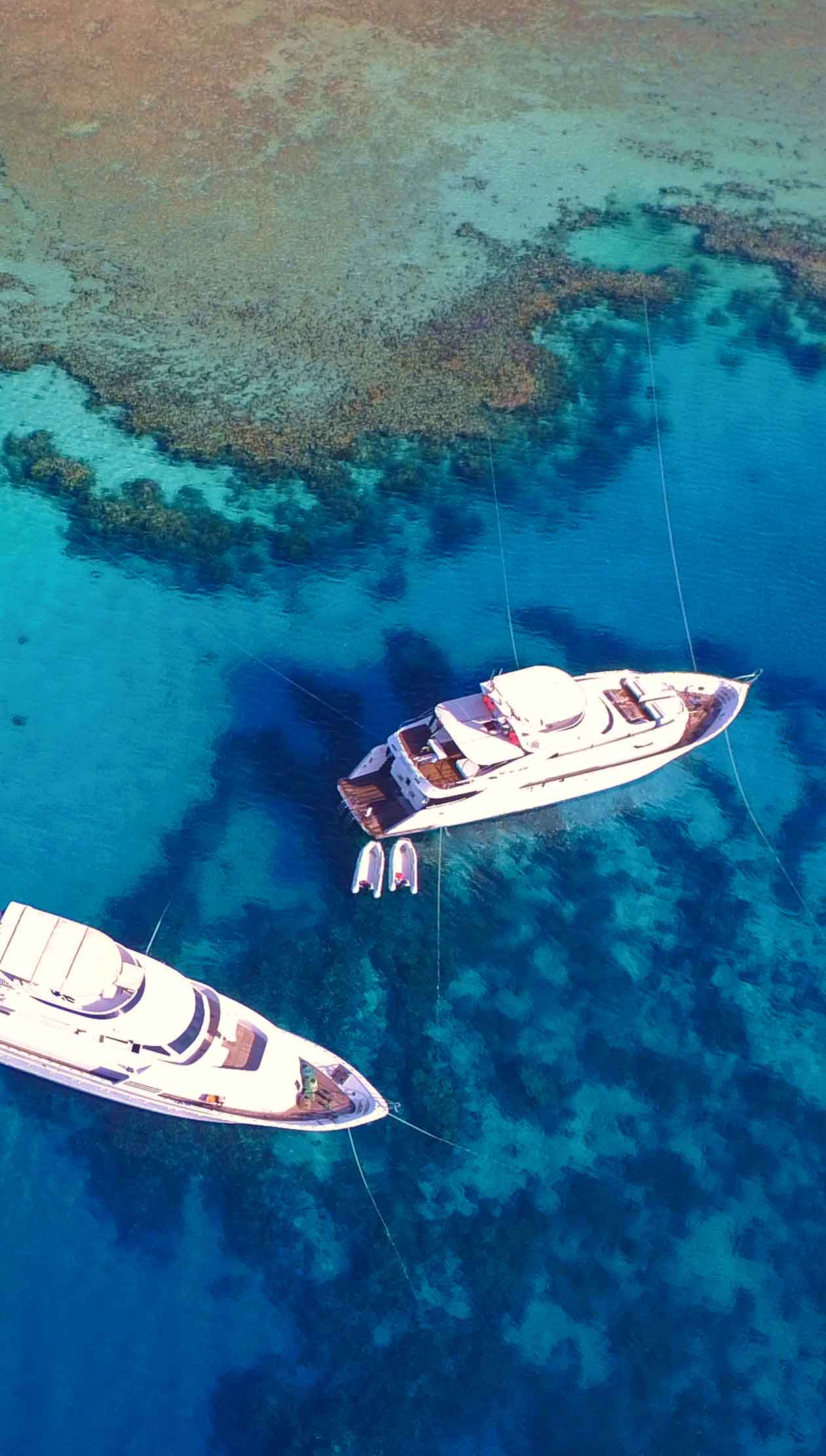
One of the best ways to visit Hin Daeng is by a liveaboard dive cruise, as its location is quite far from the land. The submerged boulder pinnacle creates an impressive underwater topography, less so topside, as it breaks the surface and jets out only a few meters above the water. The southern sides provide Thailand's most extreme vertical drop, down to 70m. The rock formation is covered in colorful hard and soft corals, generally appearing red nearer the surface, hence the namesake. These, along with anemones, sea fans, and sponges, shelter many smaller reef fish, such as the boxer shrimp, octopus, lionfish, morays, and beautiful ribbon eels. The eastern and northern sides are best done as a second dive as they are shallower and gently slope down to about 40m. Here, look out for schools of jacks and trevally hunting along the wall, shimmering like a silver blanket. The Barracudas and reef sharks bring excitement to scuba divers.


Located 100 km southeast of Phuket, Hin Daeng is one of the top ten sites for scuba diving with Thailand’s whale sharks and manta rays.


Hin Daeng Diving Reviews

  • Rating 8.9 out of 10
  • 8.9 Fabulous
  • Rating 10.0 out of 10
  • 10.0 Exceptional
  • Brian H
  • Flag of United StatesUnited States

Beautiful dive site! One group saw a blue spotted octopus. Lots of eels and lion fish, beautiful reefs teaming with variety of fishes.

Diving Hin Daeng in September on the Seatopia
  • Rating 10.0 out of 10
  • 10.0 Exceptional
  • Nathan J
  • Flag of United StatesUnited States

Excellent dive here, colorful coral and nice diversity

Diving Hin Daeng in June on the Seatopia
  • Rating 9.2 out of 10
  • 9.2 Superb
  • Paul S
  • Flag of United StatesUnited States

Another excellent site dominated by soft corals.

Diving Hin Daeng in March on the Gentle Giant
  • Rating 9.6 out of 10
  • 9.6 Exceptional
  • Jeffrey L
  • Flag of United StatesUnited States

Fantastic - manageable currents and we spotted a few Mantas.

Diving Hin Daeng in December on the The Phinisi


What to know about diving in Hin Daeng

What does "Hin Daeng" mean?

"Hin Daeng" translates from Thai as "red rock," a reference to the reddish soft coral and algae that coat its shallower ledges. It's paired on almost every itinerary with its neighbor Hin Muang, or "purple rock," about a 10-minute boat ride away.

Where is Hin Daeng located?

Hin Daeng sits in the Andaman Sea, south of Koh Lanta and Koh Haa, roughly 40 miles (65 km) from Koh Lanta and within reach of both day boats from Koh Lanta or Phuket and southern-extension liveaboard routes from the Similan Islands. It's an isolated pinnacle with no other landmass nearby.

How deep is Hin Daeng?

The site ranges from about 16 ft (5 m) near the surface to over 130 ft (40 m) along its outer walls, so it suits everything from a shallow reef dive to a deep drift along the drop-off. Most recreational dives stay in the 30–100 ft (9–30 m) range.

What marine life can you see at Hin Daeng?

Hin Daeng is best known for seasonal manta ray and whale shark passes, as well as resident leopard sharks, grey reef sharks, and large schools of barracuda and trevally along the current line. Soft coral, gorgonian fans, and reef fish cover the shallower ledges year-round.

When is the best time to dive Hin Daeng?

November through April is the diving season, with the best odds for manta rays and whale sharks from February through April, when the water is calmest and clearest. The site closes along with the rest of the West Coast season during the May–October monsoon.

How do you get to Hin Daeng?

Most divers reach Hin Daeng on a speedboat day trip from Koh Lanta (about 1.5 hours) or on liveaboard itineraries running the southern Andaman Sea between Phuket and the Similan Islands. It's too far offshore for a casual swim or kayak visit.

Is Hin Daeng suitable for beginner divers?

It's better suited to divers with some open-water experience, since currents can be strong and the best marine-life encounters happen along exposed walls and drop-offs. Guides can usually tailor a shallower, more sheltered route for less-experienced divers on the same trip.

What makes Hin Daeng's rock reddish?

The pinkish-red hue comes from a coating of red algae and soft coral on the pinnacle's shallow sections, which is also how the site got its Thai name. Underwater, the color is most vivid in the top 30 ft (9 m) or so where light penetration is strongest.

Can you see whale sharks at Hin Daeng?

Yes — Hin Daeng is one of the more reliable spots in the Andaman Sea for whale shark encounters, with sightings concentrated from February through April. They're never guaranteed on any given dive, but the odds here are among the best in Thailand.

How far is Hin Daeng from Koh Lanta?

Hin Daeng sits roughly 40 miles (65 km) south of Koh Lanta, about a 1.5-hour speedboat ride each way, which is why it's typically sold as a full-day trip rather than a half-day excursion.

Is Hin Daeng part of a liveaboard itinerary or a day trip?

Both — it's a popular full-day speedboat trip from Koh Lanta or Phuket, and it also appears on longer Similan Islands liveaboard itineraries that extend south to cover it along with neighboring Hin Muang.

What's the visibility like at Hin Daeng?

Visibility typically runs 50–100 ft (15–30 m) in season, though it can drop when plankton-rich water moves through — the same conditions that tend to bring in mantas and whale sharks.

Are there currents at Hin Daeng?

Yes, currents can run from moderate to strong along the pinnacle's exposed sides, which is part of what attracts the big pelagics that pass through to feed on plankton. Guides typically plan drift dives that work with the current rather than against it.

What's the difference between Hin Daeng and Hin Muang?

Hin Daeng ("red rock") and Hin Muang ("purple rock") are two pinnacles about 10 minutes apart by boat, almost always dived on the same trip; Hin Daeng is generally described as slightly shallower and more current-swept, while Hin Muang's deeper faces are known for leopard sharks and dense soft coral.

Is Hin Daeng good for night diving?

Night dives are offered less often here than at sheltered sites, mainly because of the currents and exposed location, but some liveaboards do schedule a night dive at Hin Daeng's more sheltered side when conditions allow. Day diving with its big-animal encounters is the main draw.

We’re here to help, 24/7.

Connect with our expert travel consultants to plan your next trip.

  • Andrea Martinez
  • Juliane Ball
  • Farah Celada-Benito
  • Josue Zarco
  • Nina Kapp
  • Oksana Kovaleva
  • Nicole Laughlin