Liveaboard.com

Thailand Liveaboard Diving

Compare and book 34 liveaboards with 2,682 verified reviews online

  • 100% Best Price Guarantee

Liveaboard Diving in Thailand

Diving in Thailand gives scuba divers the chance to experience the lush underwater life of the Andaman Sea with relative ease and comfort.

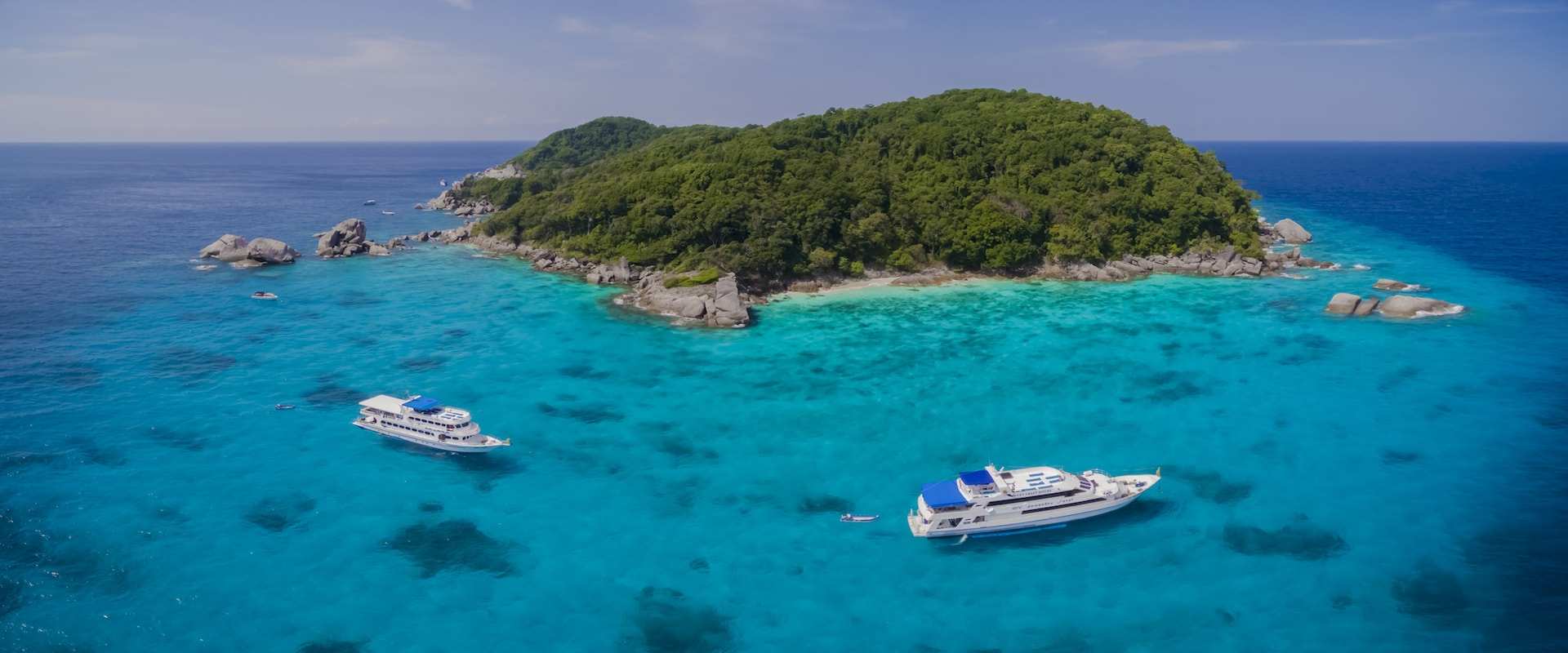
Thailand liveaboard diving brings together granite boulders, coral-covered pinnacles, limestone walls, and reefs alive with schooling fish. In the Andaman Sea, a single trip can take you from the underwater landscapes of the Similan Islands to the busy feeding grounds around Richelieu Rock. Island silhouettes, open sea views, and freshly prepared meals set the rhythm of life aboard.

Choose a focused trip to a few favorite sites or a longer itinerary exploring several dive areas. Northern routes feature the Similan and Surin regions, while southern trips explore destinations around Phi Phi and beyond. Staying aboard lets you travel between areas without returning to a mainland hotel each evening, leaving more time to enjoy the diving.


Dive Areas in Thailand

Thailand's Andaman liveaboard routes fall broadly into northern and southern itineraries. Several of the areas below can be combined into a single trip, but the exact stops depend on the boat, departure date, and conditions.

Similan Islands

The Similan Islands offer a striking mix of rounded granite boulders, reef slopes, and sandy channels. Sites such as Elephant Head Rock and Christmas Point showcase the archipelago's underwater formations, while other dives focus on coral gardens and smaller reef inhabitants. This variety makes the Similans a rewarding foundation for a northern itinerary, often combined with Koh Bon, Koh Tachai, and Richelieu Rock. Conditions vary between sheltered reefs and exposed boulder sites.

Richelieu Rock

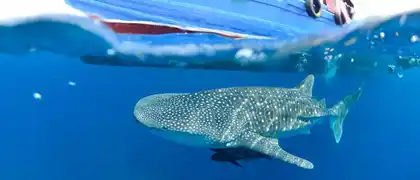
Soft corals, anemones, and clouds of fish surround Richelieu Rock, an offshore pinnacle in the Surin National Park. Look closely for small creatures among the crevices, then out into the blue for hunting trevally and barracuda. Whale sharks occasionally visit, but the reef life alone gives divers plenty to explore. Routes allowing repeat dives here offer time to appreciate both the larger scene and its smaller details. Currents and open-water conditions can be challenging.

Surin Islands

The Surin Islands add coral reef scenery to northern liveaboard trips. Sloping reefs and shallower coral formations provide a different setting from the region's exposed pinnacles, with opportunities to observe reef fish and search for smaller marine life. Check the itinerary carefully: a visit to Richelieu Rock, which is in the same national park, does not necessarily mean the boat also circles the islands themselves.

Koh Bon and Koh Tachai

Koh Bon is known for its ridge and the possibility of encountering manta rays, while Koh Tachai attracts divers with submerged boulders and schooling fish. Both feature on northern routes linking the Similan area with Richelieu Rock. These are appealing stops for divers who enjoy watching the blue as well as the reef, although stronger currents can make the diving demanding. Large-animal sightings remain a possibility rather than a promise.

Hin Daeng and Hin Muang

The southern pinnacles of Hin Daeng and Hin Muang offer steep underwater scenery decorated with soft corals and sea fans. Schooling fish gather around the rocks, with occasional visits from manta rays and whale sharks. Their exposed location, depth, and currents make the experience especially valuable here. Look for southern itineraries that explicitly include these sites; a trip around Phuket or Phi Phi does not automatically reach them.

Phi Phi Islands

Limestone cliffs above the water lead to walls and coral gardens below around the Phi Phi Islands. The area offers a different landscape from the northern granite islands and features on southern liveaboard routes. Sheltered sites and more exposed dives provide variety, with the day's choices shaped by conditions. Depending on the itinerary, Phi Phi may be combined with sites around Phuket or a wider journey towards Koh Haa and the southern pinnacles.

Marine Life and Underwater Scenery

Thailand's appeal extends from small reef creatures to the movement of entire schools of fish. Anemonefish shelter among tentacles, moray eels peer from rocky crevices, and trevally patrol the edges of reefs. Depending on the site, divers may encounter nudibranchs, shrimp, or seahorses, while turtles and reef sharks sometimes join the scene.

The settings are just as varied: granite passages in the Similans, colorful pinnacles at Richelieu Rock, and limestone walls in the south. For underwater photographers, this creates opportunities for both wide-angle scenes and close-up subjects. Build your trip around that variety, with larger passing animals as a welcome bonus.

Best Time to Dive in Thailand

Your chosen route determines when to travel. Northern park access is seasonal, while selected southern trips operate beyond that window.

  • Similan and Surin routes: Plan around the usual mid-October to mid-May visitor season. The parks close during the southwest monsoon; confirm the applicable opening dates for your trip.
  • Southern Andaman routes: November to April is generally favored for calmer conditions, but some operators also offer summer departures. Check the actual sites included, as availability and access vary.
  • Wildlife encounters: Choose an itinerary for its overall appeal for diving. Manta rays and whale sharks are wild animals, and traveling in a particular month cannot guarantee a sighting.

Choosing Your Thailand Liveaboard Itinerary

  • Focused northern trips: Three-night options can concentrate on Koh Bon, Koh Tachai, and Richelieu Rock. Check whether the Similan Islands are included rather than assuming every northern trip visits them.
  • Broader northern trips: Four- and five-night itineraries can combine the Similans with sites farther north. Compare the planned stops and diving days, as similar trip lengths can cover different routes.
  • Southern trips: Selected three- or four-night departures explore southern dive areas. Routes vary considerably, from sites around Phi Phi and Phuket to itineraries featuring Koh Haa, Hin Daeng, and Hin Muang.
  • Combined itineraries: Selected eight- or ten-night voyages link northern and southern highlights. These suit divers who want a broader view of Thailand's underwater landscapes in a single holiday.

Diving Conditions and Experience

Thailand offers both sheltered reef dives and exposed offshore sites. Currents can strengthen around pinnacles and headlands, while visibility changes with weather, tides, and plankton. Avoid choosing a trip on the assumption that every dive will be shallow, calm, or exceptionally clear.

Certification and logged-dive requirements vary by operator and itinerary. Check these before booking, especially for routes featuring deeper pinnacles. If you are newly qualified or returning after a break, discuss your experience with the booking team so they can help identify an appropriate trip.

Departure Ports and Travel Information

Phuket and Khao Lak are important gateways for Thailand liveaboards. Phuket International Airport provides access to both, with an onward road transfer for departures near Khao Lak.

  • Khao Lak area: Northern trips often embark at Thap Lamu, also written as Tap Lamu, south of Khao Lak.
  • Phuket: Chalong is a departure point for southern trips and some wider itineraries.
  • Before booking flights: Confirm the actual boarding pier, pickup arrangements, and return location. Your transfer meeting point may differ from the embarkation port.

Planning Your Thailand Liveaboard Trip

  • Compare the full cost: Check whether marine park fees, transfers, equipment rental, and other mandatory charges are included.
  • Arrange diving extras: Confirm Nitrox availability, rental sizes, and any special equipment requirements in advance.
  • Check trip requirements: Review certification, experience, and diving insurance requirements for your selected boat.
  • Allow for itinerary changes: Weather, sea conditions, and park access can affect the route and individual dive sites.

Explore the Thailand liveaboards above to compare itineraries, departure dates, and onboard facilities, and find the trip that suits your diving interests.

Thailand Diving Reviews

  • Rating 9.1 out of 10
  • 9.1 Superb
  • Rating 9.6 out of 10
  • 9.6 Exceptional
  • Ann P
  • Flag of United StatesUnited States

Relaxed and people are so friendly from captain to staff and also dive instructors amazing and took so many amazing photos

Diving Thailand in July on the Krishna 3
  • Rating 10.0 out of 10
  • 10.0 Exceptional
  • Alexandria K
  • Flag of United StatesUnited States

Wonderful even not during peak season. Dive conditions were still good. Not great but pretty good.

Diving Thailand in July on the Andaman
  • Rating 10.0 out of 10
  • 10.0 Exceptional
  • Ann P
  • Flag of United StatesUnited States

It was amazing with lots of things to see and captain made sure to take us to places that were suitable for current wearher

Diving Thailand in July on the Seatopia
  • Rating 10.0 out of 10
  • 10.0 Exceptional
  • Bradley F
  • Flag of United StatesUnited States

I’m in love with this country and its people. Friendly does not even begin to describe it. It is a joy to experience a culture based on respect.

Diving Thailand in July on the Seatopia


What to know about diving in Thailand

How do you get to the Similan Islands?

Most divers reach the Similan Islands by speedboat or liveaboard departing from Khao Lak or Phuket, with the islands sitting roughly 60 km (37 mi) offshore in the Andaman Sea — a speedboat crossing runs about 2 hours from Khao Lak or up to 3-4 hours from Phuket, while liveaboards make the same run overnight. The park is only open from mid-October through mid-May each year, so trip dates need to fall within that window, as of the 2026 season.

Where is the best diving in Thailand?

Thailand's best diving splits between two very different regions: the Andaman Sea in the west, home to the Similan and Surin Islands and the famous pinnacle Richelieu Rock, and the Gulf of Thailand around Koh Tao, with sites like Sail Rock and Chumphon Pinnacle. Serious liveaboard divers tend to favor the Andaman Sea's outer islands for visibility and pelagic encounters, while the Gulf offers reliable year-round diving and easier access for shorter trips.

Where are the Similan Islands, and how far are they from Phuket?

The Similan Islands are a chain of nine granite islands in the Andaman Sea, roughly 60 km (37 mi) off Thailand's west coast and part of Mu Ko Similan National Park. Most trips depart from Khao Lak, the closest mainland pier, or from Phuket, a bit further south, with the crossing taking anywhere from about 2 hours by speedboat to overnight by liveaboard.

Where is Richelieu Rock, and what makes it special?

Richelieu Rock is a submerged limestone pinnacle in the Andaman Sea, part of Mu Ko Surin National Park and about 18 km (11 mi) east of the Surin Islands, with its peak rising close to the surface from a base around 98-115 ft (30-35 m) down. Purple soft corals blanket the rock, and it's widely rated Thailand's best single site for macro life and its most reliable spot for whale sharks and manta rays, typically February through April.

How do you get to the Surin Islands?

The Surin Islands are reached by speedboat from Kuraburi Pier on the mainland, a roughly one-hour crossing, with boats typically departing around 9-9:30am and returning by late afternoon. Kuraburi itself sits over 250 km (155 mi) north of the main Phuket and Krabi resort areas, so most visitors add an hour-plus road transfer before reaching the pier, or join a liveaboard that includes the islands on a longer Andaman itinerary.

When and where can you see whale sharks in Thailand?

Whale sharks show up most reliably at Richelieu Rock and Hin Daeng/Hin Muang in the Andaman Sea and at Sail Rock and Chumphon Pinnacle in the Gulf of Thailand, generally February-April in the Andaman and whenever plankton blooms are thick in the Gulf. Sightings are never guaranteed at any single site, so divers specifically chasing whale sharks do best on multi-day liveaboard itineraries that visit several of these locations.

When is Similan Islands National Park open for diving?

The park closes to all boats and divers every year during the southwest monsoon, reopening in mid-October and closing again by mid-May. For the 2025-2026 season, it opened October 15, 2025, and is scheduled to close May 15, 2026, as of the published park calendar — outside that window, the islands are completely off-limits, so any Similan-focused itinerary needs to fall inside those dates.

What are Hin Daeng and Hin Muang, and what are they known for?

Hin Daeng ("Red Rock") and Hin Muang ("Purple Rock") are a pair of dramatic pinnacles in the southern Andaman Sea, part of Mu Ko Lanta National Marine Park, roughly 100 km (62 mi) southeast of Phuket and about 90 km (56 mi) south of Phi Phi Island. Hin Muang's wall drops from around 16 ft (5 m) to well beyond 131 ft (40 m) and is famously blanketed in purple soft coral; together, the pair are regarded as Thailand's top spot for manta rays.

When is the best time to see mantas at Hin Daeng and Hin Muang?

February through April is the sweet spot for manta ray — and occasional whale shark — encounters here, when seas are calmest, and plankton draws the animals in to feed. The sites are only reachable on longer liveaboard routes or full-day trips from Koh Lanta or Phuket, given a 2.5-5-hour crossing depending on the departure point.

What is Sail Rock, and why is it a signature Koh Tao dive site?

Sail Rock is a granite pinnacle in the Gulf of Thailand sitting between Koh Tao and Koh Phangan, best known for "the Chimney" — a vertical swim-through starting around 60 ft (18 m) and exiting near the surface around 26 ft (8 m) — and for some of the region's best odds of a whale shark encounter in season. Because it's the furthest site from Koh Tao, it's most often dived as a day trip from Koh Phangan or as a stop on Gulf of Thailand liveaboard routes.

What is Chumphon Pinnacle, and what will I see there?

Chumphon Pinnacle is a submerged granite formation about 45 minutes northwest of Koh Tao by boat, with depths ranging from 46 to 131 ft (14-40 m) across several connected peaks. It's known for the sheer volume of fish — dense schools of barracuda, giant trevally, and batfish swirl around the rock, and whale sharks pass through when conditions align, making it one of Koh Tao's most popular deeper dives.

How does diving in the Gulf of Thailand differ from the Andaman Sea?

The Gulf of Thailand, centered on Koh Tao, offers year-round diving with calmer, more sheltered conditions and generally lower visibility around 33-98 ft (10-30 m), making it a popular choice for training and repeat day trips. The Andaman Sea, home to the Similan and Surin Islands and Richelieu Rock, tends to have clearer water and more frequent pelagic encounters, but is seasonal — open only roughly mid-October to mid-May — and is better suited to liveaboard trips than day boats.

What's the diving like around the Phi Phi Islands?

Phi Phi's sites mix sheltered bays suited to any certification level with more demanding pinnacles like Shark Point and Anemone Reef, where seahorses, occasional leopard sharks, and dense soft coral growth are the draw. Blacktip reef sharks and hawksbill turtles are common sightings, and marine park entrance fees apply — around 600 THB (roughly $17 USD) for foreign divers, as of 2026 rates.

What certification level do you need for a Thailand liveaboard trip?

Open Water certification covers most itineraries, since the bulk of the Similan, Surin, and Gulf of Thailand sites are within recreational depth limits and have light currents. Advanced Open Water becomes useful for deeper pinnacles like Richelieu Rock, Hin Daeng/Hin Muang, and Chumphon Pinnacle, where dives regularly push past 66-80 ft (20-24 m) and occasional currents run stronger.

When is the best time of year for liveaboard diving in Thailand overall?

For the Andaman Sea — Similan, Surin, and Richelieu Rock — the entire season runs mid-October through mid-May, with February-April offering the calmest seas and the best odds of whale sharks and mantas. The Gulf of Thailand around Koh Tao offers comfortable diving year-round, making it the fallback option during the Andaman's May-October closure.


Similar destinations

Indonesia

Indonesia

  • Rating 9.3 out of 10
  • 82 liveaboards
  • 1,008 reviews
Philippines

Philippines

  • Rating 8.9 out of 10
  • 15 liveaboards
  • 249 reviews
Egypt

Egypt

  • Rating 9.1 out of 10
  • 80 liveaboards
  • 1,207 reviews
Myanmar

Myanmar

  • Rating 8.6 out of 10
  • 3 liveaboards
  • 26 reviews
Maldives

Maldives

  • Rating 9.2 out of 10
  • 42 liveaboards
  • 1,173 reviews
Seychelles

Seychelles

  • Rating 8.2 out of 10
  • 3 liveaboards
  • 26 reviews

We’re here to help, 24/7.

Connect with our expert travel consultants to plan your next trip.

  • Andrea Martinez
  • Farah Celada-Benito
  • Juliane Ball
  • Nicole Laughlin
  • Josue Zarco
  • Ester Canali
  • Oksana Kovaleva