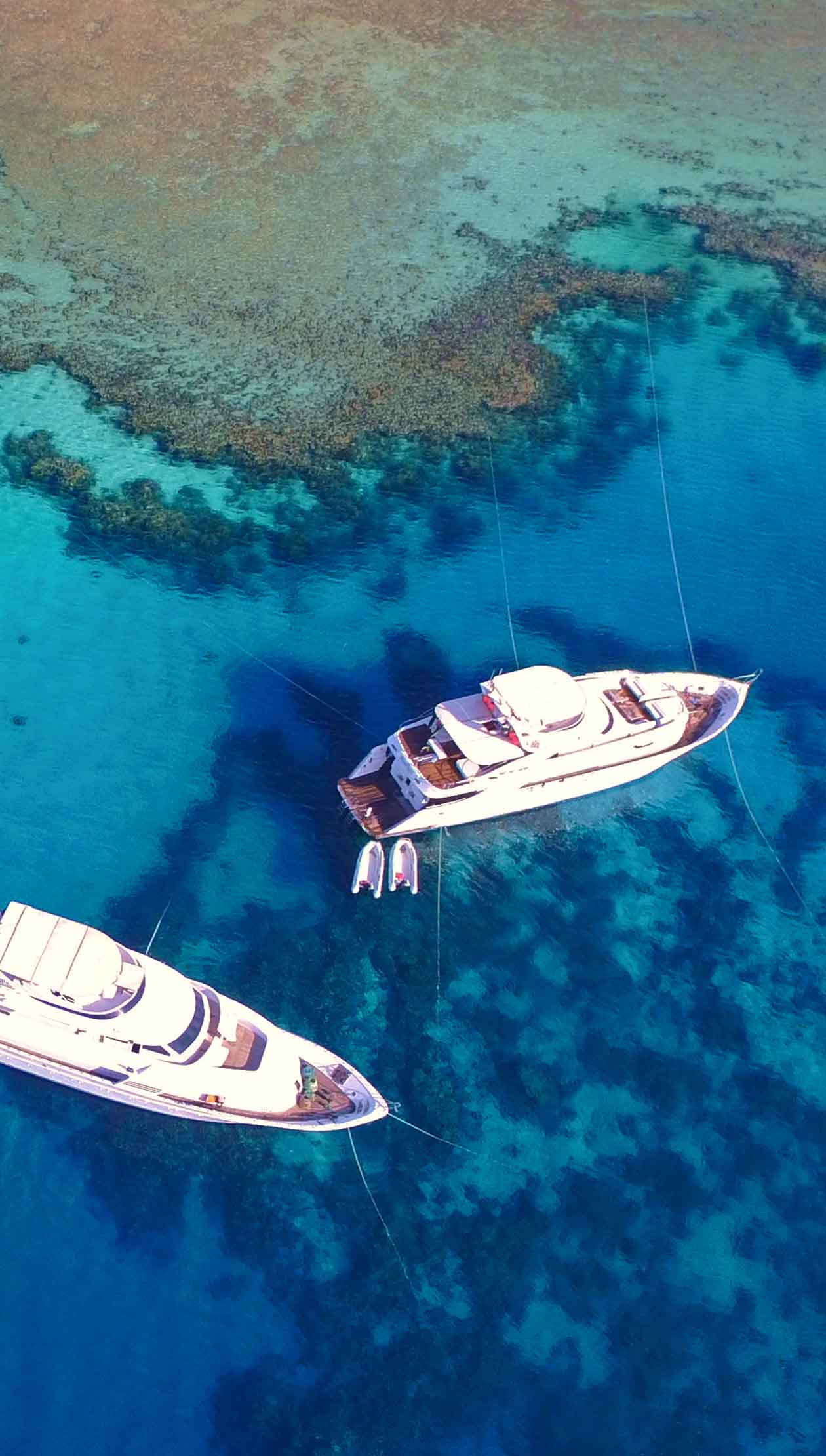
What to Expect On A Canary Islands Liveaboard
Most liveaboards start in Tenerife, which has an extremely long, varied coastline with stretches of volcanic beaches, dramatic cliffs, and equally impressive underwater walls. Tenerife diving liveaboards take guests to hidden gems only accessible by boat. Sailing past ‘Los Gigantes’, the famous rock formations on the island's west coast, is a real highlight.
Although the Canaries are a well-loved tourist destination, a diving liveaboard takes guests not only to the most famous dive spots but also to more remote island sites. Several parts of the Canary Islands are less populated. La Gomera Island is particularly famous for diving. It offers stunning marine life, plus a unique culture and lush natural beauty. Diving liveaboards in the Canaries also give guests the chance to explore Garajonay Natural Park's misty forests and dramatic landscapes.
Canary Islands Underwater
The waters around Tenerife and La Gomera host a beautiful blend of dramatic volcanic topography and abundant marine life. The topography ranges from dramatic cave complexes to the Canary Islands' own underwater ‘Giant’s Causeway’. The ocean's conditions have preserved the numerous wrecks along the coastline. Local universities have also created several sunken artificial reefs around the Canary Islands to study the ecological benefits of submerging structures. You can choose from disused ships, unusual concrete shapes, and more. The Canary Islands enjoy a Mediterranean climate for most of the year and water visibility of up to 30 meters, although water temperatures can drop below 20 degrees in winter.
Underwater currents, although stronger in the summer months, are easy to manage, and a diving liveaboard can offer pleasant drift dives when the water moves faster. The currents also increase the chances of seeing marine life. Pelagic fish shoals, colossal stingrays, angel sharks, and resident green turtles come out in numbers to take advantage of these nutrient-rich currents.
Dive Sites of the Canary Islands
Divers looking to explore dramatic underwater topography will have plenty to choose from on a Canary Islands liveaboard. Tenerife is home to La Catedral de Tenerife. This colossal volcanic formation consists of a complex of caves and archways filled with shoals of fish, rock lobsters, and moray eels. Also part of this fascinating volcanic landscape, La Montaña Amarilla is a popular stopover for liveaboard divers in Tenerife. Waves and yellow volcanic ash have created a unique lunar-type underwater surface, with plateaus, spires, and caves for swim-throughs.
For wreck lovers, Tenerife is also home to the Tabaiba, which was sunk as an artificial reef, and the Condesito which sank - far less deliberately - in an underwater canyon in the 1970s. Both wrecks are substantial in size and home to shoals of roncadors, plus octopi and the curious-looking trumpet fish.
Diving liveaboards to Gomera focus on the wealth of marine life this tiny island offers. More remote than other parts of the archipelago, Gomera’s dive sites offer a wide array of marine life and, in particular, one of the Canary Islands' most varied selections of rays. Punta Espino, just off the port of Playa Santiago, is an excellent ray-watching spot. Bull rays, stingrays, eagle rays, and angel sharks can all be found there, feeding on scraps thrown overboard by local fishermen. For pelagic shoals and excellent macro life, Roque del Herrero is the place to see barracuda, octopus, and rock lobster in one spot.
Along the coast of Gomera and around Tenerife, a Canary Islands liveaboard also gives divers a chance to encounter one of the islands' most beloved creatures: the turtle. Turtles are a common sight at many dive sites, and many are friendly and well accustomed to divers.
Top Tips for Divers
- Despite the consistently sunny weather, water temperatures around Tenerife and Gomera vary by season.
- Summer can reach 25 degrees, but winter can drop to around 17 degrees. Check before packing your suit.
- Although the currents are far from dramatic by many divers’ standards, remember that the Canaries are oceanic and offer some proper drift dives.
Getting To the Canary Islands
The Canary Islands' popularity as a tourist resort makes it easy and affordable to reach the main islands, such as Tenerife. Flights to Tenerife’s main airport, Tenerife South, depart from most major European airports.
Connecting flights from further afield usually involve a stopover in Madrid or London. You can also travel to Tenerife from other islands. Gran Canaria, Lanzarote and Fuerteventura all have regular inter-island ferries and flights. You can reach La Gomera via Tenerife’s North airport, which offers small inter-island flights, or by ferry from Santa Cruz. Gomera’s airport is small, so you can only reach it from Tenerife, and it offers no direct international flights.
Most diving liveaboards in the Canary Islands depart from and return to Tenerife.
Nicknamed the land of eternal spring, the Canary Islands' liveaboards take divers into clear blue Atlantic waters, rich in marine life. Most liveaboards in the Canary Islands are sailing ships, offering a unique experience and smaller groups.