Liveaboard.com

Iro Maru Wreck Liveaboard Diving

Our guests rated liveaboard diving in Iro Maru Wreck as 9.5

  • 100% Best Price Guarantee

Liveaboard Diving in Iro Maru Wreck

What to expect on an Iro Maru Wreck Liveaboard

Liveaboards to the Iro Maru wreck means exploring probably the most famous wreck in Palau. It is 143m (470ft) long and the deck lies at 25m (85ft) below the surface. This Japanese navy oiler sank back in 1944 right next to one of its sister ships after an attack while it was on its way from Micronesia to the Philippines. It is located at Urukthapel Anchorage, 15 minutes southeast off the coast of Koror. When liveaboard diving at the Iro Maru Wreck you'll notice the visibility can vary a lot, at its best it will be around 30m (100ft) and at its worst 10m (30ft). The visibility is very much dependent on the number of divers because there is a lot of thick sediment under, around on, and on the wreck, which if disturbed, will decrease the visibility. There are luckily no currents in this area to stir up the sediment making an Iro Maru Wreck liveaboard the perfect addition to your Palau itinerary.

It is very important to be a confident diver to dive here, there are a lot of dangers involved with diving in a wreck, so confidence is key. If you want to penetrate the wreck, then you do need to have a wreck diver certification. Most liveaboards that go around Palau will visit Iro Maru. As it is close to the coast it is generally one of the first or one of the last sites the liveaboard will visit.

What You Can see

Firstly, what makes this wreck impressive is that it is still standing upright, so you get a complete view of the ship. Over the many years of this ship being underwater, it has created its own, very remarkable little ecosystem. The deck is filled with zigzag clams, oysters, invertebrates of many species but especially Nudibranchs. There are numerous amounts of corals that have grown on and around the ship such as Mushroom Corals, Staghorn Corals, Brain Corals, and Lettuce Corals. There is also an impressive collection of Black Coral Trees growing here.

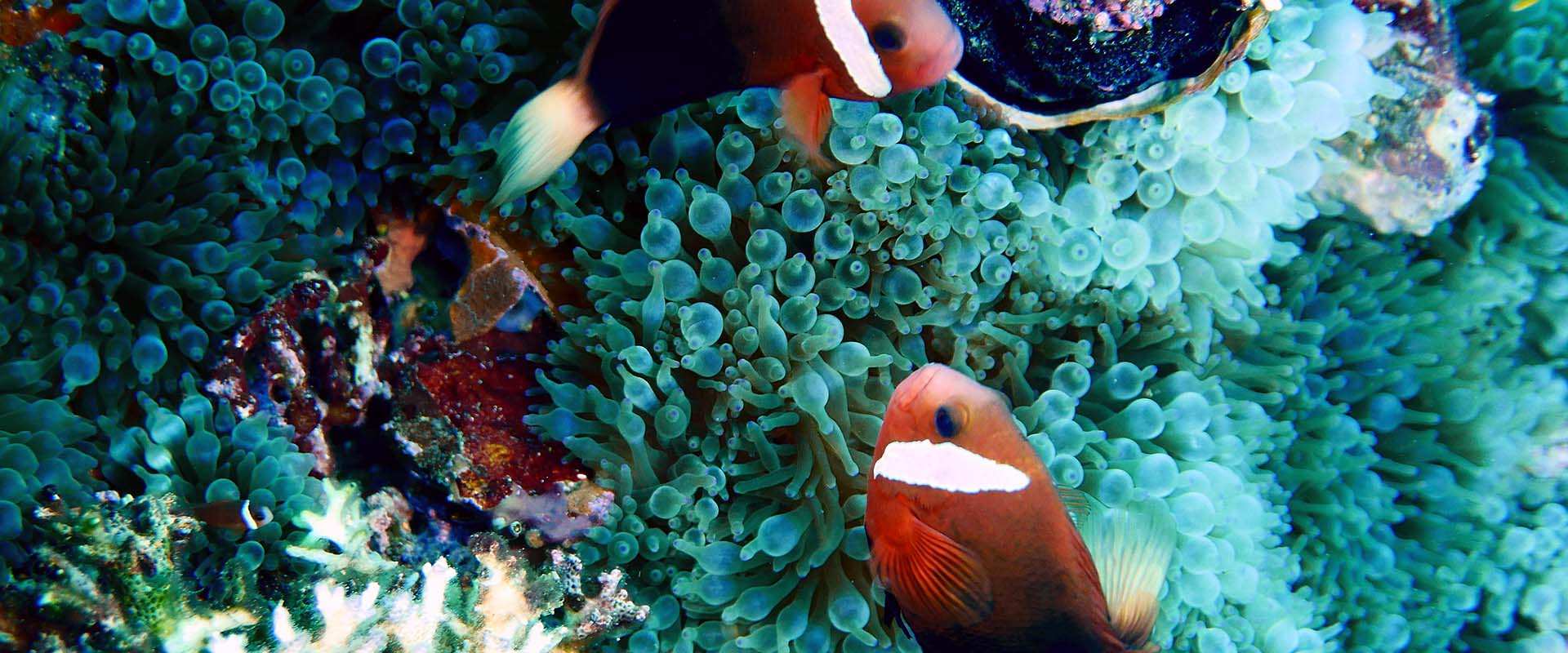
You will encounter many schools of colorful fish, but some of the most colorful marine life here are the anemones that are all around, inhabited by the charming tomato clownfish. Apart from marine life, there are still a lot of WWII artifacts, including some live ammunition, so it is VERY important to not touch anything in this wreck. There are also still two large guns, one located on the stern and the other on the bow.

Getting to Iro Maru Wreck

To get to this site, or to get to any Micronesia liveaboards which will be visiting this area, you will need to make your way to Koror, which is the largest city in Palau. The airport is located on the island of Babeldaob which is connected by a bridge to Koror. The airport is called The Roman Tmetuchl International Airport. There are only five destinations that have outgoing flights to Palau, so you would have to fly to one of these first; Philippines, Taiwan, South Korea, Japan, and Guam. Once in Palau, all Iro Maru Wreck liveaboards will depart from the Malakal Harbour in Koror.


Iro Maru Wreck Diving Reviews

  • Rating 9.5 out of 10
  • 9.5 Exceptional
  • Rating 9.6 out of 10
  • 9.6 Exceptional
  • Henry D
  • Flag of United StatesUnited States

Birds nest was interesting. Rest of the wreck was nothing special.

Diving Iro Maru Wreck in February on the Palau Aggressor II
  • Rating 9.2 out of 10
  • 9.2 Superb
  • Tymur V
  • Flag of United StatesUnited States

It was an okay wreck dive. Anemones on the spire was the highlight

Diving Iro Maru Wreck in February on the Palau Aggressor II
  • Rating 10.0 out of 10
  • 10.0 Exceptional
  • Jason C
  • Flag of United StatesUnited States

The history for this wreck is interesting and there was a lot of colorful life on the night dive

Diving Iro Maru Wreck in December on the Palau Aggressor II
  • Rating 9.6 out of 10
  • 9.6 Exceptional
  • Daniel B
  • Flag of United StatesUnited States

Weather played a significant role, but visibility was poor, and We actually lost sight of everyone for large portions of the dive.

Diving Iro Maru Wreck in February on the Palau Aggressor II


What to know about diving in Iro Maru Wreck

Where is the Iro Maru wreck?

The Iro Maru rests south of Koror in Palau, one of several WWII wrecks scattered through Palau's waters from the March 1944 US air raids known as Operation Desecrate One. It's a boat dive reached from Koror-based operators rather than a shore or beach dive.

How deep is the Iro Maru?

The wreck's upper deck sits at about 82 ft (25 m), with the seabed around 131 ft (40 m), making it a genuinely deep wreck dive reserved for advanced or technical divers. Its more vertical profile compared to flatter lagoon wrecks adds to the depth management challenge.

What type of ship was the Iro Maru?

It was a Japanese Navy oiler — a fuel-supply ship roughly 469 ft (143 m) long — sunk during WWII while supporting Japan's Pacific Fleet operations. Oilers like the Iro Maru were high-value targets since fuel shortages crippled Japanese naval mobility later in the war.
What can you see on the Iro Maru wreck?

Divers can spot deck guns, kingposts, and clear torpedo damage in the bow, all coated in decades of coral growth that gives the structure a heavily encrusted, almost reef-like appearance. Its upright, largely intact hull makes for straightforward wreck orientation despite the depth.

Is the Iro Maru suitable for beginner divers?

No — depths of 82 to 131 ft (25 to 40 m) put this wreck firmly in advanced or technical diving territory, with an emphasis on depth management and wreck procedures rather than casual sightseeing. Most operators require advanced certification and solid experience before booking this dive.

Can you penetrate the interior of the Iro Maru?

Yes, for suitably trained divers — the wreck is considered suitable for penetration by advanced divers, though its depth means bottom time is limited and careful planning is essential. Guides typically restrict interior access to those with wreck diving certification.

What marine life is on the Iro Maru?

Marine life is generally described as average for the area, with small reef fish and encrusting coral rather than the big pelagic action found at sites like Blue Corner. The wreck itself, rather than the marine life around it, is the main draw here.

How do you get to the Iro Maru dive site?

It's accessible only by boat through a local Koror-based dive operator, given its offshore location, depth, and technical demands. There's no way to reach or view the wreck without a guided dive trip.

When is the best time to dive the Iro Maru?

December through March generally brings calmer seas and clearer conditions in Palau, which matters even more on a deep dive like this one, where good visibility helps with orientation and safety. Dive shops typically only run trips there when conditions cooperate.

Why did the Iro Maru sink?

It was sunk during World War II air strikes on Japanese shipping around Palau, part of the broader US campaign (including the March 1944 Operation Desecrate One raids) that targeted the fuel and supply vessels supporting Japan's Pacific Fleet. Torpedo damage visible in the bow today is a direct remnant of that attack.

How long is the Iro Maru?

The wreck measures roughly 469 ft (143 m) long, a substantial oiler that gives technical divers plenty of structure to explore across multiple dives. Its size and depth mean most divers need more than one trip to see it properly.

What certification do you need to dive the Iro Maru?

Advanced Open Water at minimum, with many operators preferring deep-diving or wreck specialty certification given depths beyond 100 ft (30 m). Divers should also be comfortable with the added risks of depth-related narcosis and limited bottom time.

Is the Iro Maru part of a liveaboard itinerary?

It can be, though it's less commonly featured than headline sites like Blue Corner or German Channel, since its depth and technical demands make it a better fit for wreck-focused itineraries or advanced groups requesting it specifically. Worth confirming with your operator if it's a must-dive for you.

What should I bring to dive the Iro Maru?

A dive computer suited to deeper profiles, a reliable primary and backup light, and careful air-supply planning (or nitrox/technical gas, where certified) are all worth having given the depth. A wide-angle camera can capture the guns and torpedo damage, though low light at depth calls for a strobe or good external lighting.

How does the Iro Maru compare to Truk Lagoon's wrecks?

It's deeper and generally less decorated with artifacts than famous Truk Lagoon wrecks like the Fujikawa Maru, making it more of a specialist's dive than a headline attraction. Divers chasing Palau's wall and shark diving sometimes add it as a change of pace, but most come to Palau primarily for Blue Corner and German Channel rather than its wrecks.

We’re here to help, 24/7.

Connect with our expert travel consultants to plan your next trip.

  • Oksana Kovaleva
  • Nicole Laughlin
  • Josue Zarco
  • Andrea Martinez
  • Nina Kapp
  • Farah Celada-Benito
  • Juliane Ball