Liveaboard.com

Cabo Pulmo Liveaboard Diving

Our guests rated liveaboard diving in Cabo Pulmo as 9.5

  • 100% Best Price Guarantee

Liveaboard Diving in Cabo Pulmo

What To Expect On A Cabo Pulmo Liveaboard

Cabo Pulmo liveaboards visit this protected marine park which hosts the oldest reef on the western coast of North America. Located on the Southeast coast of the Baja California Peninsula, this reef is around 20,000 years old, and after many years of extreme overfishing, the Mexican Government agreed for it to become a protected reef in 1995. In the years from 2000-2010, the biomass of the reef increased by 400 percent, making it one of the most successful marine parks in the world, to date. It currently hosts over 6000 species of all shapes, sizes, and colors making it a true photographer's paradise.

Cabo Pulmo Underwater

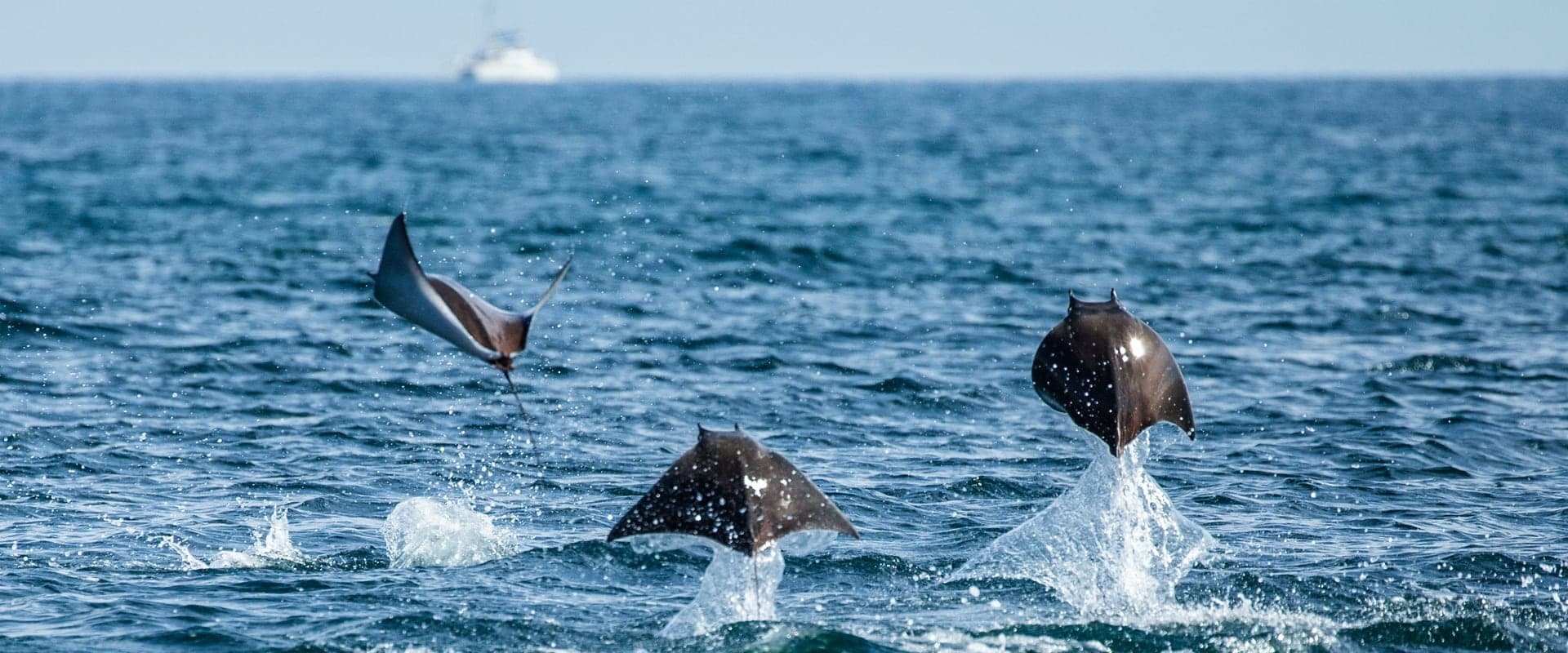
The ancient but still thriving reef and its massive coral heads, in Cabo Pulmo attracts all kinds of species. From smaller species such as schools of Angelfish, groupers, Mobula Rays, and the famous Panamic Green Eel, to the larger species such as Whale sharks in Autumn time, Humpback whales, Orcas and sharks in Winter. If you are lucky you could see the spectacular show that the hundreds of schooling Mobula Rays display when jumping out of the water flapping and twisting mid-air right next to your liveaboard dive boat.

Dive Sites Of Cabo Pulmo

El Bajo: A popular drift provides divers with a chance to swoop along the ridge of the fingered reef, observing the schools of Groupers, Snappers, and Sardines. On a good day, you will see some turtles gracefully swim by, and on a lucky day, you will see some White Tip sharks come by as well.

El Islote: A wall dive where you have the chance to see schools of hundreds of Jacks, Rays, Eels, and many more species that inhabit this wall. The wall itself is covered in its own jungle of corals, sea fans, and surrounded by tiny reef fish. A great place to see spiny lobsters hiding amongst the large boulders spread around the base of the site.

Nearby you will also find a large colony of Brown Californian sea lions who will provide divers and snorkelers with some serious fun.

Tips For Divers

Cabo Pulmo, in general, is an advanced diver dive area due to strong currents and big waves, however, each liveaboard has their own minimum dive experience level, please always check this before booking and it is important to remember your dive logs/logbooks. It is possible to rent equipment but it will be more comfortable to use your own gear, so if possible bring that with. With the large diversity of marine life, you will have the chance to see, it would be completely worth it to bring an underwater camera, to capture the memories.

The main language is Spanish, however, English is widely spoken all around the country and on the liveaboards. The currency is the Mexican Peso and you can easily exchange all popular currencies such as US dollars and Euros etc.

The plug is the same plug as the US; two flat prongs with the standard voltage being 127V. Please remember to bring an adaptor for all your electrics if you are not coming from the US.

Getting To Cabo Pulmo

There are two ports from which the liveaboards we have to offer depart from, these are La Paz and Puerto Penasco.

Puerto Penasco is located in the state of Sonora which is the small piece of land that connects Baja California with the rest of Mexico. In July 2016 Puerto Penasco Airport will receive flights from domestic destinations, till then most fly into Yuma International Airport in Arizona, which is located 180km (112mi) from Puerto Penasco.

La Paz is the capital city of Baja California and the port from which the Mexican liveaboards depart is called Marina Fonutar. The closest International airport is El Alto International airport, which has flights arriving from international destinations such as the United States, Peru, and other South American destinations, and from multiple domestic locations as well. The airport is located approximately 15km (8mi) from La Paz center.


Cabo Pulmo Diving Reviews

  • Rating 9.5 out of 10
  • 9.5 Exceptional
  • Rating 8.4 out of 10
  • 8.4 Very good
  • Colleen W
  • Flag of United StatesUnited States

Poor visibility, didn't see any hammerheads

Diving Cabo Pulmo in November on the Valentina
  • Rating 10.0 out of 10
  • 10.0 Exceptional
  • Thomas R
  • Flag of United StatesUnited States

Great. Abundant fish life.

Diving Cabo Pulmo in August on the Valentina
  • Rating 10.0 out of 10
  • 10.0 Exceptional
  • Dora C
  • Flag of United KingdomUnited Kingdom

Fantastic - diving with bull sharks

Diving Cabo Pulmo in March on the Nautilus Belle Amie
  • Rating 9.6 out of 10
  • 9.6 Exceptional
  • monica R
  • Flag of SpainSpain

Buceo con tiburon toro , muy emocionante

Diving Cabo Pulmo in August on the Valentina


What to know about diving in Cabo Pulmo

What is Cabo Pulmo known for?

Cabo Pulmo, on the East Cape of Baja California Sur, is known for its living coral reef — a rarity in the Sea of Cortez — and the resulting concentration of fish life, from schooling snapper to resident bull sharks. The site sits within Cabo Pulmo National Park, a strictly protected marine reserve credited with one of the most dramatic fish-population recoveries recorded anywhere in the world. It's reachable by road from Los Cabos, roughly an hour and a half away.

What is Cabo Pulmo National Park?

Cabo Pulmo National Park is a marine protected area established in 1995 to safeguard one of the only living hard coral reefs in the Sea of Cortez. Strict no-fishing rules implemented since the park's creation led to a documented increase in total fish biomass of more than 400% within a decade, making it one of the most cited marine conservation success stories globally. As of 2026, diving and snorkeling remain permitted within the park under local operator guidelines.

What is diving like in Cabo Pulmo?

Diving in Cabo Pulmo centers on the reef itself, with depths generally ranging from 20–60 ft (6–18 m), making it accessible to a wide range of experience levels. Expect large schools of snapper and jack, resident bull sharks in the cooler months, and occasional visits from manta rays and whale sharks. Most diving is boat-based day trips rather than liveaboard, given the park's proximity to shore.

What is snorkeling like in Cabo Pulmo?

Cabo Pulmo's shallow reef sections make it one of Baja's best snorkeling spots, with schools of tropical fish visible just a short swim from the beach in some areas. Visibility and fish activity are generally best outside the summer hurricane season, from roughly October through May. Guided boat snorkel tours are common, though some reef areas are accessible directly from shore.

What makes the Cabo Pulmo reef significant?

The Cabo Pulmo reef is one of only three hard coral reef systems in the Sea of Cortez and the northernmost living coral reef in the Eastern Pacific, believed to be around 20,000 years old. Its survival and recovery after near-collapse from overfishing in the 1980s and '90s made it a widely cited case study in marine protected area effectiveness. The reef supports over 200 fish species across a relatively small area.

What activities are available in Cabo Pulmo?

Beyond diving and snorkeling, Cabo Pulmo offers kayaking, stand-up paddleboarding, and seasonal whale watching, with the small town itself being a quiet, low-key base rather than a resort strip. Most activity centers on the marine park, since the surrounding desert landscape sees far less development than nearby Los Cabos. It's a popular day trip from Los Cabos or La Paz for travelers wanting a quieter alternative.

What's the water temperature like in Cabo Pulmo?

Water temperature in Cabo Pulmo follows the wider Sea of Cortez pattern, ranging from around 68°F (20°C) in winter to roughly 84°F (29°C) in late summer. A 3mm wetsuit is generally enough in summer, while a 5mm suit is more comfortable from December through April. Visibility tends to be best in the cooler, calmer months outside the summer storm season.

Where is Cabo Pulmo located?

Cabo Pulmo sits on the East Cape of Baja California Sur, roughly 60 miles (97 km) northeast of Los Cabos and about 90 minutes by road. It faces the Sea of Cortez rather than the open Pacific, giving it calmer, more protected waters than much of the surrounding coastline. The drive passes through a relatively undeveloped desert coastline, in contrast to the resort corridor further south.

When is the best time to dive Cabo Pulmo?

Cabo Pulmo dives well most of the year, but conditions are generally calmest and clearest from October through May, avoiding the summer hurricane season. Bull shark sightings are most common in the cooler months, roughly November through April. As of 2026, most local operators run trips year-round with seasonal adjustments for weather.

Is Cabo Pulmo safe to visit?

Yes — Cabo Pulmo is generally considered a safe, low-key destination, with most safety concerns tied to standard beach and ocean conditions, such as currents, rather than crime or wildlife. The reef's resident bull sharks are wild but not typically aggressive toward divers who follow guide instructions. As with any remote coastal town, it's worth confirming road conditions for the drive in, since parts of the route are unpaved.
What are the main dive sites in Cabo Pulmo?

Cabo Pulmo's main dive sites are located along the reef itself, including "El Bajo" and "Los Frailes," both known for schools of fish and occasional bull shark encounters. Depths are shallow enough that many sites suit both new and experienced divers on the same trip. Boat access from the small beach launch in town reaches most sites within a short ride.

How do you get to Cabo Pulmo?

Cabo Pulmo is reached by road from Los Cabos International Airport, roughly a 90-minute drive along Mexico's East Cape, with the final stretch partly unpaved. There's no public transit directly to the town, so most visitors arrive by rental car, taxi, or a transfer arranged through their accommodation or dive operator. La Paz is a similar driving distance from the north.

What's the weather like in Cabo Pulmo?

Cabo Pulmo has a dry desert climate with hot summers, often exceeding 95°F (35°C), and mild winters averaging around 75°F (24°C). Rainfall is minimal outside the summer hurricane season, which runs roughly July through October. Most visitors find the cooler months from November through April the most comfortable for both above- and below-water activities.

What guided excursions are available in Cabo Pulmo?

Guided boat trips for diving and snorkeling are the main excursions in Cabo Pulmo, typically run as half-day or full-day trips from the town's small beach launch. Kayaking and paddleboarding rentals are also available for exploring the calmer inshore waters independently. Some operators combine a Cabo Pulmo reef trip with a stop at nearby Los Frailes for an extended day out.

Is Cabo Pulmo included on liveaboard or day-boat dive itineraries from Los Cabos?

Cabo Pulmo is typically visited as a day-boat trip rather than part of a liveaboard itinerary, since it sits close enough to shore that overnight boats aren't necessary. Divers based in Los Cabos or La Paz commonly add a Cabo Pulmo day trip alongside other Sea of Cortez diving, separate from any Revillagigedo liveaboard booking. It isn't a stop on Revillagigedo-bound liveaboards, which head further offshore.

We’re here to help, 24/7.

Connect with our expert travel consultants to plan your next trip.

  • Farah Celada-Benito
  • Josue Zarco
  • Andrea Martinez
  • Nina Kapp
  • Mylene Issartial
  • Oksana Kovaleva
  • Nicole Laughlin