Liveaboard.com

Southern Atolls Liveaboard Diving

Our customers rated liveaboard diving in Southern Atolls as 8.9.

  • 100% Best Price Guarantee

Liveaboard Diving in Southern Atolls

What To Expect On A Southern Atolls Liveaboard

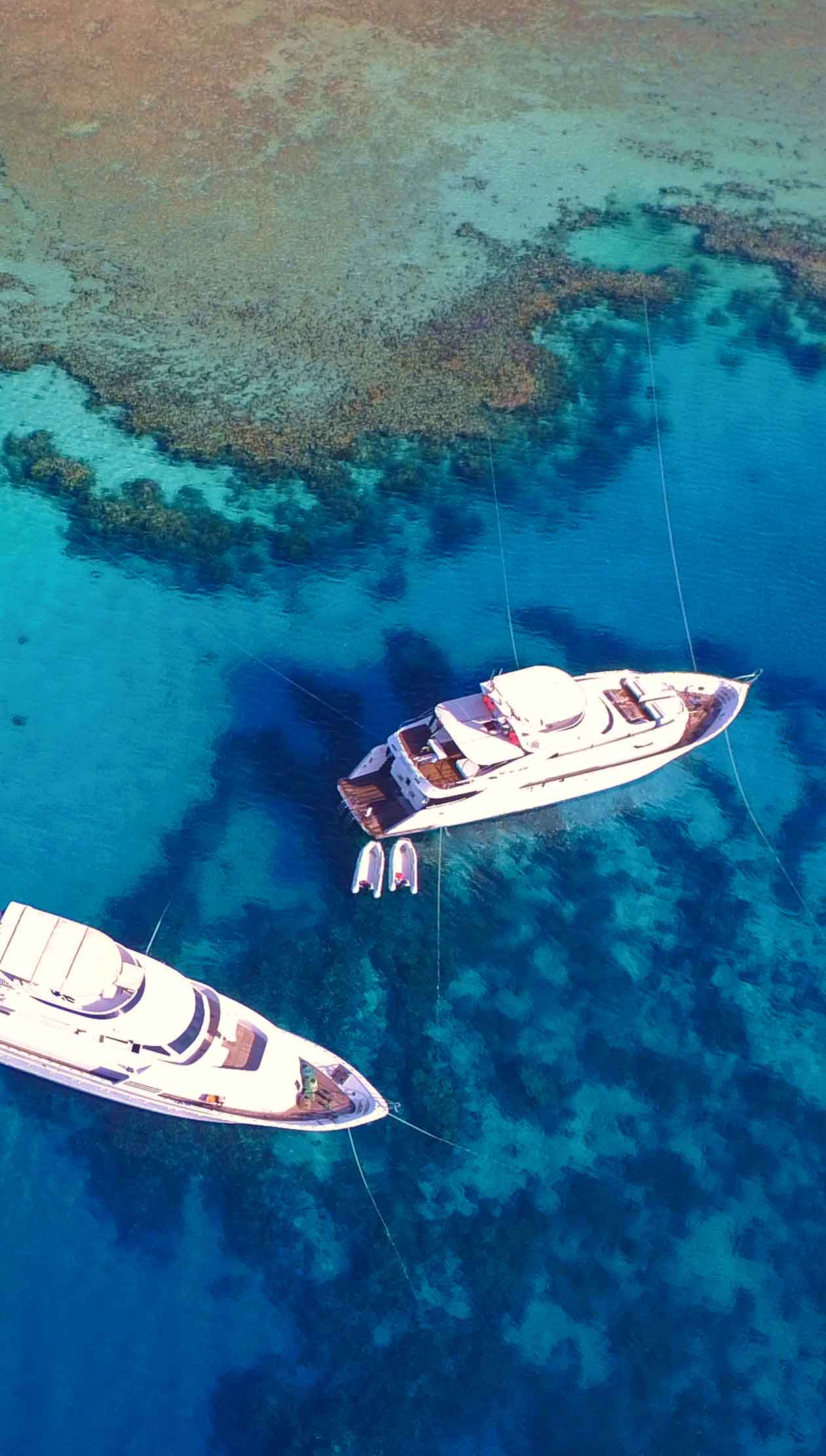
Maldives liveaboard diving in the Southern Atolls is like taking a step back in time; this area evokes the Central Atolls when they were first discovered by tourism. Dive cruises in the Southern Atolls will likely have the water all to themselves. The undisturbed marine environment holds everything divers could wish for from a Maldives liveaboard: reef sharks, mantas, big fish, and whale sharks. Southern Atolls dive dhonis are still discovering new sites on these itineraries, so you may have the chance to see the next famous Maldives location before anyone else does.

Southern Atolls Underwater

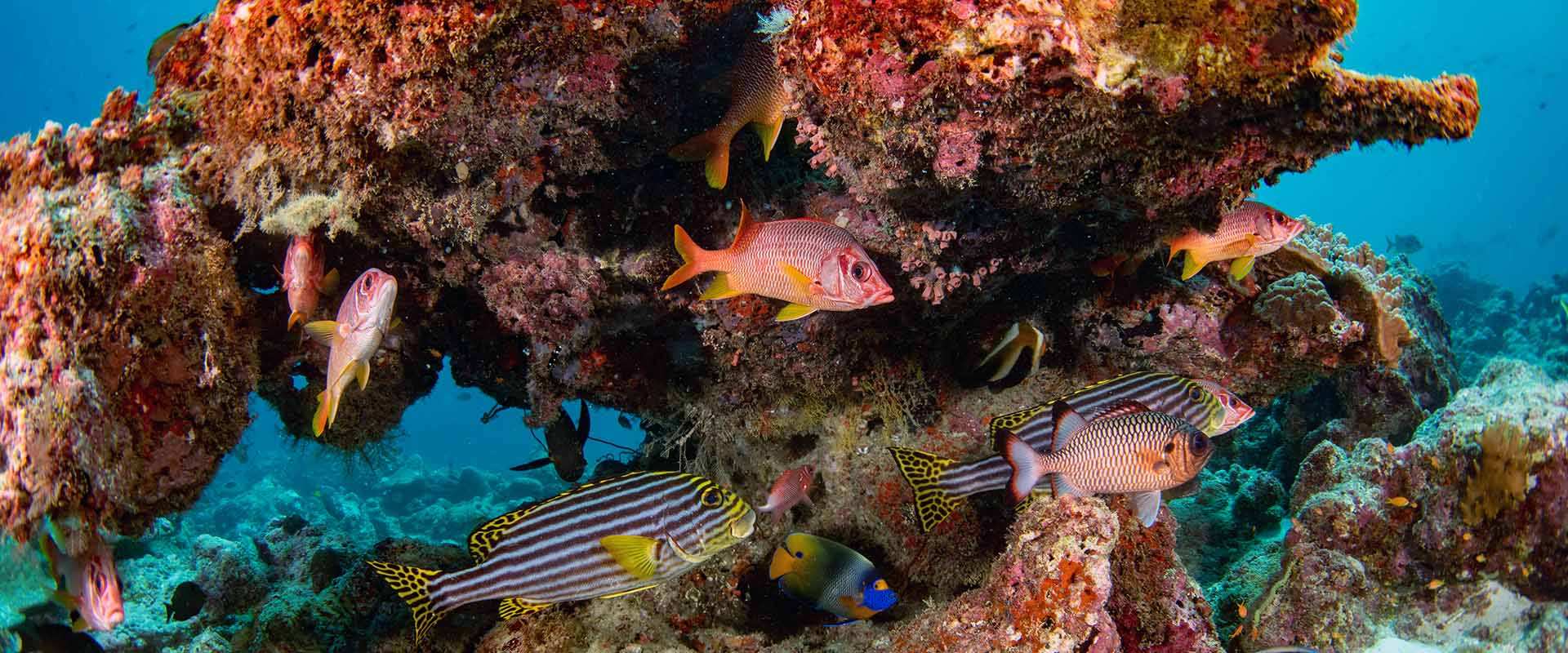
The currents rushing down Southern Atolls kandus attract big schools of predatory jacks searching for a meal, mantas and eagle rays circling cleaning stations, grey reef sharks patrolling the reef surface. At a few dive areas, whale sharks sedately gorge on plankton or pass through. There are even some areas with excellent hard coral cover. Experienced divers will be best able to manage the fast currents and enjoy the reef life that abounds along the Southern Atolls' walls, channels, and pinnacles.

Dive Areas Of The Southern Atolls

Thaa Atoll, one of the least-explored areas of the Maldives, is a good Southern Atoll location for whale sharks. But while these gentle giants are rare, some other Maldives favorites can be seen regularly, such as schools of eagle rays and big reef fish like Napoleon wrasse. Healthy corals decorate the craggy wall at the site 7-Up, and nearby, a large garden of gorgonian fans makes a pretty landscape for circling manta rays. The strong currents of Thaa's large kandus ensure that sharks are plentiful, especially whitetips.

Laamu Atoll - With a length of 48 kilometers and no resort, its exploration is still very much in progress; if your Southern Atolls dive tour ventures to Laamu's outer reef, prepare to descend at incredible sites that have seen few or no divers before. Big schools of fish like tuna and jacks can be found in Laamu's deep channels. Some say that Laamu tops all the country's atolls regarding large schools of fish. While drift-diving these kandus, expect to see whitetip reef sharks and eagle rays. The lagoons, some over 70 meters deep, also hold incredible fish biomass.

Meemu Atoll, like in Thaa, whale sharks appear every once in a while, but manta rays can be seen on almost every dive. Mantas and More is one site particularly notable for the frequency of visits from these winged giants. The channels at Meemu are also deep, and their sea life is rich; Meemu divers are virtually ensured of eagle ray and grey reef shark sightings along the atoll's rugged underwater cliffs. Swaying soft corals add color to the caverns and walls of Meemu's thilas, which host a variety of reef fish that attract tuna and jacks. At Medhufushi Thila, the current even relaxes a bit, allowing a rare opportunity for less experienced divers to jump in the water without stress.

Nilandhe Atoll offers some thrilling diving, wherein the current brings you from pinnacle to pinnacle instead of through a channel. Particularly at the site Jumping Jack, divers can make an underwater traverse from one island to another by "thila-hopping," each thila maintains its reef life population, supporting predators like sharks and tuna. In the stretches of blue water between thilas, sharks, and schools of eagle rays can be seen. Turtles are plentiful in some areas of Nilandhe, and a marine protected area is placed around five thilas in the middle of a channel to support the abundance of Nilandhe's reef life for perpetuity.

Top Tips for Divers

In the Maldives, a new Green Tax of 12 USD per person per night applies to every tourist in the country. The official language is Maldivian, also called Dhivehi.

Especially with newly emerging dive areas like the Southern Atolls, staying on top of your research can help you plan your ideal Maldives liveaboard trip. It's worthwhile to check recent reviews by visitors and blogs by local dive shops; this way, you'll know about incredible, newly-discovered destinations, and you'll be able to ask your potential liveaboards if they visit them. Suppose you're excited about the possibility of exploration dives. In that case, you may also want to contact your potential liveaboards in advance to find out which ship is most likely to do this experimental sort of dive tourism.

Gear to bring includes your own mask, booties, fins, and dive computer. These are personalized pieces of equipment that we donít recommend renting. An ill-fitting mask or fins can make diving virtually impossible, and a dive computer is your most important safety equipment.

Getting To The Southern Atolls

The Southern Atolls are best dived by Maldives liveaboard; in no other way can you access so many dive sites, often near uninhabited islands or far from land. The length of liveaboard itineraries in the Southern Atolls usually ranges from 7 to 10 nights, with a budget from 200 to a bit over 300 euros per night. Southern Atolls liveaboards sometimes include the Central Atolls, and a few even add the Deep South Atolls in a north-south traverse that crosses half of the archipelago.

The Maldives capital Male, is one liveaboard departure location for Southern Atolls liveaboards, accessible by direct flights from Dubai, Singapore, and Colombo. However, many other Southern Atolls departure ports exist, including Kadhoo, Koodoo, Laamu, Medfushi, and Gan (in the deep south). Visitors should take a domestic seaplane to get to these locations from Male; trips are usually around an hour. International flights often connect through the regional airports mentioned above to reach Male from Europe, America, China, India, and Australia.

Diving the Southern Atolls is possible all year round, even more so than the rest of the Maldives. The conditions are ideal during the northeast monsoon from December through May, with calm seas and little chance of rain. The water temperature usually stays between 26 and 29 C, and visibility tends to be excellent, between 20 and 30 meters.


Southern Atolls Diving Reviews

  • Rating 8.9 out of 10
  • 8.9 Fabulous
  • Rating 10.0 out of 10
  • 10.0 Exceptional
  • Laura S
  • Flag of United StatesUnited States

One of the best dive sites of the trip was Myaru Kandu. SCHOOLS of eagle rays and sharks.

Diving Southern Atolls in January on the Princess Sara
  • Rating 7.6 out of 10
  • 7.6 Good
  • Quentin C
  • Flag of FranceFrance

Strong current, lots of sharks

Diving Southern Atolls in February on the Princess Sara
  • Rating 10.0 out of 10
  • 10.0 Exceptional
  • Inigo P
  • Flag of SpainSpain

Dives can be challenging due to currents if you are not an experienced diver. Staff is there to help and guide anytime!

Diving Southern Atolls in February on the Princess Sara
  • Rating 8.8 out of 10
  • 8.8 Fabulous
  • Celine V
  • Flag of FranceFrance

We loved this destination! It is full of surprises. We had great sunrises and sunsets on the boat. It is very lovely to have all these atolls spread around the ocean. They are offering a great spot for fishes and sharks.

Diving Southern Atolls in February on the Princess Sara


What to know about diving in Southern Atolls

What does a Southern Atolls liveaboard route typically include?

A typical Southern Atolls circuit runs for about 7 nights between Addu Atoll and Kooddoo (Gaafu Alifu), covering roughly 15 dives across Addu, Fuvahmulah, and Gaafu Alifu. Signature stops usually include Addu's British Loyalty wreck, a Fuvahmulah tiger shark dive, and the manta- and shark-rich channels around Kooddoo, sometimes with a night anchorage for whale sharks.

What are the Southern Atolls of the Maldives?

The Southern Atolls are the trade name for the Maldives' far south: Huvadhoo (split administratively into Gaafu Alifu and Gaafu Dhaalu), Addu Atoll, and Fuvahmulah. It's the least-dived quarter of the archipelago, reached by domestic flight rather than the seaplane network serving the central atolls, and liveaboards route through it specifically for pelagic-heavy channel diving rarely seen further north.

What is surfing like in the Maldives' Southern Atolls?

The Southern Atolls, chiefly Huvadhoo and Addu, catch consistent southwest and southeast swells from May to October, with July and August delivering the biggest surf. Named breaks like Five Islands and Beacons in Huvadhoo run 2-10 ft (0.6-3 m) and are reached almost exclusively by surf charter boat rather than a land-based camp.

Can you dive the Southern Atolls from a resort instead of a liveaboard?

Yes, a small number of resorts on Kooddoo (Gaafu Alifu) and within Addu Atoll run their own dive centers and day-boat excursions to nearby channels, so a land-based trip is possible. A liveaboard still covers far more ground, since it can reach outer Gaafu Dhaalu and Huvadhoo sites that are a long day trip or unreachable from any single resort.

Do Southern Atolls liveaboard itineraries visit more than one atoll?

Most do: a standard route links Addu Atoll, Fuvahmulah, and Gaafu Alifu (or its neighbor Gaafu Dhaalu) into a single 7-night trip rather than staying within one atoll. That range is the main reason divers choose a liveaboard here over a single-resort stay, since none of these island groups have road or bridge access to the others.

How do you get to the Southern Atolls from Malé to join a liveaboard?

Access is by domestic flight rather than a boat transfer from the capital: Gan International Airport (Addu) and Kooddoo Airport (Gaafu Alifu) are the two gateways, each roughly an hour's flight south of Malé. Divers then board their liveaboard by dhoni tender directly off the airport island, since sailing there from Malé itself would otherwise take about two days.

How many dives can you expect on a Southern Atolls liveaboard week?

A standard week runs around 15 to 18 dives, typically three per day plus an occasional night dive, spread across whichever atolls the itinerary covers. Operators build in extra surface time between some sites to account for longer repositioning distances than those required for a central-atoll trip.

How rough are the currents in the Southern Atolls' dive channels?

The region's kandus funnel a large volume of tidal water between the ocean and the lagoon on every tide change, producing drift dives that regularly run in the 1-3 knot range and occasionally stronger during spring tides. Dive guides typically plan entries and exits around slack or incoming tide specifically to manage this.

Is Huvadhoo Atoll part of the Southern Atolls dive region?

Yes. Huvadhoo is the old geographic name for the natural atoll now split into the administrative provinces of Gaafu Alifu and Gaafu Dhaalu, and it anchors the western side of most Southern Atolls itineraries. Its channels see less dive traffic than Addu's, which is exactly why liveaboards include them, for reef and shark life that's had relatively little diver exposure.

What certification level do you need to dive the Southern Atolls?

Most operators require Advanced Open Water certification with 100 or more logged dives, and some require Nitrox certification because the region's channels have stronger, less predictable currents than those in the central Maldives. A handful of sheltered lagoon and house-reef sites inside Addu Atoll remain suitable for less experienced divers, but the outer kandus are not beginner terrain.

What marine life makes the Southern Atolls worth the extra travel?

The region's channels support an unusually complete shark community for the Maldives, with grey reef, silvertip, hammerhead, and even tiger and bull sharks recorded across its various atolls, alongside year-round manta cleaning stations and seasonal whale sharks. It's the pelagic density, more than any single site, that draws divers past the more accessible central atolls.

What's the best time of year to dive the Southern Atolls?

The dry northeast monsoon from December through April brings the calmest seas, clearest water, and the most reliable channel diving across the region, and it overlaps with peak whale shark season, January through April. May through October bring rougher surface conditions but also the season's best surf swells.

What's the water visibility like in the Southern Atolls?

Visibility commonly runs 66-100 ft (20-30 m) or better during the December-to-April dry season, dropping somewhat during the rougher southwest monsoon months. Outer channel sites, which see less runoff and more open-ocean exchange, tend to hold the clearest water year-round.

Why are the Southern Atolls less crowded than the rest of the Maldives?

Limited domestic flight capacity and the extra day or two of travel time keep visitor numbers low compared with Malé, Ari, or Baa atoll. Operators themselves describe the region as off the traditional Maldives routes, and a repositioning cruise from a northern base to the south can take roughly 48 hours by boat, which is why almost everyone flies in instead.

Why do Southern Atolls dive trips cross the equator?

Fuvahmulah sits a few minutes of latitude south of the equator, and Addu Atoll lies further south still, so any liveaboard itinerary that strings the two together necessarily crosses the line. It's one of the few diving routes in the Maldives where that's true, and boats often mark the crossing as a highlight of the trip.

We’re here to help, 24/7.

Connect with our expert travel consultants to plan your next trip.

  • Nicole Laughlin
  • Ester Canali
  • Mylene Issartial
  • Andrea Martinez
  • Farah Celada-Benito
  • Josue Zarco
  • Nina Kapp