Liveaboard.com

Thistlegorm Liveaboard Diving

Our guests rated liveaboard diving in Thistlegorm as 9.3

  • 100% Best Price Guarantee

Liveaboard Diving in Thistlegorm

What to Expect On A Thistlegorm Liveaboard

A dive liveaboard to the SS Thistlegorm, one of the world's most famous shipwrecks resting in around 20-30 meters of water, should be on any divers '' dive' list in the Red Sea. She left Glasgow in June 1941 carrying locomotives for an Egyptian train company, military vehicles, and munitions for the Allied forces stationed in Egypt. She anchored off the coast with the HMS Carlisle as an escort waiting for transit through the Suez Canal.

The Thistlegorm never made it to the Canal, though. On the 6th of October, she was mistaken for a troop carrier and bombed by the Luftwaffe. She sank through a destructive combination of the German bombs and the ignition of her ammunition. Most of her cargo remains inside the ship's holds, except for two locomotives on either side of the shipwreck.

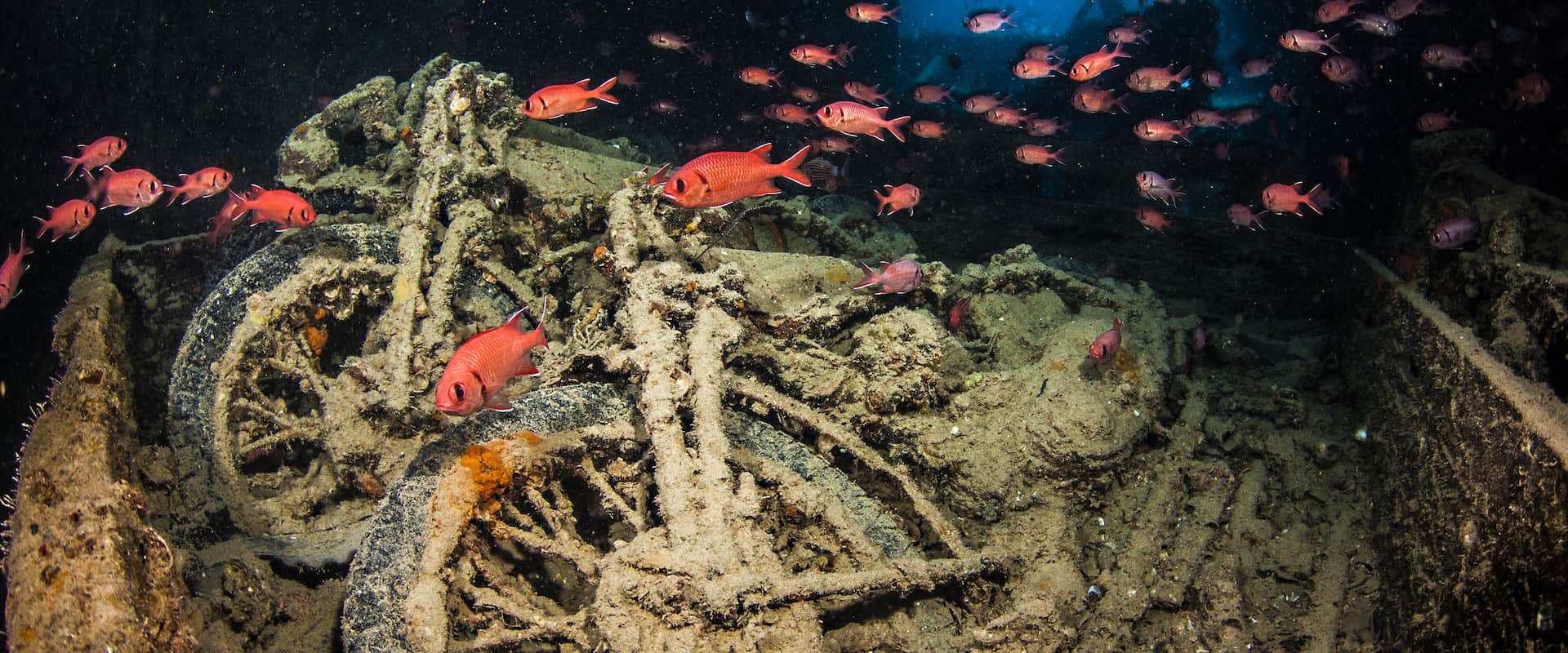
The Thistlegorm was rediscovered as a dive site by Jacques Cousteau in the 1950s, and during the diving boom in the 1990s, it became a world-famous dive site. The cargo is easy to view without wreck penetration because the wreck split in two, revealing trucks, guns, motorcycles, and many other military goods in the cargo holds. This is a dream for wreck divers, and there are plenty of eels, barracuda, batfish, and the occasional turtle around for wildlife lovers, too. Numerous Egypt liveaboards offer dives on the Thistlegorm as part of their Northern Red Sea itineraries.

Daily Schedule

Morning: The Thistlegorm is rated one of the best wreck dives in the world, which means that it is extremely popular. This means many divers visit every day, so if you are diving from a liveaboard you are in luck. The morning will be early, around 6 am, but getting in the water and exploring before any of the day boats arrive from Sharm is well worth it. For this reason, most liveaboards diving the Thistlegorm try to make two dives on the wreck before heading to another quieter site in the afternoon.

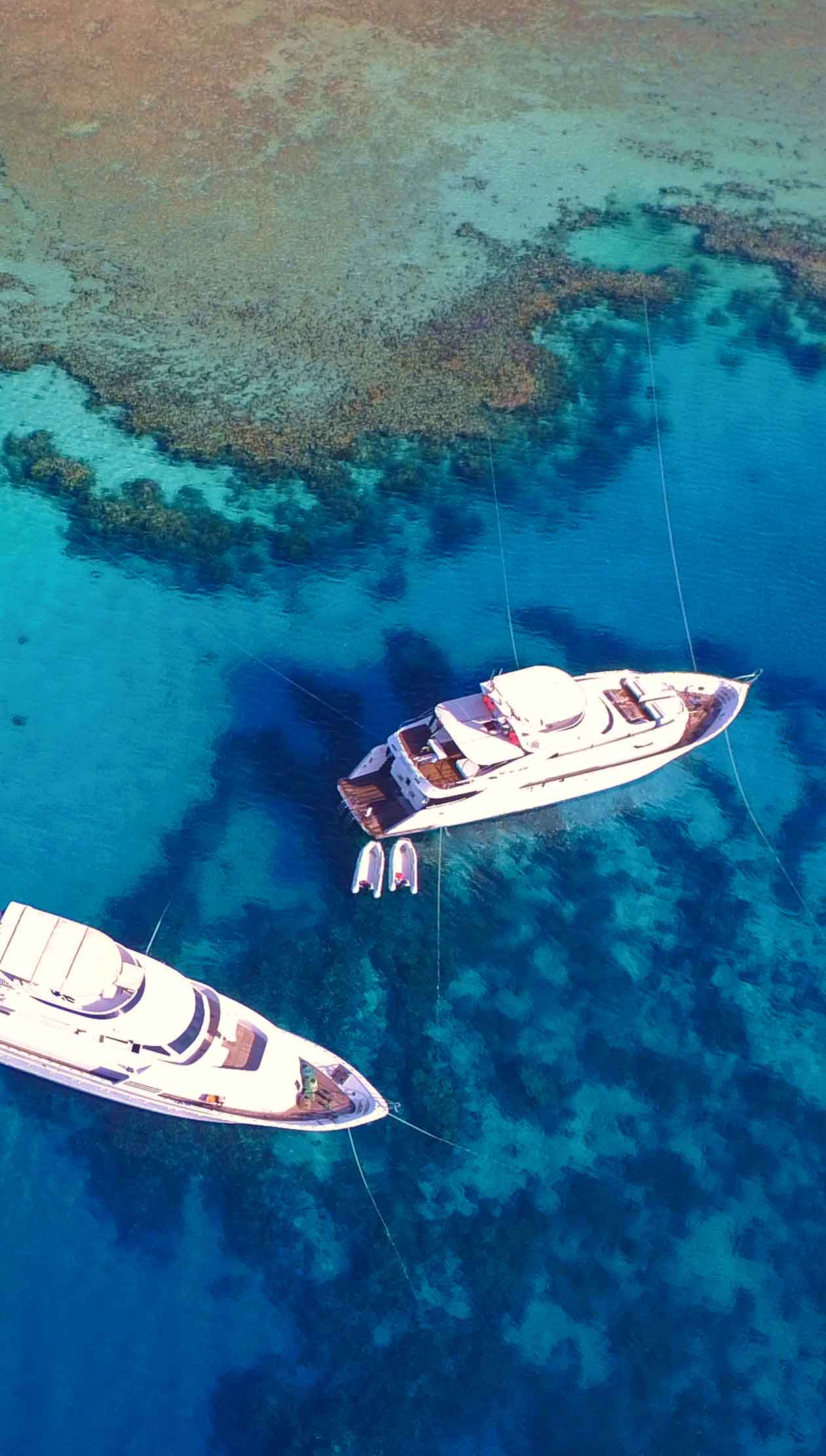
A light breakfast in the morning, followed by a briefing, will help you orient yourself for the dive. The wreck is very large, so maybe even take notes in the briefing to spot important points when you get down there. Liveaboards and other boats often anchor on or very close to the wreck, meaning divers can go directly from the main boat without a tender.

Thistlegorm Underwater

The Thistlegorm is over 128 meters long and sits upright on a sandy seabed. The wreck site has so much to see that it takes at least two dives, if not more, to see most of it. It is best to start with the deeper profile at the stern, around 30 meters, and then work your way up.

The Thistlegorm is split in two, with the smaller stern section on its side and a fantastic break that exposes the layers of cargo decks. On the stern, in addition to the propeller, tanks, and munitions, machine and anti-aircraft guns are hanging from the now vertical deck. They are a dream come true for divers with a passion for World War II hardware.

There are also two locomotives, one on the port and one on the starboard. They came out of the vessel when she sank, and sitting in the sand not far from the main wreck, they are a perfect subject for underwater photographers. Towards the middle, where the bowels of the ship have been exposed by the explosion that sank her, there are numerous layers of the holds. These holds are full of cargos, including everything from rifles and grenades to shoes and boots a veritable underwater museum.

The marine life is more concentrated towards the shallower area close to the ship's stem, although you will find cardinals in the holds and crocodile fish in the sand near the locomotives. Big barracudas hang out above the wreck, though, and eels are frequently seen poking out of different cracks and holes in the structure.

Top Tips for Thistlegorm

  • A liveaboard cruise which visits the Thistlegorm is the best way to see this wreck, with early morning dives you will avoid the crowds arriving by boat from Sharm el Sheikh.
  • The wreck can be a bit disorientating, so making a quick slate copy of the sitemap might prove helpful.
  • For photographers, a good flash is a big advantage. Many of the most photo-worthy items are in the hold, where the light is scarce.

Getting to Thistlegorm

Egypt liveaboards that include the Thistlegorm normally depart from Sharm el Sheikh or Hurghada. Both resorts have airports offering international flights from mainland Europe with further afield connections. Almost all liveaboards offer transfers for guests from the nearby airport or hotels in the area.

Liveaboards, which dive on the Thistlegorm, usually embark from Sharm el Sheikh and will normally travel along the coast towards the Thistlegorm, taking in several dives in Ras Mohammed National Park and the wrecks at Abu Nuhas. Those that begin in Hurghada will head North via Abu Nuhas and other popular wreck sites such as Shaab El Erg.

Accessing the Thistlegorm by day boat starting in Sharm el Sheikh is also possible. The day starts very early, usually around 4 am, and returns around 5-6 pm. This long day is due to the 4-hour sail from the port at Sharm. Most of these day trips offer 2 dives on the Thistlegorm.


The SS Thistlegorm is an underwater history lesson and a must dive for the wreck enthusiast.


Thistlegorm Diving Reviews

  • Rating 9.3 out of 10
  • 9.3 Superb
  • Rating 9.6 out of 10
  • 9.6 Exceptional
  • Michael M
  • Flag of United StatesUnited States

Unique. The shipwreck is in superb condition for its age. Equipment onboard was in good condition, left in the original state. Both outside and inside of the wreck were easy to navigate.

Diving Thistlegorm in July on the Discovery II
  • Rating 10.0 out of 10
  • 10.0 Exceptional
  • Paola Z
  • Flag of United StatesUnited States

Impressive but hard for us due to high current.

Diving Thistlegorm in June on the Ghazala Adventure
  • Rating 10.0 out of 10
  • 10.0 Exceptional
  • Nicholas L
  • Flag of United StatesUnited States

Amazing wreck experience. It lives up to its reputation as a top five site in the world.

Diving Thistlegorm in April on the Blue Melody
  • Rating 10.0 out of 10
  • 10.0 Exceptional
  • Brent F
  • Flag of United StatesUnited States

Excellent - highlight dive of the trip

Diving Thistlegorm in February on the Ocean Lovers


What to know about diving in Thistlegorm

What is the Thistlegorm known for?

The SS Thistlegorm is widely considered the single most famous wreck dive on the planet — a WWII British armed transport ship sunk in 1941 that still sits largely intact, its cargo holds packed with rows of motorcycles, trucks, and rifles much as they were loaded eight decades ago. Divers travel to Egypt specifically for this one wreck, and many Red Sea liveaboard itineraries are built around reaching it early, ahead of the day-boat crowds.

What cargo was the Thistlegorm carrying when it sank?

The ship was hauling war material for Allied forces in North Africa — stacks of Bedford trucks, Norton and BSA motorcycles, Bren gun carriers, rifles and ammunition crates, plus rubber boots, radio gear, and aircraft parts. Two steam locomotives destined for Egyptian railways were lashed to the deck and were thrown clear of the hull in the explosion; they now rest upright on the seabed on either side of the wreck.

How and when did the Thistlegorm sink?

The Thistlegorm was anchored in a wartime holding area north of Ras Mohammed, waiting to join a convoy through the Suez Canal, when German Heinkel He 111 bombers found it on the night of October 6, 1941. A bomb struck hold four near the stern, and the resulting explosion broke the ship's back, killing nine crew members. Jacques Cousteau rediscovered and filmed the wreck in the early 1950s, though it wasn't opened to regular recreational diving until the early 1990s.

How deep is the Thistlegorm and what's a typical dive profile?

The wreck sits upright on a sandy bottom at about 98 ft (30 m), with the main deck at around 52-59 ft (16-18 m) and the shallowest structure at about 46 ft (14 m). Most liveaboard visits run two dives: an orientation dive along the exterior and superstructure, followed by a deeper dive into the cargo holds for divers qualified to penetrate.

Can you penetrate the wreck's cargo holds, and what certification do you need?

Yes — holds one through four are open for guided penetration, but you'll generally need at least Advanced Open Water certification, and a wreck-diving specialty (or equivalent penetration training and logged experience) is expected before anyone enters the holds rather than just looking in through the openings. As of 2026, most liveaboards also want divers who are comfortable with drift entries and have a reasonable dive count logged, since exits inside the holds are limited and silt builds up quickly.

What marine life will I see at the Thistlegorm?

Expect pelagic action in the water column — barracuda, tuna, batfish, and the occasional passing reef shark — alongside resident turtles and moray eels working the hull. Inside and around the holds, look for lionfish, scorpionfish tucked on the cargo, and dense clouds of glassfish that have colonized the dark spaces over the decades.

When is the best time of year to dive the Thistlegorm?

April through November generally brings the calmest seas for the boat crossing and the most reliable conditions, with water warming toward the upper end of its range by late summer. December through February can bring rough surface weather that cancels day trips outright, which is one reason liveaboards — less dependent on a single-day crossing — often manage to reach the site more consistently in winter.

Is the Thistlegorm accessible by day boat or liveaboard only?

Both — day boats run out from Sharm El Sheik and Hurghada, typically a few hours' crossing each way, but you're sharing the wreck with several boatloads of divers at once. Liveaboards on northern Red Sea itineraries can time their arrival for early morning or even schedule a night dive, which makes for noticeably quieter conditions on the wreck itself.

What's the water temperature like at the Thistlegorm?

Expect a seasonal range of roughly 72-82°F (22-28°C), cooler through the winter months and warmest from June through September. A 5mm wetsuit is the general year-round recommendation given the depth and typical dive times, with some divers adding a hood or vest in cooler months.

Is the Thistlegorm suitable for beginners, or is it advanced-only?

It's best suited to divers with some experience already logged — the depth, occasional strong current, and penetration opportunities all favor Advanced Open Water certification and beyond. Newer divers can still join for a shallower exterior tour with a guide, but the full experience, including the holds, is really an advanced-diver site.

How many dives does a liveaboard typically spend here?

Most northern Red Sea itineraries schedule two to three dives on the Thistlegorm, sometimes spread across two mornings to catch calmer conditions and thinner crowds. It's common for the wreck to anchor an entire day's schedule, with nearby sites like Ras Mohammed or the Gubal Strait wrecks rounding out the rest of the trip.

What safety hazards should I know about before diving the Thistlegorm?

Currents here can run strong — up to a couple of knots — which makes drift-diving skills and staying close to your group important, especially along the exterior. Inside the holds, poor buoyancy control kicks up silt fast and can drop visibility to near zero within seconds, and loose wiring, netting, and cargo debris pose a real entanglement risk, so penetration should stay within your training level and always be with a guide.

We’re here to help, 24/7.

Connect with our expert travel consultants to plan your next trip.

  • Andrea Martinez
  • Ester Canali
  • Oksana Kovaleva
  • Mylene Issartial
  • Nina Kapp
  • Juliane Ball
  • Josue Zarco