Liveaboard.com

Egypt Liveaboard Diving

Compare and book 79 liveaboards with 4,533 verified reviews online

  • 100% Best Price Guarantee

Liveaboard Diving in Egypt

Scuba diving in Egypt's Red Sea invigorates divers as they navigate spectacular reefs, millions of brilliantly-colored fish and corals, or historical wrecks.

Liveaboard diving in the Egyptian Red Sea is spectacular; the land is known for its ancient history - Pharaohs and Pyramids but is also a mecca for scuba divers and snorkelers. Wrecks, colorful corals, and big fish abound, but the off-shore sites such as Daedalus, The Brothers & St. Johns, only reachable by dive liveaboards, can provide the ultimate thrill and the best experience.

Our Red Sea dive liveaboards offer various itineraries to bring you to Egypt's best dive sites. Departing on a Sharm el Sheikh Liveaboard or Hurghada Liveaboard means you can dive into history at the wrecks of the SS Thistlegorm and Abu Nuhas combined with the stunning reefs in the Ras Mohammed Marine Reserve and the Straits of Tiran.


From Hurghada or Port Ghalib, our Red Sea liveaboards bring you to the Brothers Islands to offer amazing dive tours, most famous for their multitude of shark action, brightly colored corals, and anthias. You could spend a week at the Brothers Islands alone, but a 'Simply the Best' route to the Brothers, Daedalus, and Elphinstone provide the opportunity to see Manta rays, Oceanic white tip sharks, and the wonderful Anemone City. Some liveaboard dive safaris also stop at Marsa Alam, where dugongs can be sighted. Explore the Deep South from Port Ghalib (Marsa Ghalib) with a dive safari to Fury Shoals, St Johns reefs, or Rocky and Zabargad. Dive sites vary from steep walls to caverns and wrecks, with plenty of pelagic action to be expected. The best Egypt liveaboards make it possible to dive into these magnificent areas all year round though itineraries offered may vary with the seasons.

Liveaboard Dive Trips in Egypt

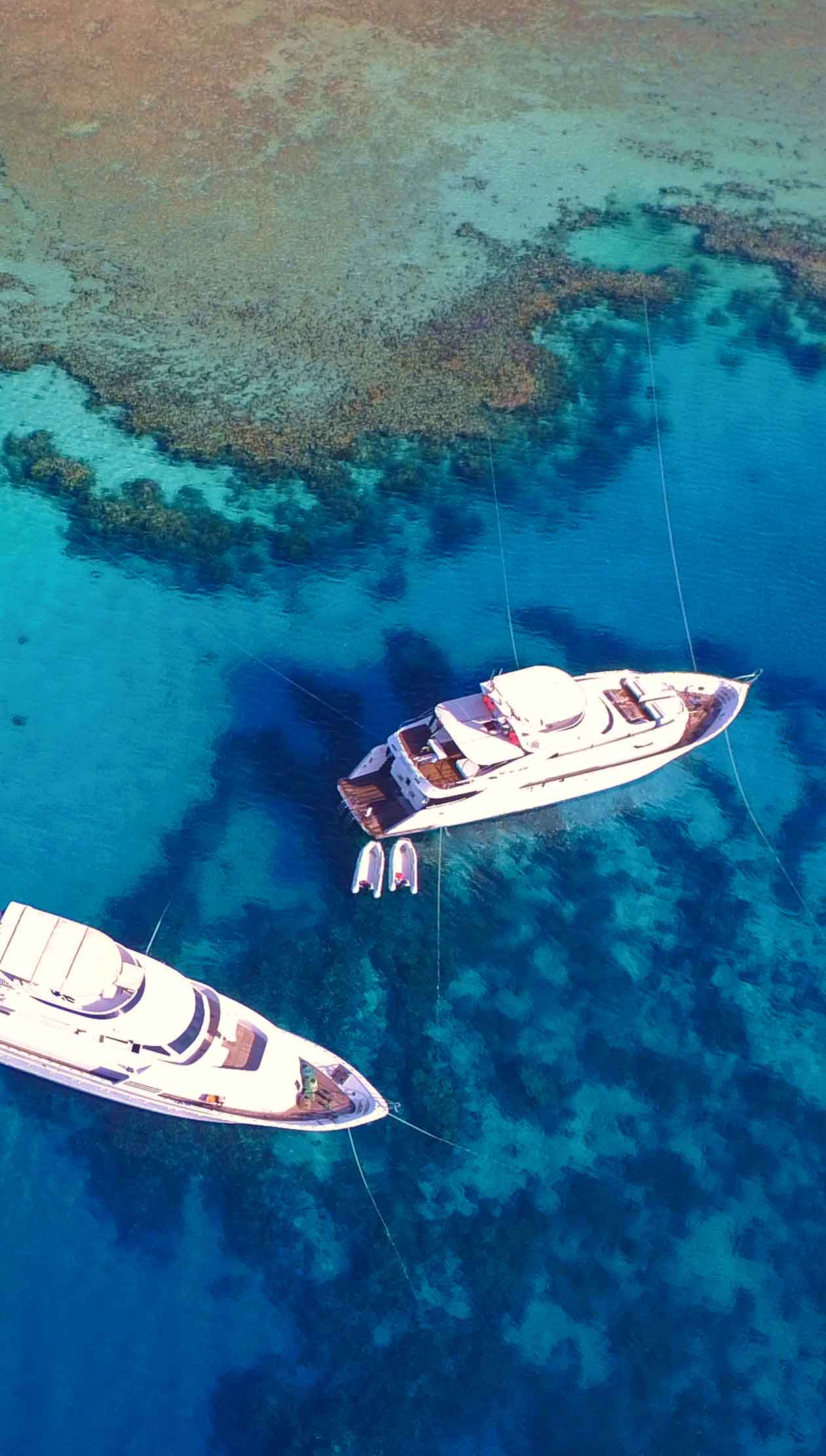
LiveAboard.com hosts a wonderful variety of over 60 different liveaboard boats. Most of our boats are MV's motor vehicle yachts ranging from 22 meters to 40 meters in length. Our boats can host anywhere from 10 to 26 divers depending on the liveaboard yacht, with a choice of budget-friendly up to luxury liveaboard. Electricity and internet connections are sometimes available but are subject to additional fees depending on the boat.

Guests usually arrive the day or night before the departure from the port. The boats tend to depart from the ports very early in the morning so that guests can immediately enjoy their first 'check dive' with their dive guides on a shallow, current-free, yet stunningly beautiful reef dive, and can then expect 3-4 dives per day usually. The Red Sea is renowned for its incredible underwater visibility and lush wildlife. It is very rare to be disappointed with any dive site in Egypt.

The check dive will allow the dive guide to gauge the experience and comfort level of the group and individual divers. This information will help the captain and crew to choose the best dive sites suited to the guests and the current weather conditions.

Guests can ask to visit specific dive sites, and most boat captains will do everything they can to oblige. Liveaboard itineraries are subject to various unpredictable changes, including weather conditions. All dives, and especially some wreck dives, are subject to divers experience and weather permitting. Liveaboard itineraries depend on the Egyptian government, coast guard, and/or marine police approval. Every effort is made, but liveaboards cannot guarantee diving at specific dive sites. The final decision lies with the captain and guide. Safety always comes first!

Dive Sites and Areas of Egypt

FURY SHOALS is located in Southern Egypt; this area is best reached by a liveaboard boat from Marsa Alam. This magnificent dive site has some of the most beautiful reefs in the Red Sea.

DAEDALUS is an amazing reef about 90 km southwest of Marsa Alam and is accessible by liveaboard boats. It surrounds a very small island with a lighthouse on it to warn passing boats that the water is very shallow. The reefs there are close to the surface and so offer a huge variety of wildlife in the extra-warm water. Perfect for diving and snorkeling.

ABU NUHAS, or Shaab Abu Nuhas reef, is in the Shadwan Channel, just off the northern coast of Shadwan Island. There are 5 shipwrecks excellent for wreck diving.

RAS MOHAMMED MARINE RESERVE is an underwater national park at the southern extreme of the Sinai Peninsula near Sharm el Sheikh. Completely protected from fishing and commercial activity, its reefs are glorious and untouched.

ELPHINSTONE reef is a 400-meter cigar-shaped reef located in the southern Red Sea, close to Marsa Alam. It was named after Admiral George Elphinstone, a 19th-century British naval commander. Elphinstone Reef is about 7 miles from the shore so it's best reached by liveaboard cruise.

ST JOHNS reefs are far removed from the coast of Egypt, not far from the Sudanese border. The St. Johns reefs cover an area of more than 290 square kilometers. This dive area can only be reached by liveaboard but is more than worth the trip.

THE BROTHERS Islands are two small islands in the Red Sea near Egypt. The islands are Big Brother and Small Brother Island. Big Brother has a lighthouse on it, and Small brother is located just under 1 mile to the south. The best way to reach the Brother Islands is by liveaboard cruise.

STRAITS OF TIRAN are located in Northern Egypt at the beginning of the Gulf of Aqaba and is one of the best dive areas in Egypt. Four amazing dive sites, Jackson Reef, Woodhouse Reef, Thomas Reef, and Gordon Reef, make diving here on a liveaboard trip very special.

SALEM EXPRESS was a passenger ferry that was caught in a storm on the 17th of December, 1991. She was in transit from Mecca when the bow was breached, and the vessel sank so quickly that many passengers were unable to escape in time. Those who dive it report feeling moved by the experience of visiting this underwater monument to those who lost their lives that day.

When to go

The best time to dive in Egypt is all year-round. With depths ranging from 5 meters (15 feet) to depths limited to recreational divers to even deeper dives for technical divers and visibility ranging from 15 meters (50 feet) to 70 meters (230 feet), Egypt diving season knows few limits. But be sure to take note of the currents, which could make for nice drift dives when planned properly. The water temperature in Egypt's Red Sea is 21 degrees Celsius (70 Fahrenheit) at its coldest and 30 degrees Celsius (104 Fahrenheit) at its warmest, which is like a soak in a bathtub of luxury with great visibility and underwater life.

Tips For Travellers

Minimum logged dives are required by some Red Sea liveaboards or on certain itineraries. Ensure you bring along your dive certification card and proof of dive experience (log books). Check dives are common on liveaboards and are often held on the first day.

The Red Sea is one of the saltiest bodies of water in the world, so adjusting your weights to compensate for greater buoyancy will be necessary.

The official language of Egypt is Egyptian Arabic, but English is widely spoken by crew and guides on most liveaboards. The main currency is the Egyptian Pound, but Euros, UK Pound Sterling and US dollars are widely accepted or easily exchanged also.

Electricity voltage runs at 220-240 volts; the standard socket is an EU-style two-pin. Remember to bring plug adaptors for your electrical gadgets. A step-down transformer will be required for appliances that normally operate on 110-120volts (USA/Canada), to avoid serious damage. This will convert 220/240-volt electricity to 110/120 volts.

How to get there & Ports of Departure

Cairo is the main airport city of Egypt. But there are other airports closer to the liveaboard departure points. Marsa Alam airport, Sharm El Sheikh airport, and Hurghada airport are the principal airports for liveaboard departures in Egypt.

There are many direct flights to these locations from all over the world. But many more flights will connect to the Cairo airport before flying to the final destinations.

Upon arrival to Egypt, all guests must pay an entry visa of $25.00 to the Egypt immigration service. Some liveaboards offer free transfers from the airport or hotel as a part of the liveaboard package deal.

However, when transfers are not included in the price, visitors can expect airport transfers to range from $10.00 to $70.00, depending on the airport and departure port.

SAFAGA PORT is a port town in Egypt and often the departure point for liveaboard cruises. Many dive sites are accessible from Safaga like Panorama reef, Salem Express, Gassous Bay and many more. The nearest arrival/departure airport to Safaga is Hurghada International.

HURGHADA is located on the Egyptian mainland at the mouth of the Gulf of Suez. It is the main gateway for liveaboard trips to both the northern and southern sections of Egypt's Red Sea. Hurghada has its own International airport for liveaboard departures from this area.

SHARM EL SHEIKH is located on the Sinai Peninsula and overlooks the Straits of Tiran at the southernmost tip. Renowned for its beautiful reefs and vibrant nightlife, it is a major tourist destination, liveaboard launch point and has its own International airport.

MARSA ALAM (Port Ghalib/Marsa Ghalib) is a town in south-eastern Egypt renowned for its beautiful sandy beaches. Sea turtles are extremely common near Marsa Alam so if you love diving with turtles, this is the place to visit. Flights are available directly to Marsa Alam International airport for liveaboard departures from this area.

Considerations

There are also various marine park fees per person per day to consider. Some liveaboard boats will include these fees in the package while others will require guests to pay onboard. These fees are paid onboard the boat and may be paid by Visa, Mastercard, cash or travelers checks if they are not already included in the package deal (Please check what option is best for your chosen liveaboard).

Extra Marine Park Fees may be payable onboard for some liveaboard trips.

When travelling abroad most countries will require you to have a passport that is valid for at least 6 months after entering the country and also a return ticket to leave. Please ensure your passport is valid for at least 6 months after the date you intend to enter. It's recommended that you check well in advance to arrange any necessary visa requirements for the country you intend to visit. See www.mfa.gov.eg for further information.

Please contact your doctor around 8 weeks before your trip to check whether you need any vaccinations or other preventative measures. Make sure you arrange comprehensive travel/medical insurance before you travel.

Good to know

Some quick facts for divers interested in going to Egypt
Available liveaboards71
Average № of dives / day3 to 4
Price range (per day)US$ 72 - US$ 195 1
Best time to visitAll year round
Average water temperature21°C (min.) - 30°C (max.)
Main airports near diving destinationsMarsa Alam airport, Sharm El Sheikh airport and Hurghada airport
1 Based on starting price for regular trips of 8 days, may vary due to different factors (availability, exchange rate, etc.). For indicative purposes only, no rights can or may be derived from this information.


Egypt Diving Reviews

  • Rating 9.1 out of 10
  • 9.1 Superb
  • Rating 9.6 out of 10
  • 9.6 Exceptional
  • Sharon E
  • Flag of United StatesUnited States

The famous swim-throughs at St. Johns caves and Shaab Claudia; and the impressive topography along the Southeast corner of Sataya Fury Shoals are always a thrill (this is my fourth trip to these Deep South Red Sea locations).

Diving Egypt in August on the Red Sea Aggressor V
  • Rating 9.2 out of 10
  • 9.2 Superb
  • Christina C
  • Flag of United StatesUnited States

Good- reefs were in better condition than expected but we didn’t see large pelagic life

Diving Egypt in July on the Blue Horizon
  • Rating 9.6 out of 10
  • 9.6 Exceptional
  • Spencer R
  • Flag of United StatesUnited States

Great lots of variety reefs, wreck, walls, and drift. Sometimes jumping from boat, others zodiac.

Diving Egypt in June on the Discovery II
  • Rating 10.0 out of 10
  • 10.0 Exceptional
  • Jessica C
  • Flag of United StatesUnited States

Disappointing but only because we were very unlucky - you can't control that. Coral was beautiful though and visibility and current were ideal

Diving Egypt in June on the Ocean Lovers


What to know about diving in Egypt

Is Egypt a good place to go scuba diving?

Egypt's Red Sea coast is consistently ranked among the world's top diving destinations, prized for warm, clear water, sheer wall reefs, and famous wrecks all within a few hours of major airports. Visibility regularly ranges from 65–100+ ft (20–30+ m), and sea temperatures remain diver-friendly year-round, from around 68–72°F (20–22°C) in winter to 82–86°F (28–30°C) in summer. Whether you're after easy reef dives from Hurghada or advanced drift dives at offshore pinnacles, Egypt offers options for every certification level.

Is liveaboard diving worth it in Egypt?

Yes — a liveaboard is the only practical way to reach Egypt's best offshore sites, like the Brothers, Daedalus, and Elphinstone, since these reefs sit hours from the mainland by day boat. Most Red Sea liveaboards run 7–8-day itineraries covering 20-plus dives, with far less crowding and more flexible timing than shore- or day-boat-based diving. As of 2026, it's worth booking several months ahead for peak-season (spring and autumn) departures.

Can I get PADI certified while diving in Egypt?

Yes — Hurghada, Sharm El Sheik, and Marsa Alam all have dozens of PADI (and some SSI/CMAS) dive centers offering everything from a half-day Discover Scuba experience to full Open Water and Advanced certifications. Courses typically run 3–4 days and combine confined-water sessions with open-water dives on nearby house reefs, with English-, German-, and Russian-speaking instructors widely available. As of 2026, a full Open Water certification typically costs roughly $350–$450.

What makes Red Sea diving in Egypt so special?

The Red Sea is unusually salty and largely landlocked, which keeps its coral reefs exceptionally healthy and its water remarkably clear compared with most tropical diving destinations. Steep drop-offs, swim-through canyons, and over 1,000 fish species sit alongside some of the best-preserved WWII wrecks in the world. That combination of reef, wreck, and pelagic diving packed into one relatively compact stretch of coast is what keeps divers returning.

Is eco-friendly or sustainable diving practiced in Egypt?

Egypt's marine parks, including Ras Mohammed National Park and the Red Sea protectorates, enforce mooring-buoy systems, no-touch/no-collection rules, and marine park entry fees that fund reef conservation. Many dive operators now run reef-monitoring and cleanup dives, and reef-safe sunscreen is increasingly requested at resort dive centers. That said, popular sites like Ras Mohammed and the Thistlegorm can see heavy daily boat traffic, so choosing smaller operators and traveling during the shoulder season can reduce your footprint.

What is a "diving safari" in Egypt?

"Diving safari" is the common Red Sea term for a multi-day liveaboard trip, typically 7–8 days, that cruises between remote reef systems rather than returning to port each night. A typical southern Egypt safari might combine the Brothers, Daedalus, and Elphinstone, while a northern route covers the Straits of Tiran and the Thistlegorm wreck area. Expect 3–4 dives a day and full-board accommodation on the boat itself.

When is the best time of year for a diving holiday in Egypt?

April–June and September–November are generally the sweet spots, with water temperatures around 77–82°F (25–28°C), good visibility, and fewer crowds than peak summer. Summer (July–August) is warmest, up to 86°F (30°C), but busier and hotter topside; winter (December–February) drops to around 68–70°F (20–21°C), which is also when hammerhead and oceanic whitetip shark sightings tend to peak at offshore reefs. As of 2026, most liveaboard operators run departures year-round, so timing mainly comes down to marine-life priorities and budget.

What are the best wreck dives in Egypt?

The SS Thistlegorm, a WWII supply ship sunk in 1941 near Sha'ab Ali, is Egypt's most famous wreck, its holds still packed with motorcycles, trucks, and rail cars at depths of roughly 55–100 ft (17–30 m). Other standout wrecks include the Salem Express near Safaga and the "Ships' Graveyard" at Abu Nuhas, where four ships lie within swimming distance of each other. Most wreck sites suit Advanced Open Water divers and up, given the depth and occasional current involved.

Can you dive with sharks in Egypt?

Yes — Egypt's offshore reefs are among the Red Sea's most reliable shark territories, with oceanic whitetip sharks commonly seen at the Brothers and Elphinstone, and scalloped hammerheads schooling at Daedalus Reef, mainly from June through October. Grey reef sharks and the occasional whale shark also turn up at Ras Mohammed and the Straits of Tiran. Most shark-focused sites require Advanced certification due to their depth and current.

What are the best dive sites in Egypt?

Divers most often name the SS Thistlegorm wreck, Ras Mohammed National Park, the Brothers Islands, Elphinstone Reef, and the Dahab Blue Hole among Egypt's top sites, each offering a different style of diving from wreck penetration to shark-rich walls to dramatic drop-offs. Sharm El Sheik and Marsa Alam serve as the main gateways to the northern and southern Red Sea sites, respectively. Which is "best" really depends on whether you're chasing wrecks, big pelagics, or vivid coral gardens.

Is the Dahab Blue Hole dangerous to dive?

The Blue Hole itself — a sinkhole reaching just over 330 ft (100 m) deep with a shallow rim at about 20 ft (6 m) — is safe for divers who stay within recreational limits. The danger lies in "the Arch," an 85 ft (26 m) tunnel with its ceiling at 180 ft (55 m), well beyond the roughly 130 ft (40 m) recreational depth limit; well over 100 divers have died there since the 1990s attempting to pass through it without technical training. Egyptian authorities now require a local guide at the site, and reputable operators won't take recreational divers anywhere near the Arch.

Is Dahab a good diving destination in Egypt?

Dahab, on the Sinai Peninsula's Gulf of Aqaba coast, is known for laid-back, shore-accessible diving directly off the beach rather than boat-based reef hopping. Sites like the Canyon and the Blue Hole sit within walking distance of town, making it popular with backpackers, freedivers, and technical divers alike. Water here tends to run a touch cooler and clearer than the central Red Sea, roughly 72–79°F (22–26°C) depending on season.

What's it like staying at a dive resort in Egypt?

Most Red Sea dive resorts, concentrated around Hurghada, Sharm El Sheik, El Gouna, and Marsa Alam, are all-inclusive beachfront hotels with an on-site PADI dive center, so you can walk from your room to a boat or house reef within minutes. Daily two-tank boat trips are typically bookable directly through the resort's dive center rather than needing a separate operator. As of 2026, this style of trip tends to be more budget-friendly than a liveaboard, though it trades offshore sites for closer, more frequently dived reefs.

Can you go scuba diving in Alexandria, Egypt?

Alexandria offers a completely different kind of diving from the Red Sea resorts — cooler Mediterranean waters over the sunken remnants of the ancient city, including submerged blocks linked to the Pharos Lighthouse and ruins associated with Cleopatra's royal quarters, as well as WWII-era wrecks. Visibility is lower than in the Red Sea, and water temperatures run cooler, around 61–75°F (16–24°C) depending on the season, so a thicker wetsuit is recommended. It's a niche but genuinely unique add-on for divers interested in underwater archaeology rather than coral reefs.

How much does a diving trip in Egypt cost?

As of 2026, resort-based day diving typically costs $35–$60 per two-tank boat trip, plus equipment rental, while an 8-day Red Sea liveaboard safari generally costs $800–$1,700 per person, depending on the boat and route, excluding flights. A 4-day PADI Open Water certification typically costs an additional $350–$450. Prices vary by season, boat class, and how far offshore the itinerary goes, so it's worth comparing a few operators before booking.


Similar destinations

Thailand

Thailand

  • Rating 9.1 out of 10
  • 34 liveaboards
  • 784 reviews
Maldives

Maldives

  • Rating 9.2 out of 10
  • 42 liveaboards
  • 1,158 reviews
Indonesia

Indonesia

  • Rating 9.3 out of 10
  • 81 liveaboards
  • 990 reviews
Philippines

Philippines

  • Rating 8.9 out of 10
  • 15 liveaboards
  • 249 reviews
Seychelles

Seychelles

  • Rating 8.2 out of 10
  • 3 liveaboards
  • 26 reviews
Djibouti

Djibouti

  • Rating 7.8 out of 10
  • 2 liveaboards
  • 20 reviews

We’re here to help, 24/7.

Connect with our expert travel consultants to plan your next trip.

  • Oksana Kovaleva
  • Nina Kapp
  • Nicole Laughlin
  • Josue Zarco
  • Juliane Ball
  • Andrea Martinez
  • Farah Celada-Benito