Liveaboard.com

Abu Nuhas Liveaboard Diving

Our guests rated liveaboard diving in Abu Nuhas as 9.3

  • 100% Best Price Guarantee

Liveaboard Diving in Abu Nuhas

What to Expect on an Abu Nuhas Liveaboard

Abu Nuhas, also known as 'the Ships Graveyard' is a wreck divers delight. Located around 2 hours north of Hurghada, the name Abu Nuhas means "Father of Bad Luck", and with good reason! This submerged reef has caused the sinking of at least 5 ships here, including the oldest shipwreck available to divers in the Red Sea, the British cargo ship, the Carnatic.

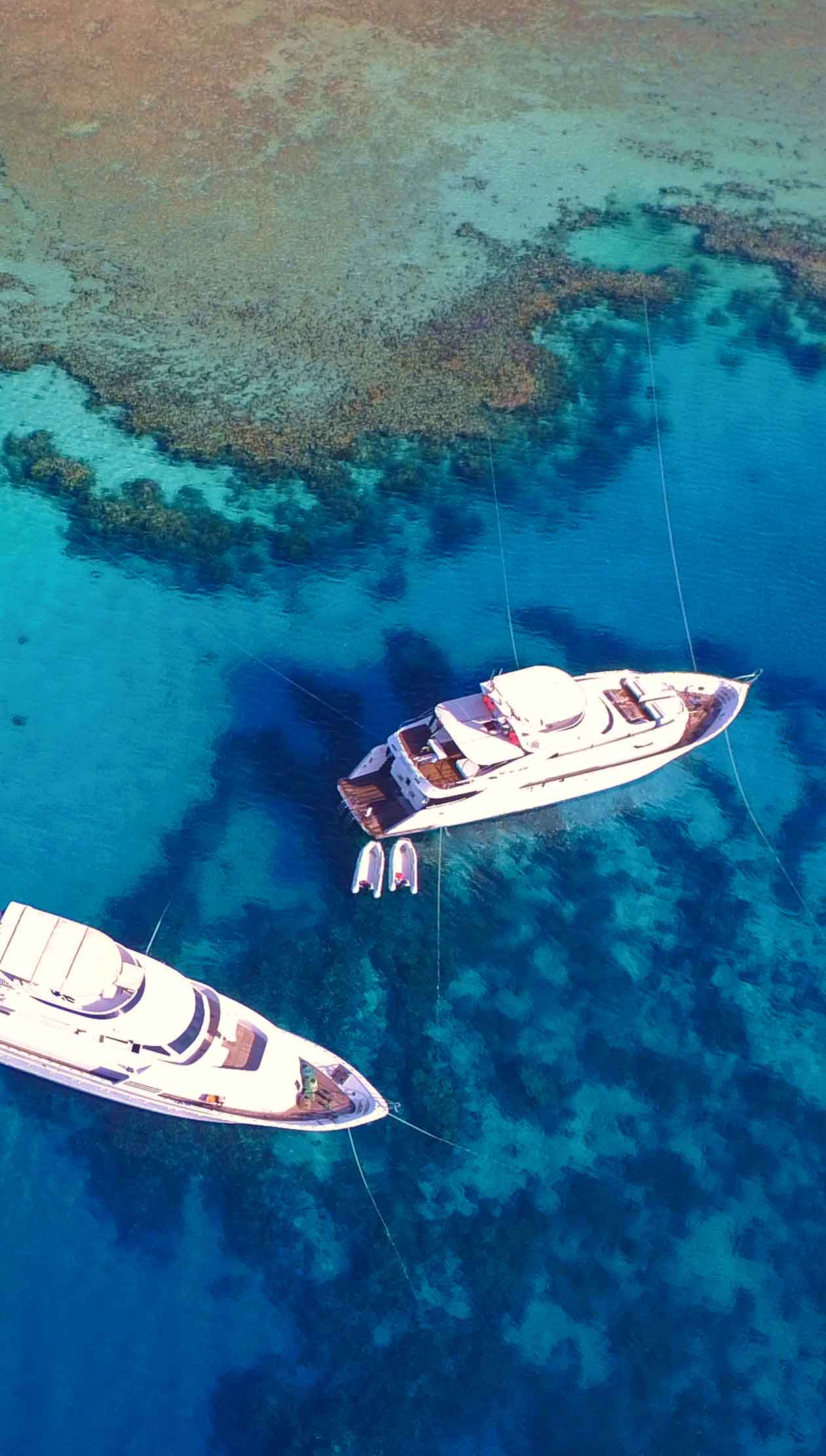
The easiest way to dive the wrecks at Abu Nuhas is by liveaboard. Our dive safari yachts to the northern Sinai, departing from Sharm el-Sheikh or Hurghada, include this fabulous dive area in their itineraries.

Abu Nuhas Underwater

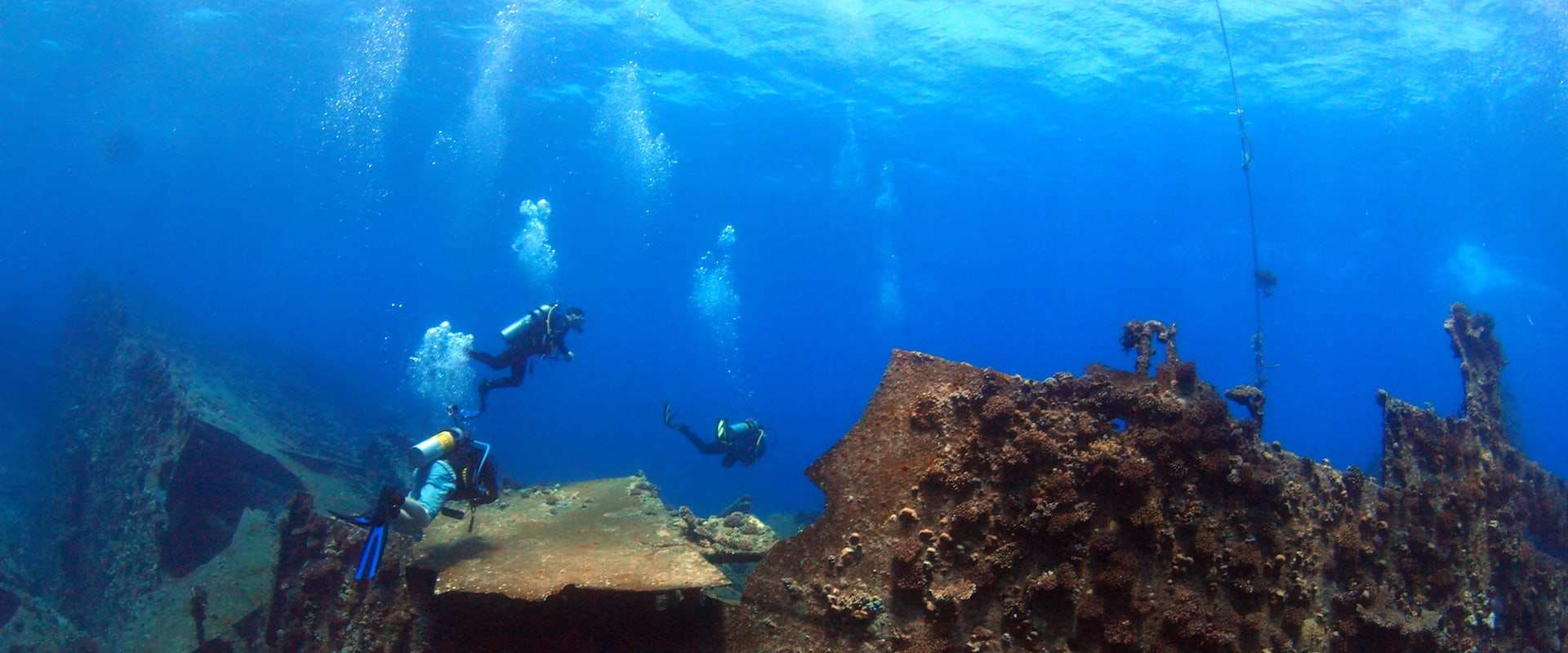
The highlights of diving Abu Nuhas are of course the wrecks, but due to the amount of time the wrecks have been underwater (the Carnatic sank in 1869), there is abundant marine life and beautiful vibrant corals that have encrusted the wrecks over the years.

Dive Sites Of Abu Nuhas

The 4 wrecks below are the main reason people dive Abu Nuhas. Starting from oldest to newest...

The Carnatic is a favourite amongst Red Sea divers. She was en-route to India when in September 1869 she ran aground laden with gold, port wine and copper. She was initially balanced on top of the reef but didn't stay there for long before breaking in half and resting next to the reef at around 25m/82ft. The 90m (297ft) passenger supply vessel lies on her port side and is in good condition. Over 100 years later you can dive the whole length of the Carnatic, and her beams encrusted with soft coral and hydroids, whilst common inhabitants are nudibranchs, scorpionfish, sweepers, glassfish and batfish.

The Kimon M was a cargo ship transporting lentils from Turkey to Bombay when she met her fate on the Abu Nuhas reef in December 1978. She was travelling at full speed when she hit the north-east corner of the reef. Fortunately the passing cargo ship the 'Interasja' immediately responded to the distress calls and was able to take all the crew to safety to Suez. Now the Kimon M rests at around 32m/106ft on her starboard side. She is almost fully intact so makes an excellent dive with swim-throughs and interesting features.

On her final journey, the Chrisoula K, also known as the 'Tile Wreck', met her end in August 1981. She was a Greek freighter transporting Italian tiles to Jeddah when she also collided with the north-east corner of the Abu Nuhas reef at full speed. Fortunately, all the crew were rescued and the Chrisoula K now rests in an almost upright position in an open sandy area. She is extremely accessible for divers, with the deepest point being in 26m/86ft of water, and the shallowest part is only 3m/10ft below the surface. She is now encrusted with hard corals harboring flatworms, lionfish, triggerfish and clown sand wrasse and offers plenty of swim-throughs and penetration opportunities to her engine room.

Last, but certainly not least, is the famous Giannis D, a cargo vessel transporting timber when she sank in 1983. She lies at a 45-degree angle in 24m of clear water with the stern and bow still intact. Divers can easily explore the rooms and passageways, to discover schools of glassfish, scorpionfish, gobies, nudibranchs, octopus and giant moray eels, whilst her funnel with its famous "D" has been much photographed.

There are remnants of other wrecks in the area, which is no surprise as the Abu Nuhas reef is right in the shipping canal lane, but the above 4 are the most accessible for recreational divers.

Top Tips For Divers

Use the descent line if one is available. The line generally will take you to the start of the dive. Sometimes the visibility can be stirred up and if there is strong current the line will take you right to the start point

Be careful with wreck penetration. Make sure you listen carefully to the dive briefing as your guide will know where you can and can not go for your own safety. Some parts of the wrecks may be falling apart which can cause hazards, or there may be broken glass, nails or sharp objects around.

Monitor your air supply and watch your no-deco time more frequently. It is easy to lose track of time when diving a wreck, but easy to multi-level your dive to stay within no-deco limits, so make sure you come shallower when your dive computer tells you to.

Be sure to have an SMB. When exploring a wreck your surface point may not be at the same place as everyone else. Having an SMB means the boat will be able to spot you and your buddy and come and pick you up.

Getting There

The best way to get to Abu Nuhas is by Red Sea liveaboard which will depart from either Sharm El-Sheikh or Hurghada. Hurghada and Sharm El Sheikh both have international airports and also serve domestic flights from Cairo.


Abu Nuhasis a haven for wreck diving enthusiasts!


Abu Nuhas Diving Reviews

  • Rating 9.3 out of 10
  • 9.3 Superb
  • Rating 10.0 out of 10
  • 10.0 Exceptional
  • bibhujit B
  • Flag of United StatesUnited States

Wonder corals and spotted a large group of barracudas amongst a large size Tuna, fishes and octopuses.

Diving Abu Nuhas in November on the Amelie Adventures
  • Rating 10.0 out of 10
  • 10.0 Exceptional
  • Marcelo L
  • Flag of United StatesUnited States

Beautiful reefs and wrecks for all level of divers.

Diving Abu Nuhas in March on the Ghazala Explorer
  • Rating 9.6 out of 10
  • 9.6 Exceptional
  • Megan C
  • Flag of United StatesUnited States

Lovely! The wrecks were quite busy though. Staggering times with other boats would be helpful so it wouldn't be so crowded but we still enjoyed the wrecks.

Diving Abu Nuhas in September on the Amelie
  • Rating 9.6 out of 10
  • 9.6 Exceptional
  • James N
  • Flag of United StatesUnited States

Giannis D was possibly our favorite wreck dive. We came for the Thistlegorm and it still has my heart but Giannis was amazing. The reefs around this area with the sandy bottom gave a good balance for things to see.

Diving Abu Nuhas in July on the Sea Serpent Contessa


What to know about diving in Abu Nuhas

What is Abu Nuhas known for?

Abu Nuhas is a shallow reef guarding the entrance to the Gulf of Suez, and its nickname — the Ships' Graveyard — comes from the string of cargo vessels that have run aground on it over the last century and a half. Four wrecks sit close enough together to dive as a set on a single visit, each with its own depth, cargo, and character, which is what makes the reef such a popular liveaboard stop.

What are the four wrecks, and what are they nicknamed?

The four are the Giannis D ("wood wreck"), the Carnatic ("wine wreck"), the Chrisoula K ("tile wreck"), and the Kimon M ("lentil wreck") — each nickname taken from the cargo it was carrying when it sank. They range from an 1869 steamship to vessels lost as recently as the early 1980s, so together they read almost like a timeline of Red Sea shipping.

How deep are the Abu Nuhas wrecks?

Depths vary a good deal by wreck: the Giannis D's mast reaches to about 13 ft (4 m) with its stern near 79 ft (24 m), the Carnatic sits around 59-89 ft (18-27 m), the Chrisoula K spans roughly 13-92 ft (4-28 m), and the Kimon M is the deepest, with sections down to around 100 ft (30 m) or more. That spread means a single day at Abu Nuhas can include everything from a shallow safety-stop-friendly wreck to a genuinely deep dive.

Which wreck is the oldest, and what's its story?

That's the Carnatic, a British steamer that struck the reef at night in 1869 while carrying wine, cotton goods, and a shipment of gold en route to Bombay. The crew and passengers stayed aboard for nearly two days, hoping the ship would hold together before she broke apart and sank; today, her wooden decking is long gone, leaving an atmospheric skeleton of iron ribs draped in soft coral.

Can you penetrate these wrecks, and what certification do you need?

The Chrisoula K and Giannis D both offer multiple entry points into cargo holds and engine spaces at varying levels of difficulty, generally suited to divers with Advanced Open Water certification and, for the more involved sections, wreck-specialty training or an experienced guide. The Carnatic's open, skeletal structure allows plenty of exploration without true overhead penetration, while the Kimon M's deeper interior spaces are best left to divers with solid penetration experience given the depth involved.

What marine life will I see at Abu Nuhas?

The wrecks and surrounding reef support healthy coral growth and reef fish, with regular sightings of lionfish, moray eels, batfish, and glassfish schooling in the more open sections of the wrecks. Napoleon wrasse and the occasional passing reef shark show up in the water column, and the Carnatic's long-encrusted hull in particular has become its own miniature coral garden.

When is the best time of year to dive Abu Nuhas?

Diving is possible year-round, but conditions are generally calmest and most predictable from April through November, similar to the rest of the northern Red Sea. As of 2026, winter trips from December through February remain more weather-dependent, with stronger winds occasionally affecting the crossing and surface conditions at this exposed reef.

Is Abu Nuhas accessible by day boat or liveaboard only?

It's reachable by day boat from Hurghada, but its position out in the Gulf of Suez means most divers experience it as part of a northern Red Sea liveaboard itinerary, which can dedicate a full day to rotating through all four wrecks. That extra time is a real advantage here, since squeezing four distinct sites into a single day trip usually means shortchanging at least one of them.

What's the water temperature like at Abu Nuhas?

Expect the same broad seasonal range as elsewhere in the northern Red Sea, roughly 72-82°F (22-28°C), with the warmest water from June through September and the coolest in January and February. A 5mm wetsuit is the standard recommendation, particularly given the multiple dives typically packed into a single day here.

Is Abu Nuhas suitable for beginners, or advanced-only?

It's a mixed bag by design — the Giannis D's shallow mast and stern make it approachable for less experienced divers, while the Kimon M and parts of the Carnatic, with greater depth and current exposure, suit advanced divers better. Most liveaboards will tailor which wrecks — and how much penetration — a given diver does based on certification and comfort level.

How many dives does a liveaboard typically spend at Abu Nuhas?

A full day is standard, with three to four dives covering some or all of the four wrecks; the deeper Kimon M is often scheduled first to manage no-decompression limits, working progressively shallower through the day. Some itineraries split the site across two half-days instead, depending on conditions and the rest of the route.

What hazards should I know about before diving Abu Nuhas?

The reef itself is the main hazard — it's shallow enough to break the surface in places, and the current funneling through the Gulf of Suez here can be strong and shift quickly, which is exactly why so many ships have wrecked on it. Inside the more broken-down sections, expect sharp rusted metal, loose cargo netting, and old fishing line, so careful buoyancy and situational awareness matter as much here as inside any of the four wrecks.

We’re here to help, 24/7.

Connect with our expert travel consultants to plan your next trip.

  • Andrea Martinez
  • Juliane Ball
  • Farah Celada-Benito
  • Josue Zarco
  • Nina Kapp
  • Oksana Kovaleva
  • Nicole Laughlin