Galapagos Marine Iguanas
The Ocean’s Only Seafaring Lizard
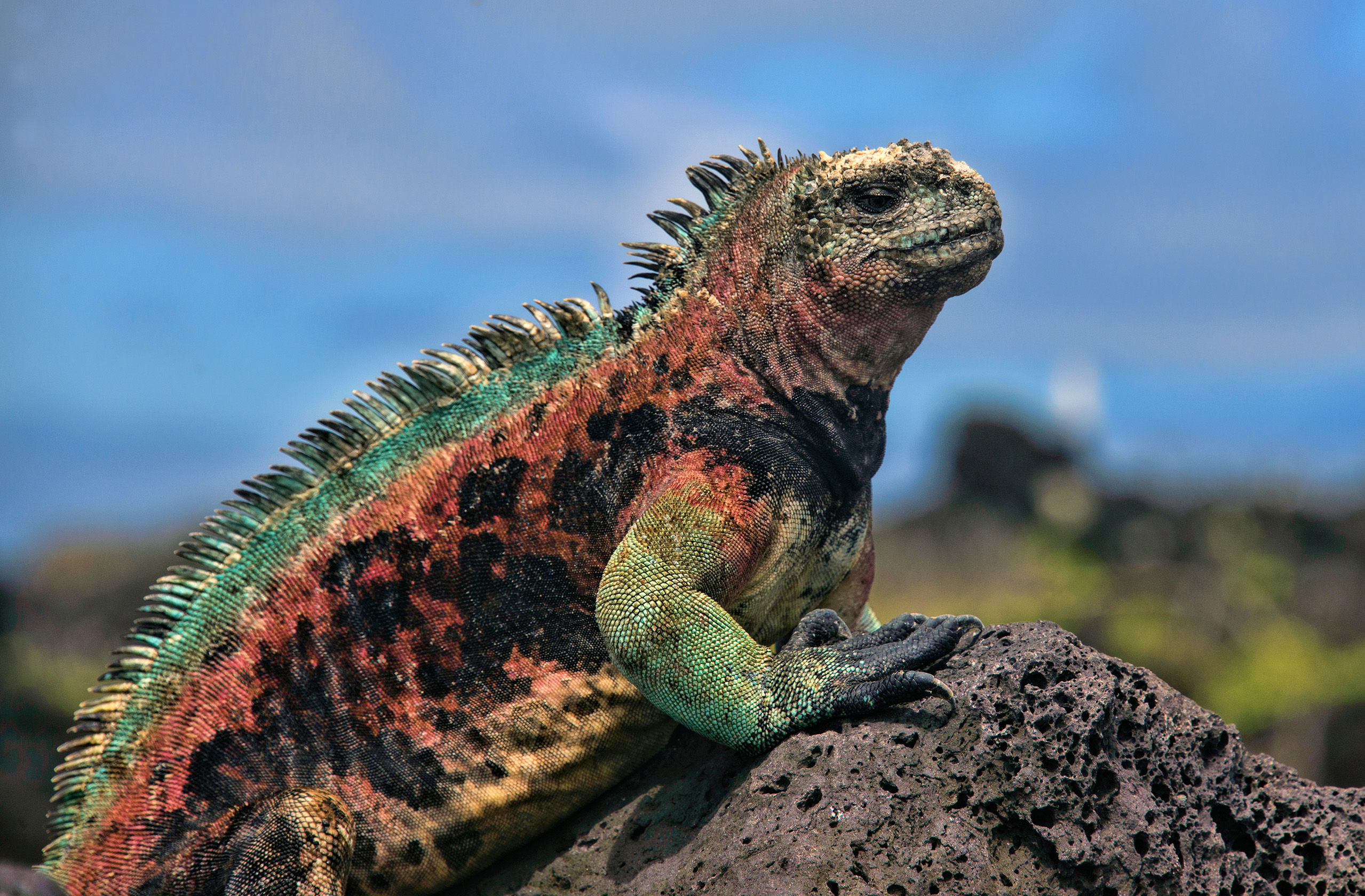
On the black lava rocks of the Galapagos, the shoreline seems to move. A dark shape lifts its head from the stone, salt crystals glinting around its nostrils. Another slips into the surf, its flattened tail pushing through the Pacific like a miniature crocodile. This is the Galapagos marine iguana, one of the most unusual reptiles on Earth and one of the archipelago's great wildlife encounters.
Found nowhere else in the world, the marine iguana is a defining symbol of the Galapagos Islands' wildlife. It is not as instantly famous as the giant tortoise or as playful as a sea lion, but it may be the animal that best captures the spirit of these islands: volcanic, ancient, improbable, and shaped by evolution in full view. To watch a marine iguana Galapagos encounter unfold is to see adaptation written in scales, claws, and salt spray.
For travelers exploring the islands by cruise, marine iguanas are often among the most memorable Galapagos animals. Galapagos small ship cruises visit multiple islands, each with its own landscapes, landing sites, and wildlife rhythms. One day may bring red-splashed iguanas on Española; another may reveal dense colonies on Fernandina’s raw lava coast. With expert naturalist guides, shore walks, snorkeling excursions, and panga rides, cruises offer a deeper understanding of how this remarkable reptile lives between land and sea.
The Galapagos Marine Iguana
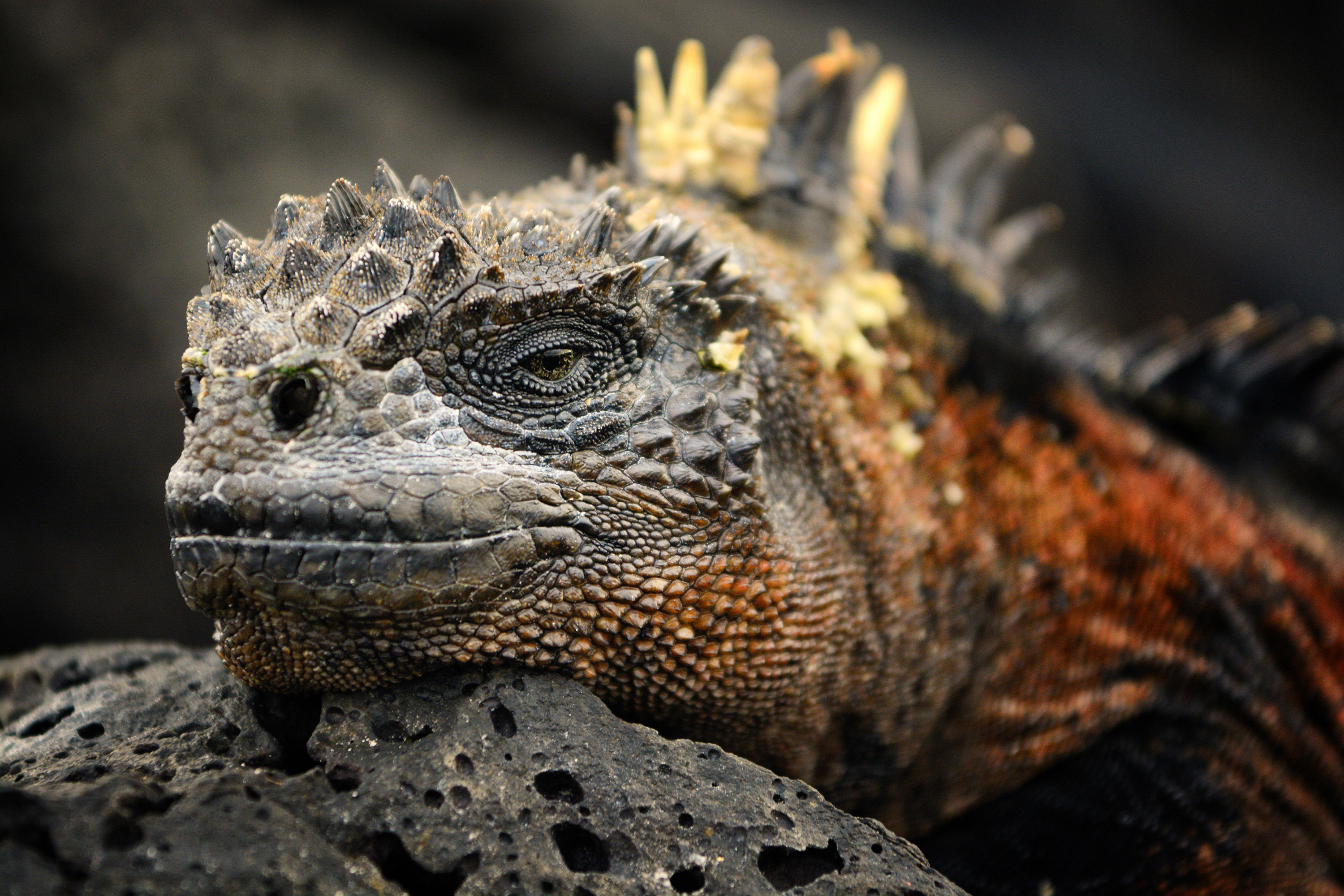
The Galapagos marine iguana is the only living lizard known to regularly forage in the ocean. Its scientific name is Amblyrhynchus cristatus, and it is endemic to the Galapagos Islands, meaning it exists naturally nowhere else on Earth. Marine iguanas occur along the coastal areas of all major Galapagos islands and many surrounding islets, making them a familiar but never ordinary presence along the archipelago’s shores.
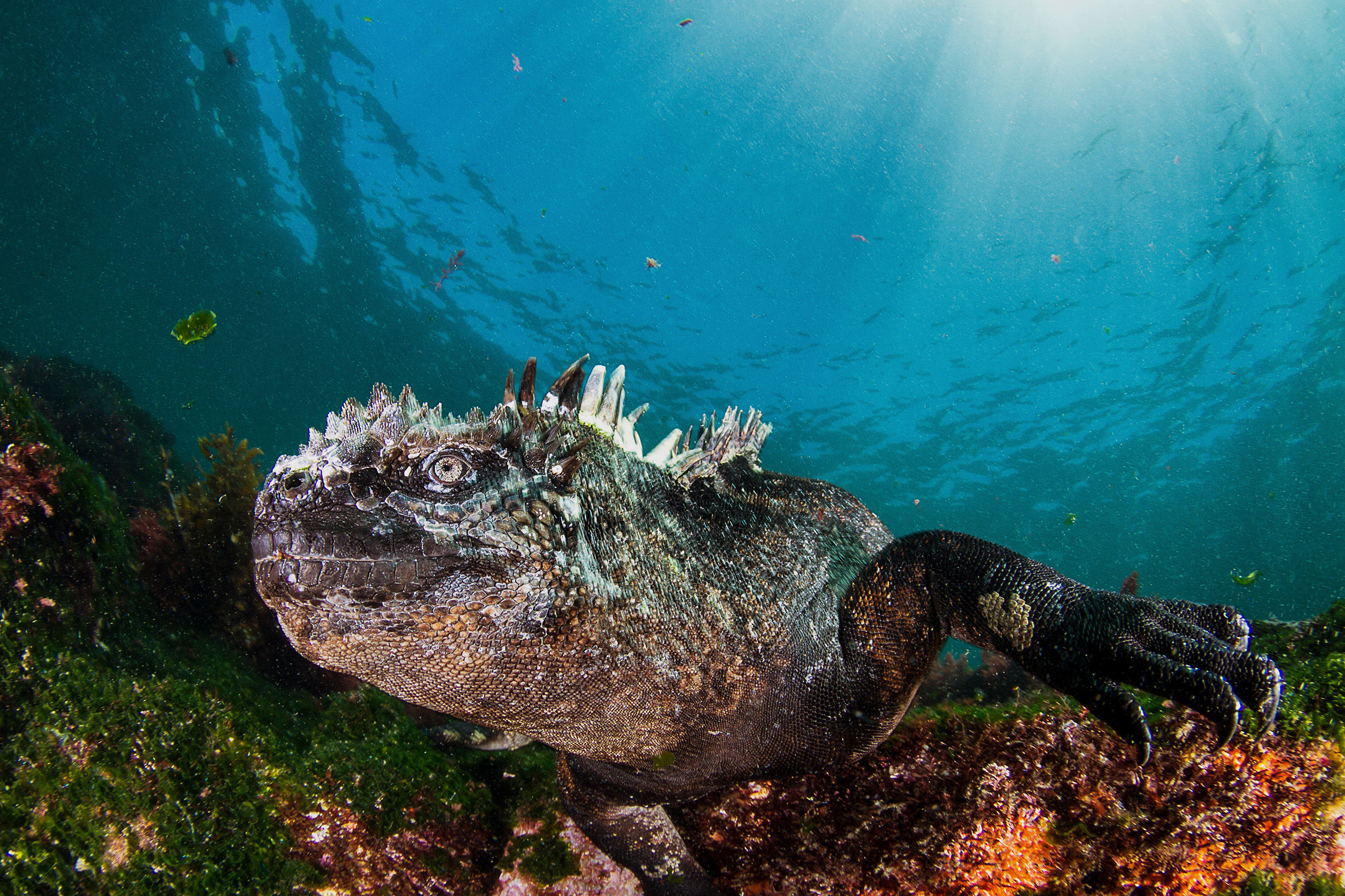
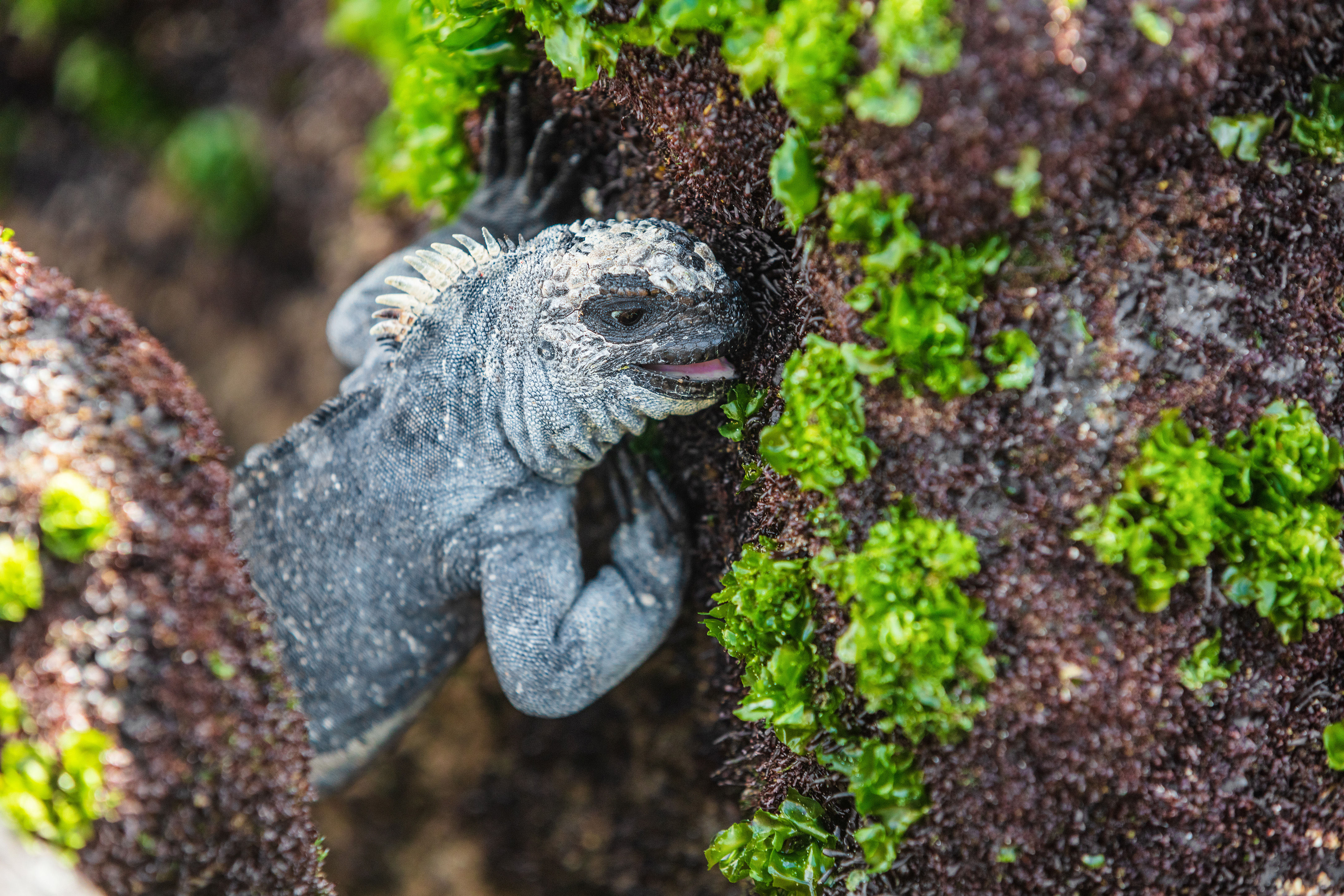
Unlike land iguanas, which feed on vegetation such as cactus pads and fruits, the marine iguana has taken to the sea. Its diet consists mainly of marine algae, which it grazes from rocks in the intertidal zone or, in the case of larger individuals, by diving below the surface. This ocean-feeding behavior is what makes the marine iguana so extraordinary: it is a reptile built for volcanic coastlines, cold currents, and saltwater survival.
Marine Iguana: Size, Habitat, and Adaptations
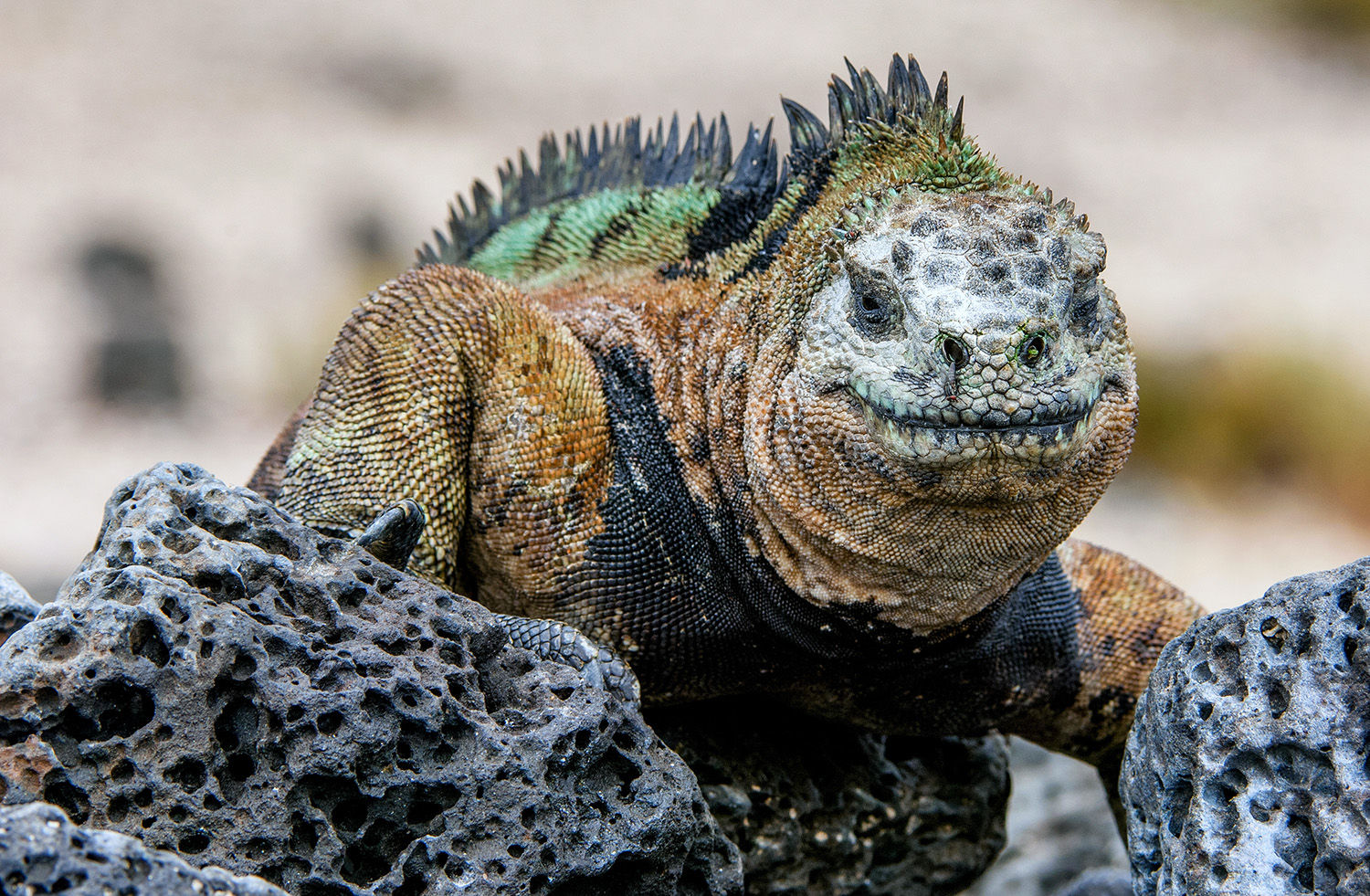
Marine iguana size varies depending on island, sex, and local food availability. Males are generally larger than females, and some island populations are noticeably bigger than others. This variation is part of what makes the animals of the Galapagos Islands so fascinating: even within a single species, life adapts differently from island to island.
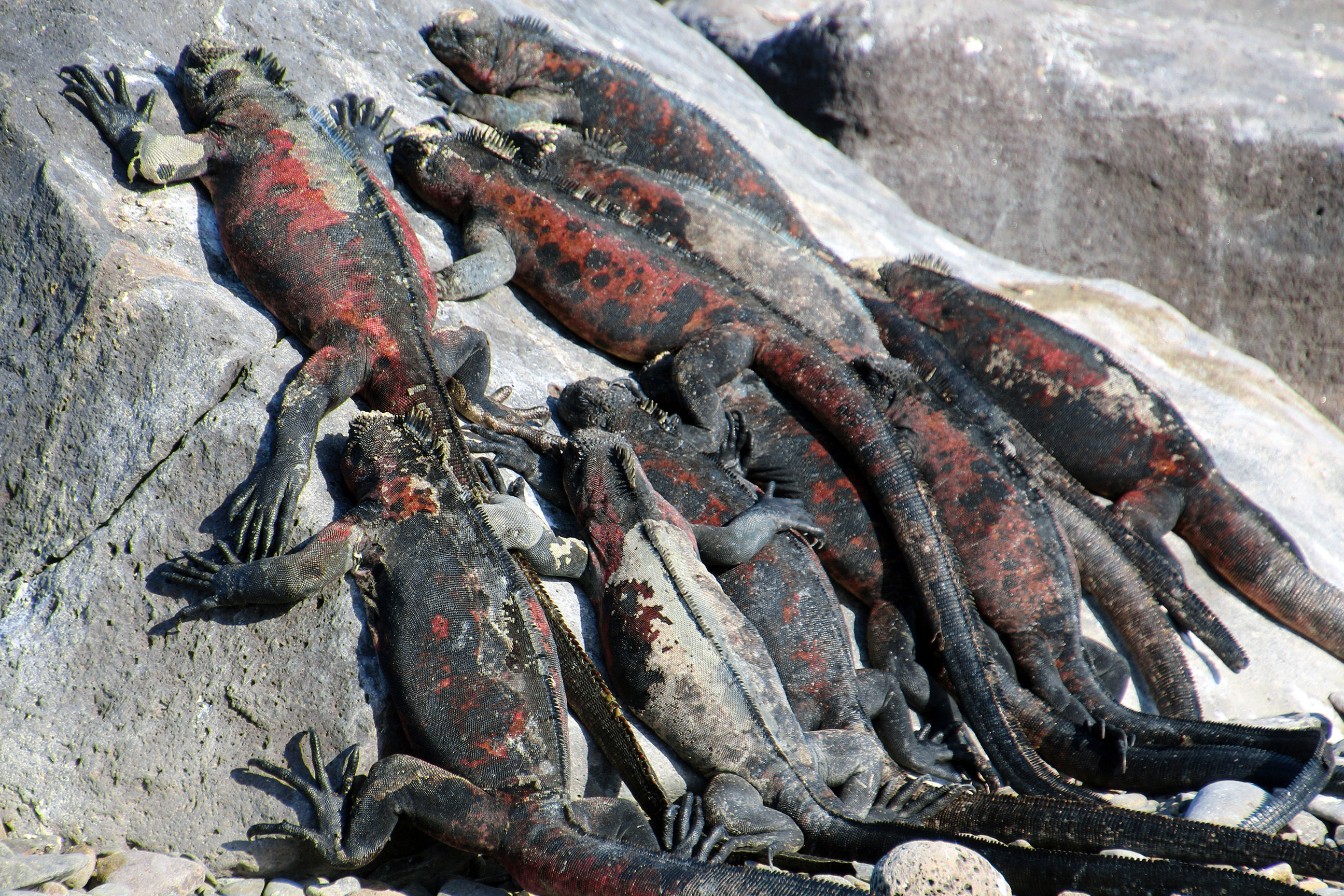
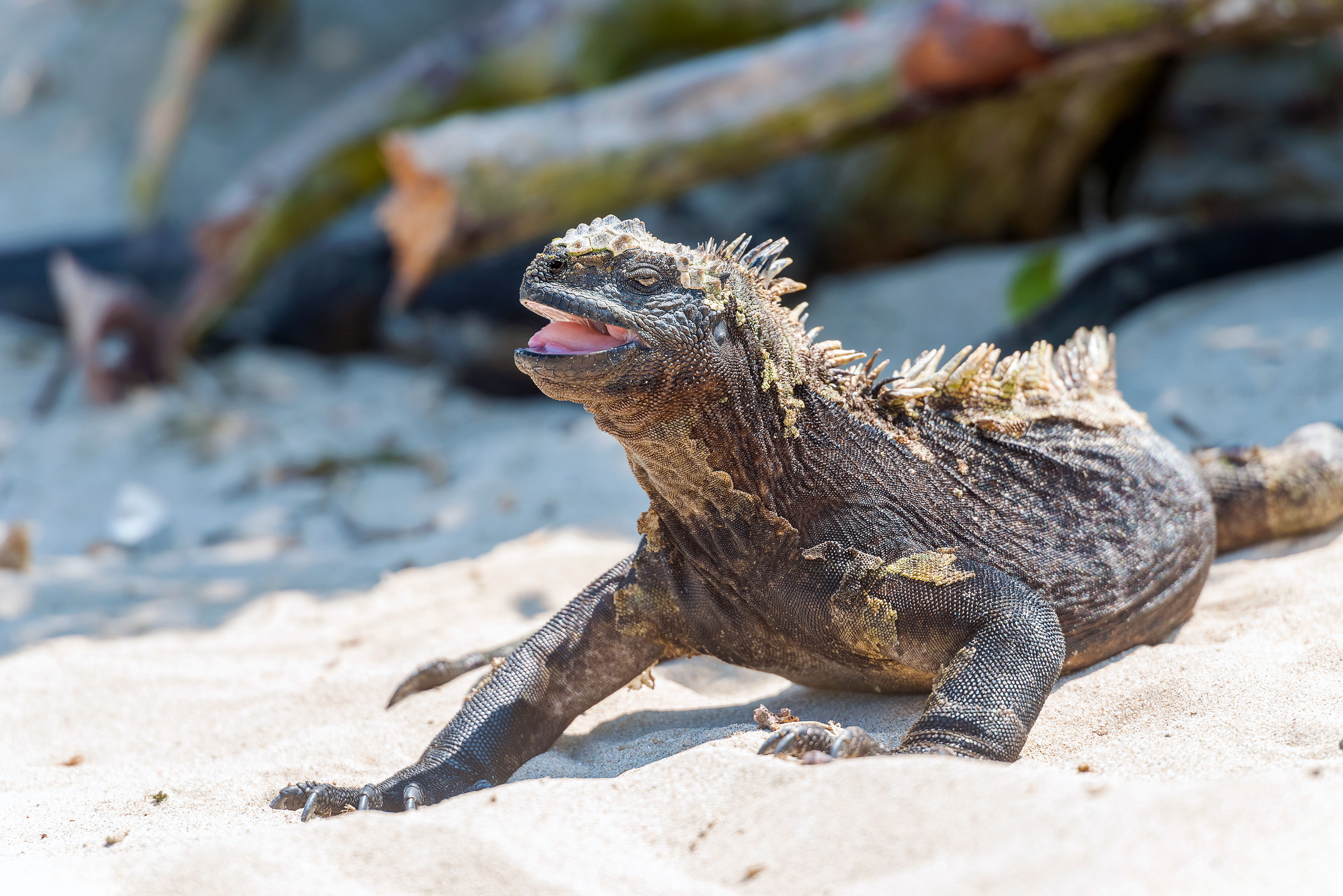
The marine iguana's typical habitat is the rocky Galapagos coast. They are often seen on black lava platforms, in tide pools, on beaches, in mangroves, and on low coastal cliffs. After feeding in the ocean, they return to land to bask, raising their body temperature after time spent in cool Pacific water. This is why travelers often find them piled together on sun-warmed rocks, looking motionless until a sneeze of salt or a sudden head movement gives them away.
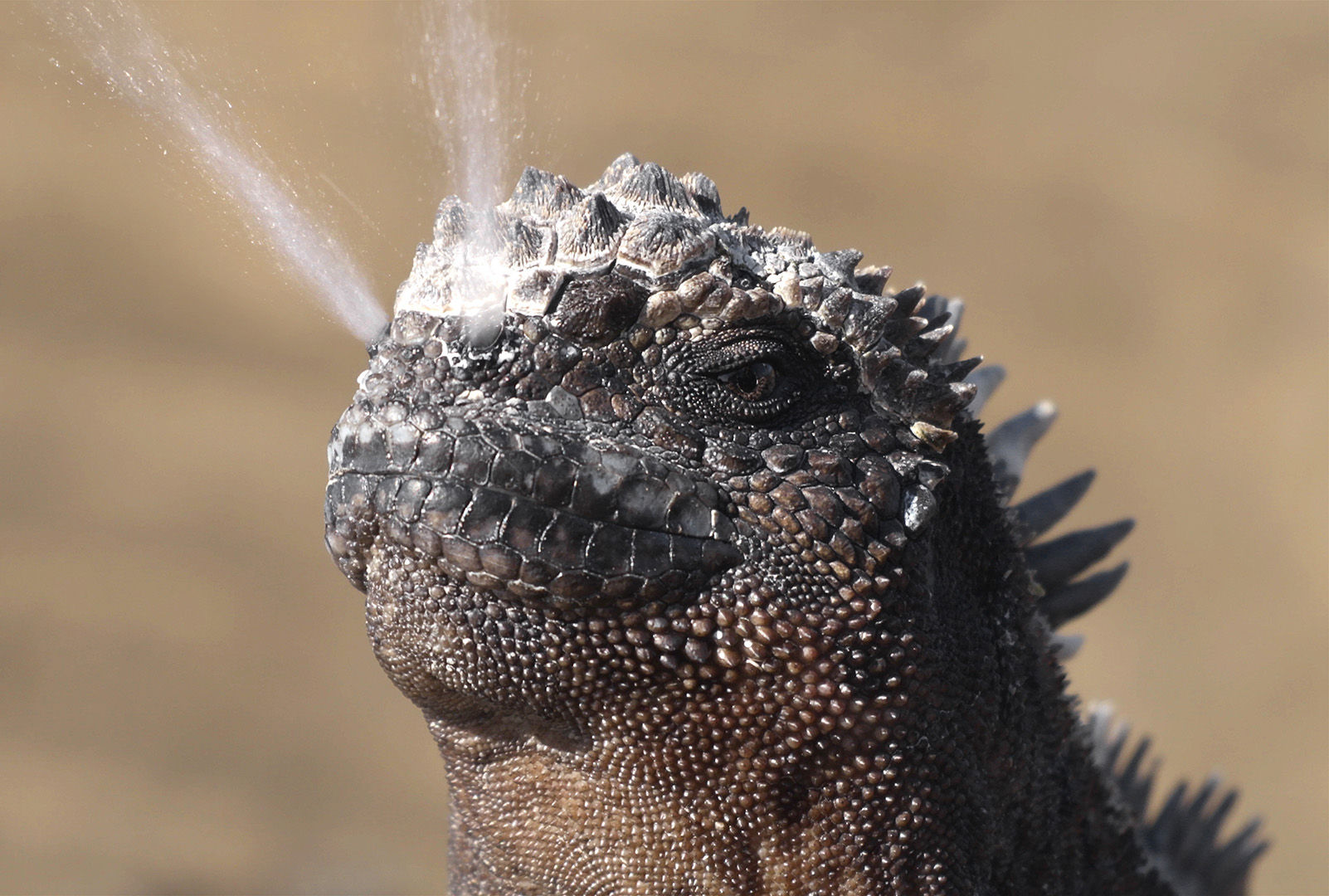
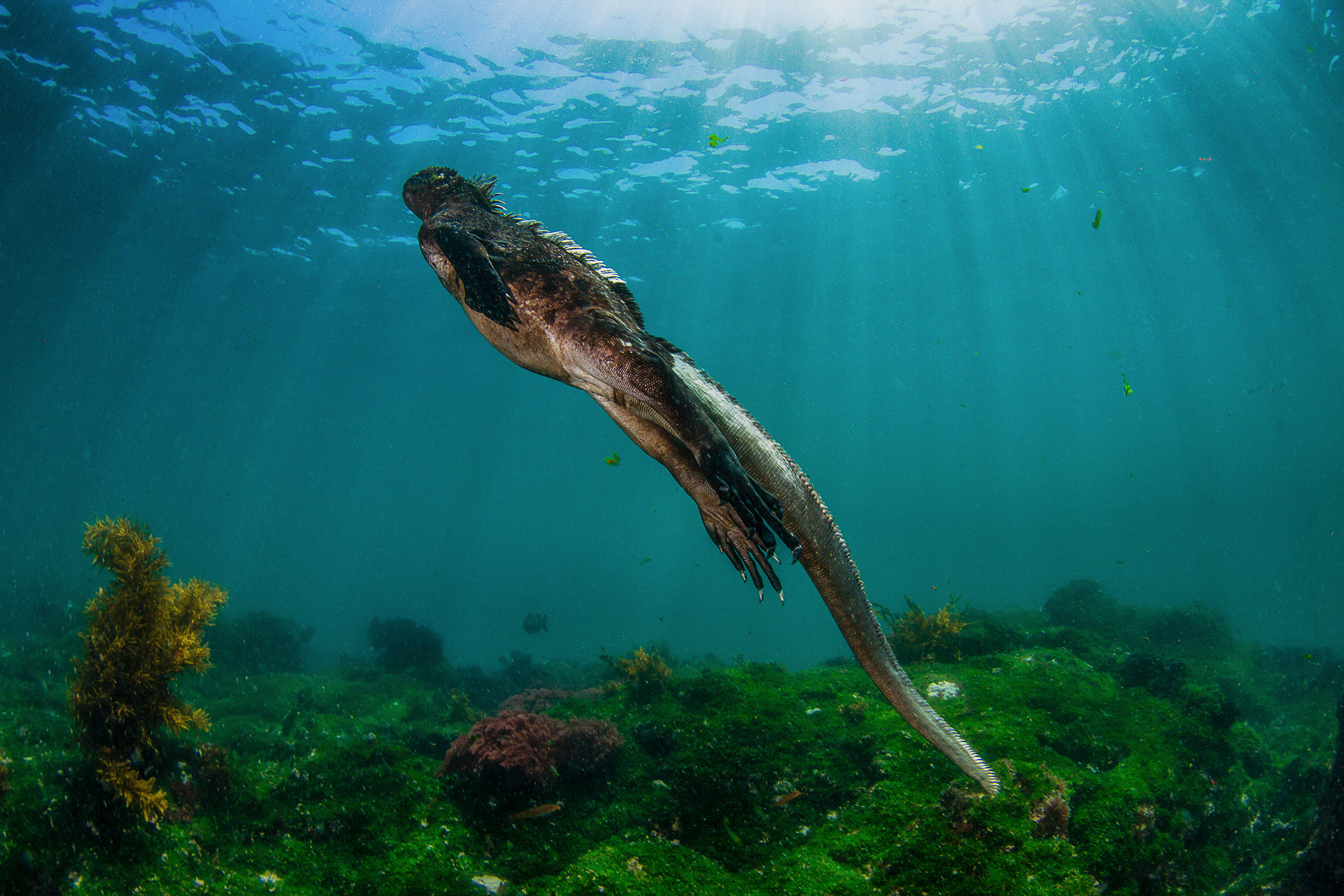
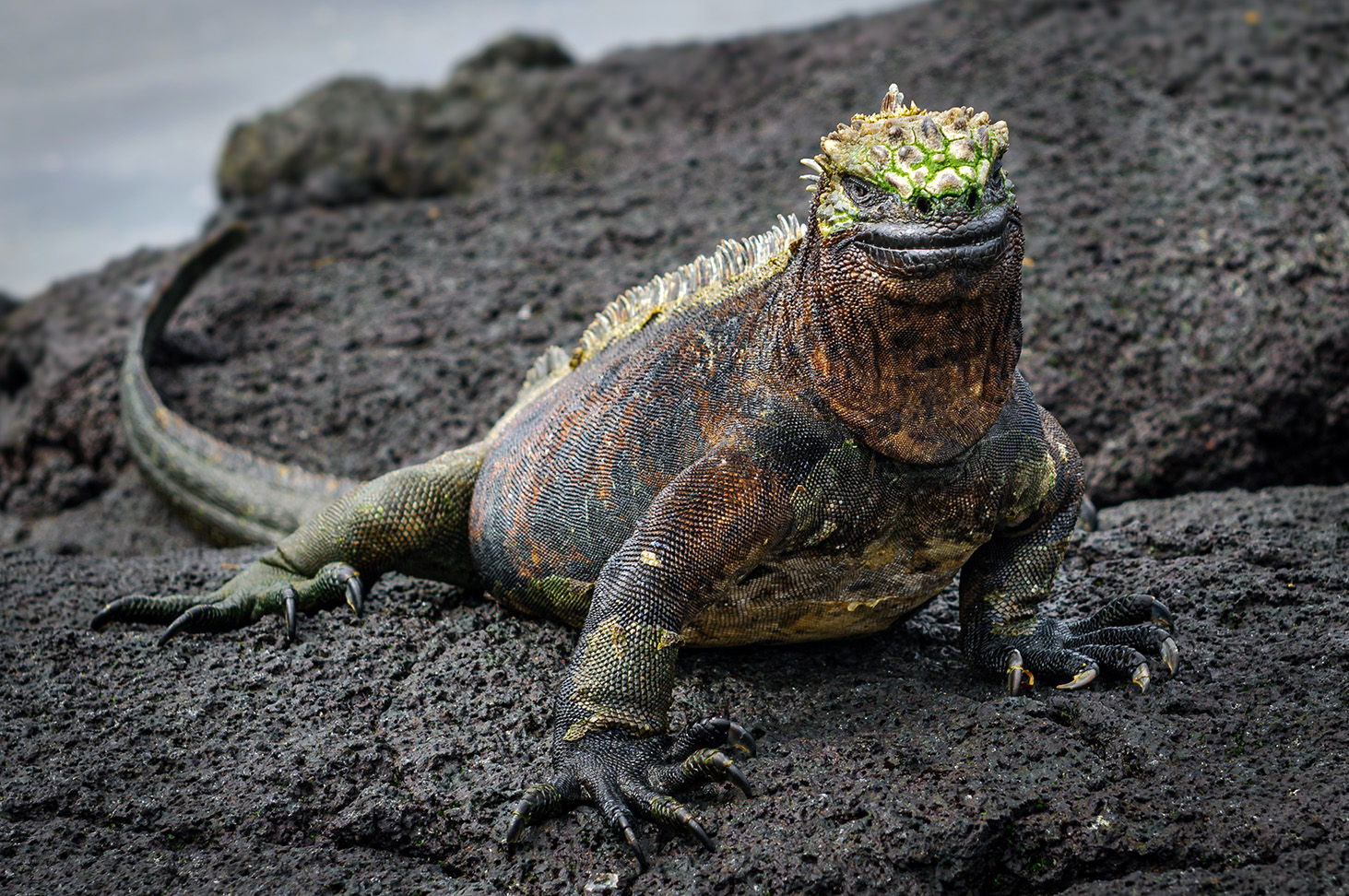
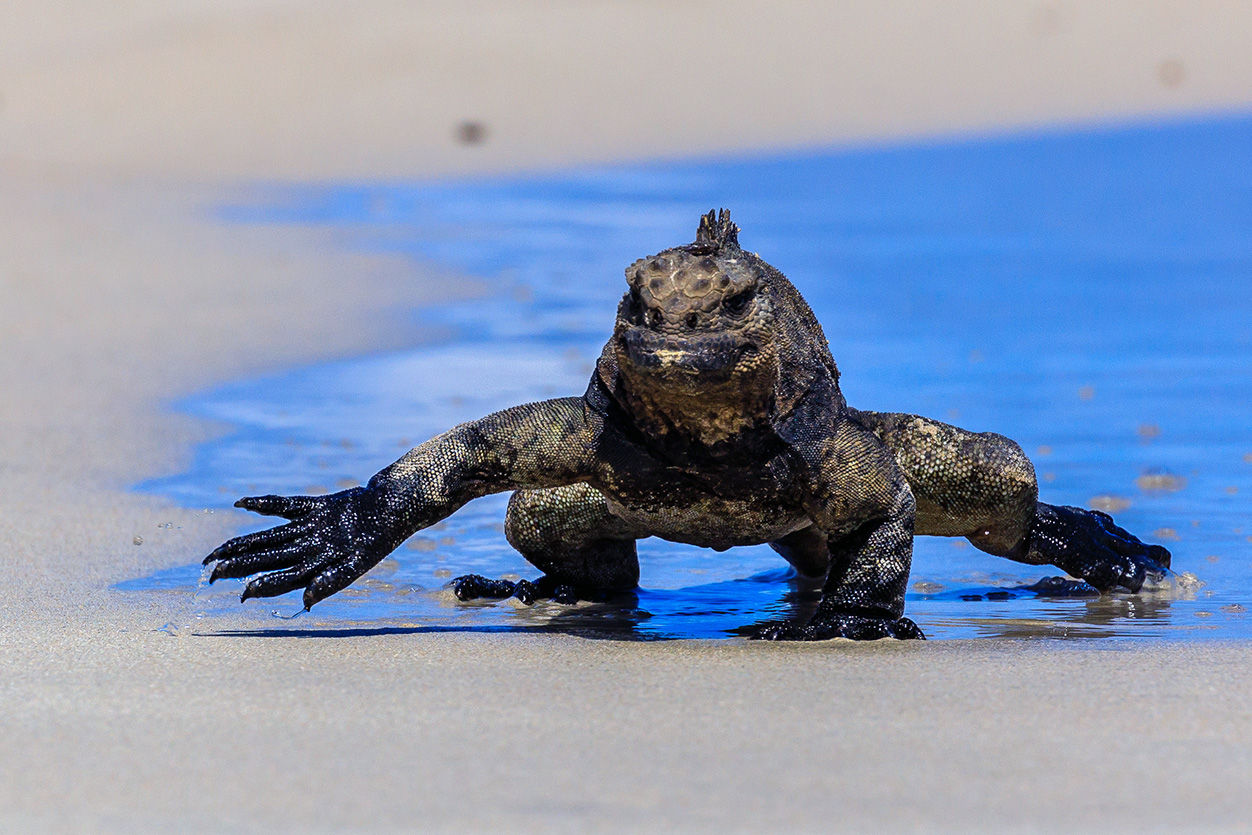
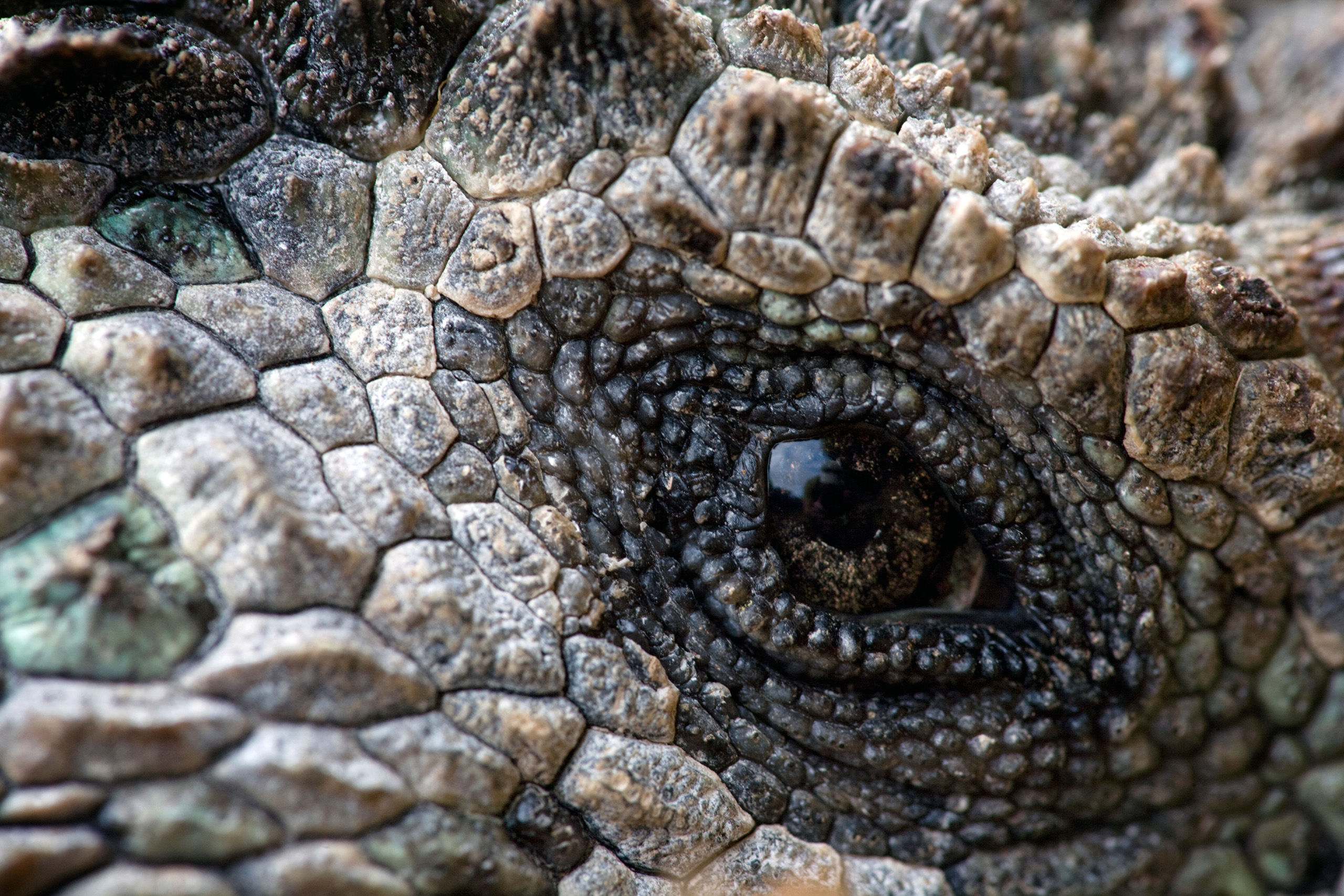
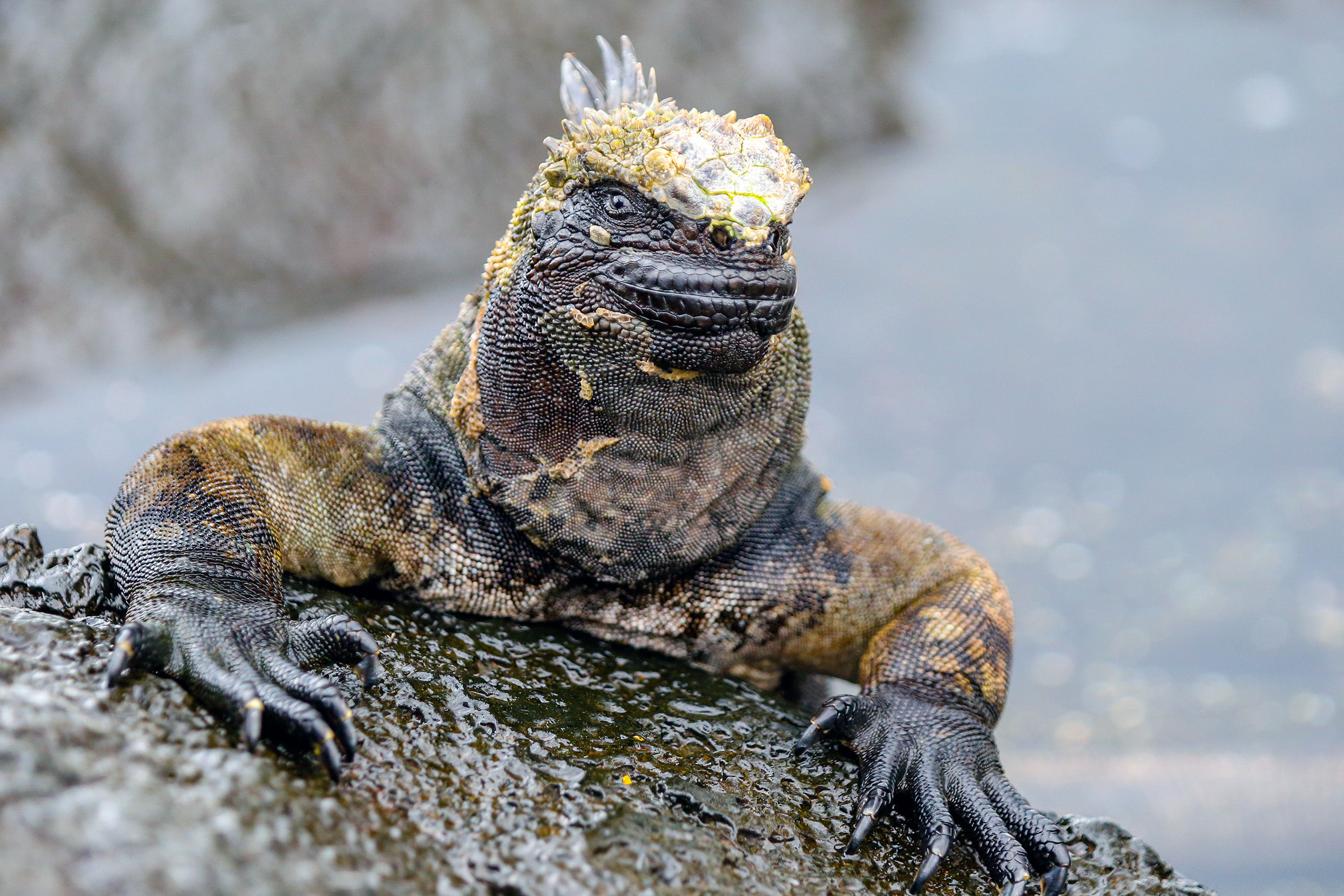
Marine iguana adaptations are among the most impressive in the Galapagos. Their dark coloration helps them absorb heat quickly after swimming. Their strong claws grip slippery rock as waves break around them. Their blunt snouts help them crop algae close to the stone. Their flattened tails propel them through the water with a side-to-side motion, making marine iguana swimming look more like a small sea serpent than a land reptile taking an awkward dip.
They also possess salt glands that allow them to expel excess salt absorbed during feeding. That famous “sneeze” travelers often hear on shore is part of this process. It may not be glamorous, but it is one of the behaviors that allows a Galapagos iguana to survive where few reptiles could.
Life Cycle of the Marine Iguana
The life cycle of the Galapagos marine iguana is closely tied to the rhythm of the islands: seasonal seas, algae growth, nesting beaches, and predator pressure. Marine iguanas can be seen year-round, but certain months show more dramatic behavior.
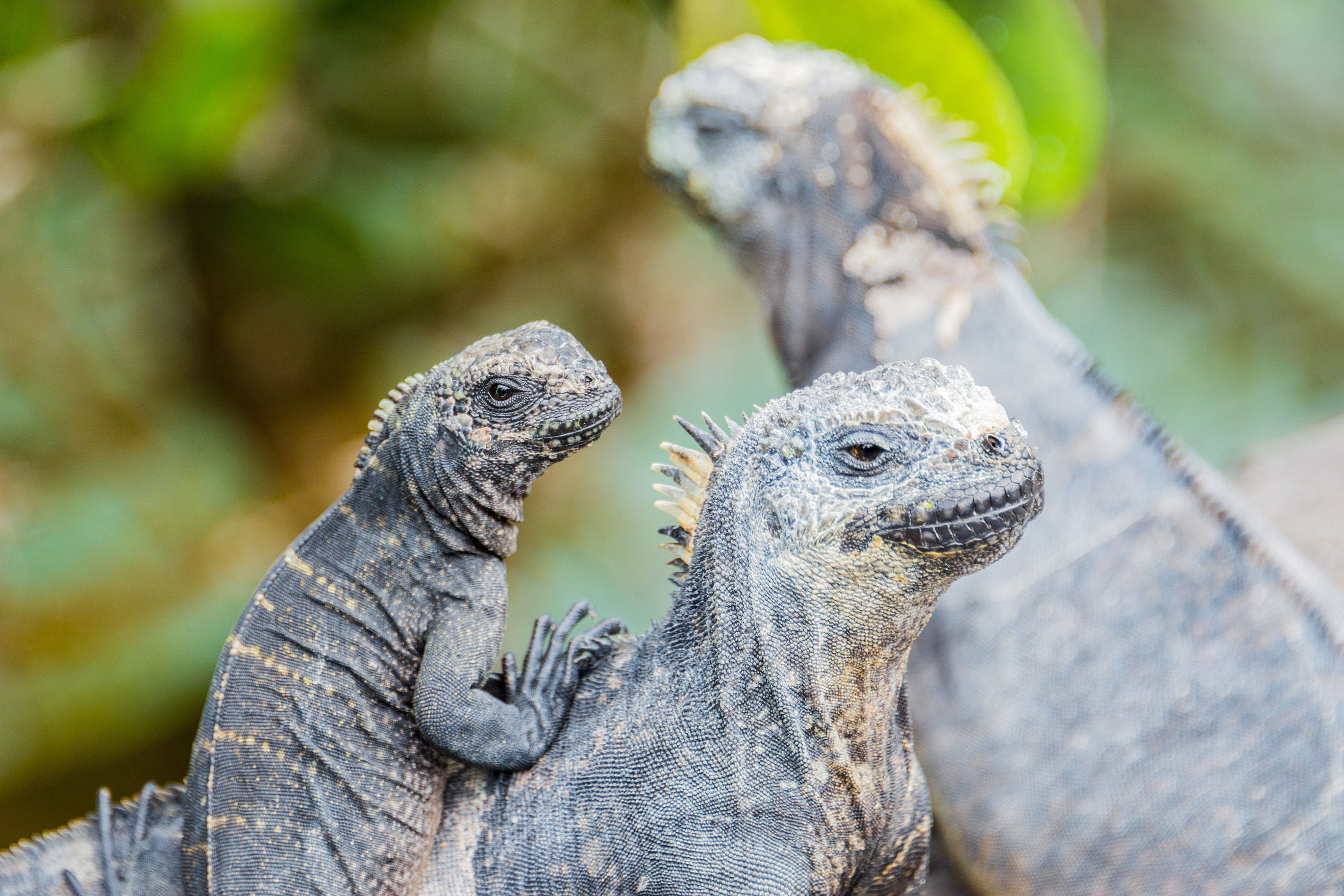
Breeding activity generally becomes more noticeable from late in the year into the warm season. December marks the start of mating rituals along many coastlines, while October is noted for breeding activity on Fernandina and the appearance of colorful male “Christmas iguanas” on Española. During this period, males may become more territorial, defending space and displaying brighter coloration. On Española in particular, males can flush with reds and greens, transforming from dark lava-toned reptiles into some of the most striking animals in the Galapagos.
After mating, females dig nests in sandy or loose volcanic soil, often inland from the shore. Nesting areas are critical habitats, especially on islands such as Isabela, where conservation groups have worked to protect marine iguana nesting zones near Puerto Villamil. Females lay eggs in burrows, and the young hatch later into one of the most dangerous stages of life.
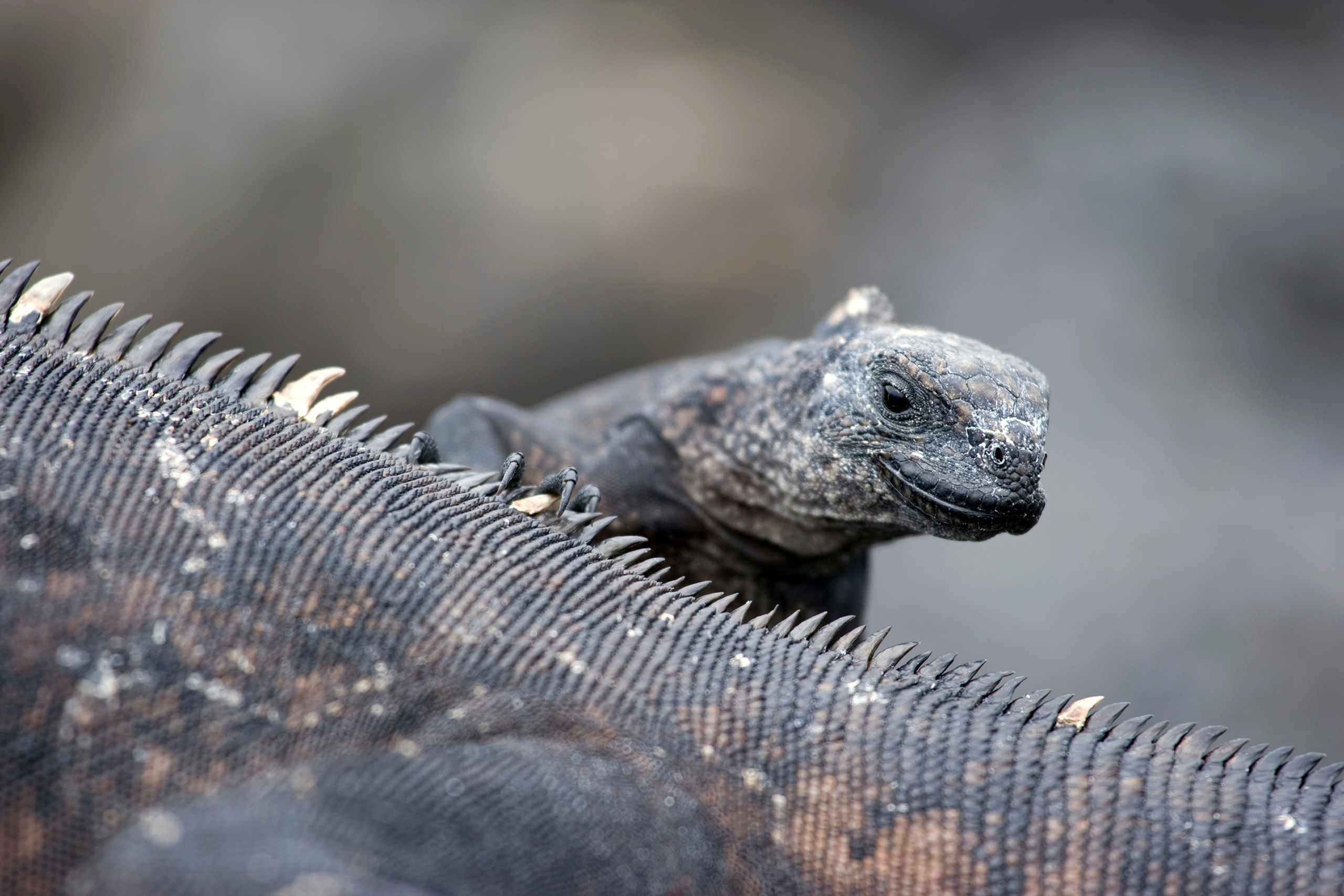
Hatchlings and juvenile marine iguanas face the highest risk. They are small, exposed, and vulnerable to predators. Those that survive grow into coastal adults, joining colonies where life follows a daily pattern of feeding, basking, digesting, and retreating from danger. Their world is narrow but demanding: lava, surf, sun, salt, and seaweed.
Marine Iguana Diet
The marine iguana's diet is one of the main reasons this species is so famous. Marine iguanas feed primarily on marine algae, scraping it from rocks with their short, blunt snouts. This unusual feeding strategy allows them to survive in a volcanic island environment where terrestrial plant food can be limited.
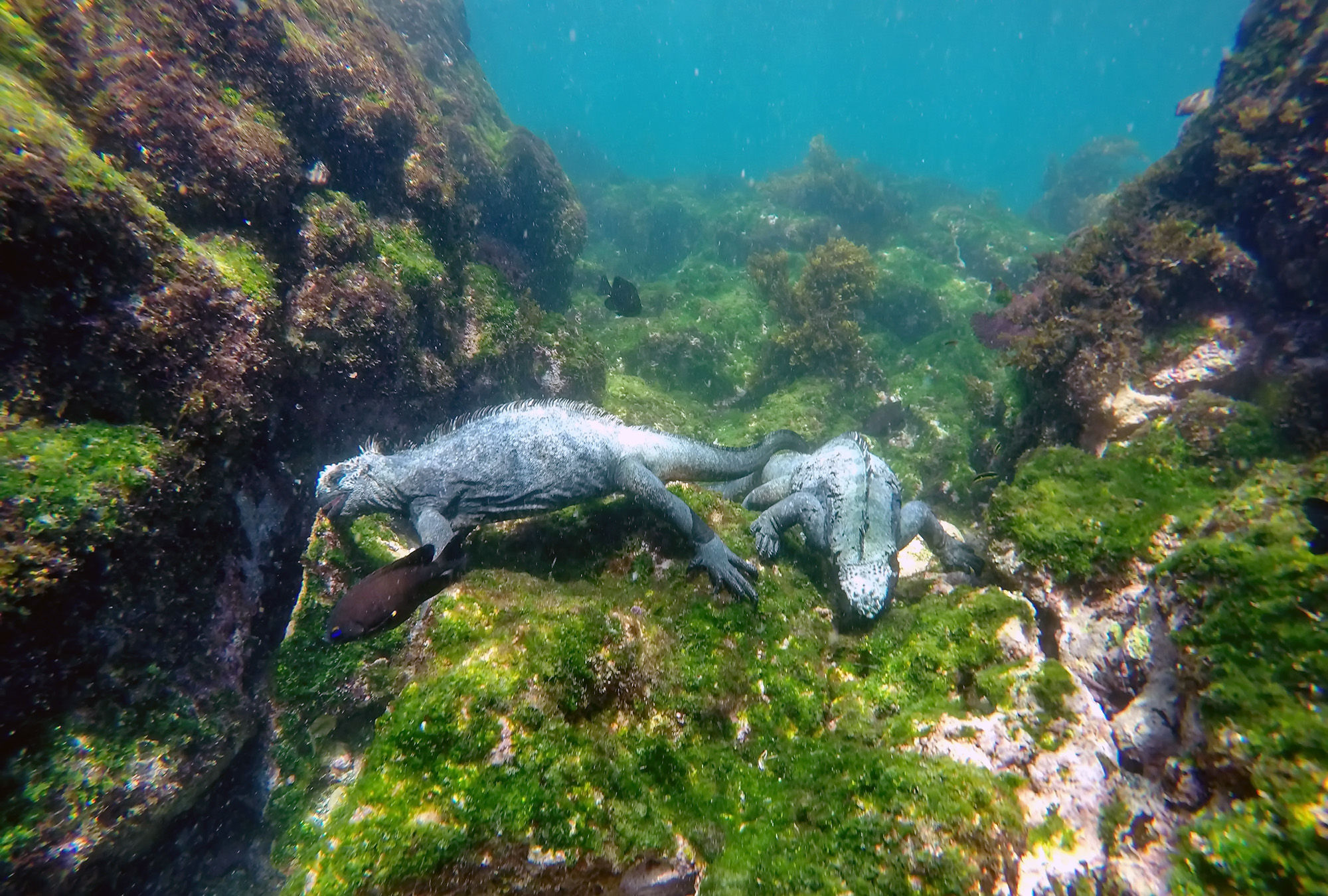
Not all marine iguanas feed in the same way. Smaller iguanas and many females often graze in the intertidal zone when the tide is low, feeding from exposed rocks. Larger males are more likely to swim and dive underwater to reach algae beds. After feeding, they must return to shore to warm up, since prolonged exposure to cool water lowers their body temperature.
This feeding behavior is one of the reasons small-ship cruise itineraries are so rewarding. On a guided walk, travelers may see iguanas stretched across the rocks in the morning sun. During snorkeling excursions or panga rides, they may glimpse them entering or leaving the sea. A naturalist guide can explain not just what they are doing, but why these behaviors evolved here and almost nowhere else.
Marine Iguana Predators and Survival Challenges
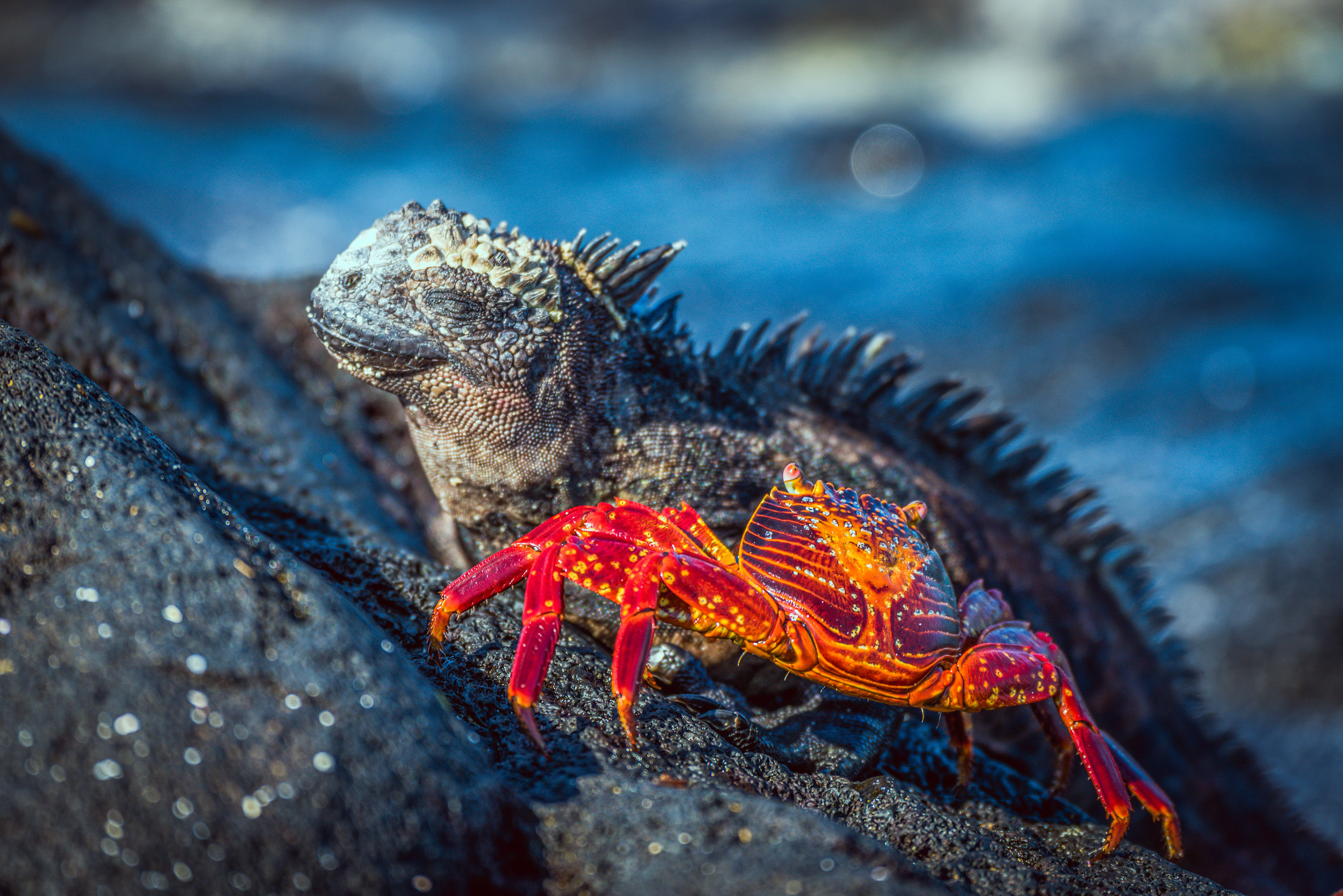
Adult marine iguanas have relatively few natural predators, but eggs, hatchlings, and juveniles are far more vulnerable. Marine iguana predators can include Galapagos hawks, snakes, herons, and crabs. Introduced animals such as cats, rats, and dogs can also threaten eggs and young iguanas.
Environmental conditions can be just as serious. El Niño events may reduce algal availability, affecting survival and body condition. Marine iguanas are famous for their ability to endure harsh conditions, and research has shown that during food shortages, they can even shrink in length, then regrow when food becomes plentiful again.
Where to See Marine Iguanas in the Galapagos
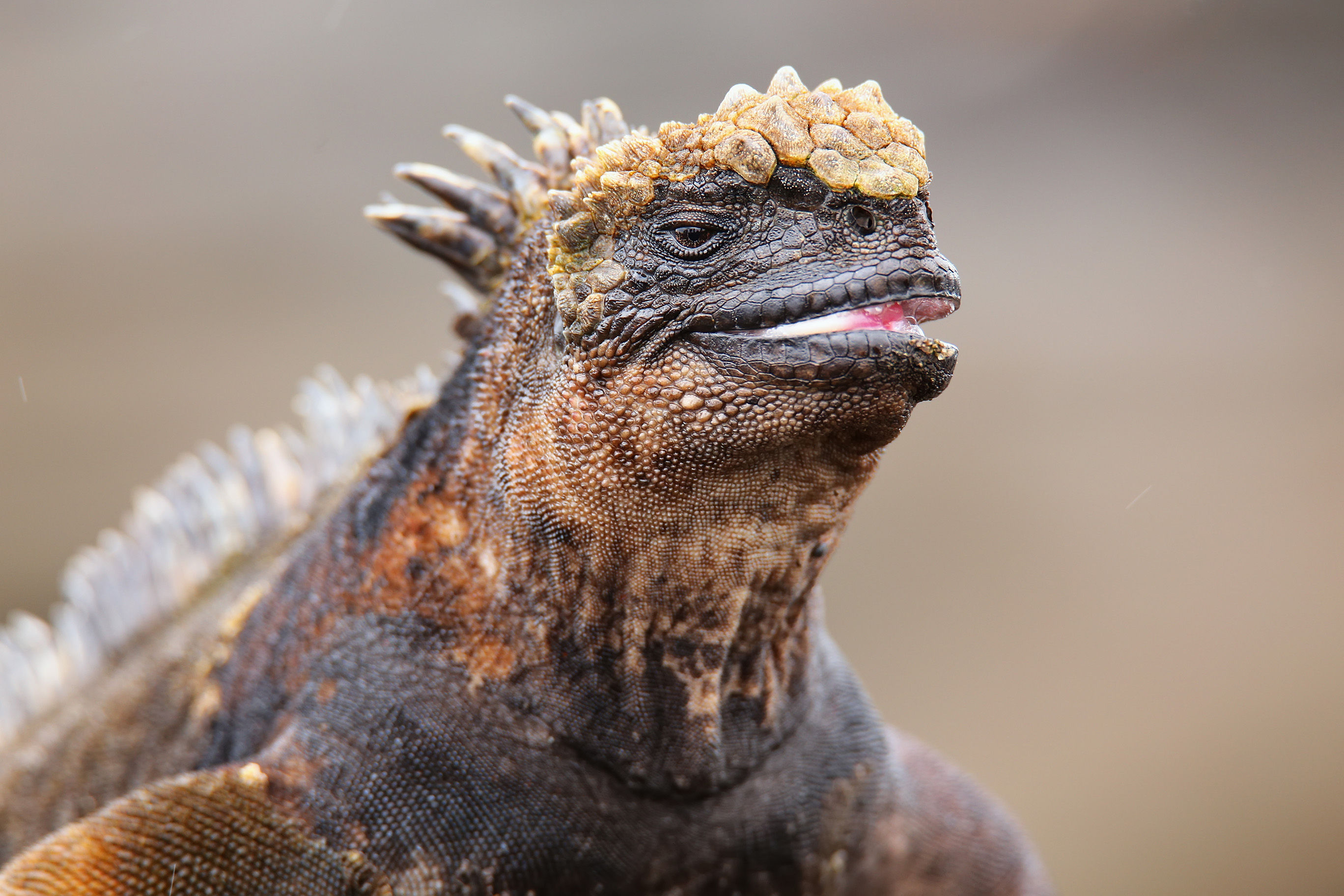
Marine iguanas live throughout the archipelago, but some islands are especially memorable for sightings. The best itinerary depends on whether travelers want dense colonies, colorful breeding males, remote volcanic scenery, or a broader mix of the Galapagos Islands' animals.
Fernandina Island
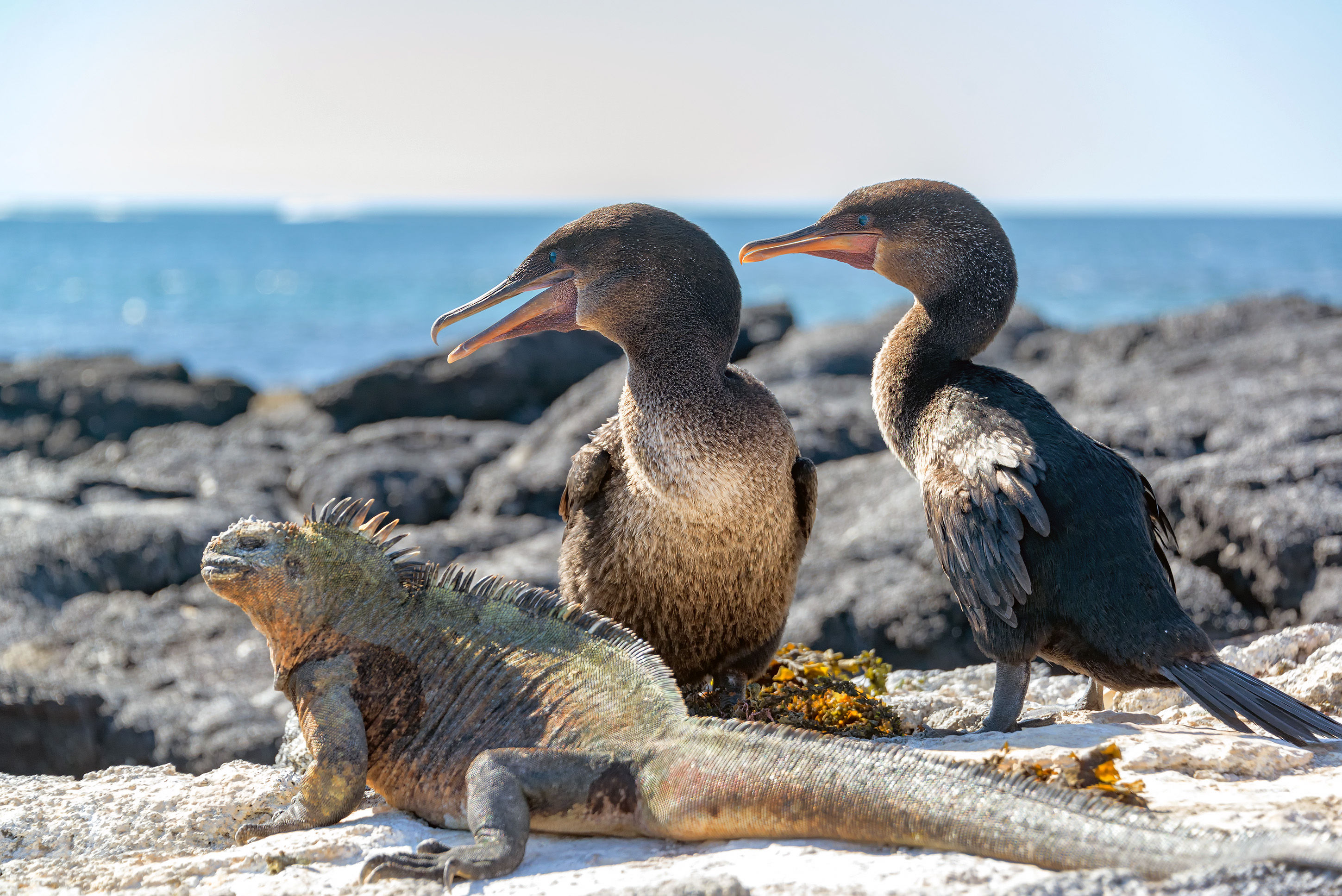
Fernandina is one of the most powerful places to see marine iguanas. Its lava fields feel newly made, and its coastlines are often crowded with dark iguanas basking in large groups. Western Galapagos cruises that include Fernandina are ideal for travelers interested in raw volcanic landscapes and wildlife, including flightless cormorants, Galapagos penguins, sea lions, and marine iguanas.
Isabela Island
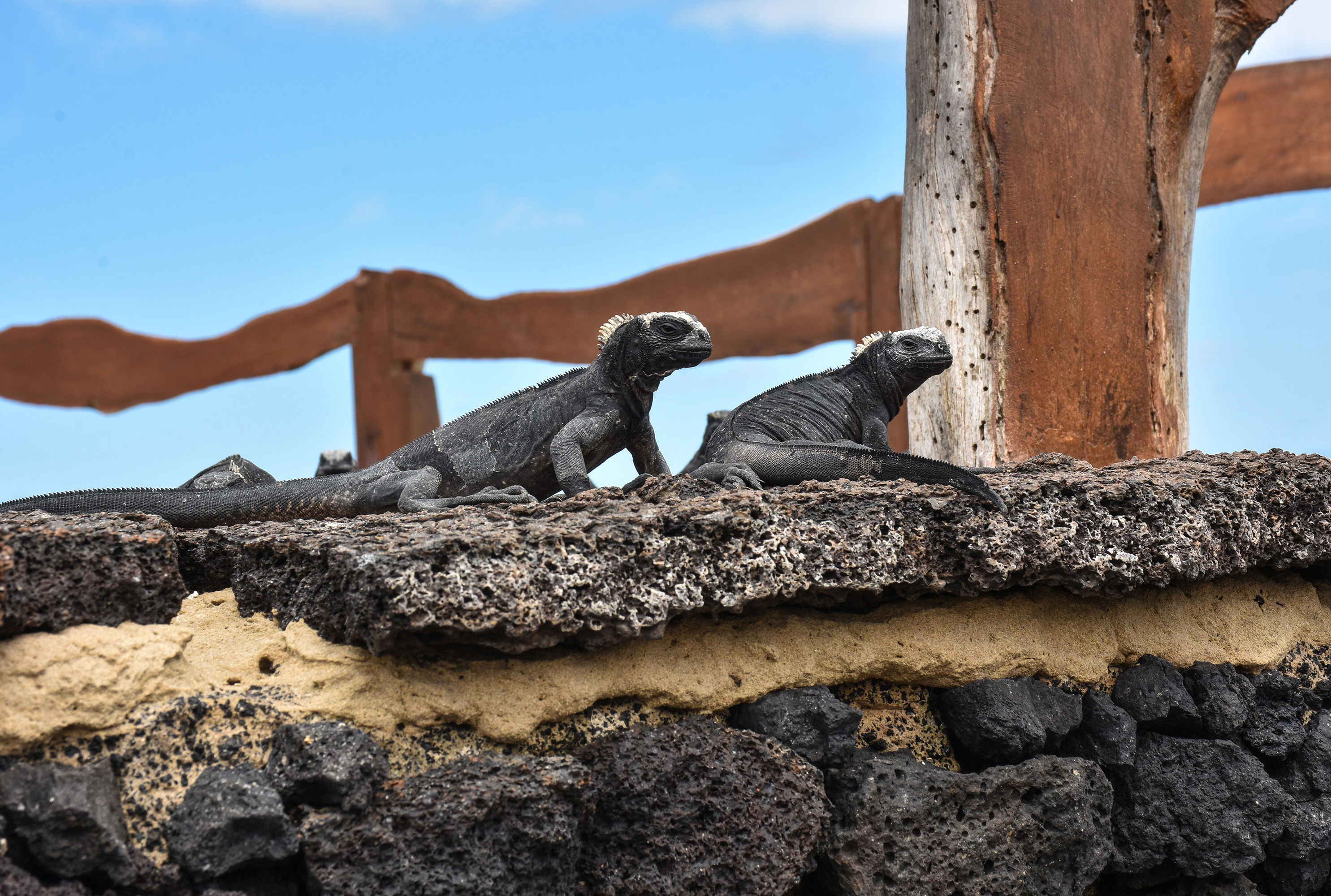
Isabela offers dramatic scenery, from volcanic slopes to mangrove-fringed shores. It is also important for marine iguana nesting and coastal wildlife. Cruises that explore western Isabela often appeal to travelers seeking a richer, more remote Galapagos adventure tour.
Española Island
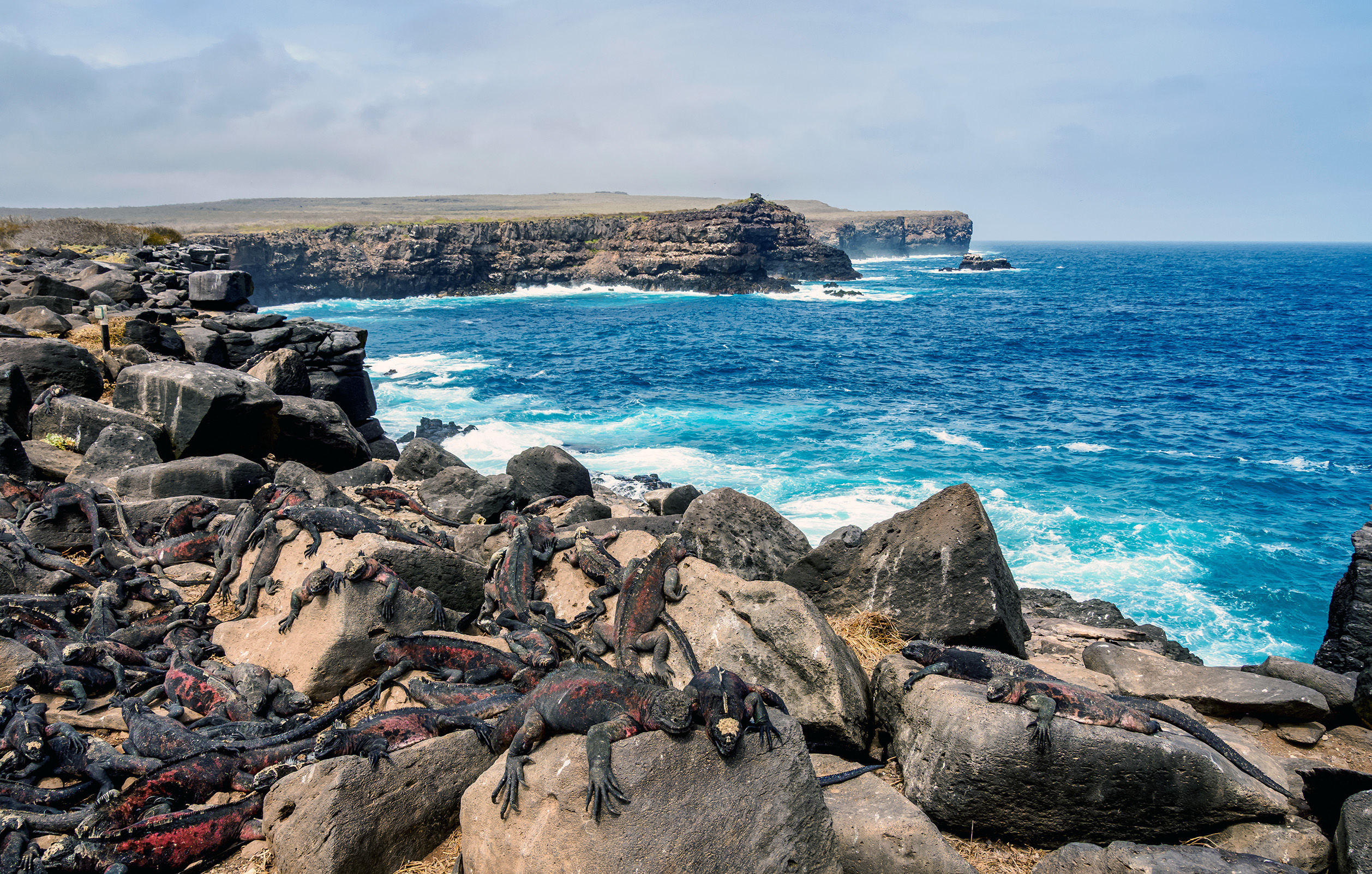
Española is famous for its colorful marine iguanas during the breeding season. The red and green tones of the males make this one of the best islands for photography and close naturalist observation. It is also a superb island for seabirds, sea lions, and dramatic coastal walks.
Santa Cruz and San Cristóbal
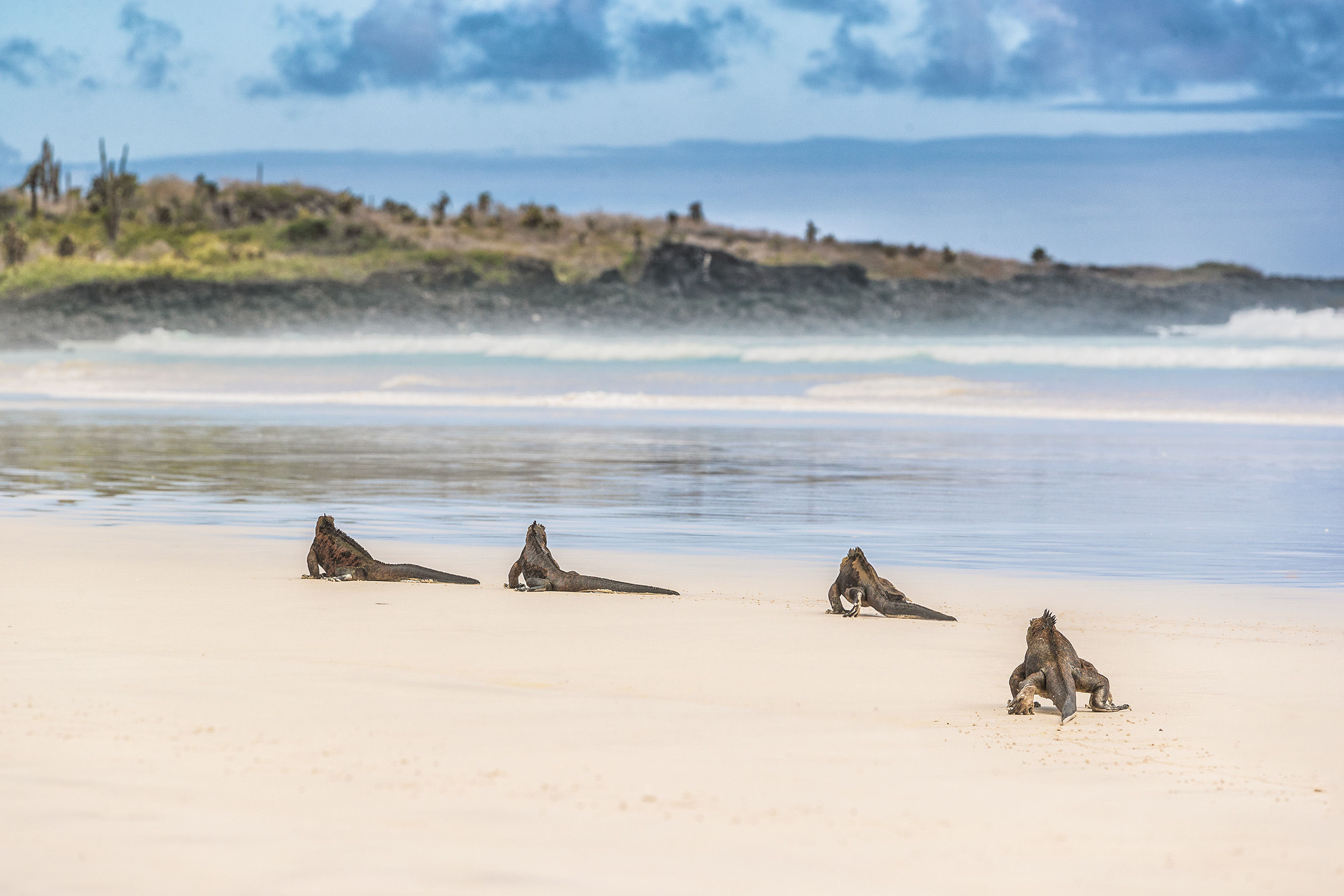
Santa Cruz and San Cristóbal are more accessible islands and often feature at the beginning or end of cruise itineraries. Both can offer marine iguana sightings, as well as opportunities to see giant tortoises, sea lions, coastal birds, and other Galapagos animals.
Best Time to See Galapagos Marine Iguanas
Marine iguanas can be seen year-round, making them one of the most reliable highlights of Galapagos Islands wildlife. Unlike migratory species, they remain tied to the archipelago’s shores in every season. The best time depends on what kind of behavior travelers hope to witness.
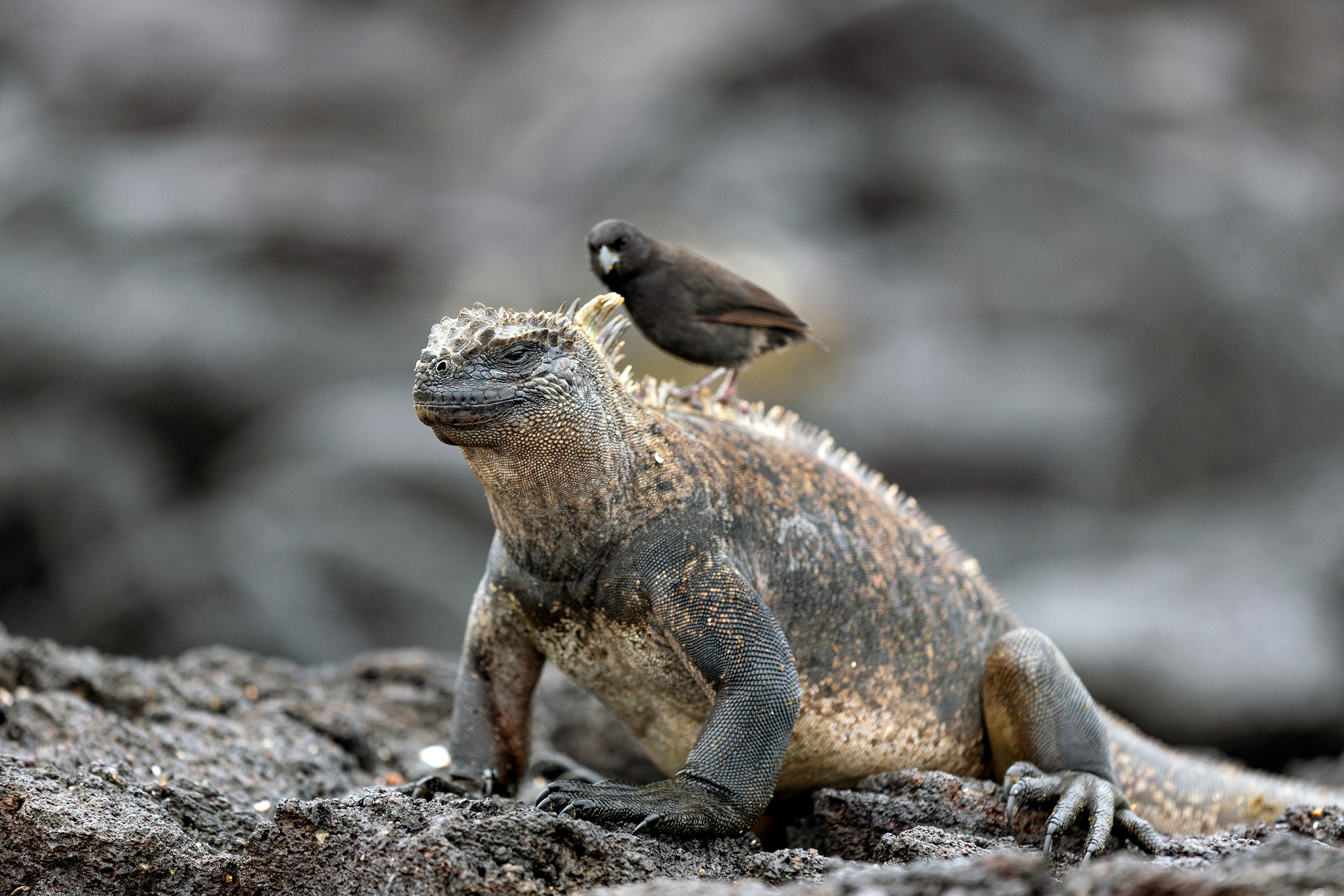
For breeding behavior and color, the late-year and warm-season months are especially rewarding. December marks the beginning of mating rituals along the coastlines, while October can bring breeding activity on Fernandina and early color changes among Española males. Travelers hoping to see the most vivid “Christmas iguana” colors should consider itineraries that include Española during the right seasonal window.
For daily sightings, morning is often excellent. Marine iguanas are commonly seen basking soon after sunrise or after feeding, warming themselves on rocks near sea level. Low tide may also reveal feeding behavior along exposed rocks, while snorkeling outings can sometimes add the rare thrill of watching a marine iguana swimming in its ocean habitat.
Best Galapagos Cruise Itineraries for Marine Iguanas
For travelers focused on marine iguanas, Galapagos small-ship cruises offer the best experience by combining multiple islands, guided landings, and daily wildlife interpretation. A short 4- or 5-day cruise can provide an introduction, especially around the central islands, but it may not reach the more remote western or southeastern sites.
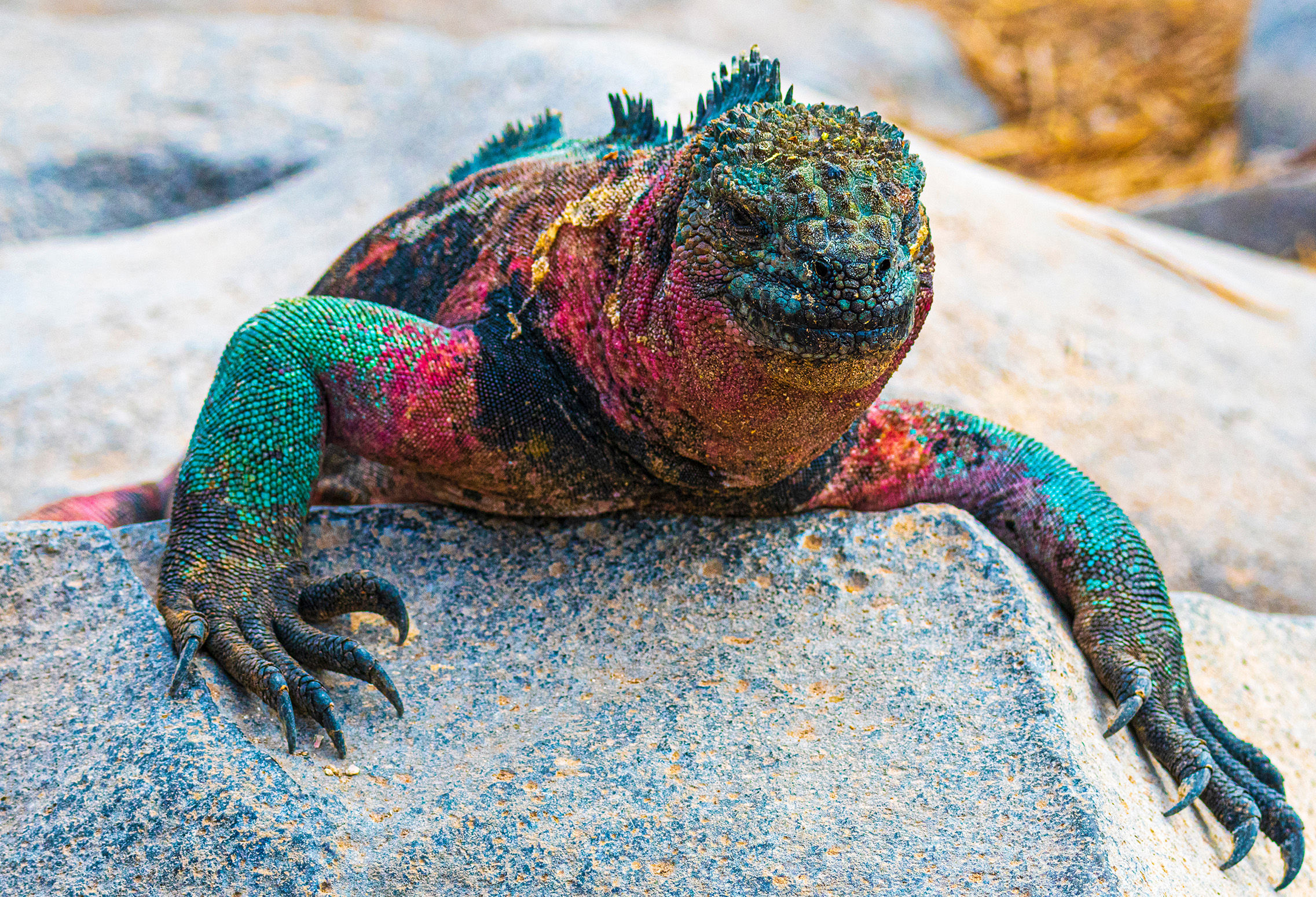
An 8-day cruise is often the sweet spot. Western itineraries that include Fernandina and Isabela are excellent for marine iguana colonies, volcanic coastlines, snorkeling, Galapagos penguins, and flightless cormorants. Southeastern itineraries that include Española are better for travelers hoping to see the most colorful breeding-season iguanas, as well as seabird colonies and dramatic cliffs.
Longer cruises of 10 days or more allow a fuller view of the archipelago. These itineraries may combine central, western, and southern islands, creating a broader portrait of the Galapagos Islands' animals and their habitats. For wildlife-focused travelers, this added time can be the difference between simply seeing a marine iguana and understanding its place in the islands’ larger story.
Small-Ship Cruises Are Ideal for Galapagos Wildlife
The Galapagos rewards slow looking, and small-ship cruises are built around that principle. Rather than staying in one place, travelers move between islands, waking each day to a new landing site, beach, lava field, mangrove lagoon, or snorkeling cove. Naturalist guides help interpret the behavior of each species, from marine iguanas and sea lions to blue-footed boobies, frigatebirds, giant tortoises, sea turtles, rays, and reef fish.
For the Galapagos marine iguana, this context matters. Seeing one animal on one rock is memorable; seeing different colonies across different islands reveals a living map of adaptation. A small-ship cruise connects the animal to its habitat, food sources, predators, breeding season, and the volcanic world that shaped it.
How to Watch Marine Iguanas Responsibly
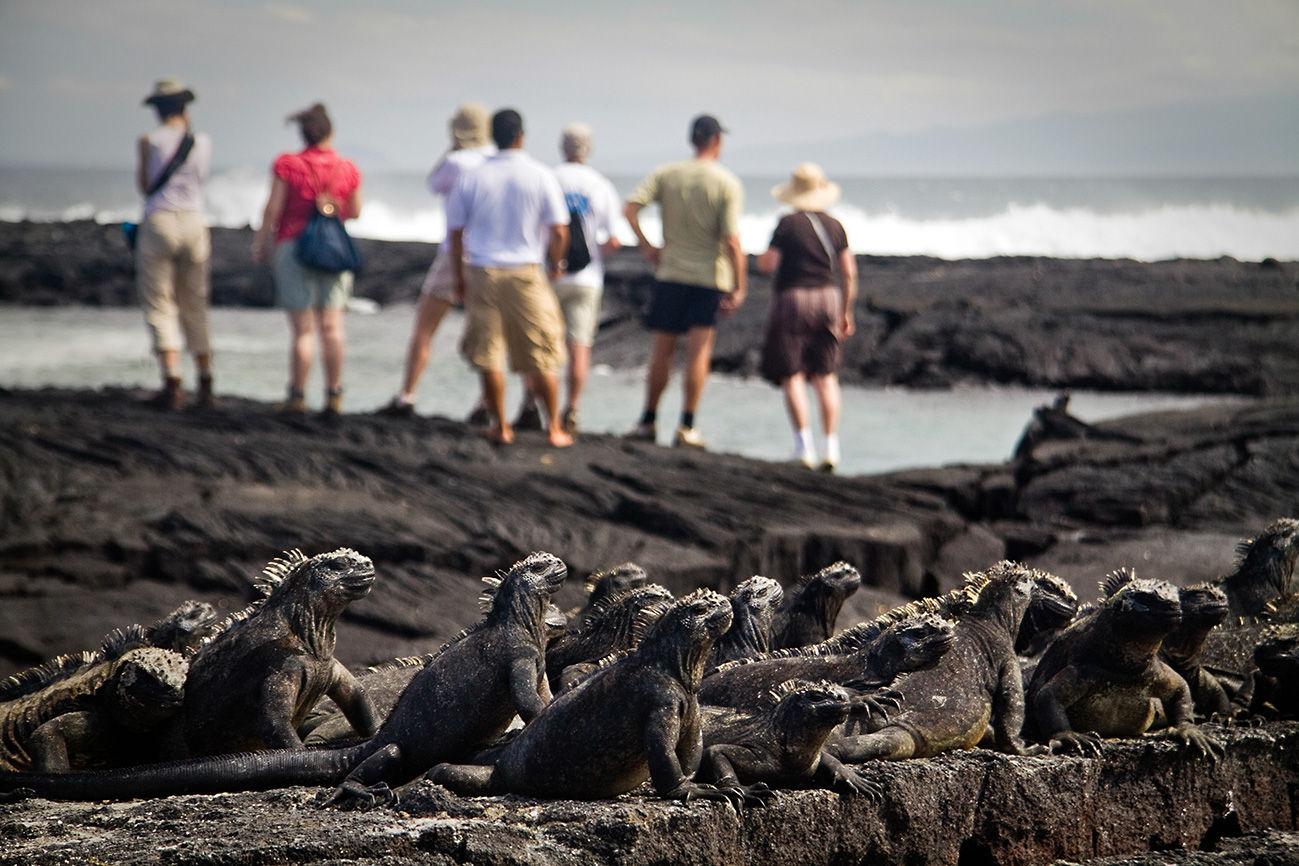
Responsible viewing is essential in the Galapagos. Travelers should keep the required distance from wildlife, remain on marked trails, never touch or feed animals, and avoid blocking an iguana’s path to or from the sea. Extra care is needed around nesting areas, where disturbance can affect eggs and hatchlings.
Marine iguanas may look tough, but their survival depends on a delicate balance of food, temperature, safe nesting sites, and protected coastlines. Following the naturalist guide's instructions helps ensure that future travelers can continue to witness one of the world’s most distinctive reptiles in its natural habitat.
The Marine Iguana: Unique Wildlife Encounters
The Galapagos marine iguana is not beautiful in any ordinary sense. It is better than beautiful: it is ancient-looking, improbable, and perfectly suited to its strange volcanic world. It sneezes salt, swims through surf, eats algae from lava rock, and warms itself beneath the equatorial sun. For travelers drawn to evolution, wild coastlines, and rare encounters, few animals say “Galapagos” more powerfully.
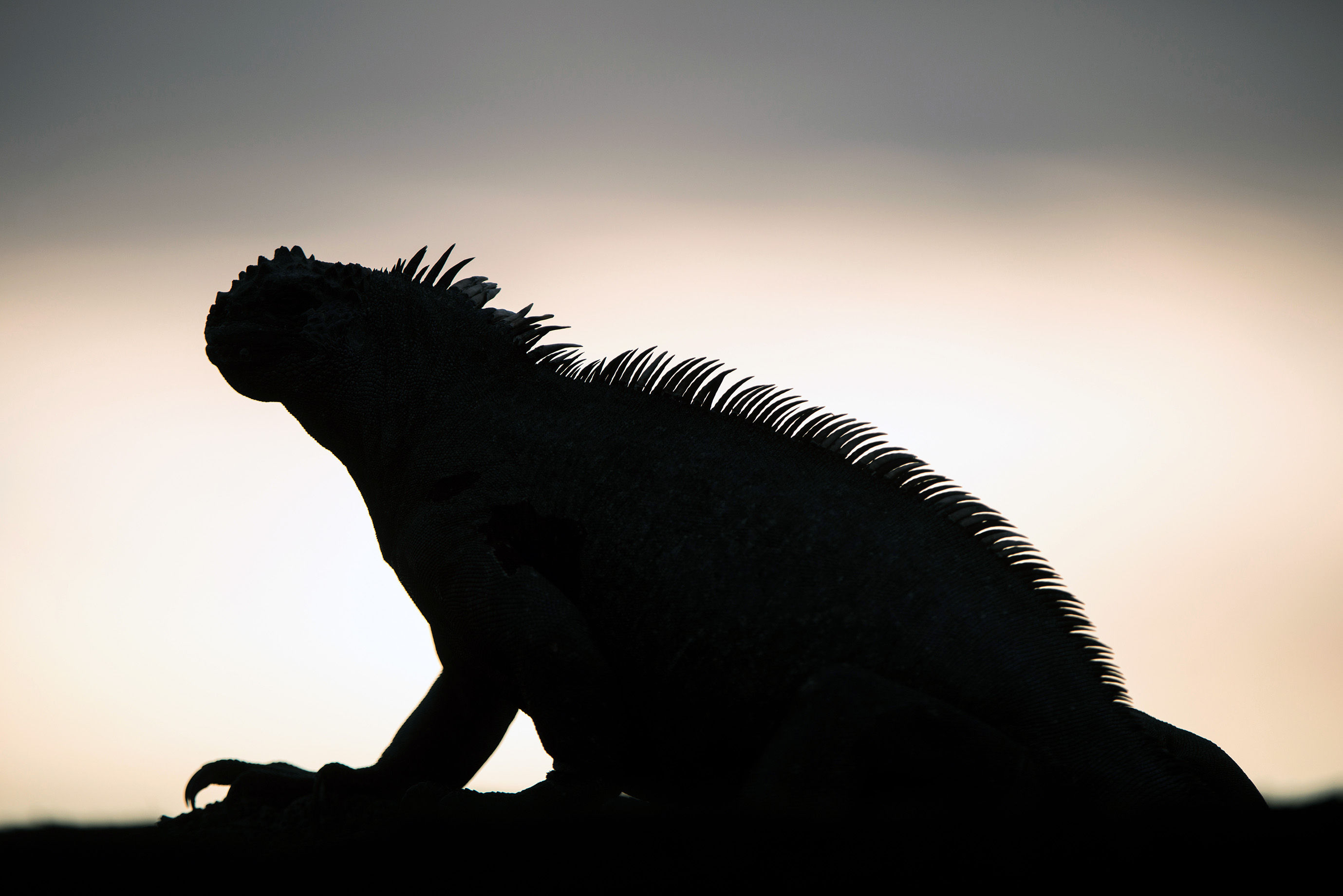
Whether seen on Fernandina’s black shores, Española’s colorful breeding grounds, or the coastal trails of Isabela, the marine iguana is one of the great rewards of a naturalist-led Galapagos cruise. For those planning Galapagos adventure tours or small-ship itineraries, it is more than another species on a checklist. It is a reminder that these islands are still doing what they have always done best: turning isolation into wonder.
This article was developed with AI assistance and reviewed and edited for accuracy, quality, and relevance.