Bird Watching on a Raja Ampat Cruise
Before dawn on Waigeo, the rainforest is all sound and no light: cicadas, the drip of last night's rain, and then, somewhere overhead, a harsh rising call that stops every birder mid-step. A male red bird-of-paradise has reached his display branch, and within minutes, the canopy will catch fire with crimson. This is birding in Raja Ampat, an Indonesian archipelago far better known for its reefs than its forests, yet home to some of the most extravagant birds on Earth.
Scattered off the Bird's Head of New Guinea, these islands reward the patient watcher twice over: paradise birds in the hills at first light, terns and kingfishers along the karst by mid-morning. The naturalist who puzzled over them in the 1850s, Alfred Russel Wallace, would recognize the spectacle at once.
A crossroads of evolution
Raja Ampat sits at the western tip of New Guinea, on the Australasian side of the invisible boundary now called the Wallace Line. Isolation has done its slow work here. Cut off from the predators and competition of the larger continents, the region's birds have diversified into forms found nowhere else, and nowhere is that clearer than among the birds-of-paradise, the cendrawasih of Indonesian lore.
More than forty species range across New Guinea and its satellite islands, the products of sexual selection pushed to baroque extremes: trailing wires, iridescent breast shields, courts swept clean for dancing. Two of those species are endemic to Raja Ampat alone. One point for the uninitiated: the bird-of-paradise meant here is the bird, not the garden plant that borrowed its name. Watching one of these bird-of-paradise birds display in the wild is among the defining experiences in all of birdwatching.
The birds of paradise of Raja Ampat
The archipelago's headline act unfolds on the forested ridges of its largest islands, where two endemic species hold court within a short boat ride of one another.
Red bird-of-paradise
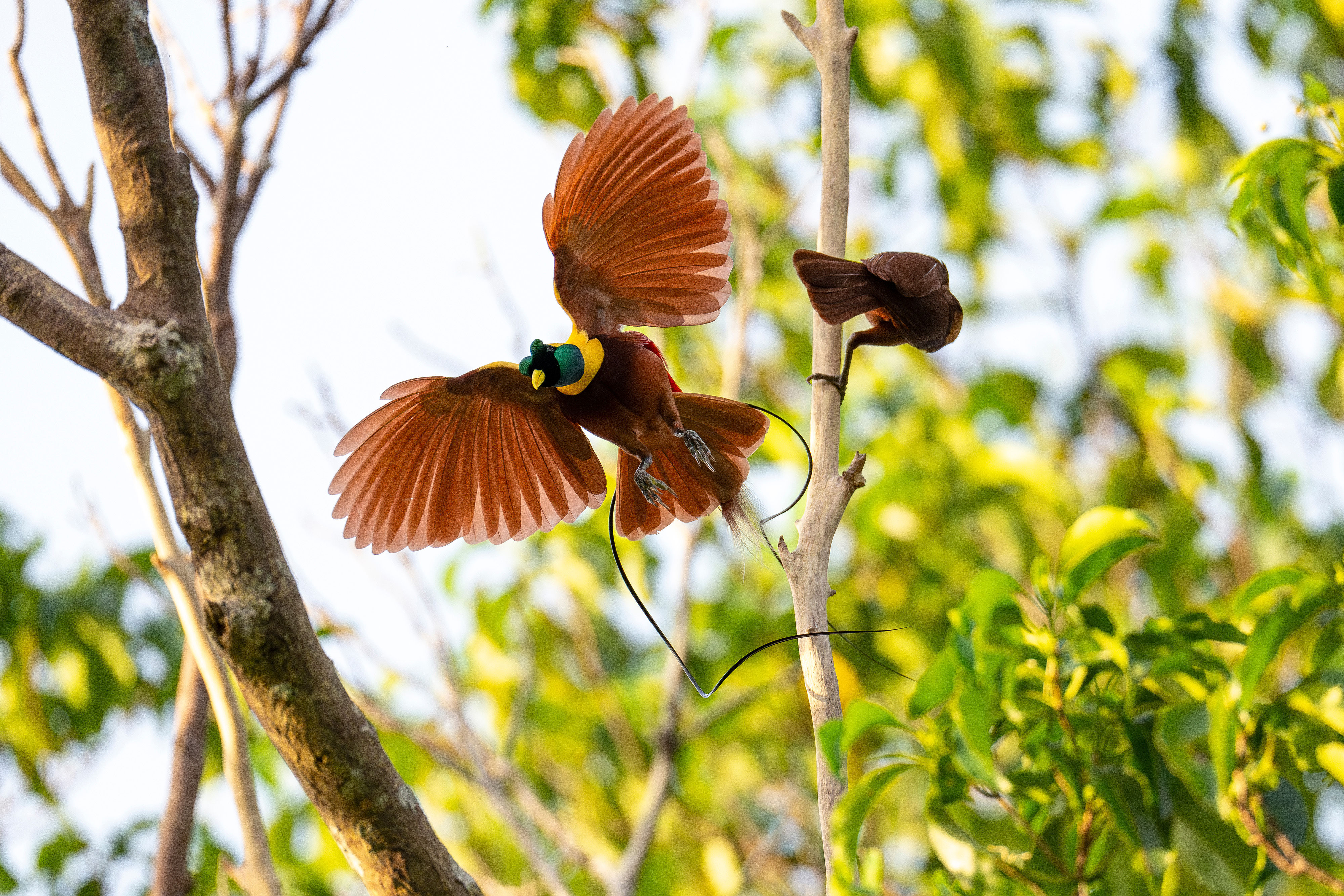
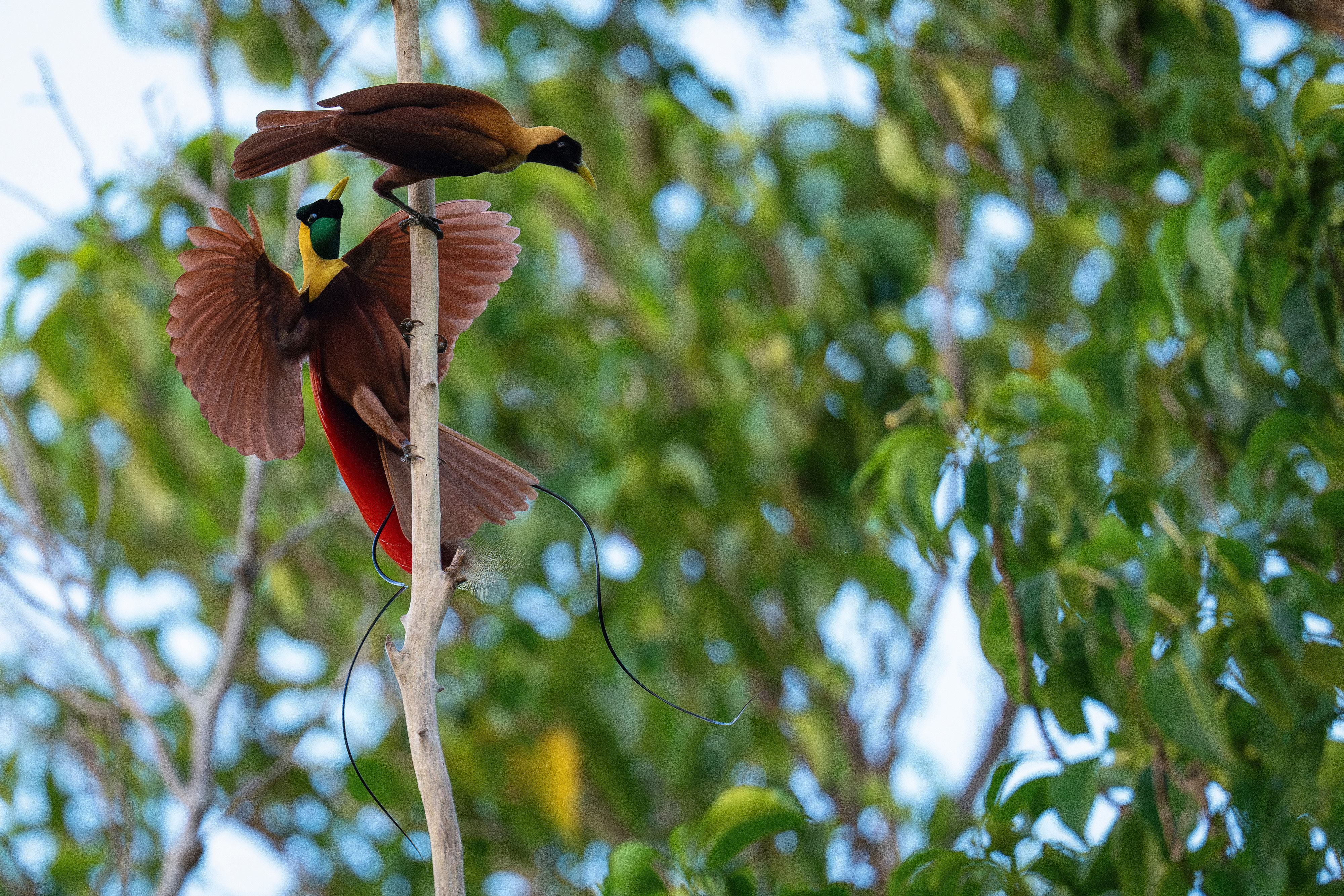
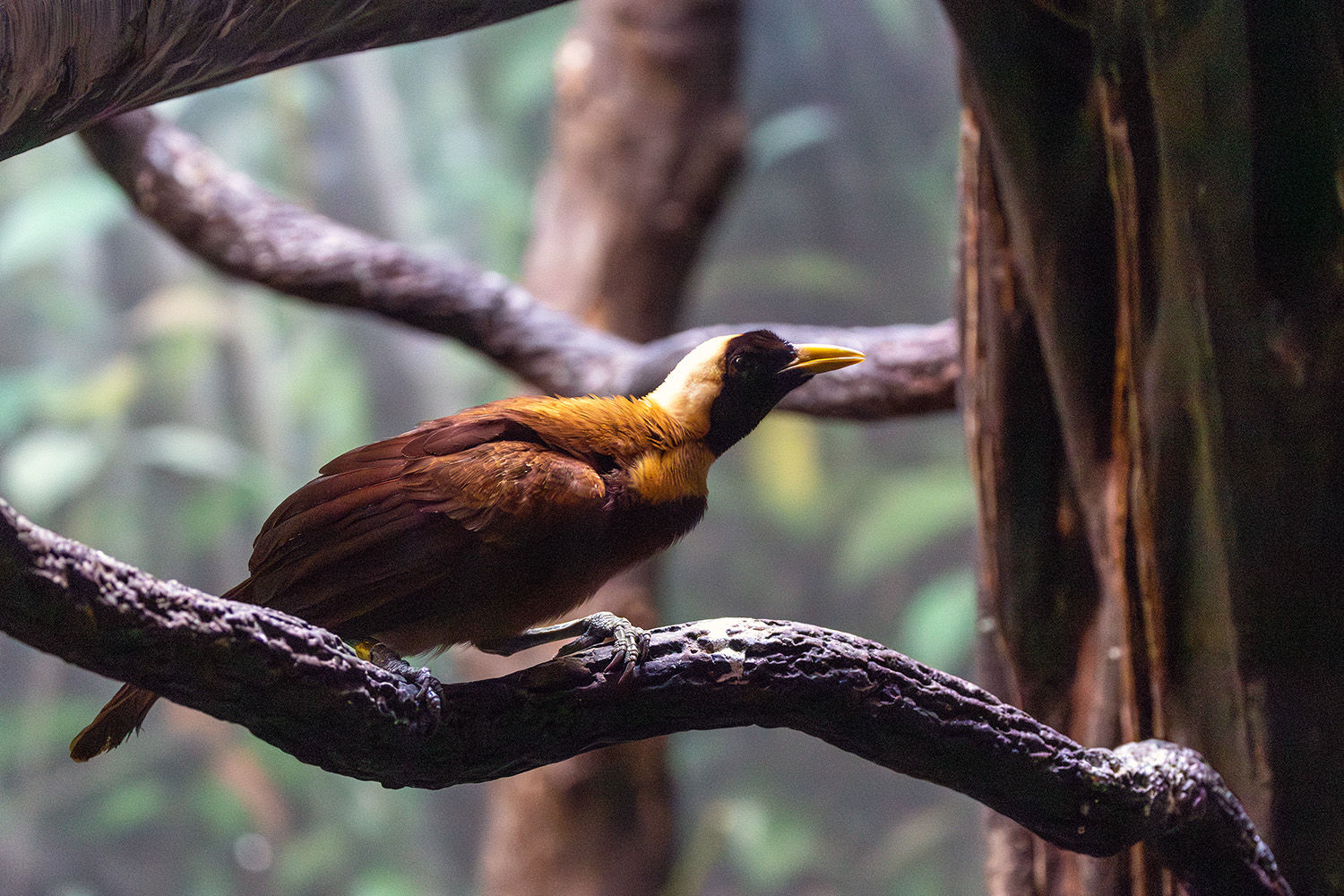
Found in the wild only here, chiefly on Waigeo, Paradisaea rubra is the island's signature bird. Well before sunrise, males assemble in the crown of a tall tree for a communal lek, calling and posturing and cascading their crimson flank plumes in the frenzied mating dance that made the family famous.
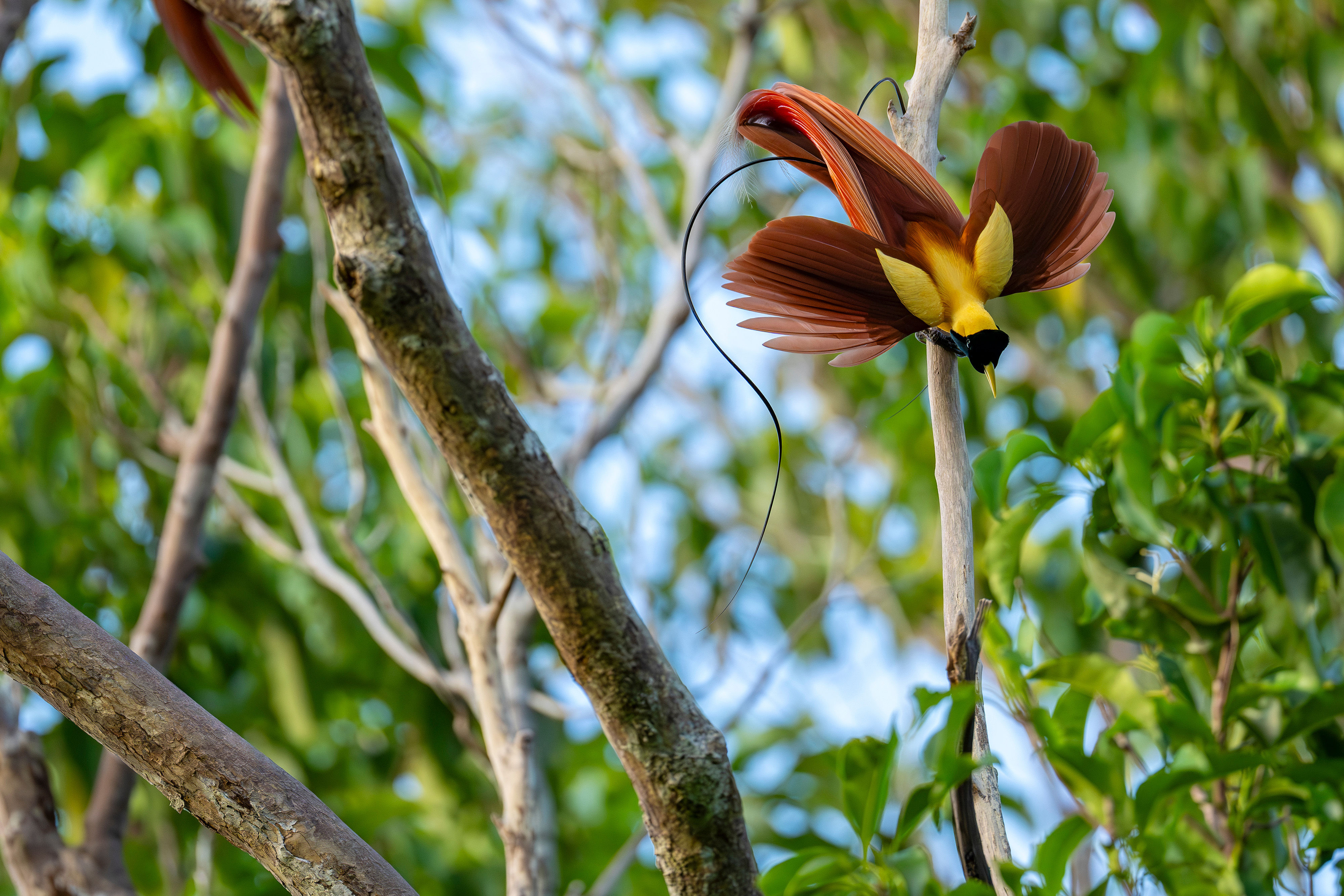
Females arrive to judge; the males compete in earnest, jostling for the best perch and the most arresting display. The classic vantage is a ridge trail above Yenbeser, the very stretch of forest where Wallace collected and theorized in the 1850s. Arrive in darkness, settle into a guide's hide, and wait for the canopy to ignite. The performance is usually over by mid-morning, so a single missed alarm can cost you the day.
Wilson's bird-of-paradise
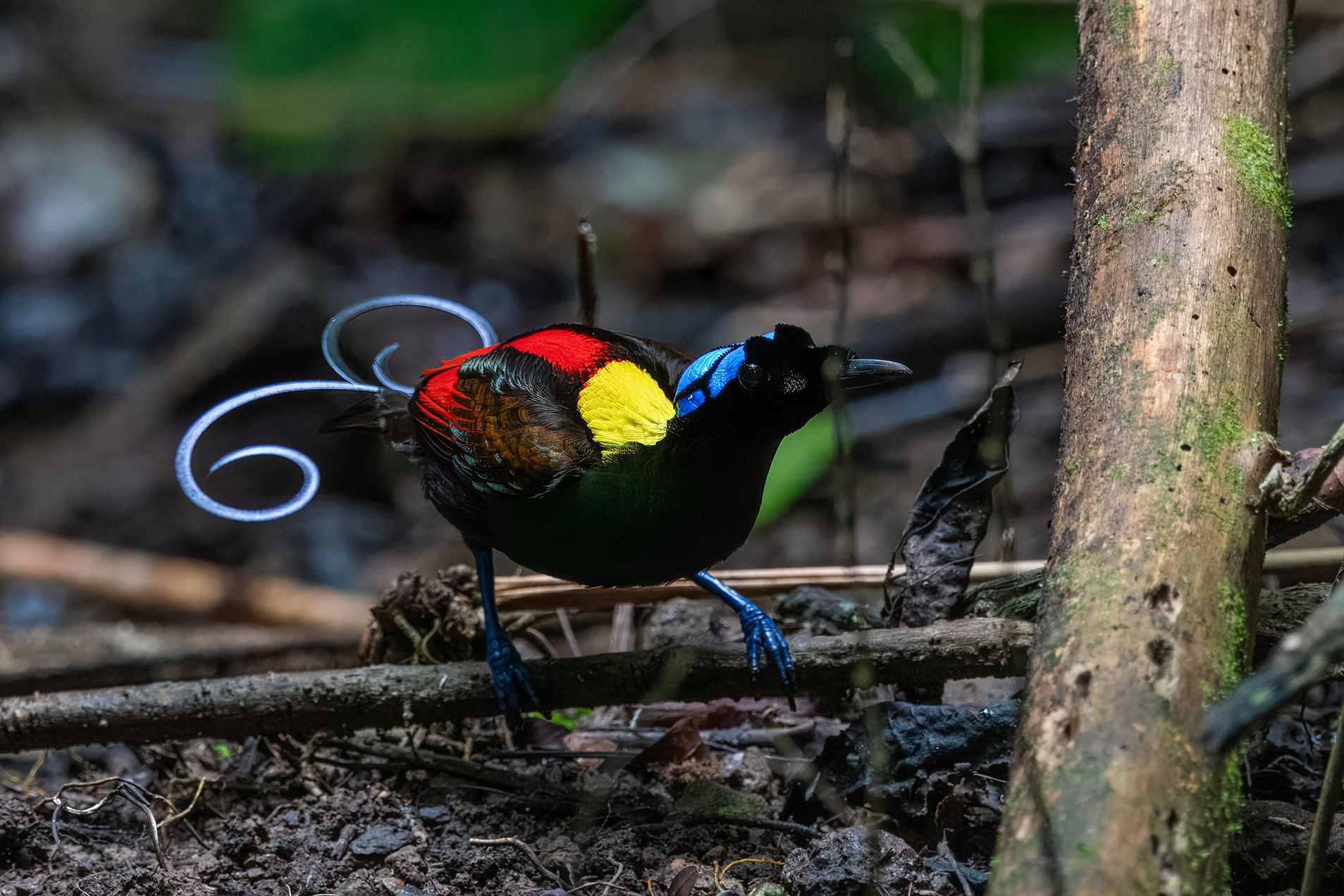
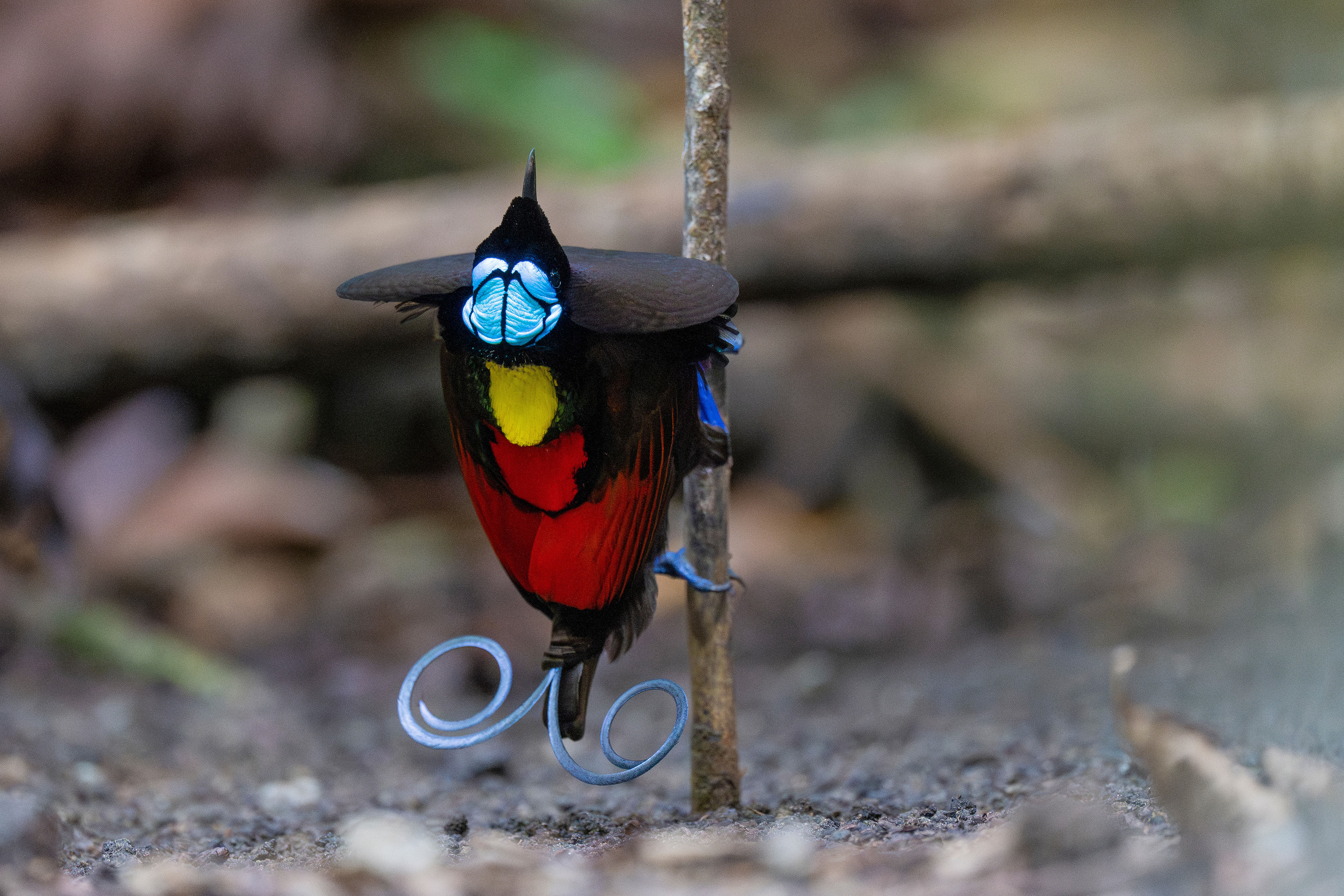
Smaller, stranger, and arguably more spectacular, Cicinnurus respublica occurs on just two islands on the planet: Waigeo and Batanta. The male is a collision of color, with a scarlet back, a lemon nape, a deep-green breast shield, and a bare crown of electric turquoise skin so vivid it appears lit from within.
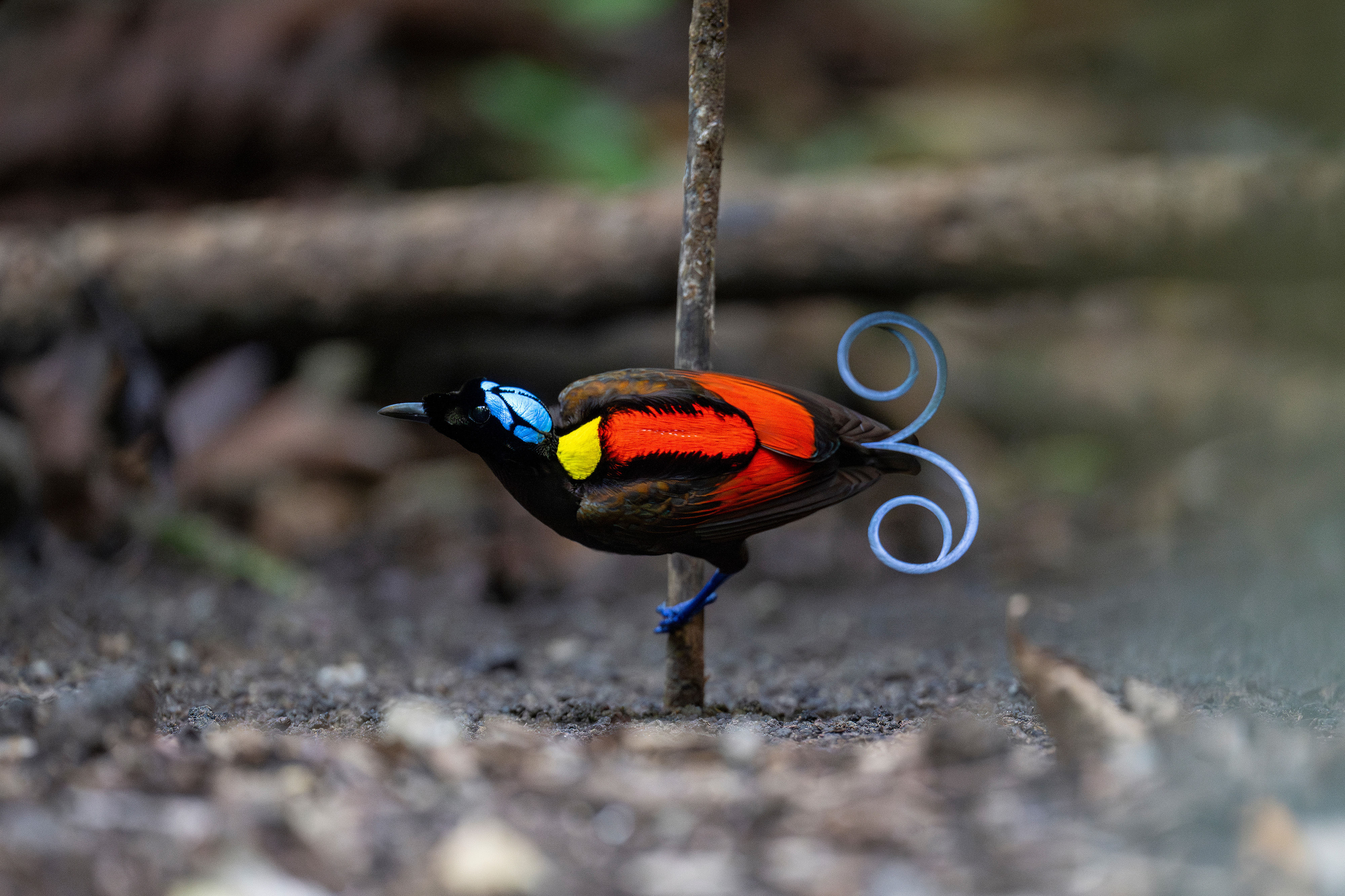
He performs not in the canopy but on the forest floor, meticulously clearing a small court of fallen leaves and debris so that nothing distracts from the show. Reaching him means an early, steep, and often muddy walk to a hide, repaid by a few unforgettable minutes when he drops in to inspect his stage and a watching female.
The forest's supporting cast
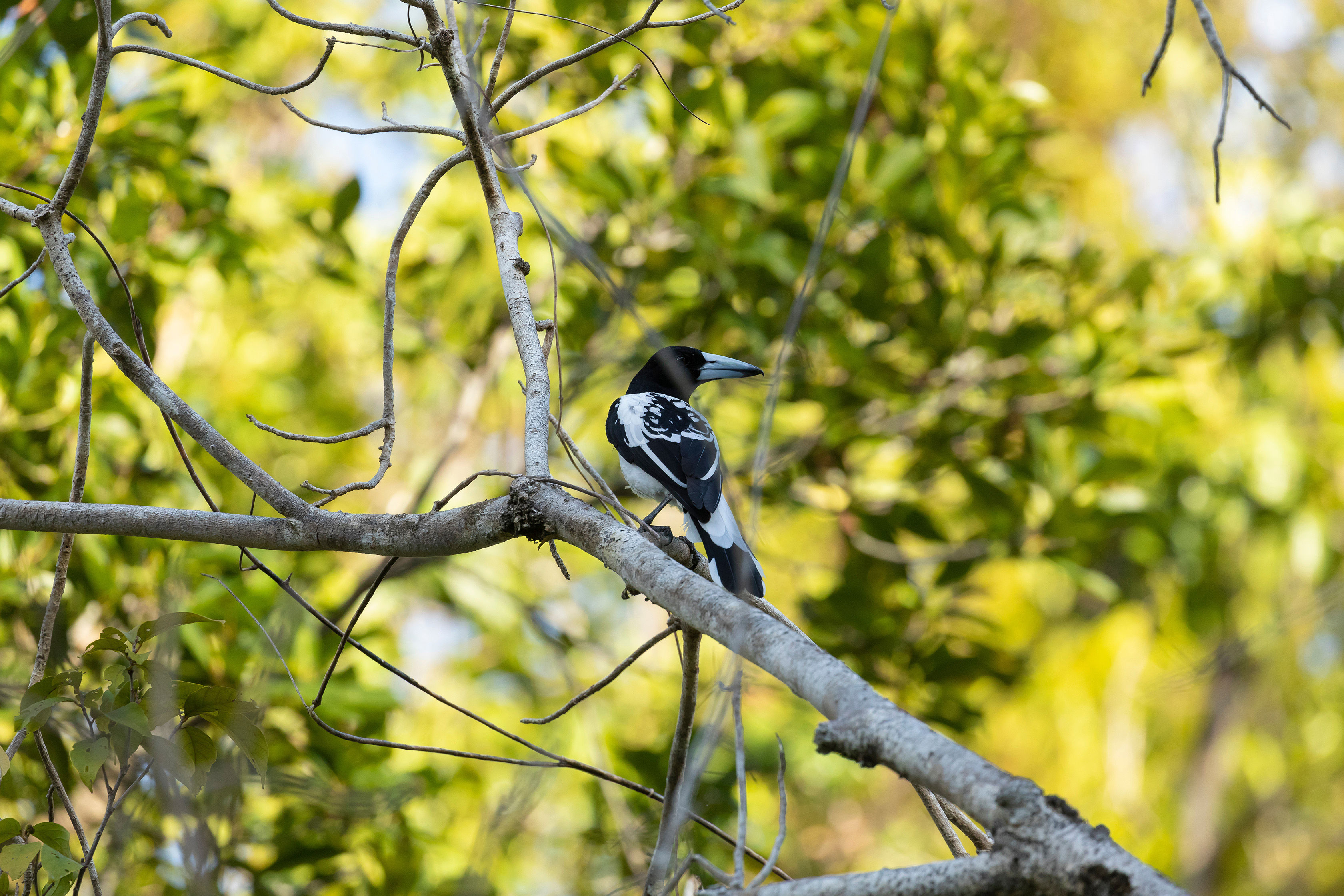
The paradise birds may draw you to Raja Ampat, but the surrounding forest keeps you occupied between performances. The hooded butcherbird (Cracticus cassicus) is heard before it is seen, its rich, fluting song carrying from the forest edge while its bold black-and-cream plumage and heavy bill betray a kinship with the region's more celebrated songsters. Overhead, black-capped lories (Lorius lory) tear across clearings in noisy pairs, their crimson bodies and deep-blue bellies unmistakable even at speed.
Along the bare snags at the forest margin, watch for the mustached treeswift (Hemiprocne mystacea), a long-winged, scimitar-shaped flier that perches bolt upright between aerial sorties and thinks nothing of harrying a passing osprey several times its size. None of these is genuinely rare, but each rewards the watcher who slows down. The forest here is loud, layered, and quick to reveal more the longer you stand still within it.
Birding by boat: the coast and the karst
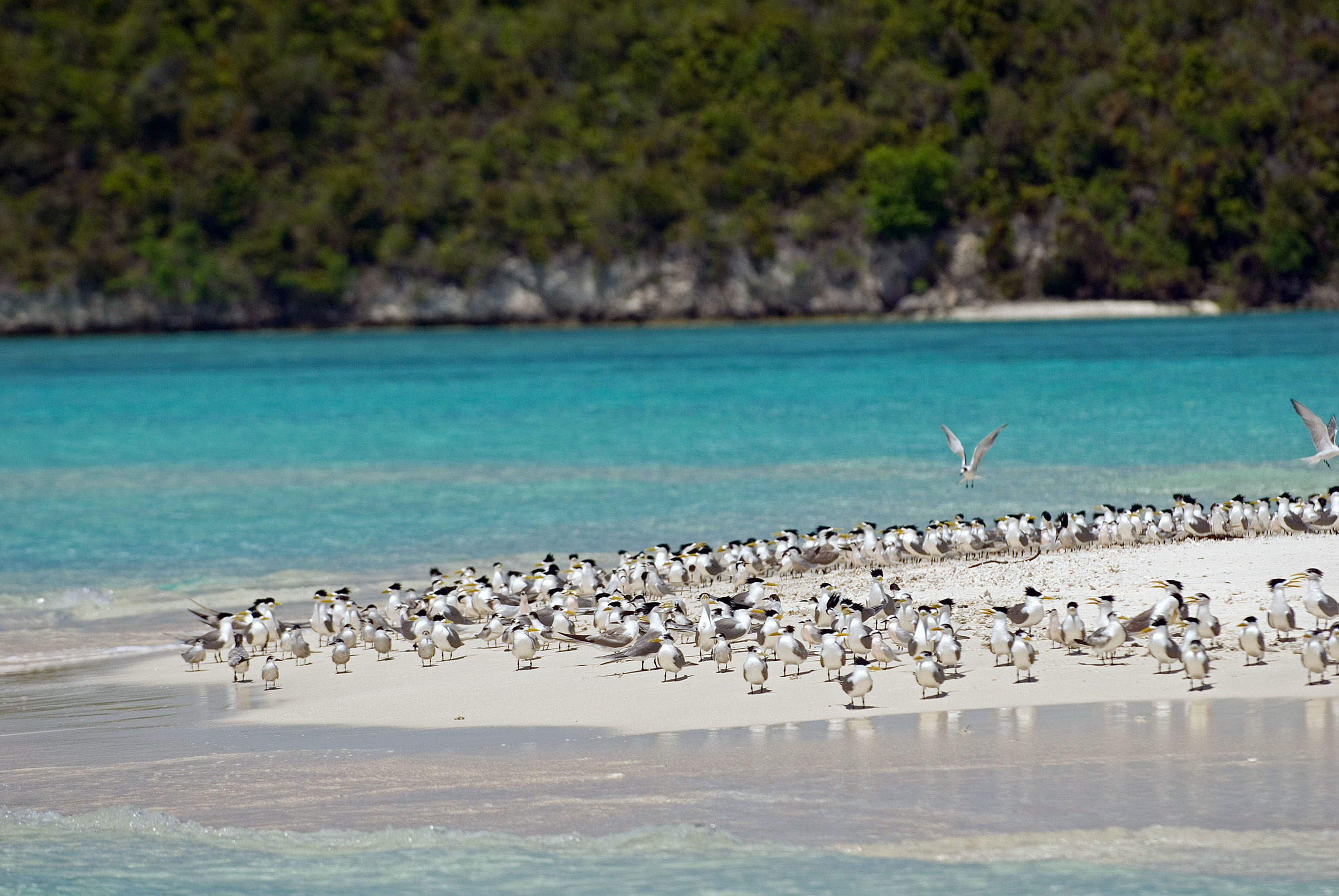
Half of Raja Ampat's birding happens on the water. Between dive sites and snorkel stops, the boat becomes a moving hide, drifting past the mushroom-shaped karst islets where seabirds loaf and hunt. Greater crested terns (Thalasseus bergii) stand sentinel on driftwood and bare rock, shaggy-crested and yellow-billed, lifting off in loose squadrons as you pass. Among them, in the cooler months, you may pick out the common tern (Sterna hirundo), a slightly longer-distance migrant whose darkened bill in non-breeding plumage helps separate it from its resident cousins.
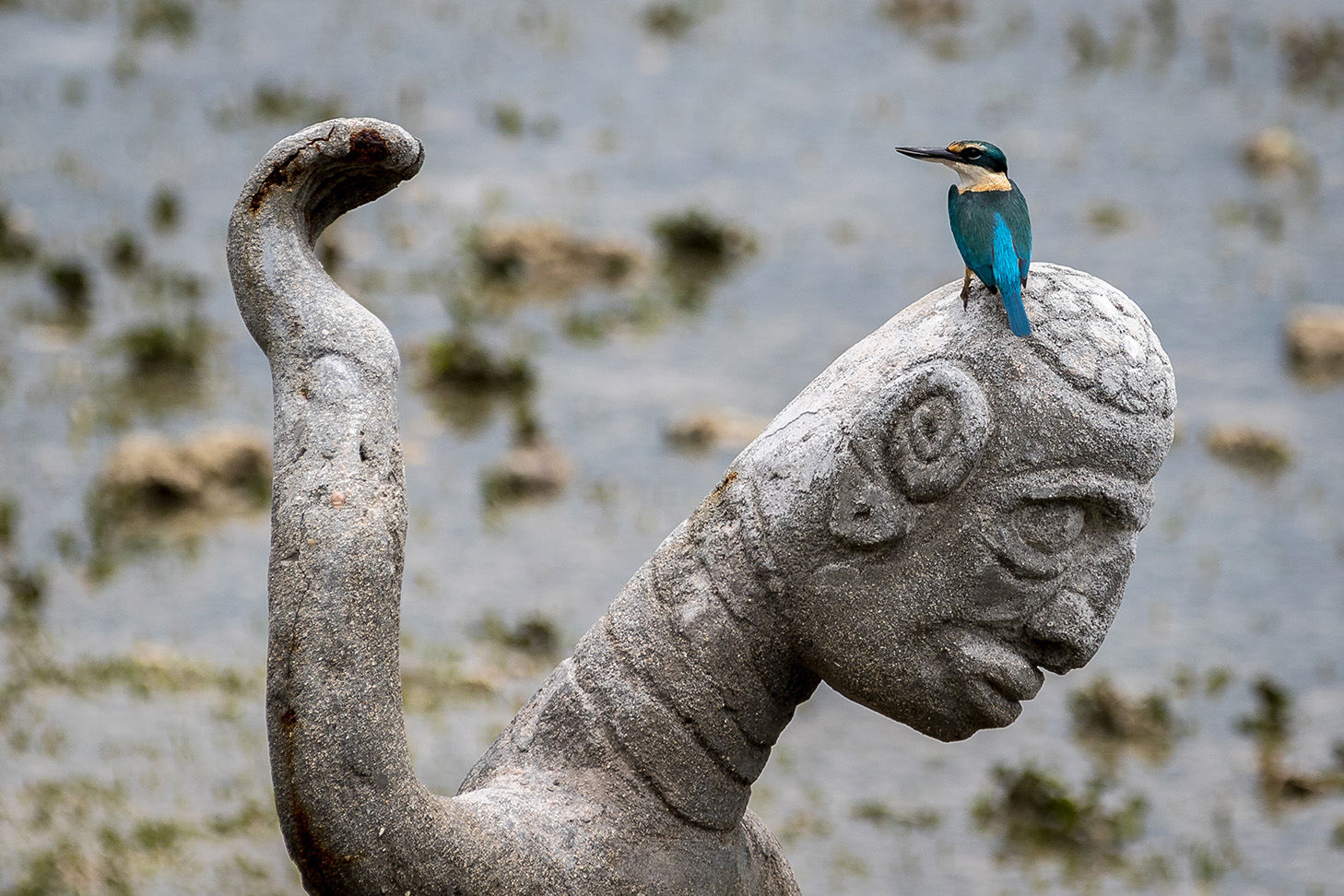
Closer to the mangroves and tidal flats, scan the low perches for a sacred kingfisher (Todiramphus sanctus): turquoise above and buff below, with a buff collar and a dark dagger of a bill, dropping to the mud for crabs and small fish. Exploring on a Raja Ampat small-ship cruise puts you within binocular range of all three, and a snorkeling cruise between islands doubles neatly as a seabird transect.
Best time for birding in Raja Ampat
The best time for birding in Raja Ampat is from June to November, when drier weather, calmer seas, and reliable lek activity make both forest treks and boat birding easier. The paradise birds display year-round, so off-season visits can still deliver, but the wetter months from December to March bring rougher crossings and muddier trails. For the steadiest combination of dawn forest sessions and settled water, aim for the heart of the dry season.
Planning your trip
Reaching the archipelago takes patience. Most visitors fly to Sorong on the New Guinea mainland, then take the ferry to Waisai on Waigeo, the gateway island, before transferring by boat to homestays, resorts, or a waiting vessel. The paradise-bird leks are birded with local guides who maintain the hides and know each court intimately; these guides are usually booked through your accommodation or operator.

Lek etiquette matters: keep your distance, stay quiet, and never use flash, which can disrupt both the display and the birds that depend on it. For the practicalities of getting there and what a typical week looks like, see our guide to how to get to Raja Ampat, and consider pairing your birding with the reefs on a Raja Ampat adventure cruise.
Long after the crimson has faded from the canopy and the tern squadrons have scattered over the karst, it is the doubling that stays with you: a place where the richest reefs on Earth lie directly beneath the most flamboyant birds. To experience both in a single day, explore Raja Ampat by small-ship cruise.
This article was developed with AI assistance and reviewed and edited for accuracy, quality, and relevance.