Alaska Whale Watching

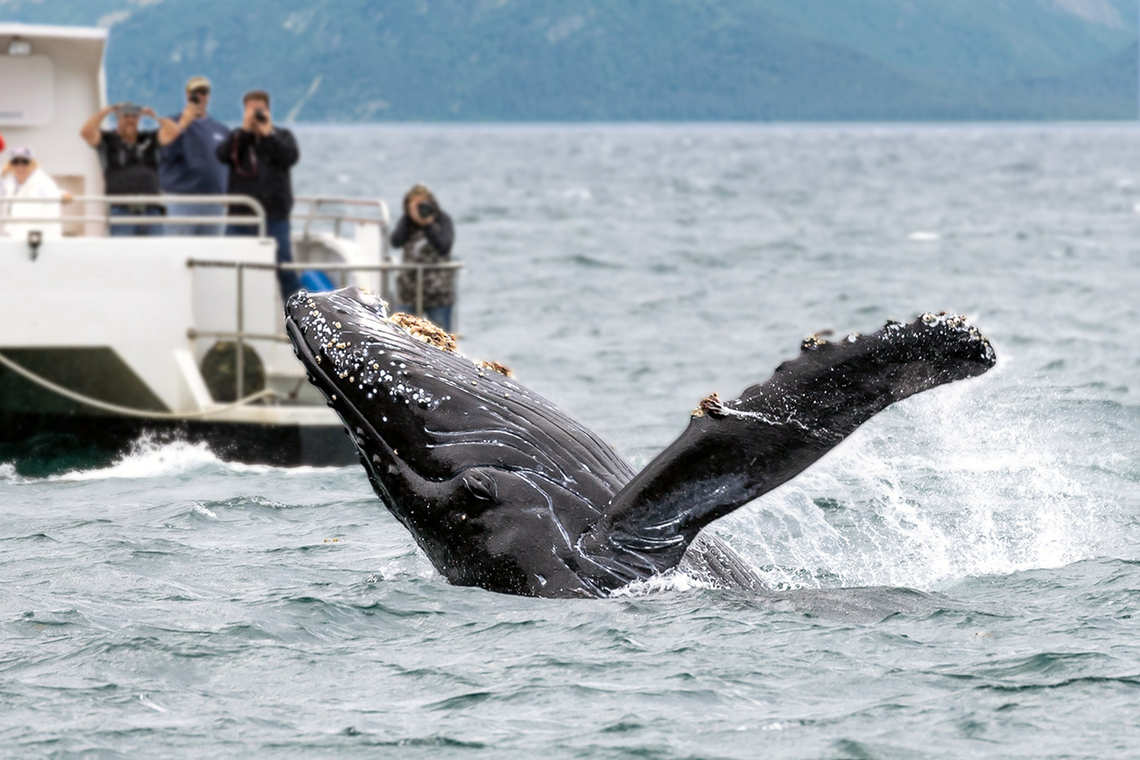
It happens without warning. One moment, there is only water — grey-green, glacier-cold, stretching to a wall of spruce-black mountains — and then the sea itself seems to inhale. A humpback whale, forty tons of muscle and migration, launches its full length clear of the surface and hangs, briefly and impossibly, against the Alaskan sky before crashing back with a sound like a cannon shot. The spray is still falling when it happens again.
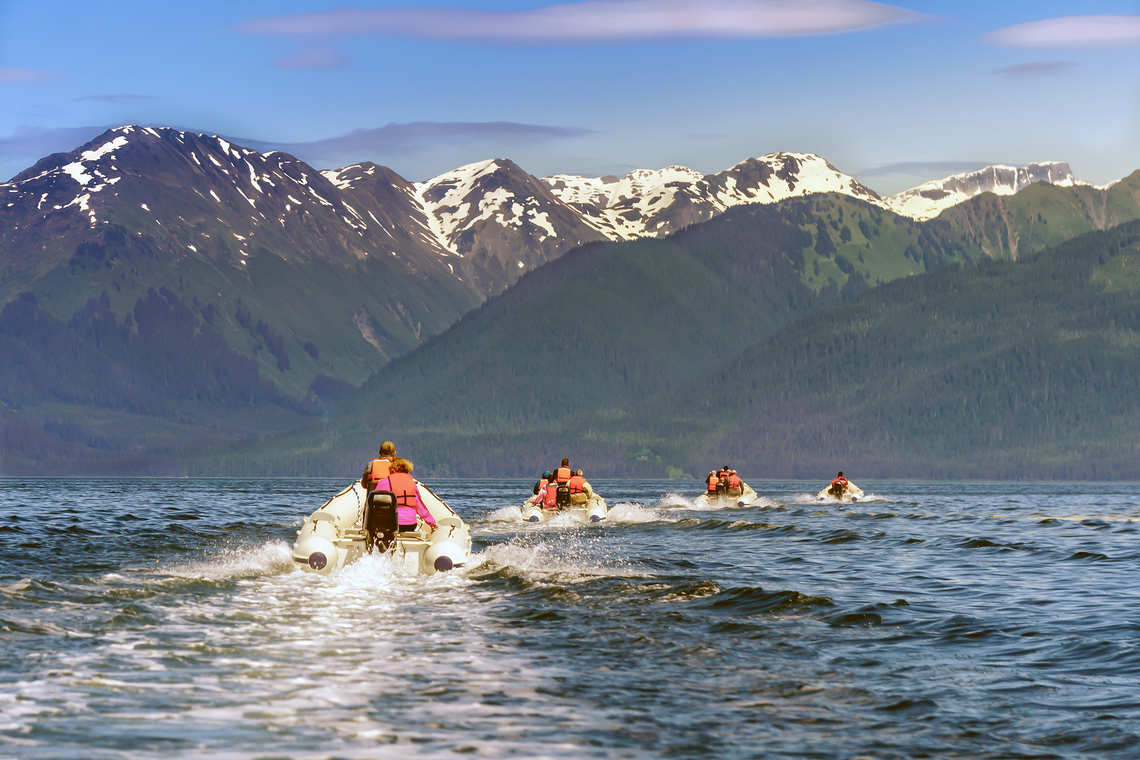
From a large cruise ship, this would be a distant white splash, something to photograph from a railing twelve decks up. From a small expedition vessel, it fills your entire field of vision. You feel the percussion in your chest. You can hear the whale breathe.

Alaska's waters hold some of the most productive marine habitats on Earth, and for those willing to seek it on the right vessel at the right time, the wildlife encounters here belong in a different category entirely — less tourist attraction, more wildlife event. The window is specific. The vessel matters enormously. And among all the months the season spans, July stands in a category of its own. Here is everything you need to understand about whale watching in Alaska — the animals, the season, the geography, and why a small ship changes what is possible.
The Whales of Alaska: A Cast of Giants

The waters of Southeast Alaska sustain one of the richest concentrations of cetaceans in the northern hemisphere. That richness is not accidental — it is the product of a collision between cold, nutrient-laden deep water upwelling along the continental shelf and the explosive bloom of herring, krill, and sand lance that follows every summer. Where the food goes, the whales follow. And in summer, the food is here in extraordinary abundance.
Humpback Whales

Humpback whales are the signature species, and justifiably so. Adults reach up to sixteen meters in length and return to the same Alaskan feeding grounds year after year — researchers have been identifying individual animals by the unique black-and-white patterns on their flukes for decades, and many are known by name. What makes humpbacks particularly compelling as a wildlife spectacle is their behavior: they breach, they slap their pectoral fins against the surface, they lunge-feed with their mouths agape.

And in Alaska, they engage in one of the most complex cooperative hunting strategies in the animal kingdom — bubble-net feeding, in which groups of up to twenty animals work together to spiral columns of air bubbles beneath a school of herring, forcing the fish to the surface where they are consumed in a single, coordinated surge. To watch it unfold from a small ship, with a naturalist explaining the acoustics in real time, is one of the defining experiences of expedition travel.
Orca
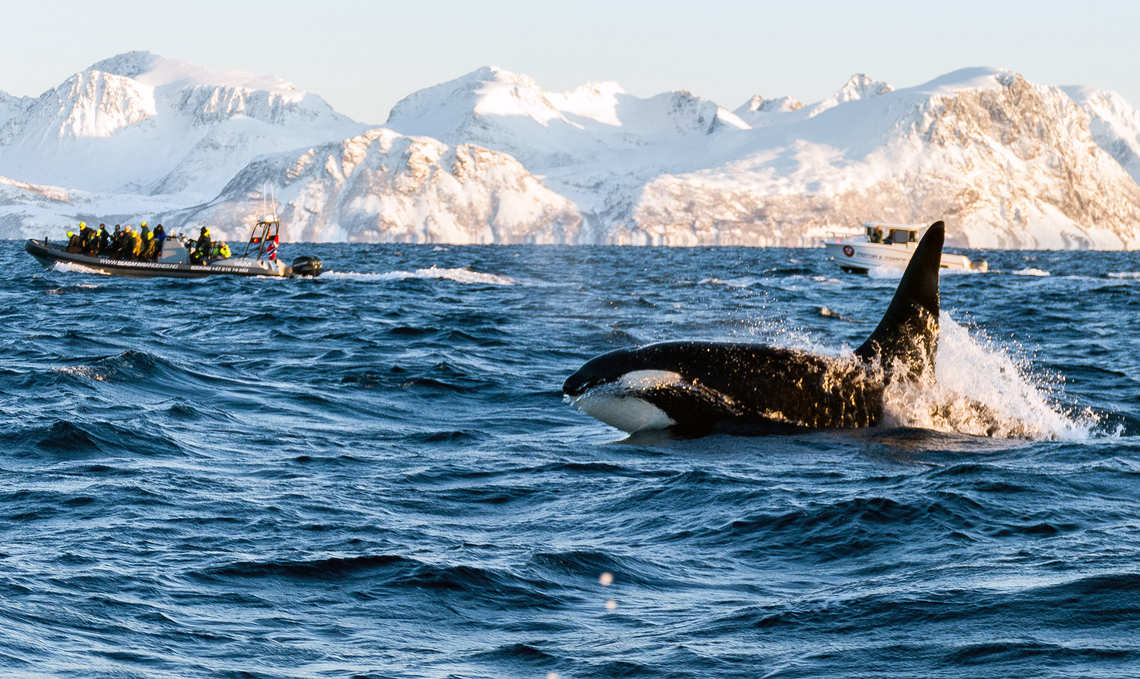
Orca — killer whales — are the apex predators of these waters and reliably present throughout the summer season. Southeast Alaska hosts two distinct ecotypes: resident pods that specialize in hunting fish, returning to the same territories generation after generation, and transient pods that hunt marine mammals — seals, sea lions, even other whales — and roam more widely. The behavioral contrast between the two is one of the more fascinating stories in cetacean biology, and encounters with either are electric.
Minke Whales

Minke whales are smaller, shyer, and often overlooked by those fixated on humpbacks, but a close encounter with a minke — surfacing suddenly alongside a Zodiac, its sleek dark back barely clearing the water — has an intimacy all its own.
Gray Whales

Gray whales appear as migrants during spring and early summer, moving through the region en route to Arctic feeding grounds, and Dall's porpoise, with their startling black-and-white coloration and habit of bow-riding at speed, are almost guaranteed to be seen at some point during any voyage through the Inside Passage.

The diversity of species here — and the density of individuals — reflects an ecosystem in extraordinary health. Alaska's waters are among the last places on Earth where you encounter whales not as occasional sightings but as a recurring, expected presence in the daily landscape.
When to Go: July Stands Apart
The question of when to see whales in Alaska is one of the most-searched queries among travelers planning an expedition to the region — and with good reason. The season is relatively short, conditions vary significantly month to month, and the difference between a good trip and a transcendent one often comes down to timing.

The season opens in May, when the first humpbacks begin appearing in Southeast Alaska following their winter migration from breeding grounds off Hawaii and Mexico. The feeding aggregations are still forming — animals are arriving, scattering, probing the newly bloomed food sources — and encounters tend to be opportunistic rather than reliable. There is a rawness to May, an early-season energy that some travelers love, and shoulder pricing reflects the relative unpredictability.

June brings a step change. The days lengthen dramatically — Juneau receives nearly eighteen hours of daylight at midsummer — and whale activity intensifies as food sources concentrate. Humpback aggregations grow. Orca pods become more reliably sighted. But fog is common in June, and the weather, while improving, still carries the unpredictability of early summer. It is an excellent month, but not the finest.
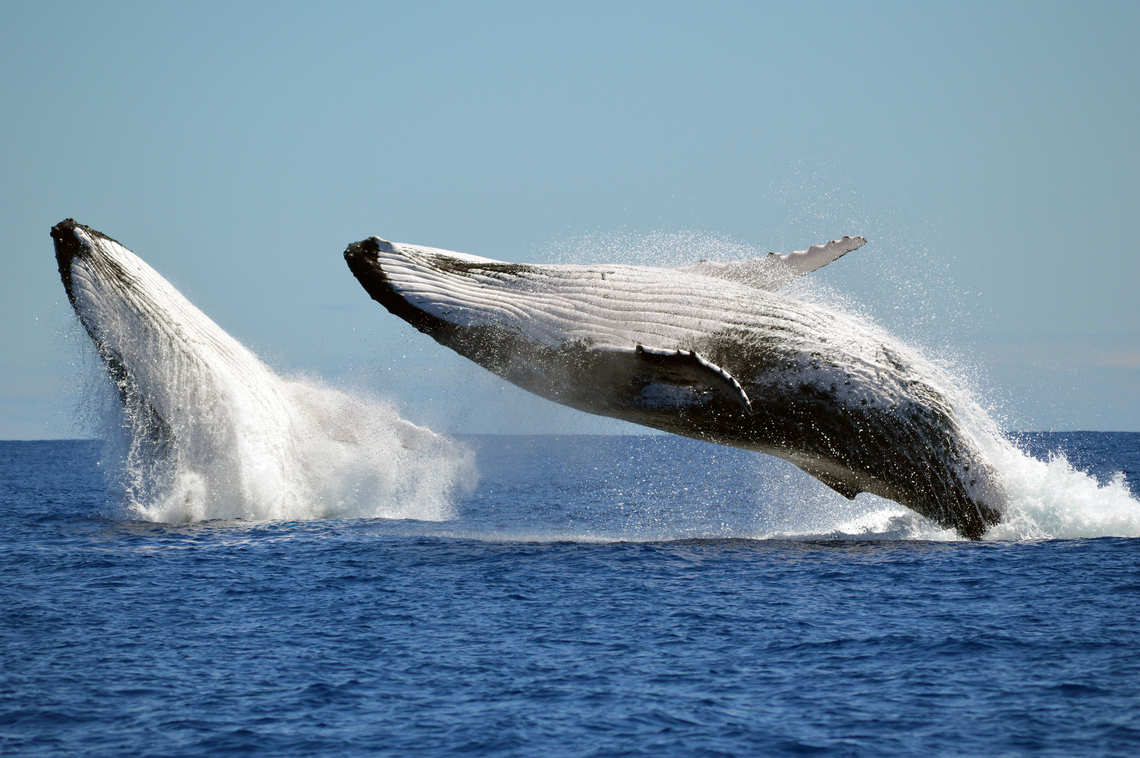
July is the peak. Humpback feeding aggregations reach their maximum density, drawn by herring and krill populations at their summer apex. The behavior is at its most dramatic — bubble-net feeding is most commonly observed in July, when prey concentrations are high enough to make the cooperative strategy worthwhile. Orca pods are reliably present. The weather is the most stable of the season: precipitation drops, cloud cover lightens, and the near-endless daylight — Alaska sits close to nineteen hours of usable light in early July — means that wildlife activity continues long into what should, by any normal reckoning, be evening.
For travelers planning an Alaska whale-watching cruise, it is worth noting that this alignment of factors is well understood by other travelers. July departures are the most sought-after and fill earliest. If July is the target, early booking is not merely advisable — it is essential.

August remains excellent through its first half, but aggregations begin to disperse as the month progresses and fish stocks shift locations. Rainfall returns with increasing frequency toward the end of August. September offers extraordinary scenery and prime bear-viewing season — but the peak whale-watching window is closing, and those who come specifically for whales are better served earlier in the summer.
The verdict is not complicated: for the best whale watching in Alaska, the answer is July. For those with the flexibility to choose only one month, the biology, the weather, and the quality of light all point in the same direction.
The Inside Passage: Alaska's Whale Highway

To understand why Southeast Alaska produces such extraordinary whale watching, it helps to understand the geography. The Inside Passage is a thousand-mile corridor of sheltered waterways — channels, straits, fjords, and island-lined passages — that runs from the northern tip of Vancouver Island to the southeastern edge of Alaska. Protected from the open Pacific by the Alexander Archipelago, it creates a vast network of calm, nutrient-rich waters that, in summer, functions as one of the most productive marine environments in the world. For whales, it is an extraordinary feeding ground. For small-ship travelers, it is a route of almost incomprehensible beauty.
The ports along the Inside Passage each offer something distinct for the whale-watching traveler.

Juneau, Alaska's capital, sits at the convergence of Stephens Passage and Gastineau Channel — waters that consistently produce some of the most reliable humpback encounters in the entire region. The feeding conditions here, shaped by tidal upwelling and a rich herring population, concentrate whales in densities that can seem almost implausible. The waters off Point Adolphus, accessible by small ship, are regarded by researchers and guides alike as among the finest humpback habitat in the Pacific. Long-term photo-identification studies run out of Juneau have tracked individual animals across decades — the continuity of their relationship with these waters speaks to just how consistently productive the feeding grounds are.

Sitka, on the western edge of Baranof Island, faces the open Pacific rather than the sheltered channels of the inner passage. The shift in geography changes the character of the wildlife: the mixing of oceanic and inshore water here attracts a different mix of species, including gray whales on their migration and humpbacks that move between the open ocean and the protected fjords. The scenery shifts accordingly — from the brooding green channels of the inner passage to the wide, exposed horizons of the Gulf of Alaska.

Ketchikan, the southernmost port on most Inside Passage itineraries, is the gateway to Clarence Strait — a productive stretch of water known for orca sightings, particularly transient pods working the passages between Prince of Wales Island and the mainland. Ketchikan also offers the added layer of Tlingit and Tsimshian cultural history, with the world's largest collection of standing totem poles providing a civilizational depth to complement the wildlife encounters.

Skagway, at the northern reach of the Lynn Canal, marks the top of the Inside Passage and the edge of humpback territory. It's whale watching is incidental to its other extraordinary qualities: the town is the gateway to the Chilkoot Pass and one of the most evocative surviving landscapes of the Klondike Gold Rush, and its fjord approach — through the deepest fjord in North America — is itself a spectacle of geological drama.

Tracy Arm, the glacier-carved fjord that cuts forty miles into the Coast Mountains south of Juneau, offers one of the most visually arresting experiences in Alaskan waters: humpback whales feeding in the shadow of the twin Sawyer Glaciers, their dark backs surfacing against a field of floating ice. The fjord is narrow, shallow in places, and cluttered with calved glacial ice — access requires a small vessel and a crew comfortable navigating among bergs. It is not a place a large ship can go. That exclusivity is, in itself, part of what makes it remarkable.
Glacier Bay: A National Park Built for This
If the Inside Passage is Alaska's whale highway, Glacier Bay National Park is its cathedral. A UNESCO World Heritage Site encompassing over 3.3 million acres of ice, mountain, fjord, and rainforest, it is one of the few places on Earth where you can watch a humpback whale surface against the face of a calving tidewater glacier — where the largest animals and the largest ice formations on the planet share the same frame.

The park's marine ecosystem is exceptional in ways that go beyond its visual drama. The rapid glacial retreat of the past two centuries — Glacier Bay was almost entirely ice-filled as recently as 1750 — has created a succession of progressively more productive marine habitats as the newly exposed waters age and accumulate nutrients. The result is a gradient of marine richness, with the most recently deglaciated upper bay still relatively sparse and the more established lower bay teeming with krill, fish, and the whales that feed on them. In July, humpback aggregations in the lower bay are among the densest in the park's recorded monitoring history.
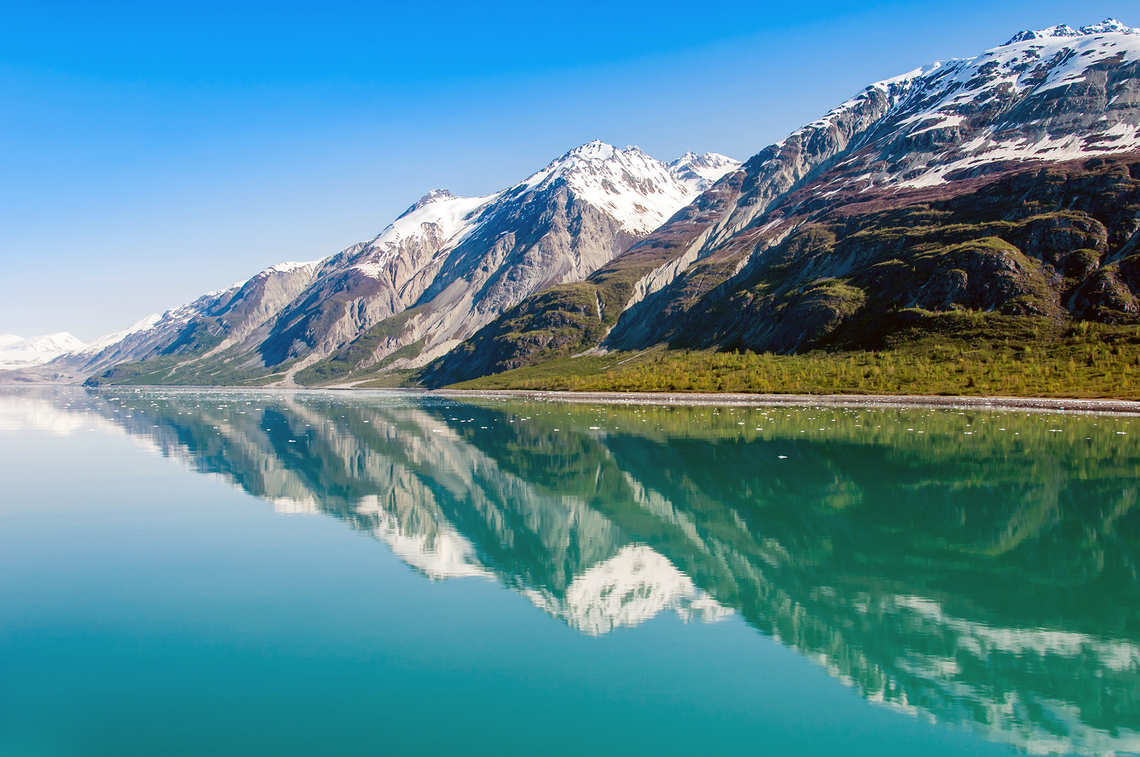
The park imposes strict limits on vessel traffic — a fixed number of permit days is allocated to cruise ships and smaller vessels alike, and the quota is genuinely binding. In practice, this means Glacier Bay never feels crowded, and the ratio of wildlife to human observers is maintained at a level that preserves the quality of the experience. It also means that access to the most productive waters is, in certain respects, a function of vessel size: the small-ship operators who hold permits for Glacier Bay can reach parts of the park that larger vessels cannot, and can spend more time in the presence of wildlife without the competitive pressure that comes from multiple large ships working the same area.
To enter Glacier Bay on a small ship in July, with humpbacks surfacing in the middle distance and a glacier calving into the silence, is to understand something about scale — the scale of geological time, the scale of these animals, and the relative smallness of the human presence in both.
A Small Ship Changes Everything
The argument for a small-ship Alaska cruise is not merely logistical — though the logistics are compelling enough. It is experiential. The vessel you travel on determines not just where you can go, but what kind of relationship you have with the landscape and the wildlife you encounter.

Large ships are prohibited entirely from some of the most productive whale-watching waters in the region. Glacier Bay's permit system caps both vessel size and numbers. Tracy Arm's narrow fjord and ice-choked approaches exclude anything above a certain beam. The shallow tidal flats where humpbacks concentrate in Stephens Passage require a draught that eliminates most large-scale cruise vessels entirely. A significant proportion of the best whale-watching geography in Southeast Alaska is, structurally, small-ship territory.

But the more important difference is sensory and relational. On a small ship cruise in Alaska, the water is close — a few feet below the rail, not forty feet below a promenade deck. When a humpback surfaces at two hundred meters, the captain can stop the engine. When it surfaces at fifty, you can hear the exhalation — a deep, wet rush of breath from an animal that has been holding it for twenty minutes in water that is close to freezing. That sound, and the cloud of vapor that follows it, is something you feel rather than simply witness.

Expedition-style vessels carry hydrophones, which can be deployed when whales are feeding nearby, allowing passengers to hear the complex, eerie vocalizations of humpbacks communicating beneath the hull. They carry naturalists whose knowledge of individual animals, local behavior, and the ecology that underpins what you are watching transforms a sighting into understanding. They carry inflatable Zodiacs, which can move passengers to within meters of feeding whales — a proximity no large ship can legally or safely achieve.

An Alaska expedition cruise at this scale is not a cruise in the conventional sense. There is no casino, no poolside entertainment, no formal dinner schedule. There is a small community of people in a remote and extraordinary place, sharing the experience of watching some of the largest animals on Earth go about the business of living. The ratio of passengers to wildlife is incomparably better. The breach that would be a distant splash from a mega-ship fills the entire frame.
What to Pack: Dressing for Alaska in July
July in Alaska is not tropical. On the water in Southeast Alaska, temperatures typically range from 10°C to 16°C, with wind chill reducing the perceived temperature further on open decks. The key is layering — and specifically, layering that remains functional when wet.

The foundation is a merino wool base layer, which retains insulation even when damp and manages the temperature swings between below-deck warmth and on-deck cold without creating the clamminess of synthetic alternatives. Over this, a mid-weight fleece provides the insulation layer that can be shed when the sun emerges. The outer layer needs to be genuinely waterproof — not merely water-resistant — and should extend below the hip to prevent water from reaching the waist when leaning over a railing or boarding a Zodiac.
Footwear matters more than most travelers anticipate. Wet decks and slippery Zodiac pontoons require non-slip soles; cold, wet feet can define the quality of an entire day at sea. Rubber-soled deck shoes or mid-height waterproof hiking boots work well. A dedicated pair of rubber-soled neoprene boots is worth bringing specifically for Zodiac excursions.

For photography, the combination of near-perpetual daylight and the explosive brevity of whale behavior creates its own demands. A 400mm lens (or equivalent) is the minimum serious reach for surfacing whales; a 600mm lens is better for flukes at distance. A dry bag is non-negotiable for camera equipment during Zodiac excursions. And despite the latitude, sun protection matters — eighteen hours of daylight, with significant reflective surfaces from the water, mean meaningful UV exposure even on overcast days.

Finally: 10×42 binoculars. Even when whales are close enough to photograph, binoculars give you something a camera cannot — the ability to watch without the mediation of a viewfinder, to simply look at the animal, at the water streaming from its jaw, at the barnacle patterns on its rostrum, at the extraordinary reality of what is in front of you.
Plan Your Alaska Whale-Watching Cruise
There are journeys that can be taken in almost any season, at almost any level of planning, from almost any kind of vessel. An Alaska whale-watching cruise in July on a small ship is not one of them. It rewards specificity — the right month, the right vessel, the right geography — and it repays that specificity with experiences that are difficult to describe to those who haven't had them and unnecessary to describe to those who have.

A humpback surfacing beside a calving glacier in water the color of hammered pewter, in light that at ten o'clock in the evening still throws long shadows across the mountains — there is no version of that moment that requires justification or embellishment. Some mornings on the water in Alaska are, in the most literal sense, once in a lifetime. July is when those mornings are most likely to happen.
This article was developed with AI assistance and reviewed and edited for accuracy, quality, and relevance.